City of Dragons by Robin Hobb

This third novel in Robin Hobb’s Rain Wild Chronicles is my favourite of the series so far – although it doesn’t really have a lot of competition, as I was disappointed with the previous two books. If you’re new to Robin Hobb, don’t start with the Rain Wild quartet; they are part of a larger sequence and not only are they not as good as the earlier books, they also fall towards the end of the sequence. You need to begin with the Farseer Trilogy, the Liveship Traders Trilogy and the Tawny Man Trilogy, all of which are excellent!

Anyway, getting back to City of Dragons, it continues the story where the previous novel, Dragon Haven, left off: with our band of stunted, poorly formed dragons and their human keepers within reach of the fabled Elderling city of Kelsingra at last. Separated from the city by the swollen, fast-flowing waters of the Rain Wild River, the group need to make their way across – but only one of the dragons, Heeby, has successfully learned to fly. The magical properties of Kelsingra could restore the dragons to their former glory, but first they need to find a way to get there…

I think the fact that I enjoyed this book more than the first two in the series is mainly due to the wonderful, atmospheric descriptions of Kelsingra. Although most of the dragons and keepers are stranded on the opposite banks of the river, a few of the characters do manage to make trips back and forth to explore the abandoned city. Different characters hope for different things from Kelsingra. Historian Alise Finbok tries to leave the buildings and treasures untouched, determined to make a careful record of everything she finds before word of the discovery begins to spread and traders and scavengers from Bingtown descend upon the city. Rapskal and Thymara, however, part Elderling now themselves, know that Kelsingra is not quite the dead, empty place it may at first appear, and they are able to connect with the memories it holds in a way that Alise cannot:

“Some of the streets she [Thymara] ran through were dark and deserted. But then she would turn a corner and suddenly be confronted by torchlight and merrymakers, a city in the midst of some sort of holiday. She had shrieked the first time, and then she recognized them for what they were. Ghosts and phantoms, Elderling memories stored in the stone of the buildings she passed.”

Although the Kelsingra sections of the book interested me most, the action moves away from the city now and then so that we can catch up with some of the other characters and subplots from earlier in the series: Alise’s estranged husband, Hest, waiting in vain for Sedric to return to Bingtown with dragon parts to cure the invalid Duke of Chalced; Leftrin, captain of the liveship Tarman, who is heading back to Cassarick to claim the keepers’ payment for the expedition; and Malta and Reyn Khuprus, expecting the birth of their first child at any moment. There’s a lot going on in this novel and the way the various storylines begin to converge towards the end sets things up nicely for the fourth and final book, Blood of Dragons, which I hope to read soon.

This is book 6/20 of my 20 Books of Summer.
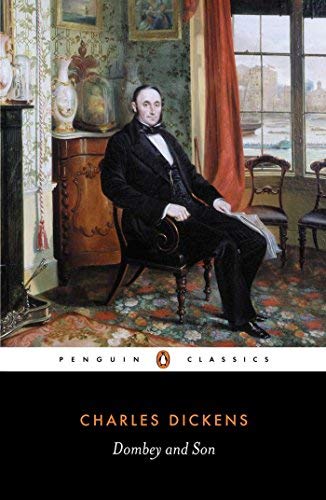
Dombey and Son by Charles Dickens

Dealings with the Firm of Dombey and Son: Wholesale, Retail and for Exportation (I think we can see why the title is usually shortened) was originally published in monthly parts between 1846 and 1848. It’s the book I was supposed to read for a Classics Club Spin over a year ago, but I struggled to get into it at the time and decided to wait until I was more in the mood for Dickens. And you definitely need to be in the right mood for a book of this length – more than 900 pages in the edition I read! I’ve loved other very long Dickens novels, though, such as the wonderful Our Mutual Friend, so I hoped I would end up loving this one too. Unfortunately I didn’t, but I did still find a lot to enjoy.

The Dombey of the title is the wealthy owner of a shipping company who dreams of having a son and heir who will be able to continue the family business. Dombey gets his wish early in the novel when his wife gives birth to a son, Paul. However, she dies shortly after the birth, leaving Paul to become the sole focus of his father’s attention – even though Dombey already has a six-year-old daughter, Florence. Florence loves her father and does her best to please him, but no matter how hard she tries, it’s obvious that all of Dombey’s hopes and ambitions lie with Paul and that Florence is just a useless girl and an inconvenience.

Whether or not the proud and arrogant Dombey will ever come to love and value his daughter as she deserves is the question at the heart of the novel, but as you would expect from Dickens, there are also plenty of diversions and subplots and lots of larger than life characters to get to know. Of these, my favourites were Captain Cuttle, the kind-hearted retired sea captain with a hook for a hand, and Susan Nipper, Florence’s loyal nurse and one of the few people who will stand up to Dombey for his neglect of his daughter. There’s a great villain too: James Carker, the scheming manager of Dombey and Son, with gleaming white teeth and a devious brain. There are too many others I could have done without, though – mainly the ones who seem to be there purely for their comedy value, such as Major Bagstock, Sir Barnet Skettles and Cousin Feenix, without actually adding much to the central plot.

Dickens gets a lot of criticism for his treatment of female characters (I think Dora in David Copperfield is his worst), but the women in this book are well-drawn and interesting. Yes, Florence can be too good to be true at times, but her father’s rejection of her is so cruel and hurtful that it’s impossible not to have sympathy for her. Her stepmother, Edith Dombey, though, is one of the strongest female characters I’ve come across in a Dickens novel: a woman filled with self-loathing after being pushed into marriage by her mother, who then decides to take her fate into her own hands.

Although I really enjoyed parts of this book, other sections dragged and I’m afraid I can’t list it amongst my favourite novels by Dickens. Nicholas Nickleby is the next one I’m planning to read, so I’m hoping for better luck with that one.

This is book 17/50 read from my second Classics Club list.

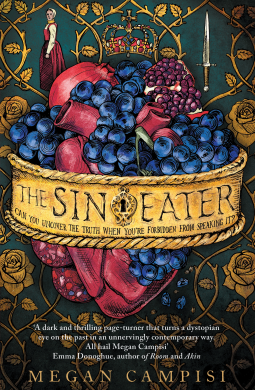
The Sin Eater by Megan Campisi

Megan Campisi’s unusual first novel is based around the historical concept of sin eating: the idea that a person close to death could call on a ‘Sin Eater’ to spiritually take on their sins. The dying person would do this by confessing to the Sin Eater, who would then consume a ritual meal consisting of a different type of food to represent each transgression. As you can imagine, this is not a pleasant job and certainly not something most people would want to do…but May Owens, the fourteen-year-old narrator of the novel, has no choice in the matter. After being arrested for stealing a loaf of bread, she is sentenced to live as a Sin Eater for the rest of her life.

With that sentence, everything changes for May. Overnight, she has become a social outcast. She is exiled to live alone on the edge of town and is forbidden to speak or be spoken to, except when listening to a confession. The heavy brass collar she is forced to wear around her neck, marked with an ‘S’, identifies her as someone to be avoided at all costs. It’s a lonely and miserable life, but May is a strong and resilient person and tries to carry out her work to the best of her ability.

Early in the novel, May accompanies another Sin Eater to the royal court to hear the deathbed confession of one of the Queen’s ladies. However, when the ritual meal is prepared, an extra item of food – the heart of a deer – is included, although it does not represent any of the sins confessed by the lady. What does the heart mean and who put it there? When another courtier falls ill and the same thing happens again, May decides to investigate.

By now you’re probably wondering about the time period in which this story is set. Well, it’s Elizabethan England – but not quite. Instead of Queen Elizabeth, Queen Bethany is on the throne, and her half-sister – the previous queen – was not Mary, but Maris. Bethany’s father did have six wives, but he was Harold II rather than Henry VIII. God is The Maker and England is Angland.

Megan Campisi states in her author’s note that the story is ‘spun out of fantasy’ and I can understand that using a fictitious setting rather than a real one would have given her more freedom to tell the story without needing to stick too closely to historical fact. It also gives the novel a bit of a fairy tale feel, as does the way most of the other characters are referred to not by names but by nicknames such as ‘Country Mouse’, ‘Willow Tree’ or ‘Fair Hair’. Sadly, though, I didn’t think any of these intriguing-sounding secondary characters really came to life; May herself was the only one who felt believable. And I’m afraid I found the thinly-disguised parallels with the Elizabethan court irritating; I think the story would have worked just as well set either at the real Elizabethan court or in an entirely fictional world.

Despite not enjoying this book as much as I’d hoped to, I do think the concept was fascinating and I can honestly say that I’ve never read anything quite like it!

Thanks to Pan Macmillan/Mantle for providing a copy of this book for review via NetGalley.

This is book 5/20 of my 20 Books of Summer.
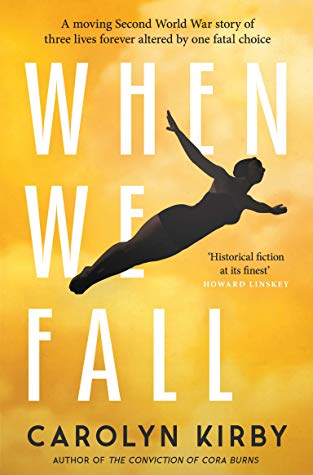
When We Fall by Carolyn Kirby

Carolyn Kirby’s new novel, set during World War II, was published in May to coincide with the 75th anniversary of VE day; unfortunately, I was in the middle of a lockdown-induced reading slump at that time, but I added the book to my 20 Books of Summer list to ensure that I would still read it sooner rather than later.

When We Fall, set in 1943, follows the stories of two women leading very different lives but both playing their part in the war effort. First, we are introduced to Valerie – Vee – Katchatourian, a British pilot whose job is to fly planes between airfields for the Air Transport Auxiliary. Forced to make an emergency landing due to fog one day, Vee encounters a Polish airman, Flight Sergeant Stefan Bergel of 302 Squadron. It’s only a brief meeting, but Stefan makes a big impression on Vee and she finds that she is unable to forget about him.

Meanwhile, in the city of Poznań in occupied Poland, Ewa Hartman is helping her father to run his guest house. At the same time as offering hospitality to German officers, Ewa is carrying out undercover work for the AK (the Polish resistance) – a dangerous thing to do, which becomes even more dangerous when she begins to attract the attention of a high-ranking German guest, SS-Obersturmführer Heinrich Beck. Ewa becomes close to Beck, but in her heart she remains loyal to her former lover, Stefan Bergel, whom she has not seen since he became a prisoner of the Soviet army a few years earlier.

Stefan provides the link between Ewa and Vee, but who is he really and where do his true allegiances lie? He is a complex and enigmatic character whose motives and loyalties are never clear, even to the reader who sees both sides of the story, unlike Ewa and Vee who see only their own. This, along with Ewa’s support for the resistance and the dangers of Vee’s work as a pilot, keeps the novel filled with tension and suspense until the end as there is no guarantee that any or all of our characters are going to survive the war.

The novel switches between the two storylines, although Vee’s almost disappears for a while in the middle of the book while most of the action is taking place in Poland. I liked both characters and both settings, but Ewa’s story was the most compelling, I thought. In all of my reading about the war, I don’t seem to have come across many books that describe life in occupied Poland, so I found it very interesting to read about the challenges Ewa faced on a daily basis. With the Nazi occupiers in the process of renaming streets and towns to make them sound more ‘German’ – Poznan becomes Posen, for example – Ewa must learn to respond to the German form of her own name (Eva), to avoid lapsing into her native language, and to come to terms with the local synagogue being converted into a swimming pool.

Names are also important for Vee, who was born in England but whose Armenian surname makes her the subject of prejudice and suspicion, as well as the prejudice she already experiences as a female aviator – even though the ATA was notable for paying women the same as men, Vee senses that she is not always considered an equal. Although I’m not really interested in aviation, Vee’s enthusiasm for her work as a pilot and for the different types of planes she is asked to fly comes across strongly.

Finally, I should mention the Katyn Massacre, a wartime atrocity which marked its 80th anniversary this year and casts its shadow over the lives of the characters in this book. I won’t say too much about it but will leave you to find out how it affects Stefan, Ewa and Vee if you decide to read When We Fall – which I do recommend, as it’s such an interesting and moving novel, very different from Carolyn Kirby’s previous book, The Conviction of Cora Burns, which I also enjoyed!

Thanks to No Exit Press for providing a copy of this book for review via NetGalley.

This is book 4/20 of my 20 Books of Summer. I am actually doing better with this than it seems – I have also read another four books from the list and just need to finish writing my reviews!
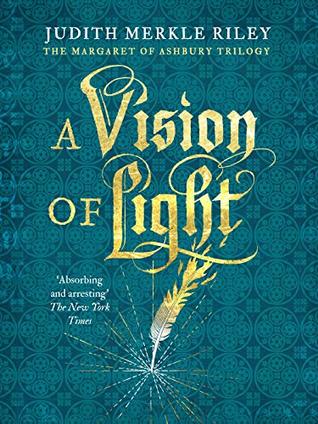
A Vision of Light by Judith Merkle Riley

I can’t believe it’s been nearly eight years since I read The Oracle Glass by Judith Merkle Riley. Having enjoyed that one, I had fully intended to explore her other books but never did; of course, it didn’t help that most of them seemed to be out of print at the time. Thanks to Canelo, all three books in her Margaret of Ashbury trilogy are now available, of which A Vision of Light (originally published in 1988) is the first.

The novel opens in the year 1355 with our heroine, Margaret, hearing the voice of God telling her that she must write a book:

“I am only a woman,” I said to the voice in my mind. “I have no letters, and do not know Latin. How shall I write a book, and what shall I put in it, as I have never done any great deeds?”

The Voice answered:

“Put in it what you have seen. There is nothing wrong with being a woman, and doing ordinary things. Sometimes small deeds can show big ideas. As for writing, do as others do: get someone to write it for you.”

The person she gets to write it for her is Brother Gregory, a young friar who is trying to make a living as a scribe writing letters for London’s largely illiterate population. Brother Gregory has a low opinion of women but he needs the money so he accepts the commission and reluctantly begins the task of chronicling Margaret’s life. He is sure a woman can’t possibly have a story worth telling, but once he begins to meet Margaret and listens to what she has to say he becomes drawn into her tale despite himself.

I won’t go into too much detail regarding Margaret’s story. There’s not really a central plot that I can describe; beginning with her early life in the little English village of Ashbury, it takes the form of a picaresque novel as she moves from place to place, having a series of adventures along the way. There are outbreaks of plague and accusations of witchcraft. There are encounters with humble peasants, wicked noblemen, travelling entertainers and mysterious alchemists. And then there is the Vision of Light which Margaret receives one day, leaving her blessed – or cursed – with the miraculous powers of healing.

I found A Vision of Light great fun to read, even though, like The Oracle Glass, it contains a few of the things that often irritate me in historical fiction: the occasional use of anachronistic language, for example, and a heroine whose views are sometimes more appropriate to the century in which the book was written rather than the one in which it is set. The writing is imbued with so much humour, life and energy that those things didn’t bother me the way they usually would; it’s a book that doesn’t take itself too seriously, while at the same time touching on some serious – and sometimes dark – topics, and getting the balance just about right.

Although the tale Margaret relates is the most compelling part of the novel, the framing narrative is also interesting, mainly for the interactions between Margaret and Gregory and the way their relationship develops as they spend more time together. Gregory is an intriguing character in his own right and although his attitude towards Margaret makes him difficult to like at first, I thought he did improve as the book went on! I’m sure I will read the second novel, In Pursuit of the Green Lion, at some point so I can find out how the story continues.

Six in Six: The 2020 Edition

We’re more than halfway through the year and I’m pleased to see that Six in Six, hosted by Jo of The Book Jotter, is back again! I love to take part in this as I think it’s the perfect way to reflect on our reading over the first six months of the year. The idea of Six in Six is that we choose six categories (Jo has provided a list of suggestions or you can come up with new topics of your own if you prefer) and then try to fit six of the books or authors you’ve read this year into each category. It’s not as easy as it sounds and I usually find that there’s a lot of overlap as some books could fit into more than one category, but it’s always fun to do.

Here is my 2020 Six in Six, with links to reviews where possible (I’m behind with reviews and will be posting the rest of them eventually).

~

Six classic mysteries

1. Murder to Music by Margaret Newman
2. Answer in the Negative by Henrietta Hamilton
3. The Long Farewell by Michael Innes
4. Murder on the Orient Express by Agatha Christie
5. Blood Upon the Snow by Hilda Lawrence
6. The Hollow by Agatha Christie

Six books set in a country other than my own:

1. The Missing Sister by Dinah Jefferies (Burma/Myanmar)
2. Tsarina by Ellen Alpsten (Russia)
3. A Long Petal of the Sea by Isabel Allende (Spain and Chile)
4. Fifth Business by Robertson Davies (Canada)
5. The Split by Sharon Bolton (South Georgia)
6. The House by the Sea by Louise Douglas (Italy)

Six books by authors new to me this year:

1. Lord Jim by Joseph Conrad
2. The Almanack by Martine Bailey
3. Mrs Whistler by Matthew Plampin
4. A Thousand Ships by Natalie Haynes
5. Queen Lucia by EF Benson
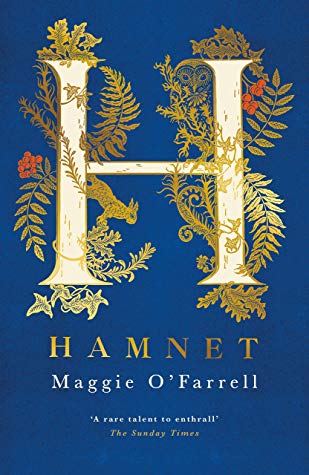
6. Hamnet by Maggie O’Farrell

Six books about royalty:

1. Royal Flush by Margaret Irwin (Minette, sister of Charles II)
2. The Silken Rose by Carol McGrath (Eleanor of Provence)
3. The Great Matter Monologues by Thomas Crockett (Henry VIII, Anne Boleyn, Katherine of Aragon)
4. Blood Queen by Joanna Courtney (Macbeth and his wife Cora/Gruoch)
5. The Brothers York by Thomas Penn (Edward IV and Richard III)
6. The Irish Princess by Elizabeth Chadwick (Aoife, daughter of the King of Leinster)

Six books I’ve particularly enjoyed so far this year:

1. In a Dark Wood Wandering by Hella S Haasse
2. The Dutch House by Ann Patchett
3. A Murder is Announced by Agatha Christie
4. The Expendable Man by Dorothy B Hughes
5. A Vision of Light by Judith Merkle Riley
6. Dreamland by Nancy Bilyeau

Six pretty covers:

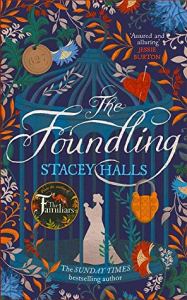
1. The Foundling by Stacey Halls
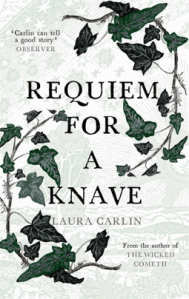
2. Requiem for a Knave by Laura Carlin
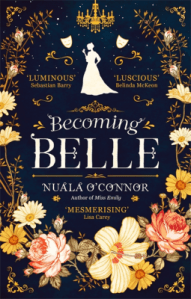
3. Becoming Belle by Nuala O’Connor

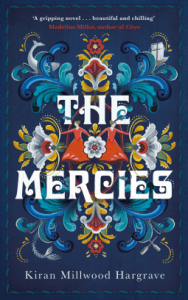
4. The Mercies by Kiran Millwood Hargrave
5. The Animals at Lockwood Manor by Jane Healey
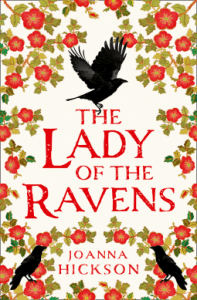
6. The Lady of the Ravens by Joanna Hickson

~

Have you read any of these? Are you taking part in this year’s Six in Six too?

Hamnet by Maggie O’Farrell

Maggie O’Farrell is an author I’ve heard a lot about over the years from other bloggers without ever feeling tempted to read myself, but the subject of her latest novel (the death of William Shakespeare’s son, Hamnet, at the age of eleven), appealed to me and I thought I would give it a try.

Despite the title, the focus of the novel is really Shakespeare’s wife, whom O’Farrell calls Agnes; she is more often known as Anne Hathaway, but Agnes is apparently the name by which her father referred to her in his will. Agnes, as she is depicted here, is an unconventional woman who flies a kestrel, has a knowledge of herbs and healing – and, some say, possesses the powers of second sight. Her husband, in contrast, is less well defined as a character. He is never even given a name; he is always ‘the husband’, ‘the father’ or, sometimes, ‘the Latin tutor’.

The novel begins with Hamnet alone in the empty workshop of his grandfather, a glovemaker, desperately searching for an adult who can help him; his sister Judith is unwell and he doesn’t know what to do. His father is in London and Agnes is away tending her beehives. It is some time later when Agnes returns home and hears the news of Judith’s illness and she will always wonder whether things might have played out differently if she had arrived earlier:

Every life has its kernel, its hub, its epicentre, from which everything flows out, to which everything returns. This moment is the absent mother’s: the boy, the empty house, the deserted yard, the unheard cry…It will lie at her very core, for the rest of her life.

Judith has a disease which appears to be the bubonic plague but we know from the historical records that it is Hamnet who will die. Knowing this in advance doesn’t spoil the story at all because we don’t know exactly when it’s going to happen or under what circumstances or exactly what impact Hamnet’s death is going to have on the people around him; these are things to be decided by the author and explored over the course of the novel. And although many people will be drawn to this book by the Shakespeare connection, I would describe it more as a book about grief and loss. O’Farrell’s portrayals of a grieving mother, a grieving father and grieving siblings – and the differences in the way each of these people handles their grief – are beautifully and poignantly written.

We are also taken back to an earlier time, before Hamnet was even born, when a Latin tutor arrives at the home of a sheep farmer to teach his young sons and becomes captivated with the boys’ half-sister. The tutor, despite not being named, is clearly Shakespeare, and the young woman, of course, is his future wife Agnes. The narrative moves backwards and forwards in time throughout the novel, alternating between the early days of Agnes and Shakespeare’s relationship and the story of Hamnet’s death, which takes place in the summer of 1596.

Although, as I’ve said, the writing is beautiful, the book is written in the third person present tense and that’s something I often dislike. It doesn’t necessarily stop me from enjoying a book (I don’t seem to have a problem with it in Hilary Mantel’s Thomas Cromwell books, for example) but in general I find it distancing and distracting and that was the case here. Another thing I found jarring was O’Farrell’s decision to avoid using Shakespeare’s name. I can understand that the reason for doing so must have been to keep the focus on Agnes and the children and to prevent it from becoming just another novel about Shakespeare, but she goes to such lengths to find alternative ways to describe him that I felt it actually drew attention to him rather than the other way around. This, and the decision to use the name Agnes instead of the more familiar Anne, makes me wonder whether the links to Shakespeare were really necessary at all; I think the story might have worked just as well with entirely fictional characters.

Finally, I want to mention one of the most memorable sections of the book: a detailed and imaginative description of how the plague which takes Hamnet’s life makes its journey from a glassmaker’s workshop in Venice to the faraway Warwickshire town of Stratford-upon-Avon. An aspect of the novel that turned out to be particularly timely and relevant, although O’Farrell couldn’t have known it while she was writing it!

If you enjoy reading historical fiction with a Shakespeare connection, here is a list of other books I’ve read either about or inspired by Shakespeare.