The Name of the Rose by Umberto Eco

I can’t remember when I first read Umberto Eco’s The Name of the Rose; it was possibly in the early 2000s – long enough ago to have forgotten most of the story, but recently enough that certain scenes have stayed quite clearly in my mind. I knew I hadn’t understood everything the first time, so when I saw that Annabel of Annabookbel was hosting a readalong in January I thought it would be interesting to read it again. Unfortunately, it was a busier month than I expected and I fell too far behind to be able to participate in the readalong, but I have been re-reading the book anyway and finished a few days ago.

The Name of the Rose is set in 1327 and is narrated by Adso of Melk, a Benedictine novice from Austria. I think the best way I can describe the book is to quote directly from the back cover of my old Picador edition: “Whether you’re into Sherlock Holmes, Montaillou, Borges, the nouvelle critique, the Rule of St. Benedict, metaphysics, library design, or The Thing from the Crypt, you’ll love it. Who can that miss out?” It probably misses out quite a lot of people, actually, but at least that gives you a good idea of the range and number of different topics and influences found in the novel.

The story begins with Adso accompanying a Franciscan friar, William of Baskerville, to a remote Benedictine monastery in the Italian mountains. In a few days’ time, this monastery will host a meeting between an embassy from Pope John XXII and a group of Minorites, but preparations are not going according to plan…Adelmo, a young illustrator known for his beautiful illuminated manuscripts, has been found dead, having supposedly fallen from a window of the Aedificium, the large building which houses the abbey’s renowned library. Was it suicide or was it murder? William, who has already impressed the abbot by successfully locating a lost horse, is asked to investigate.

There’s a reason why Eco has given William the name ‘Baskerville’ – as he moves around the abbey asking questions and uncovering the circumstances behind Adelmo’s death, he uses his powers of deduction just like Sherlock Holmes. Adso, of course, fills the position of Dr Watson, needing William to explain things to him as he goes along (which benefits the reader as well). But when a second death occurs, this one more gruesome than the first, William knows that if he is to have any chance of solving the mystery, he will need to gain access to the library – the secret, forbidden library which only the librarian and his assistant are allowed to enter.

As a murder mystery, The Name of the Rose is quite a good one. Reading it for the second time, I remembered the solution and the culprit, but not every detail of the plot, so I enjoyed watching it all unfold again. There are clues – physical and spoken – there are secrets to uncover, complex relationships to untangle and red herrings which point us in the wrong direction for a while. There are also some wonderful descriptions of the library, a genuinely eerie and sinister place; the scenes in which William and Adso explore its labyrinthine passages and chambers are some of the highlights of the book.

But The Name of the Rose is much more than just a medieval mystery novel. It is also a very detailed and erudite study of the religious history of Europe in the early 14th century, which I think is why some people love the book while others struggle with it. At the time of our story, the papacy has moved from its usual home in Rome to Avignon during a period of conflict between the church and the kings of France. From the very beginning of the novel, we are given page after page of information on the divisions within the church and the various orders and sects, such as the controversial movement led by Fra Dolcino, as well as lots of theological discussions on subjects ranging from poverty to whether Jesus ever laughed. The first time I read the book I found myself skimming over most of this to get to the murder mystery parts; this time, I tried to concentrate and understand the religious detail, but Eco’s style does not make it easy to absorb the facts and I admit there was still a lot that went over my head.

I enjoyed my re-read of this book, although I’m not sure whether I really got much more out of it than I did on my first read. I did love revisiting the library scenes, the descriptions of monastery life, and the characters of William and Adso. I have never tried reading any of Umberto Eco’s other books, but maybe I should. Does anyone have a recommendation?
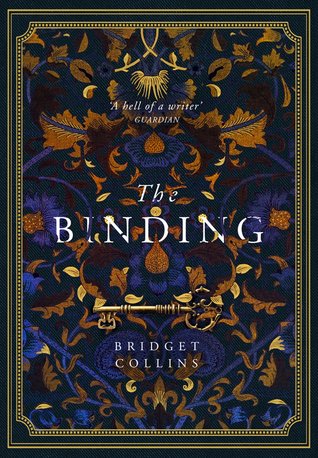
The Binding by Bridget Collins

With its attractive cover and intriguing premise, I hoped for great things from The Binding, but sadly it was not to be. I could tell almost from the beginning that it was probably not the right book for me, but I continued anyway, hoping it would get better – and it did. For a while in the middle I found myself enjoying it…but by the time I reached the end my feelings had turned to disappointment again and I wished I had followed my first instincts and stopped reading early on. For the right reader, though, I think this will probably be the great read it promised to be, so don’t let me put you off if you like the sound of the book!

The Binding is set in an unspecified time period, but there were clues that pointed to the late 19th century. Most of the action takes place in and around Castleford, a town in West Yorkshire, but it really could be anywhere. I’m sure the vagueness is deliberate because, as you’ll see, the world of The Binding is not quite the same as our own.

The novel begins with young Emmett Farmer receiving a summons to take up an apprenticeship as a bookbinder. He is reluctant to go – because he doesn’t want to leave his parents, his sister and the family farm, and also because he has always been told that books are dangerous and should be avoided – but it seems he is to be given no choice in the matter. Arriving at Seredith’s isolated bindery in the countryside, he learns from her the art of producing beautiful leather-bound books. But the real skill is involved in creating the contents…

Binders have a talent for drawing out unhappy or painful memories from people’s minds and trapping them between the covers of a book. With their memory wiped clean that person can then move on with the rest of their life, while the secrets of their past remain locked away in a vault. It’s a fascinating ability, but one which is open to abuse. What if one of these books falls into the wrong hands? What if someone is forced to have their memories bound because someone else wants them to forget? It’s a fascinating concept and the novel explores many of the equally fascinating issues that arise from it.

The book was divided into three sections and I think this structure caused some of the problems. In the first third of the book, we learned very little about Emmett even though he was our narrator and protagonist. His background was not really described in any detail, his relationships with his family and then with Seredith didn’t feel fully developed and I couldn’t even have told you what sort of personality he had. When the middle section of the story began to unfold, I understood why so much had been concealed from us and I was pleased to finally begin learning more about Emmett and the other characters – but by that time it was too late for me to feel the connection to them that I would have liked to have felt from the beginning.

I also think I’d had the wrong expectations for this book. I thought there would be a stronger fantasy element and that the concept of binding would play a bigger part in the story than it actually did. Instead, I couldn’t help feeling that the binding was only really there to provide a sort of framework for a romance between Emmett and another character. It’s disappointing because I think there was a lot of potential here and a lot of other intriguing ways that the binding idea could have been used. I’m sure there will be other readers who love this book, particularly those who enjoy young adult romances, but it just wasn’t quite right for me.

Historical Musings #47: Exploring Ancient Egypt

Welcome to my monthly post on all things historical fiction. This month I’m going to be asking for some recommendations…

In January I read When Women Ruled the World by Kara Cooney, a non-fiction book about six female rulers of Ancient Egypt. I didn’t particularly enjoy that book as I thought it was too preoccupied with drawing parallels with modern politics, but it did make me aware of how little I’ve actually read about Ancient Egypt! I can’t think of any other non-fiction books I’ve read on the subject and not much historical fiction either.

Years ago, before I started blogging, I read some of Christian Jacq’s Ramses novels about the pharaoh Ramses II, although I can’t remember which ones – The Lady of Abu Simbel, I think, and at least one or two others. More recently, I have read Cleopatra’s Daughter by Michelle Moran, about Cleopatra Selene, the daughter of Cleopatra and Marc Antony – although that book was set mainly in Rome rather than Egypt. I’ve read Shakespeare’s Antony and Cleopatra too, but otherwise I’m really struggling to think of anything at all that I’ve read set even partly in Ancient Egypt. As I’ve mentioned before, in my posts on Ancient Rome and Ancient Greece, I have never really felt drawn to books about the ancient world and am much more comfortable with later periods of history.

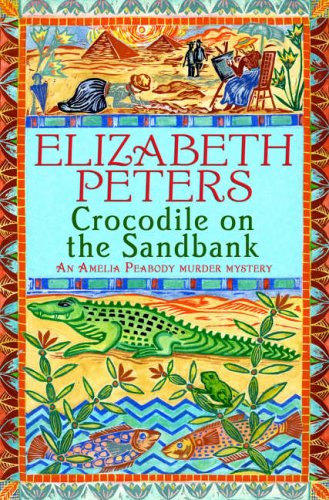
I have read the first two books in the Amelia Peabody series by Elizabeth Peters – Crocodile on the Sandbank and Curse of the Pharaohs – but they are set in 19th century Egypt with storylines revolving around Ancient Egyptian archaeology rather than being set in Ancient Egypt itself, so they’re not really the sort of books I’m looking for here.

I found a list of Best Egyptian Historical Fiction on Goodreads, but I want to hear your suggestions too.

Have you read any books set in Ancient Egypt? Which would you recommend?

Spirit of the Highway by Deborah Swift

I can hang like a mist, seep through solid walls, slither through keyholes. When you turn to look, you won’t see me, just feel a chill frost ruffle the hairs on your neck. You will sense my presence and stare hard into the dark, but I’ll be already gone, into a past or future where you can’t follow.

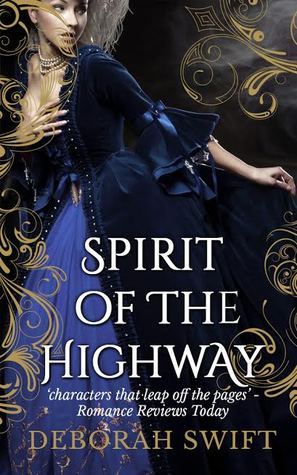
We know from the very beginning of Deborah Swift’s Spirit of the Highway that our narrator, Ralph Chaplin, is a ghost – the ghost of a former Roundhead soldier, looking back on his role in the Battle of Worcester and what happened in its aftermath. What we don’t know is when he died and how. To find the answers, we will have to read the whole of Ralph’s story because the truth is only revealed near the end.

The Battle of Worcester takes place in September 1651 and is the final battle of the English Civil War. Having fought on the winning side, Ralph should be triumphant, but instead he is sickened by the bloodshed and shocked by the abrupt death of his father. Accompanied by his army friend, Cutch, he returns home in the hope that at least some good will have come out of the fighting and the world will now be a better and fairer place to live…but with a defeated enemy on his trail, looking for revenge, it seems that things will go no more smoothly for Ralph in peacetime than they did during the war.

The woman Ralph loves – Lady Katherine Fanshawe – was on the other side of the conflict, having married into a Royalist family. Despite their differences in class and background, Kate shares Ralph’s dream of starting a community of Diggers (a movement who believe that land belongs to everyone and should not be enclosed or bought and sold). But although Kate’s Royalist husband is in exile, there is always a chance that he could return, and while he lives, she can never be free.

This is the second book in a trilogy of Highway novels, although the story makes sense on its own if you don’t want to read all three. The previous novel, Shadow on the Highway, does set up some of the storylines which are continued in this book, though, so I think it’s a good idea to read them in order. The first book is narrated by Ralph’s sister Abigail, who is Kate’s friend and maid, and the final novel, Lady of the Highway, is written from Kate’s point of view, which means we will have heard from all three of the trilogy’s main characters by the time we reach the end.

The character of Kate Fanshawe is based on the real life ‘Wicked Lady’, a highwaywoman from the 17th century. The name of Ralph (or sometimes Rafe) Chaplin is mentioned in some versions of the legend, but otherwise nothing is really known about him, which has given Deborah Swift plenty of scope to build an interesting story around him. Ralph’s two sisters, I think, must be completely fictional. I got to know and like Abigail in the previous book, but this time Elizabeth plays a more prominent role – and proves to be entirely different from her sister (not in a good way). As for Ralph himself, I liked him too, although his impulsiveness frustrated me and I wished he would stop and think before acting!

The opening chapter made me think this was going to be more of a ghost story than it actually was, but I didn’t mind that at all. The supernatural elements are quite subtle and confined mostly to the beginning and the end, but I thought they were handled well. I should also point out that this is described as a YA trilogy, but I think they are the sort of books that can be enjoyed by both young and not-so-young adults. I’ll have to read Lady of the Highway soon to see how the story ends.

The Secret of High Eldersham by Miles Burton

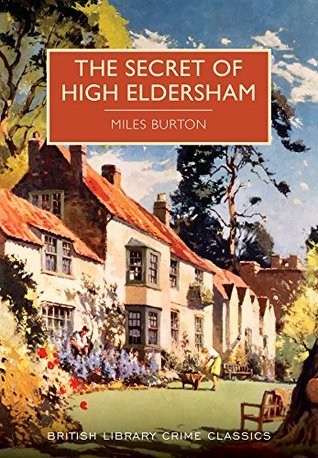
This is one of two Miles Burton novels currently available as British Library Crime Classics (the other is Death in the Tunnel). The reviews of this one seemed to be very mixed so I wasn’t expecting too much from it – and although I did find it enjoyable enough, it hasn’t become a favourite from the BLCC range.

Published in 1930, The Secret of High Eldersham seems at first to be a typical Golden Age murder mystery and High Eldersham itself to be a typical English village. We soon discover that neither of those things are true. The novel opens with the murder of Samuel Whitehead, the landlord of the Rose and Crown – and a newcomer to the village. Whitehead has been stabbed to death inside the inn and in the absence of any clues as to the motive or suspect, the local police call in Detective Inspector Young of Scotland Yard.

As Young begins to investigate, he can’t help feeling that there’s something sinister about High Eldersham. Why has it acquired such a strange reputation? Why do outsiders ‘never prosper’ in this quiet little East Anglian village? When, in the course of his inquiries, he notices something that makes him question what is really going on in High Eldersham, he summons his friend Desmond Merrion to come and help him uncover the truth.

This is apparently the first in a whole series of novels featuring the character of Desmond Merrion, amateur detective and former military intelligence officer. I found him quite bland in comparison with other fictional detectives, but in some ways that was probably a good thing as there was nothing annoying about him either – he just quietly gets on with the job of detecting! He also has a very likeable valet, Newport, who is as much a friend as a servant and who goes off and does some investigating of his own. It’s a very male-dominated novel, but there is one female character, Mavis Owerton, who has an important part to play in the story – beyond just providing a convenient love interest for several of the male characters.

Despite the murder which is committed at the beginning of the novel, this is much more of a thriller than a murder mystery and Merrion and Young become more concerned with discovering what the people of High Eldersham are trying to hide rather than finding out who killed Samuel Whitehead. I didn’t really have a problem with this as I do like either sort of crime novel, but I was still disappointed that the other elements of the story started to dominate to the point where we lost sight of the murder almost completely.

I found it very easy to guess what sort of crime was taking place in the village, but maybe it would have been less obvious to 1930s readers. There’s also another subplot, which has a hint of a supernatural element. I understood the relevance of this to the story and it does contribute to the eerie atmosphere of High Eldersham, which was already a creepy place due to its isolation and hostility to strangers, but I thought it was just one layer too many. There was too much time spent racing around on yachts and speedboats for my liking as well, although that’s probably just me – I’ve written before about my aversion to books about sailing!

I did like Miles Burton’s writing and I would read more of his books, but The Secret of High Eldersham wasn’t really for me. Death in the Tunnel sounds more appealing so maybe I’ll try that one.

Rákossy by Cecelia Holland

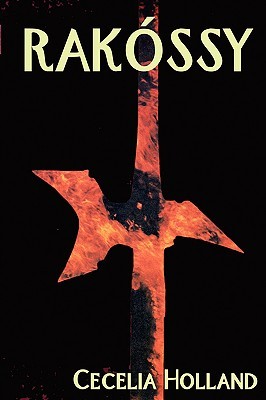
Cecelia Holland’s many historical novels cover a wide range of time periods and settings. So far I have only read two of them: City of God, a story of Rome and the Borgias, and Hammer for Princes, set in 12th century England in the period known as the Anarchy. My third Holland novel, Rákossy, takes place in Hungary during the Ottoman Wars of the 1520s. Not having read many books set in Hungary, I was looking forward to something different and to learning something new.

The title character is János Rákossy, a Magyar border lord trying to protect his lands from the threat of Turkish invasion. He is disappointed with the lack of help from the rest of Europe whom he feels are leaving Hungary to fend for itself and he knows he can’t rely on the support of his neighbouring barons either. All he can do is continue to negotiate treaties, train his knights, carry out raids, try to build alliances, and do whatever else is necessary to defend his castle and his people.

Rákossy is not the sort of man who is easy to like. He is ruthless, cold, cynical and violent towards both men and women. As another character says of him:

“The people in the village think that he sold his soul to the Devil for a charmed life and fortune in battle. The Turks, I’m told, believe so too. I think it’s possibly the only point of agreement between them.”

He does have some good qualities – he’s clever and shrewd and his courage is not in question – but he is certainly not someone I could consider to be a hero. This seems to be normal for a Cecelia Holland protagonist, though; I had similar feelings about Nicholas in City of God and Fulk in Hammer for Princes. She seems to excel at deliberately creating characters who are unappealing, morally ambiguous and whose motives are not always clear. But at least if her central characters are not very likeable, they are still interesting and complex.

Of the other characters in the novel, two stand out. One is Denis, Rákossy’s brother, a sensitive man who prefers books to warfare and doesn’t always approve of or agree with Rákossy’s actions. The other is Catharine de Buñez, believed to be an illegitimate daughter of the King of Aragon, who marries Rákossy early in the novel. As far as I can tell, most of the major characters in the book are fictional, although the story is based on fact, giving us an idea of the situation on the Hungary-Turkey border leading up to the Battle of Mohács in 1526. If you know what the outcome of that battle is going to be, it does affect how you might view Rákossy’s negotiations and military preparations throughout the novel, but either way you can admire what he is trying to do for his country.

I didn’t find this book particularly enjoyable, mainly because I thought it was very bleak and also because it didn’t seem to have any sort of plot beyond a string of raids and battles. It was one of Cecelia Holland’s earliest novels, though – published in 1967 – and based on the others I’ve read I think they do get better. I don’t think she’ll ever become a favourite author as her writing lacks the warmth and emotion I prefer, but I’m still looking forward to reading more of her books because her subjects and settings all sound so intriguing. I have a NetGalley copy of The Soul Thief, which is about to be reissued by Canelo, so I will be reading that one next.

Six Degrees of Separation: From Fight Club to Snow Flower and the Secret Fan

It’s the first Saturday of the month which means it’s time for another Six Degrees of Separation, hosted by Kate of Books are my Favourite and Best. The idea is that Kate chooses a book to use as a starting point and then we have to link it to six other books of our choice to form a chain. A book doesn’t have to be connected to all of the others on the list – only to the one next to it in the chain.

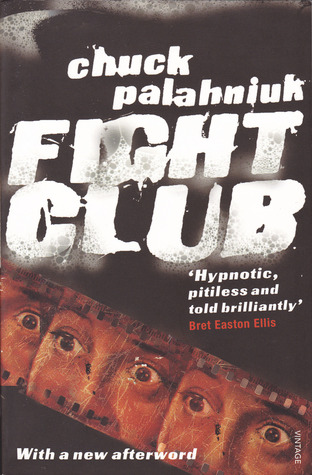
This month we are starting with Fight Club by Chuck Palahniuk. I’ve never read this book (or seen the film) and I’m not really interested in reading it, but I can see from Goodreads that it’s about an ‘enigmatic young man who holds secret after-hours boxing matches in the basement of bars’.

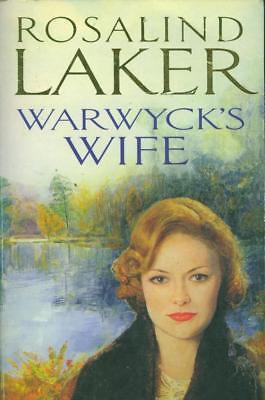
For my first link, I’ve chosen another book about a fighter – Warwyck’s Wife by Rosalind Laker. The protagonist (I refuse to call him a hero) is a boxer in the 1820s and although I have little interest in boxing, I did find it fascinating to read about what the sport involved in its early days.

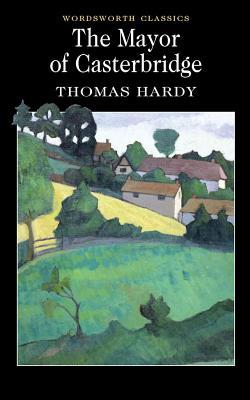
At the beginning of the book he buys a woman at auction who has been put up for sale by her husband, a custom which, unfortunately, really did take place in the 19th century. The Mayor of Casterbridge by Thomas Hardy opens with a very similar scene in which Michael Henchard sells his wife at a country fair, an impulsive act which he quickly regrets.

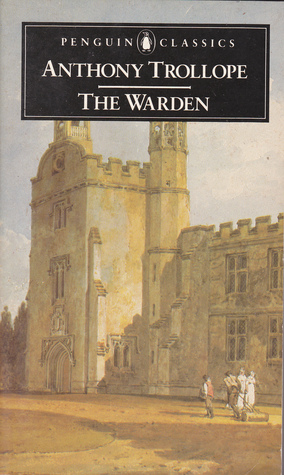
Like most of Hardy’s novels, The Mayor of Casterbridge is set in his fictional Wessex, based on the real landscape of south and south-west England. Another Victorian author who set several of his books in an imaginary region is Anthony Trollope. His Chronicles of Barsetshire take place in and around the fictitious English county of Barsetshire and its cathedral town of Barchester. The first book in the series is The Warden.

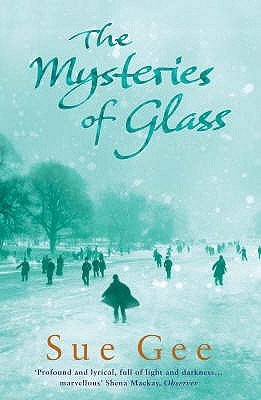
The warden of the title is the Reverend Septimus Harding (one of my favourite Trollope characters). Another novel with a clergyman as the main character is The Mysteries of Glass by Sue Gee, which I remember as a beautifully written, though very slow-paced, novel. Looking back at my review, I said at the time that “Although I was reading this book in July, I could still picture the cold, wintry landscape.”

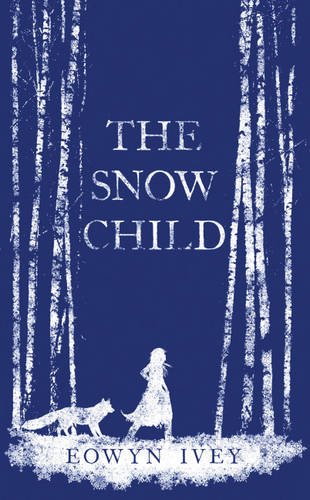
Today, I don’t need a book to show me a snowy landscape – I can see plenty of snow just by looking out of my window! Thinking of other novels that have a wintry setting and atmosphere, though, leads me to the next book in my chain: The Snow Child by Eowyn Ivey, a magical story inspired by a Russian fairy tale.

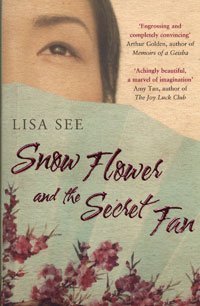
Staying on the same theme, another book with the word ‘Snow’ in the title is Snow Flower and the Secret Fan by Lisa See. This one is not a wintry read, though – it’s a novel set in 1820s China in which a girl communicates with her friend through messages written on a silk fan.

That’s my chain for this month! My links have included boxing, wife-selling, fictional lands, the church and snow.

In March we will be starting with The Arsonist by Chloe Hooper.