My favourite books of 2018

I know 2018 is not quite over yet, but with only two days remaining I think it’s safe to post my books of the year list now. I’ve enjoyed putting this post together, looking back over my reading year and picking out some favourites. As usual, it’s a long list, which is a good thing as it shows I must have read a lot of great books this year! I think I’ve included a good mixture of old and new books here, as well as a range of genres. Robin Hobb’s three Tawny Man novels were my absolute favourites of the year, so I have put them at the top, but the rest are listed at random.

Here they are – my books of 2018:

~
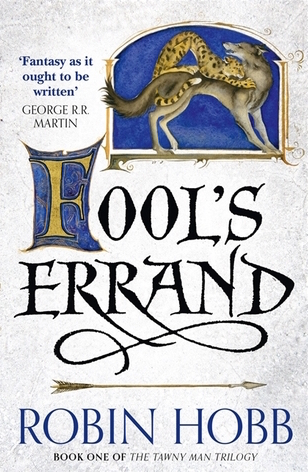
Fool’s Errand (2001), The Golden Fool (2002) and Fool’s Fate (2003) by Robin Hobb

From my reviews: “It was wonderful to be reacquainted with Fitz and the other Farseer characters again…I had to keep going until I’d reached the end of the trilogy. I cared too deeply about the characters to abandon them while I read other books.”
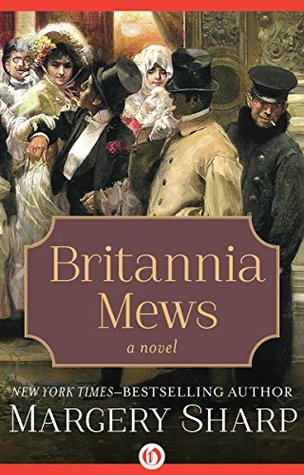
Britannia Mews by Margery Sharp (1946)

From my review: “Of course, the most important character of all is Britannia Mews itself, a street which seems to cast a spell over those who live there, pulling them back every time they might think about leaving. I loved reading about the changing nature of the street over the years and the people who inhabited it at various times in its history…This was a wonderful choice of book to celebrate Margery Sharp’s birthday this year.”
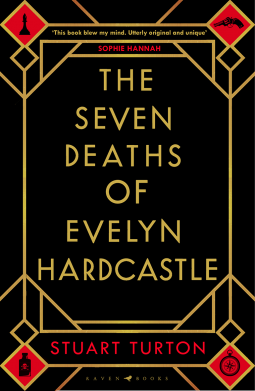
The Seven Deaths of Evelyn Hardcastle by Stuart Turton (2018)

From my review: “I can’t even begin to imagine how much time and effort must have gone into the writing of this novel! I’ve never read anything like it before and I hardly know how to describe it. It has all the elements of a classic murder mystery – but there’s a clue in the title: the same murder happens not just once but seven times.”
The Crowded Street by Winifred Holtby (1924)

From my review: “I’ve been looking forward to this one for a while and I’m pleased to say that I loved it even more than I hoped I would…The Crowded Street is a wonderful book in so many ways and a great choice for both the Classics Club and the Persephone Readathon!”
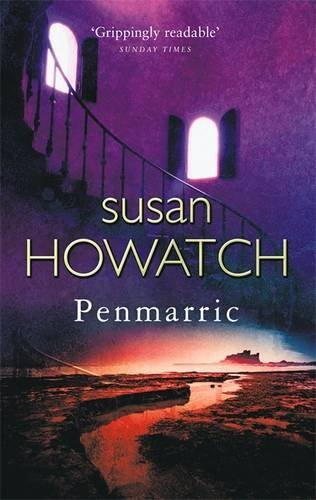
Penmarric by Susan Howatch (1971) – re-read

From my review: “Penmarric is a dark novel – as I’ve said, none of the characters experience much happiness in their lives and none of them are easy to like – but the plot is completely gripping, even when you’re reading the book for the second time. There are some lovely descriptions of Cornwall too; this is one of those books where the setting is as important as the characters and the plot.”
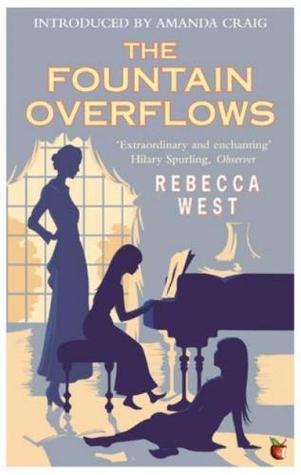
The Fountain Overflows by Rebecca West (1956)

From my review: “I loved Rose’s narrative voice; not all authors can write convincingly from the perspective of a child, but Rebecca West certainly does. She really captures the way children think and feel, the things that matter to them and the way they look at the world…With such strong, believable characters and such lovely writing, this was a wonderful read.”
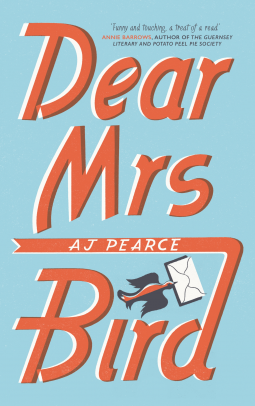
Dear Mrs Bird by AJ Pearce (2018)

From my review: “Dear Mrs Bird was an absolute joy to read from start to finish! I loved Emmy from the beginning and her friendly, enthusiastic narrative voice pulled me straight into her world…there’s drama, there’s tension and there’s heartbreak, but there’s never too much of any of these things and the book never loses its charm and its warmth.”
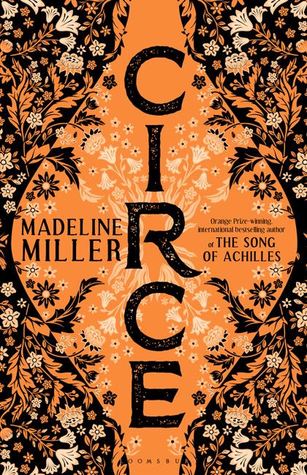
Circe by Madeline Miller (2018)

From my review: “I loved Circe; it’s a beautifully written novel and ideal for readers like myself who only have a basic knowledge of the Greek myths. I felt a stronger connection with Circe herself than I did with Patroclus in The Song of Achilles and for that reason this is my favourite of the two books.”
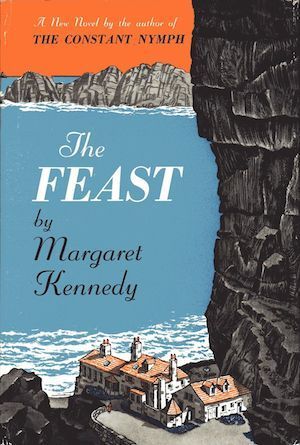
The Feast by Margaret Kennedy (1950)

From my review: “I loved following the lives of the Siddals, their guests and their servants…With over twenty characters all playing important roles in the novel, some authors would have struggled to make each man, woman and child different and memorable, but Margaret Kennedy succeeds and the result is a really enjoyable and absorbing read.”
The Winds of Heaven by Monica Dickens (1955)

From my review: “For a novel with so many unlikeable characters, I found this a surprisingly enjoyable and entertaining read. Louise’s story is obviously a very sad one at times, but Monica Dickens writes with enough humour and lightness that it never becomes completely depressing…I wish Monica Dickens had written more books about these characters, but I enjoyed this one enough to know that I will be investigating the rest of her novels anyway!”

The Corinthian by Georgette Heyer (1940)

From my review: “Thoroughly entertaining and fun to read…I won’t say too much more about the plot, but you can expect a wonderful blend of comedy, action and mystery as Richard and Pen stumble from one farcical situation to another.”
Desperate Remedies by Thomas Hardy (1871)

From my review: “I loved Desperate Remedies! It starts off slowly, but it quickly develops into an intriguing and entertaining page-turner with plenty of twists and surprises…This isn’t one of my absolute favourite Hardy novels – I think some of his later ones are better – but it’s still a great read.”
The Girl in the Tower (2017) and The Winter of the Witch (2019) by Katherine Arden

From my review: “Katherine Arden’s books are a wonderful mixture of history, folklore and fairytales with an atmospheric and wintry Russian setting… I loved The Girl in the Tower.” My review of The Winter of the Witch will follow in January.
Young Bess by Margaret Irwin (1944)

From my review: “It was a pleasure to read a good old-fashioned historical fiction novel with elegant prose and strong characterisation, no present tense, no experimental writing and no multiple time periods! It’s a book which completely immerses the reader in the Tudor period and the lives of Elizabeth and the historical figures who surround her, so that you reach the end feeling that you’ve read something fresh and worthwhile.”
Queen of the North by Anne O’Brien (2018)

From my review: “Alliances are formed and broken, friends become enemies then friends again in an instant; it’s a dangerous time, but a fascinating one to read about…I loved Queen of the North; I think it’s my favourite of the five Anne O’Brien novels I’ve read so far.”
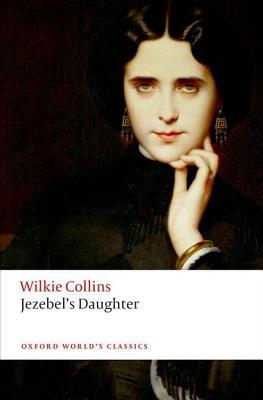
Jezebel’s Daughter by Wilkie Collins (1880)

From my review: “Jezebel’s Daughter is a great read – it’s suspenseful and exciting and, because it’s a relatively short novel, it’s faster paced than some of his others as well. With a story involving poisonings, stolen jewels, unexplained illnesses, mysterious scientific experiments, morgues, asylums and plenty of plotting and scheming, there’s always something happening…”

Dark Quartet by Lynne Reid Banks (1976)

From my review: “As someone who loves the work of all three Brontë sisters, I have been interested in reading Dark Quartet for a long time…Lynne Reid Banks doesn’t explore the Brontës’ novels in much depth, but I think she does a good job of showing how the sisters’ work was influenced by people, places and events from their personal lives… I really enjoyed reading it.”
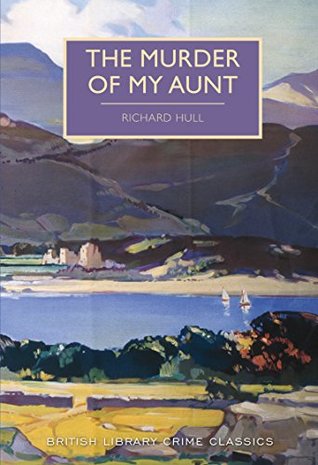
The Murder of My Aunt by Richard Hull (1934)

From my review: “It’s not really a whodunnit so there’s no puzzle to solve or clues to decipher, but that doesn’t matter at all – the fun is in wondering whether the crime described in the novel will succeed and, if so, whether the culprit will be caught…But the plot is only part of what makes this book so enjoyable; Edward’s narrative voice is wonderful too and transforms what could have been a very dark novel into a very funny one.”

~

And I want to give these books a special mention too:

A Falling Star by Pamela Belle (1990)
Church of Marvels by Leslie Parry (2015)
The Prime Minister by Anthony Trollope (1876)
House of Gold by Natasha Solomons (2018)
The Story Keeper by Anna Mazzola (2018)
Lamentation by CJ Sansom (2014)
Marking Time by Elizabeth Jane Howard (1991)
The Craftsman by Sharon Bolton (2018)
Harriet by Elizabeth Jenkins (1934)
Earth and High Heaven by Gwethalyn Graham (1944)
The Sentence is Death by Anthony Horowitz (2018)

~

Have you read any of these? Which books have you enjoyed reading in 2018?
Completed Challenge: What’s in a Name ? 2018

I only signed up for two year-long reading challenges at the beginning of 2018 – What’s in a Name? and the Historical Fiction Reading Challenge. With three days of the year remaining, I am still reading books that could count towards the Historical Fiction challenge, but I have now completed the What’s in a Name? challenge.

The challenge was hosted by Charlie of The Worm Hole and the idea was to read six books, each with a title including one of the following words:

– The word ‘the’ used twice
– A fruit or vegetable
– A shape
– A title that begins with Z
– A nationality
– A season

Here are the six books I read, with links to my reviews.

The word ‘the’ used twice:

The Girl in the Tower by Katherine Arden

A fruit or vegetable:

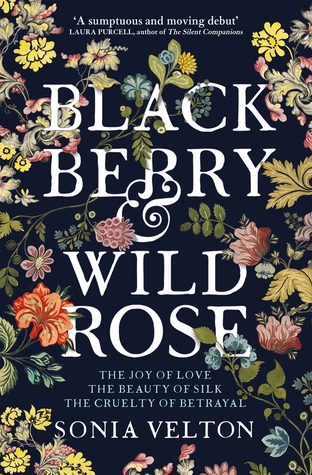
Blackberry and Wild Rose by Sonia Velton

A shape:

Bleeding Heart Square by Andrew Taylor

A title beginning with Z:

Zennor in Darkness by Helen Dunmore

A nationality:

The Japanese Lover by Isabel Allende

A season:

The Winter Prince by Cheryl Sawyer

Did anyone else take part in this challenge too?

Have you read any of these books?

Blackberry and Wild Rose by Sonia Velton

It’s 1768 and Sara Kemp has just arrived in Spitalfields, the London parish which has become home to a thriving community of Huguenot silk weavers. Sara is full of hope and optimism, ready to start a new life, but before she’s had time to get her bearings she finds herself the victim of a cruel trick which leaves her with no choice other than to live and work in a notorious brothel.

In a much more respectable house nearby lives the master weaver Elias Thorel and his wife Esther. Their marriage is not a loving or happy one, but Esther has been trying to take an interest in her husband’s work and has discovered an aptitude for designing floral patterns. There’s nothing she wants more than to see one of her own designs woven in silk, but Elias is scornful and refuses to acknowledge her talent. Still determined to turn her dreams into reality, Esther approaches the journeyman weaver who has been using the loom in the Thorels’ attic to weave his master piece.

Two women leading very different lives – but their paths cross when Esther is distributing Bibles in the poorer areas of Spitalfields and sees Sara being abused by her madam outside the brothel. Soon Sara is working as a lady’s maid in Esther’s household, but how will she repay Esther for her act of kindness?

I was drawn to Blackberry and Wild Rose by the beautiful cover – and the mention of an 18th century setting and the comparisons to Jessie Burton and Tracy Chevalier made me want to read it even more. Of course, none of those things guaranteed that I would like the book, but I’m pleased to say that I did!

First of all, there are the fascinating details of weaving, of using looms, designing patterns, and everything else involved in creating beautiful figured silk. At the beginning of the novel, Esther knows very little of any of this – she only knows that she wants to see her designs brought to life – but she learns a lot from the weaver she befriends, and her enthusiasm (and, I think, the author’s) comes through very strongly:

By the time the candle had burned down to a waxy stump, the thinnest sliver of iridescent silk clung to the heddles. ‘I can’t believe it,’ I breathed. I was finally looking at the very beginning of a silk made to a pattern I had designed. My own creation. ‘How long will it take to finish it?’

I could feel Esther’s excitement and pride as her silk took shape, as well as her disappointment and anger at her husband’s lack of support. Through the stories of Esther’s weaver friend Bisby Lambert and some of the other Spitalfields weavers, we also learn about some of the issues and challenges the industry faced and how the workers had to fight for their rights against unscrupulous masters and the threat of cheap imports from abroad.

An even more engaging aspect of the book is the relationship between the two main characters, Esther and Sara, whose narratives alternate throughout the novel. At first, Esther feels sorry for Sara, as she would for any woman driven to prostitution, and she wants to do what she can to help. Once Sara is there, in the Thorel household, however, their relationship is an uneasy one and Esther begins to wonder whether she has done the right thing in bringing Sara into her home:

She was like a cat sidling in uninvited and looking about. You don’t want to turn it out straight away so you offer it a scrap of food. The next thing you know it’s curled up on your favourite chair, watching you with unblinking elliptic eyes.

As for Sara, she quickly becomes aware that Esther’s life is not as perfect as it seems and that she is hiding some secrets of her own. While a friendship does form between the two women, they are not entirely comfortable around each other and neither is quite sure whether the other can be trusted, which makes for a tense and exciting story! The plot kept me gripped throughout the book and although I thought I could predict how it would end, I was wrong and the ending was actually much more realistic than I’d expected. This is an impressive debut novel and I hope to read more from Sonia Velton in the future.

Thanks to Quercus for providing a copy of this book for review via NetGalley.

I am counting this book towards the What’s in a Name? challenge (a book with a fruit or vegetable in the title).

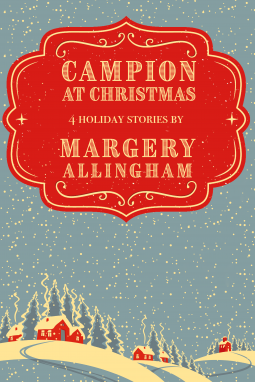
Campion at Christmas by Margery Allingham

I love Margery Allingham so I was pleased to have the opportunity to read this new collection of four short stories, all with a festive theme. The title is slightly misleading as only three of the four stories feature Albert Campion, but they are all quite enjoyable in their different ways. They are also very short, so perfect for readers with busy Christmas schedules who just want something quick to read!

The first story, On Christmas Day in the Morning, was my favourite and involves Campion investigating the death of a postman hit by a car on Christmas morning. The culprits have been identified, but the evidence provided by local residents is confusing and Campion must decide whether the suspects and the victim really could have been in the right location at the right time for the accident to have taken place. It’s not much of a mystery, but I found it a sad and poignant story which reminded me of how lonely some people feel at Christmas.

Next we have Happy Christmas, probably the weakest story in the book, in which a young couple with a passion for the 19th century decide that they would like to have a traditional Victorian Christmas. Campion doesn’t appear at all in this story and I’m not sure that it really belonged in this collection. I’m not entirely sure what the point of it was, although I do love the idea of a Victorian Christmas.

The Case of the Man with the Sack is a more conventional detective story. Albert Campion is celebrating Christmas with friends at their country house when a theft takes place – and the main suspect is Santa Claus. This is a slightly longer story than the others, so there’s more time to develop the plot. Of course, it can’t compare with a full-length Campion mystery, but it was interesting enough to hold my attention until the end.

Finally, there’s Word In Season, a lovely but unusual tale about Campion and his dog, Poins. Did you know that, according to myth, animals are given the power of speech in the final hour of Christmas Eve? I didn’t, but that’s what this final story is about.

These four Christmas stories were obviously ideal for the time of year and I did find them entertaining, but I thought they were too short to be completely satisfying. I’m looking forward to reading some more of Allingham’s longer novels soon.

Thanks to Agora Books for providing a copy of this book for review via NetGalley.

Zennor in Darkness by Helen Dunmore

One of the reading challenges I have been participating in during 2018 is the What’s in a Name? challenge which involves reading books with certain words in the title. Having reached November with only four of the six required books completed, it was looking unlikely that I would be able to finish the challenge, but I’m pleased to say that I have managed to squeeze the final two books into my December reading – starting with this one, Zennor in Darkness (a book with a title that begins with Z).

Published in 1993, Zennor in Darkness was Helen Dunmore’s first novel. I had high hopes for it, as I’ve enjoyed some of her others, particularly Exposure and Birdcage Walk. Unfortunately, although there were things that I liked about this one, I was slightly disappointed with it, even more so because most people who have read it seem to have loved it and I’m sorry that I couldn’t love it too.

The novel is set in 1917 in Zennor, a village on the coast of Cornwall where the author DH Lawrence lives for a while during the First World War. Hoping to find some peace and quiet away from the controversy caused by the recent publication of his novel, The Rainbow, Lawrence and his wife Frieda have decided to rent a cottage in Zennor where they can wait for the war to end and for a time when he may be able to resume his writing career. But even as Lawrence gets to know the local farming families and discovers the charms of rural life, he finds himself the centre of controversy yet again – this time because of Frieda, who happens to be German. The villagers view Frieda with suspicion, disapproving of her red stockings and her German songs, and convinced that she and Lawrence are sending signals to the U-boats lurking off the Cornish coast:

‘All the same though, there are things not right up there. They say they’ve put different coloured curtains up. In the same window.’
‘Why, whatever would they want to do that for?’
‘In the window looking over the sea.’
‘You mean -‘

One person who doesn’t care about the gossip and who is happy to befriend the Lawrences anyway is Clare Coyne, a young woman who lives with her widowed father. Clare is a talented artist and is helping to illustrate a new book her father is writing on botany; she is also in love with her cousin, John William Treveal, who is home on leave from the trenches before starting his training as an officer. The rest of the family are unaware of Clare’s feelings for John William, so she keeps her fears and worries for him to herself, hoping that as he has survived this long, he will continue to survive and will come back to her when the war is over.

The novel is partly about Clare’s relationship with DH Lawrence and partly about her love for John William, but I felt that the two elements of the story didn’t work together very well and could have formed the basis of two separate books. I found the central love story by far the most engaging and interesting aspect of the novel, while the inclusion of Lawrence added very little for me. I couldn’t help making comparisons with Mr Mac and Me by Esther Freud, a very similar story about the architect Charles Rennie Mackintosh, where I thought the blending of real historical characters and fictional ones was more successful.

I did love the portrayal of life in a small village during the war, touching on topics such as shell shock, desertion and the effects of war not only on those who are fighting in it but on the loved ones they leave behind. The writing is certainly beautiful – both poetic and insightful, with some lovely descriptions – but books written in third person present tense are often a problem for me and that was the case here as I found it distracting and emotionally distancing. I think the writing style is what prevented me from enjoying this book as much as I’d hoped to. Not a favourite by Helen Dunmore, then, but I will continue to read her books and will hope for better luck next time.

~

I would like to take this opportunity to wish you all a Merry Christmas! I’ll be back soon with my books of the year, my December Commonplace Book and maybe another review or two before New Year.

The Fountain Overflows by Rebecca West

Rebecca West is the final author to be celebrated in Jane at Beyond Eden Rock’s Birthday Book of Underappreciated Lady Authors this year. Having previously only read The Return of the Soldier by Rebecca West, I decided to read The Fountain Overflows next as it is one of the books on my Classics Club list. This is the first in a trilogy (the other two – This Real Night and the unfinished Cousin Rosamund – were published posthumously), and although it is a work of fiction, it does apparently draw on the author’s own childhood experiences.

The Fountain Overflows is set in the early 20th century and tells the story of the Aubrey family through the eyes of Rose, one of the children. As the novel opens, the family are preparing for a move from Scotland to London, having only recently returned to Britain from South Africa. The children have become used to changing address on a regular basis due to the fact that their father, a newspaper editor, seems unable to stay in one position for very long. He is irresponsible, unreliable and has a habit of gambling his money away on the stock exchange, but his wife and children love him anyway and hope that this time he can make a success of the job he has been offered and that they will be able to stay in their new home for longer than usual.

The Aubreys are a creative, cultured and highly gifted family – Rose and her twin sister, Mary, are talented pianists; their little brother Richard Quin, as he grows older, discovers an aptitude for the flute; and Cordelia, the eldest, plays the violin. Their mother, Clare Aubrey, had been a concert pianist herself, and it falls to her to see that each of her children receives the correct guidance and tuition to make the most of their abilities. This proves particularly challenging where her eldest daughter is concerned, as thanks to a well-meaning but interfering teacher, Cordelia is led to believe she is much more talented than she really is. I found the Cordelia storyline very moving – it’s obvious from the beginning what is going to happen but it takes a long time to play out and I dreaded the moment when she would inevitably discover the truth.

Although this is a story driven by characters, relationships and family bonds, there is also some drama. There is an episode where Rose and her mother visit the home of Rose’s Aunt Constance and cousin Rosamund, only to find the house apparently haunted by poltergeists. Later in the book, the mother of a friend from school is accused of murder and the Aubreys are drawn into that too. But these incidents, each of which could have formed the entire plot of a different sort of novel, are relatively minor aspects of The Fountain Overflows and no more or less important than many of the other things that happen in Rose’s life.

I loved Rose’s narrative voice; not all authors can write convincingly from the perspective of a child, but Rebecca West certainly does. She really captures the way children think and feel, the things that matter to them and the way they look at the world. But the most engaging character, for me, was Rose’s mother. I admired her for her strength in trying to keep her family and marriage together, seeing that the rent is paid on time, helping others despite her own financial hardship, and providing a stable, loving home for her children when their father couldn’t or wouldn’t.

With such strong, believable characters and such lovely writing, this was a wonderful read. I was sorry to have to leave the family behind at the end, but I’m looking forward to meeting them again in This Real Night.

This is book 10/50 from my second Classics Club list.

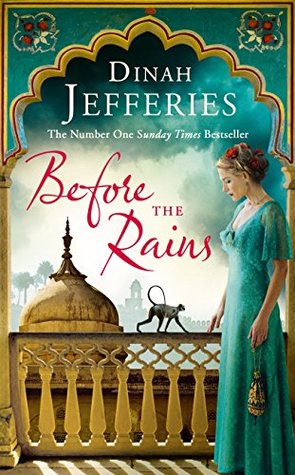
Before the Rains by Dinah Jefferies

Whenever I want a book to transport me to another country and another time, I need look no further than Dinah Jefferies. So far her novels have taken me to Ceylon, Malaya and French Indochina; this one, Before the Rains, is set in Rajputana, India, in the 1930s.

Our heroine, Eliza Fraser, has a passion for photography and hopes to build a career for herself as a photojournalist. When an old family friend and British politician, Clifford Salter, arranges for her to spend a year photographing the royal family of one of India’s princely states, she is both delighted and nervous. India is where she grew up and she still feels a connection to the land and the people, but it is also where, at the age of ten, she witnessed the death of her father in Delhi.

Arriving at the palace where she will live for the next twelve months, Eliza finds that not everyone is happy to have an outsider interfering in their affairs, especially when they discover that she is a widow. Other people, though, are much more welcoming – including Jayant Singh, the younger brother of Prince Anish. When Jay offers to escort Eliza around the countryside in search of subjects for her photographs, she is distressed by the poverty she sees and urges Jay to do something to help his people. In return, Jay helps her to understand the effect British rule has had on India. As they discuss these and other issues and get to know each other better, a friendship forms between them which quickly becomes something more…but Eliza knows that there can only be any future for them if Jay is prepared to defy both his family and the expectations of society.

Like all of Dinah Jefferies’ novels, this one features some lovely descriptive writing, bringing to life the sounds, colours, tastes and smells of India. But along with the beautiful descriptions, there are some brutal, horrifying ones, such as an account of a widow throwing herself onto her husband’s funeral pyre, followed by a discussion of the custom of sati, as well as the fates of unwanted baby girls and of women suspected of witchcraft. For all Eliza had spent her childhood in India, she had been insulated within the British community and it’s only now that she is going out on her excursions with Jay that she feels she is truly starting to understand the country, its history and its people.

Although I loved the setting, I didn’t enjoy this book as much as I enjoyed some of Jefferies’ others, which is mainly due to the fact that I found it predictable and too reliant on coincidences – there were at least two plot twists towards the end that I found completely unconvincing. I also struggled to believe in Eliza’s romance with Jay; I liked both characters, but I thought it seemed too convenient that on arriving at the palace Eliza would immediately catch the eye of a prince. Maybe I should have just been less cynical and more prepared to suspend disbelief.

This is probably my least favourite of Dinah Jefferies’ novels, but I’m still looking forward to reading her new one, The Missing Sister, which will be set in 1930s Burma.