The Man Who Was Thursday by GK Chesterton

This 1908 novel from the author of the Father Brown mystery series is subtitled A Nightmare and it certainly does have a dreamlike feel. I picked it up expecting a vintage detective novel and emerged at the other end wondering what on earth I had just been reading and what it meant.

The novel opens with a conversation between two men who meet for the first time one evening in Saffron Park in London. One, Lucian Gregory, is an anarchist poet; the other, Gabriel Syme, is a member of the secret anti-anarchist police. They spend the whole of the first chapter debating the meanings of anarchy and of law and order, using arguments like this:

Gregory struck out with his stick at the lamp-post, and then at the tree. “About this and this,” he cried; “about order and anarchy. There is your precious order, that lean, iron lamp, ugly and barren; and there is anarchy, rich, living, reproducing itself—there is anarchy, splendid in green and gold.”

“All the same,” replied Syme patiently, “just at present you only see the tree by the light of the lamp. I wonder when you would ever see the lamp by the light of the tree.”

And this:

“An artist disregards all governments, abolishes all conventions. The poet delights in disorder only. If it were not so, the most poetical thing in the world would be the Underground Railway.”

“So it is,” said Mr. Syme.

“Nonsense!” said Gregory, who was very rational when anyone else attempted paradox.

It seems they will never agree, but to at least prove that he is serious about his cause, Gregory invites Syme to accompany him to an underground meeting of anarchists. Gregory gets more than he bargained for, however, when Syme puts himself forward for a position in which he himself had been interested: one of seven coveted seats on the Council of the Seven Days, the central council of the European anarchists.

Elected to the council and given the code name Thursday, Syme is introduced to his fellow days of the week, but will he be able to prevent them from guessing that he is an undercover policeman? And who is Sunday, their mysterious and sinister leader who is so big, so powerful and so much larger than life?

I don’t think there is much more I can say about the plot without spoiling the story. I can’t discuss the themes of the novel either, or the symbolism it contains, because those things are also spoilers. It’s such a strange and unusual book that I really think it’s best not to know too much about it before you begin. Just be aware that it’s not a conventional mystery or detective novel (or a conventional anything). There are parts that I loved, such as a scene where Syme is followed through the streets of London in the snow; there are funny moments too, some witty and amusing dialogue, and lots of thought-provoking philosophical ideas. At other times it becomes a little bit too bizarre, particularly after the action moves to France halfway through the book.

There are plot twists throughout the novel, some of which are quite predictable – but the revelations near the end of the book were not what I had been expecting at all. Looking back, there were plenty of hints and clues, but I didn’t pick up on them. I’m sure I didn’t fully grasp what Chesterton was trying to say, but I think there are probably different ways to interpret this book anyway. It certainly left me with a lot to think about and I love it when that happens – when you continue to engage with a story even after you’ve turned the final page.

I don’t have any more of Chesterton’s books, but I see there are some I could read for free at Project Gutenberg. I have previously read two of his Father Brown short stories (included in Miraculous Mysteries and Murder Under the Christmas Tree); should I read more of those or is there another of his books that you would recommend?
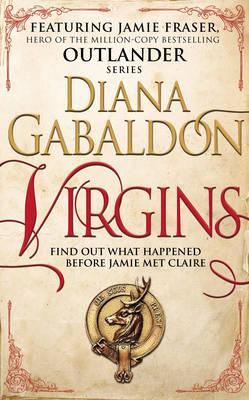
Seven Stones to Stand or Fall by Diana Gabaldon

No, this is not a new novel in Diana Gabaldon’s Outlander series, but a collection of seven stories featuring characters from the series, written over a number of years. The first five have previously appeared in other collections, such as 2013’s A Trail of Fire, or as standalone novellas, but the final two are new ones. I hadn’t really intended to read this book; although I loved the earlier Outlander novels, I’ve been less impressed with the more recent ones, mainly because of the increasing focus on Lord John Grey’s family, and as most of these stories seemed to involve the Lord John characters I wasn’t in any hurry to read them. When I found a copy in the library a few weeks before Christmas, though, I thought I would give it a try in the hope that at least one or two of the stories would interest me – and some of them did, but maybe not the ones I would have expected!

The first story (they are all really novellas rather than ‘short stories’; I don’t think Diana Gabaldon is capable of writing anything that can truly be described as short!) is The Custom of the Army. Lord John gets into trouble at an electric eel party and when he is forced to fight a duel which goes disastrously wrong, he takes the opportunity to escape to Canada to serve as character witness for an officer who is facing a court martial. While he is there he finds himself caught up in the Battle of Quebec of 1759. Despite my general lack of enthusiasm for reading about Lord John, I found the setting interesting and thought this was a good start to the collection.

The next story, The Space Between, is entirely different from the first. It’s set around the time of An Echo in the Bone, I think, and our protagonists this time are Joan MacKimmie (whom readers of the Outlander series will remember as Laoghaire’s daughter) and Michael Murray (one of Jenny and Ian’s sons). Michael is escorting Joan to Paris where she is to become a nun, but on their arrival they become entangled with the sinister Paul Rakoczy, a character who has previously appeared in the series under a different name. I found this story quite enjoyable; it was good to meet some old friends again and also to learn more about the time travel aspects of the series. I think it’s funny that in the first Outlander novel (or Cross Stitch as it used to be called here in the UK), Claire’s ability to time travel seemed to be something unusual, yet by this point in the series almost everyone is doing it!

Now we’re back to Lord John again with Lord John and the Plague of Zombies. This time John is in Jamaica where he has been sent on army business to deal with a slave rebellion in the mountains. When the Governor of Jamaica is found murdered, it seems that a zombie could be responsible for his death…but Lord John knows nothing about zombies so needs to learn quickly. I have to admit, the title of this story was enough to put me off before I’d even read it! These particular ‘zombies’ do have a rational explanation, though, and are only one element of the story. In the overall timeline of the series, this story seems to take place shortly before the events of Voyager, when a certain Mrs Abernathy is still living at Rose Hall…

Next, we have A Leaf on the Wind of All Hallows, which answers the question of what happened to Roger’s father, Jerry MacKenzie, a Spitfire pilot whose plane went down over Northumberland during World War II. This fascinating story, another which involves time travel, gives a different perspective on an episode from Written in My Own Heart’s Blood which we have already read from Roger’s point of view. I enjoyed this one as Roger is one of my favourite Outlander characters and I found it interesting to learn more about his parents.

You may be starting to wonder whether Claire and Jamie appear in any of these stories; sadly, we don’t see anything of Claire (although she is mentioned once or twice), but the next novella, Virgins, does feature a young Jamie Fraser. A straightforward prequel to Outlander, it is set during the period following Jamie’s flogging by Black Jack Randall when he joins his friend Ian Murray in France. This was the biggest disappointment in the collection, for me. It didn’t even feel as though it was written by the same author as the other stories, at least at first, although I can’t put my finger on the reason why. It does pick up halfway through, with a subplot involving the marriage of a young Jewish girl, but I still didn’t like it. I think I’m so used now to an older Jamie that I found it disconcerting to meet him as a nineteen-year-old!

Next comes my favourite story in the book: A Fugitive Green. Set in 1744, this is the story of Lord John Grey’s brother Hal, the Duke of Pardloe, and his future wife, Minnie Rennie. The young Minnie makes a wonderful heroine and I loved this tale of spying, blackmail and family secrets which takes us from Paris to London and back again. Both Hal and Minnie have appeared in other Outlander and Lord John novels, but they are not characters who ever interested me before. This story was a real surprise!

Finally, there’s Besieged, a sort of follow-up to Plague of Zombies. Lord John is still in Jamaica, but has received news that his mother, the Dowager Duchess of Pardloe, is in Havana, which is about to become the centre of a battle between Britain and Spain. Heading for Cuba to rescue her, John finds that he is too late to avoid the British invasion and the siege which follows. Like the other Lord John stories, this is set at an interesting moment in history, but the story itself was not very memorable.

So, they are the seven stories – the ‘seven stones’ of the title. They do all stand alone and it’s not completely necessary to have read anything else by Gabaldon first. However, if you’re new to her work I don’t think this would be a good place to start. I would recommend this book more for existing fans of the Outlander books (in particular, the spin-off Lord John series) who are waiting for the next full-length novel to be published.

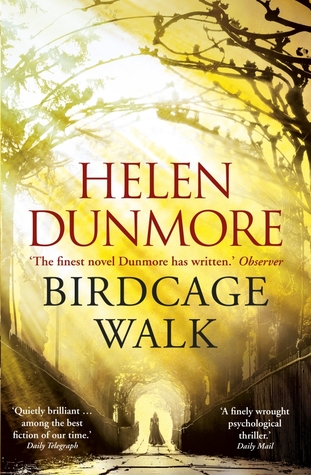
Birdcage Walk by Helen Dunmore

Helen Dunmore’s Exposure was one of my favourite books of 2016, so when I saw that she had a new one coming out last year, I knew I wanted to read it. The early reviews seemed to be very mixed, though, so I didn’t rush to get hold of a copy and it wasn’t until the days between Christmas and New Year that I finally got round to reading it.

I mustn’t have read those reviews very closely because I had the impression that this was a book about the French Revolution – but that’s not really true. The story is set in England and although events taking place across the Channel do have an effect on the lives of our characters, all of this is happening at a distance and is not the focus of the novel. The main theme of Birdcage Walk, according to Helen Dunmore herself and hinted at in the opening chapters, is the temporary nature of human life and the way so many of us leave behind very little evidence of our existence when we die. Dunmore states in her Afterword that she wanted to show that everyone has shaped the future in some way, by influencing those around them, even if they then disappear without trace. This is particularly poignant when you consider that while she was writing this novel she was already seriously ill with the cancer that would soon take her life.

But back to the plot of Birdcage Walk. The main part of the story is set in Bristol in 1792. Lizzie Fawkes’ husband, John Diner Tredevant (known simply as Diner) is a property developer who has started to build a terrace of houses with magnificent views of the Avon Gorge. With war against France on the horizon, however, this is a bad time to be trying to sell houses. Lizzie can see that her husband is troubled but is he just worried about the failure of his building project or is there something else on his mind?

Dunmore’s portrayal of Diner is excellent; he is a jealous, possessive and controlling husband who resents Lizzie having relationships with any other friends or family members apart from himself – but it is clear that something terrible has happened in his past, leaving him unhappy and disturbed. We find out very early in the novel what that something probably is, which takes away part of the suspense, but I think there is still plenty of tension in waiting to see when and how Lizzie will learn the truth.

The characterisation in general is very good; I found Lizzie’s mother, the writer Julia Fawkes and her husband Augustus particularly interesting to read about. Julia’s role in the story is brief, but she is one of the characters Dunmore uses to illustrate her point about a person’s influence living on after their words have faded away. Augustus, with his strong political views but lack of insight when it comes to the everyday things going on around him, also feels believable and real.

As I’ve said, the French Revolution is played out in the background with news reaching our characters mainly in the form of letters and newspaper reports. This means we don’t have the excitement of being thrown directly into the events of the Revolution, but it is still interesting to see things from the perspective of people who were less directly involved. Most of the novel, though, is concerned with more domestic issues: Lizzie’s personal relationship with Diner and her efforts to care for her baby brother Thomas despite Diner’s opposition.

I didn’t like Birdcage Walk quite as much as Exposure, but I still found it atmospheric and beautifully written. It’s so sad that there won’t be any more books from Helen Dunmore, but as I have only read three of them so far (The Lie is the other) I can still look forward to reading her others.

Six degrees of separation: The No.1 Ladies’ Detective Agency to The Time Machine

This is the first time I have participated in Six Degrees of Separation, hosted by Kate at Books Are My Favourite and Best. Every month we are given the title of a book as a starting point and the idea is to link it to six other books to form a chain. A book doesn’t have to be connected to all of the others on the list – only to the one next to it in the chain.

I’ve seen other bloggers taking part in this every month and it always looks fun, so I thought I would try it myself. I picked a good month for my first attempt, as the opening book in the chain is one that I read and enjoyed just last year: The No.1 Ladies’ Detective Agency by Alexander McCall Smith.

This is the first in a series of novels about Mma Precious Ramotswe, a woman who runs a detective agency in Botswana. Another book I remember enjoying which is also set in an African country is Cutting for Stone by Abraham Verghese.

Cutting for Stone tells the story of a surgeon’s twin sons who grow up in Addis Ababa, Ethiopia and are raised by two doctors from the local hospital. This brings to mind another book about a doctor: A Country Doctor’s Notebook by Mikhail Bulgakov.

This is a fascinating and surprisingly funny book about a young, newly qualified doctor working at a small hospital in a remote Russian village. It’s the second book I’ve read by Mikhail Bulgakov; I also loved The Master and Margarita.

I remember feeling intimidated at the thought of tackling The Master and Margarita…until I picked it up and started to read. What a wonderful, original, unusual novel it is!

My next link is to another book with the word Master in the title. Master of Shadows by Neil Oliver.

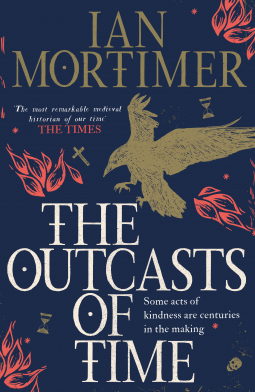
Set during the fall of Constantinople in 1453, Master of Shadows is the first novel by historian and TV presenter Neil Oliver. Another historian who has recently started to write fiction is Ian Mortimer, so the next book on my list is one that I read a few months ago – The Outcasts of Time.

The Outcasts of Time is the story of two brothers who travel forward in time from 1348 to 1942, stopping in each century to see how things have changed. I have read a lot of books which feature time travel, but the obvious choice to finish my chain is H.G. Wells’ classic The Time Machine.

I hope you’ve enjoyed my first Six Degrees of Separation! It has taken me from a detective agency in Botswana to a futuristic world, visiting Ethiopia, Russia and the Byzantine Empire along the way. I wonder where the chain will lead me next month, when we’ll be starting with Lincoln in the Bardo by George Saunders.

Have you read any of the books in my chain? What did you think of them?

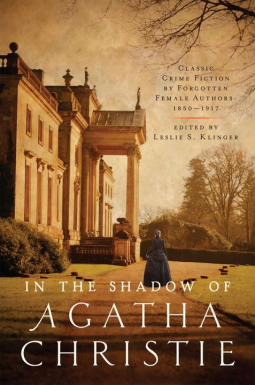
In the Shadow of Agatha Christie, edited by Leslie S. Klinger

Agatha Christie is an author most people have heard of, whether or not they’ve ever read any of her books. Ask someone to think of a female crime writer and she is probably the first name that will come to mind. Christie’s first novel, though, wasn’t published until 1920 – and she was by no means the first woman to write in the crime genre. This new collection of short stories, edited by Leslie S. Klinger, features some of the lesser known women crime writers who came before Agatha and could even have inspired her work.

The book is subtitled Classic Crime Fiction by Forgotten Female Writers: 1850-1917 and although I wouldn’t personally describe all of these authors as ‘forgotten’, there were certainly quite a few whose names were new to me. Of the sixteen stories included in the book, I had already read one of them – A Jury of Her Peers by Susan Glaspell (1917), which shows the different ways in which men and women evaluate the same situation and the different clues they pick up on – but it’s such a good story I was happy to read it again. Other names who may be familiar to many readers are Victorian novelist Elizabeth Gaskell and Scarlet Pimpernel author Baroness Orczy, although the stories included here – The Squire’s Story (1853) and The Regent’s Park Murder (1901) – didn’t particularly stand out to me.

As a fan of Victorian sensation novels, I was intrigued to come across stories by Ellen Wood and Mary Elizabeth Braddon, two authors whose work I’ve loved in the past. The Braddon one, The Winning Sequence (1896), is more of a ghost story than a mystery and I found it disappointingly weak, but Wood’s story, Mrs. Todhetley’s Earrings (1873), was very enjoyable. It is narrated by her young hero, Johnny Ludlow, who is apparently the subject of a whole series of short story collections, although I had never heard of him until now.

Others that I think deserve a special mention include The Statement of Jared Johnson (1899) by Geraldine Bonner, a murder mystery with a twist I’ve come across several times in crime stories recently but which I always find clever, The Ghost of Fountain Lane (1893) by C.L. Pirkis, in which a link emerges between two seemingly unconnected mysteries, and The Case of the Registered Letter by the Austrian author Augusta Groner. There’s also A Point in Morals (1899) by Ellen Glasgow, an unusual story which considers whether murder is always morally wrong, The Blood-Red Cross (1902) by L.T. Meade which features a sinister villain called Madame Sara, and Anna Katherine Green’s Missing: Page Thirteen (1915), an eerie tale of a house with a secret room.

The other authors represented in the book, whose work made less impression on me, are Catherine Crow, Mary Fortune, Harriet Prescott Spofford, Elizabeth Corbett and Carolyn Wells – whose The Adventure of the Clothes-Line (1915) is a parody of a Sherlock Holmes story which I think a lot of readers would enjoy even though I didn’t.

There’s nothing here, in my opinion, which resembles an Agatha Christie story in any way, so the title of this book could be slightly misleading if someone picked it up expecting a selection of Christie-style mysteries. I didn’t find any new authors here that I liked enough to want to explore further, but it was still interesting to read this collection and see how crime fiction has developed over the years.

Thanks to Pegasus Books for providing a copy of this book for review via NetGalley.

Top Ten Tuesday: New-to-me authors read in 2017

This week’s Top Ten Tuesday topic (hosted by The Broke and the Bookish) is:

Top ten new-to-me authors I read in 2017

I don’t take part in Top Ten Tuesday every week, but I thought this one would give me an opportunity to take another look back at 2017’s reading as well as looking forward to the future. The ten authors I’ve listed below were all new to me last year and I am now interested in reading more books by all ten of them, in 2018 if possible.

~

1. Rebecca Mascull

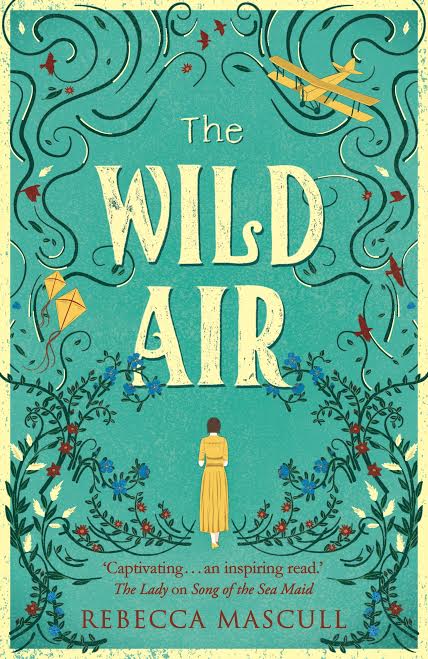
Rebecca Mascull was the first author to come to mind when I saw the topic for this week. Until 2017 I had never read any of her books, but The Wild Air and Song of the Sea Maid both impressed me enough to win a place on my books of the year list. I still have her first novel, The Visitors, to look forward to.

2. Robert Graves

I read I, Claudius in 2017 and enjoyed it more than I’d expected to (Ancient Rome is not one of my favourite periods to read about). The sequel, Claudius the God, is on my Classics Club list and I will try to get round to it this year.

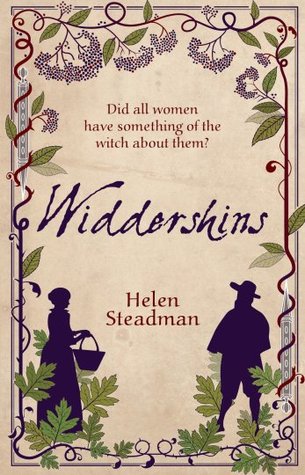
3. Helen Steadman

I was pleased to discover Helen Steadman in 2017 because she writes about the North East of England, which is where I am from. Her debut novel, Widdershins, is about the Newcastle witch trials of 1650 and apparently a sequel is on its way.

4. Allan Massie

Death in Bordeaux is the first in a quartet of crime novels set in 1940s France. I liked it enough to want to read the others, which is fortunate as I need to read the fourth one for my Reading the Walter Scott Prize project.

5. Elizabeth Jane Howard

Having heard so much about Elizabeth Jane Howard’s Cazalet Chronicles, 2017 was the year I got round to starting the series myself. I enjoyed The Light Years and am looking forward to continuing with the second book, Marking Time.

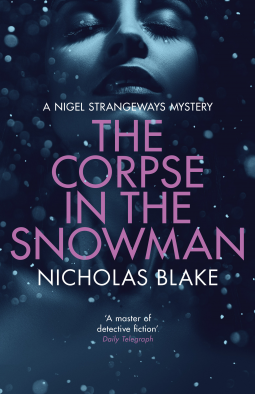
6. Nicholas Blake

Nicholas Blake (Cecil Day-Lewis) is one of several classic crime authors I read for the first time in 2017 (Michael Innes is another). So far The Corpse in the Snowman is the only book of his that I’ve read, but I have another of his Nigel Strangeways mysteries lined up to read soon.

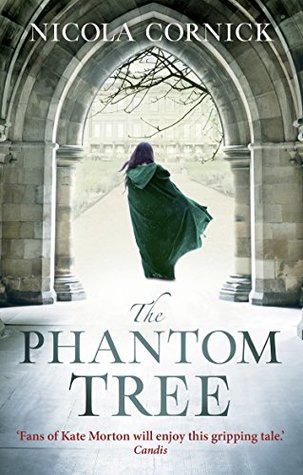
7. Nicola Cornick

I enjoyed reading two Nicola Cornick books in 2017 – The Phantom Tree and House of Shadows. Both are historical fiction involving dual time periods; her earlier novels don’t really appeal to me but I’m hoping she will write more books like these two!

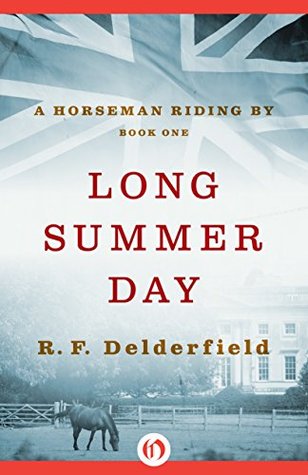
8. RF Delderfield

Delderfield’s Long Summer Day was another of my favourite books of 2017. I’m planning to read the other books in his A Horseman Riding By trilogy this year, before going on to explore everything else he has written.

9. Antonia Senior

Antonia Senior’s The Winter Isles is a fascinating story set in 12th century Scotland. Although I didn’t quite manage to love it, it has made me curious about her other novels.

10. Gerald Durrell

I don’t read a lot of non-fiction, but I did enjoy Gerald Durrell’s Three Singles to Adventure and Golden Bats and Pink Pigeons in 2017. Maybe 2018 will be the year I finally read his Corfu trilogy!

~

Have you read anything by any of these authors? Which new-to-you authors did you discover in 2017?

My Commonplace Book: December 2017

A selection of words and pictures to represent December’s reading

My Commonplace Book

commonplace book
Definition:
noun
a notebook in which quotations, poems, remarks, etc, that catch the owner’s attention are entered

Collins English Dictionary

~

“Just so. A great warrior may be a poor father or a worse husband. A respectable cleric might hide a youthful crime in a lifetime of good deeds. Most often a man is remembered for the evils he commits. But there is no man who ever lived that did nothing worthwhile through the course of his life.”

Voice of the Falconer by David Blixt (2010)

~

New Mexico

The nun took Father Latour to a window that jutted out and looked up the narrow street to where the wall turned at an angle, cutting off further view. “Look,” she said, “after the Mother has read us one of those letters from her brother, I come and stand in this alcove and look up our little street with its one lamp, and just beyond the turn there, is New Mexico; all that he has written us of those red deserts and blue mountains, the great plains and the herds of bison, and the canyons more profound than our deepest mountain gorges. I can feel that I am there, my heart beats faster, and it seems but a moment until the retiring-bell cuts short my dreams.”

Death Comes for the Archbishop by Willa Cather (1927)

~

“But your husband-” He closed his eyes for a moment and said, “The bravest are surely those who have the clearest vision of what is before them, glory and danger alike, and yet notwithstanding, go out to meet it. He did that, every day, for a long time.”

“You sent him, though,” she said, her voice as low as his. “You did.”

His smile was bleak.

“I’ve done such things every day…for a long time.”

Seven Stones to Stand or Fall by Diana Gabaldon (2017)

~

Medieval Wales

Sybil’s Breton maid, Amelina, who is of a poetical turn of mind it seems, on seeing the princess, said, “She is very beautiful. She looks like Wales – her eyes like the brilliant blue wind-driven skies and the colour of her hair reminding me of the black rugged mountains.” But Lady Sybil clicked her tongue and told her this was nonsense. “She looks like a poor orphaned child to me,” she said.

Conquest: Daughter of the Last King by Tracey Warr (2016)

~

“A mean between two extremes is apt to be satisfactory in results. If we don’t produce a Marcus Aurelius or a Seneca, neither do we produce a Nero or a Phocas. We may have lost patriotism, but we have gained cosmopolitanism, which is better. If we have lost chivalry, we have acquired decency; and if we have ceased to be picturesque, we have become cleanly, which is considerably more to be desired.”

A Point in Morals by Ellen Glasgow (1899) – taken from In the Shadow of Agatha Christie edited by Leslie S Klinger (2018)

~

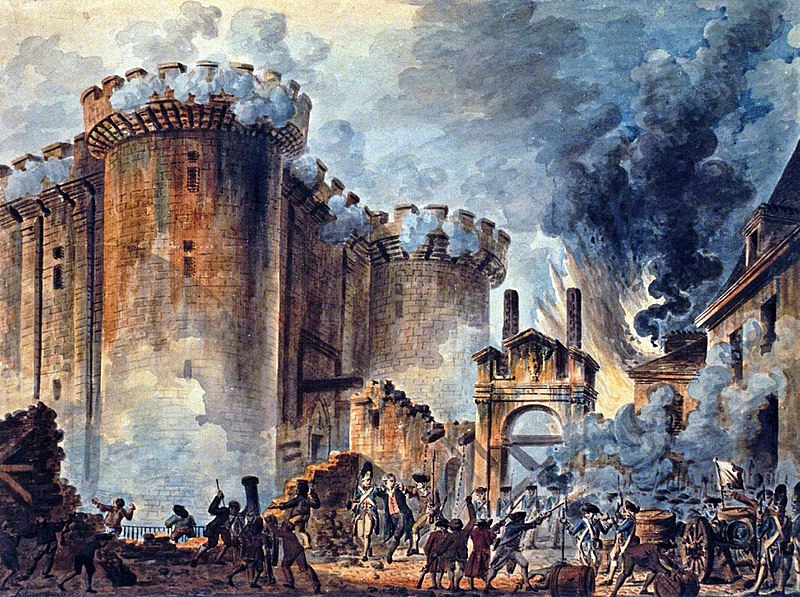
The French Revolution

Now it seemed that in France, everything my mother and her friends had long talked about was coming true. Human beings really were capable of uniting to defeat tyranny and injustice. A new order could be created, based on the rights of man. And woman too. I was the one who had been mistaken. Everything they had dreamed of and written about was coming to pass, not two hundred miles from London.

Birdcage Walk by Helen Dunmore (2017)

~

Favourite books read in December: Voice of the Falconer and Death Comes for the Archbishop

~

Happy New Year – and happy reading in 2018!