Temporary absence…

Just a quick note to let you know that I’ll be away for a few days. I’m going to Dublin tomorrow (the first time I’ll have been to Ireland) and will be back on Friday.

I won’t be able to respond to comments or emails, but I’m scheduling one or two posts for while I’m away. See you at the weekend!

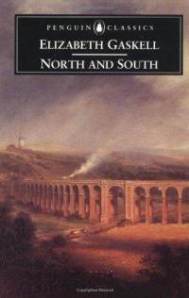
North and South by Elizabeth Gaskell

North and South is the story of Margaret Hale, a young woman who lives with her parents at their parsonage in the idyllic village of Helstone in the south of England. When Margaret’s father decides to resign as parson and takes a new job as a tutor in the northern manufacturing town of Milton, the Hale family initially find it difficult to adapt to their new environment. It is not until Margaret meets some of the inhabitants of Milton that the town begins to feel like home. She forms a close friendship with the Higgins family – the invalid Bessy, her younger sister Mary and their father, Nicholas, who works at the cotton mill. But when the Hales also get to know Mr Thornton, a wealthy mill owner, Margaret finds herself caught in a conflict between the poor mill workers and their rich masters.

There’s also a romantic element to the novel: Mr Thornton falls in love with Margaret who unfortunately is prejudiced against what she calls ‘shoppy people’. She seems to make up her mind to dislike him before she even gets to know him because he’s a tradesman who has earned his money rather than inheriting it and is not her idea of a real gentleman. And to make things worse, Mr Thornton’s mother thinks Margaret is haughty and wants to stop her son from becoming involved with her.

Although there were also a lot of things to like about Margaret, her attitude towards Mr Thornton prevented me from really warming to her until the second half of the book when after meeting different types of people and being exposed to important social issues she begins to reassess some of her views and starts to grow as a person. By the end of the book I didn’t find her the annoying character I did at the beginning. It was interesting to see how both Mr Thornton and Nicholas Higgins also changed due to Margaret’s influence. There’s a lot of character development in this book, which was one of the things I loved about it.

The book takes place during the industrial revolution, an important and interesting period of history. It was a time of progress, allowing the factory owners to develop great wealth and the country’s economy to grow. However, the factory employees were working under appalling conditions, with absolutely no regard for their health and safety. Bessy Higgins is one example of this: she is only nineteen years old and has already developed a lung disease which she blames on inhaling ‘fluff’ from the cotton in the mill where she used to work.

Most of this industry was concentrated in the north of the country, in towns and cities such as the fictional Milton. Gaskell herself was born in London but spent most of her childhood in Cheshire and then settled in Manchester after her marriage (the town of Milton is thought to be based on Manchester), so she would have had first-hand knowledge of the northern way of life and how it may have differed from life in the south. Even today many people still have certain views and misconceptions about the differences between northern and southern England and even more so at the time when Gaskell was writing this novel, so I did appreciate the way she showed both the positive and the negative things about both regions.

North and South hasn’t become one of my favourite classics, but I did still enjoy it, although I was slightly disappointed by the way the book ended – not because I was unhappy with the outcome but because it seemed too abrupt. After reading The Moorland Cottage in February, I’ve now read the required two books to complete the Gaskell Reading Challenge, but as I’ve enjoyed both of my choices I’m sure I’ll be reading more of Gaskell’s work in the future!

May Reading Summary

Here we are at the end of another month! I didn’t read as many books as I have in previous months, but where books are concerned, quality is more important than quantity and I loved almost everything I read in May.

Favourite books read in May

Choosing my favourites was difficult this month because, as I said, I enjoyed all nine books that I read. However, there are two that stand out from the rest: the first was Gillespie and I by Jane Harris (I posted my review yesterday) and the other was The Master and Margarita by Mikhail Bulgakov, which I hope to be posting about soon.

Other books read in May

Touch by Alexi Zentner
The Mystery of Edwin Drood by Charles Dickens
Ghost Light by Joseph O’Connor
Death in the Clouds by Agatha Christie
The Report by Jessica Francis Kane
A Word Child by Iris Murdoch
Orlando by Virginia Woolf

I’ve also been reading Dr Thorne by Anthony Trollope, a few chapters per week, and although I’m only halfway through I’m enjoying it as much as the other Trollope books I’ve read.

How was your month? Did you read any good books in May?

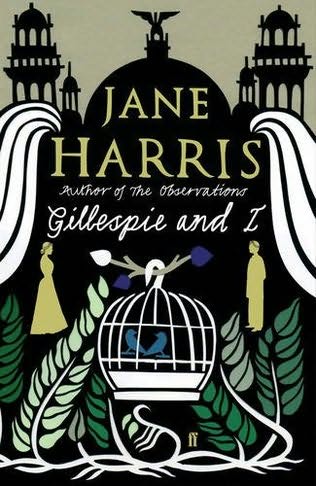
Gillespie and I by Jane Harris

I was lucky enough to win a copy of Gillespie and I through LibraryThing Early Reviewers but even if I had paid the full price for this book I would have considered it money well spent. I thought it was brilliant. It seems I’m one of the few people not to have read the first book by Jane Harris, The Observations, and I’m not sure how I managed to miss that one as it sounds like something I would love. I’ll certainly go back and read it now that Jane Harris has been brought to my attention.

But this post is about Gillespie and I. Or, I should say, Gillespie and Harriet Baxter. We first meet Harriet in 1933 as an elderly woman looking back on her life and promising to share with us her recollections of Ned Gillespie, a talented artist who was never able to fulfil his true potential. Harriet then proceeds to tell us the story of her acquaintance with the Gillespie family, whom she met in the 1880s during a trip to Scotland to visit the International Exhibition in Glasgow. She quickly becomes a friend of Ned, his wife Annie, and the other members of the family – but then disaster strikes and the lives of Harriet and the Gillespies are thrown into turmoil.

After a leisurely start, the story soon picked up pace and became very gripping. But as well as the compelling plot there were many other things that made this book such an enjoyable read. I connected immediately with Harriet’s sharp, witty and observant narrative voice. The other characters were vibrantly drawn, though the only one who never really came to life for me was Ned himself, which was the only disappointment in an otherwise excellent book. I also loved the setting. I’ve read many, many books set in Victorian London and it made a refreshing change to read one set in Victorian Glasgow instead.

Halfway through the story something happened that made me start to question everything I’d read up to that point – and even after I’d finished the book I still had questions. I was very impressed by how cleverly Jane Harris managed to control what I believed and didn’t believe at various points in the novel. I can’t really explain what I mean without spoiling the story but suffice to say there are some stunning plot twists that leave you wondering whether things are really as they seem – and this doesn’t happen just once, but several times throughout the second half of the book. At times it even felt like a Victorian sensation novel to me, which probably explains why I enjoyed it so much! Gillespie and I has been one of my favourite reads so far this year.

A Word Child by Iris Murdoch

Iris Murdoch is not a writer I’m very familiar with. A few years ago I read her Booker prize-winning novel, The Sea, The Sea, but have never investigated her other books. And so I’d like to thank Open Road Media for making A Word Child available through Netgalley and re-introducing me to Murdoch’s work.

The ‘word child’ of the title is Hilary Burde, our narrator.  Following an unhappy childhood Hilary’s future prospects looked bleak, until he discovered a passion for words and languages and embarked on a promising academic career at Oxford. However, when we first meet Hilary at the beginning of the novel, he is working as a low grade civil servant in London. We don’t know at first why he left Oxford, but we are given hints that he had been involved in some kind of scandal there – and when Gunnar Jopling, a figure from his past, comes to work in Hilary’s office building, everything starts to become clear.

The book has an interesting structure, with each chapter headed by a day of the week. Hilary has tried to establish order and routine in his life by having certain things that he always does on certain days of the week (dinner with friends on Thursday, visiting his sister on Saturdays, for example) and the novel follows him as this monotonous cycle of events is gradually thrown into disarray. Murdoch’s writing never becomes over descriptive or flowery, yet she manages to convey vivid images of the stations on the London Underground, the yellow fog that hangs over the Thames, the Peter Pan statue in Kensington Gardens. She also gives an amusingly accurate portrayal of daily office life, where Hilary is relentlessly teased by two of his colleagues, and there are other moments of humour involving Hilary’s lodger, Christopher.

Hilary himself is not an easy character to like. He controls every aspect of his sister Crystal’s life and the way he behaves towards his poor girlfriend, Thomasina, is even worse. And yet I could still empathise with him at times because his dysfunctional relationships and desperate attempts to stay in control are signs of the unhappiness and inner turmoil from which he’s suffering. I really wanted Hilary and the other main characters to have a happy ending and although I’m obviously not going to tell you whether they did or not, I did think the ending was stunning: dramatic, surprising and very satisfying.

I enjoyed this book very much and loved Murdoch’s insights into topics such as redemption, forgiveness and moving on after a tragedy. It was such a surprise because I wasn’t expecting something so accessible and readable. I’d recommend A Word Child to anyone who may be wondering where to begin with Iris Murdoch.

Room by Emma Donoghue

It’s been more than a month since I read this book but it has taken me until now to find the inspiration to post about it. That’s not to say that I didn’t enjoy the book, but as I’ve said before I find it difficult to write about a book that has attracted so much attention and already been raved about by such a lot of people.

I’m sure most of you will already have seen so many reviews of Room that you won’t need a synopsis, but for those of you who do, the plot can be summarised very quickly. The story is narrated by Jack, a five-year-old boy who has spent his whole life living with his mother in a converted shed measuring eleven foot square. His mother had been kidnapped seven years ago and Jack was born in captivity. He has no idea that a world exists outside Room and apart from Ma and Old Nick, the man who is keeping them captive, he has never seen another human being.

The story could have been very harrowing, but I was surprised to find it was less upsetting than I thought. There are a lot of aspects of the plot that are very disturbing and uncomfortable to read about but there are also some positive things that come out of the story: the strong mother/son bond, for example, and the way Jack’s mother uses her imagination to keep him busy and entertained. Being told from a five-year-old’s point of view, there’s nothing very graphic but there are always dark undercurrents beneath the surface. The trauma of Ma’s kidnapping and the abuse she suffered at the hands of Old Nick are only lightly touched on; we know they happened but aren’t given many details because those are things Jack is too young to really understand.

When I first started reading I found Jack’s narration very irritating and I had an awful feeling I was going to have to abandon the book after a few pages. Luckily though, it seemed that I just needed to get used to it. Once I got further into the story I didn’t have a problem with Jack’s voice and even stopped noticing his unusual language after a while. I can see why Donoghue chose to use a child narrator to show the situation through the innocent eyes of a child born into such an unnatural environment. Jack doesn’t know that a different way of life is possible so is quite content with how things are and when Ma finally decides to ‘unlie’ and tell him about Outside, he finds it almost impossible to believe that such a place really exists. His mother was of course fully aware of what had happened and it would have been interesting to have read the same story from her perspective as well, but of course it would then have been a completely different and probably much more traumatic book.

I’m not sure this is a book I would want to read again, but it did keep me completely gripped and I’m glad I’ve finally read it, as it hadn’t really appealed to me when everyone seemed to be reading it last year.

Have you read Room? Do you think I would like any of Emma Donoghue’s other books?

Samuel Pepys: The Unequalled Self by Claire Tomalin

As you may have noticed, I don’t often read non-fiction (a big clue can be found in my blog name) but this is something I’d like to change. I have heard a lot of praise for Claire Tomalin’s biographies, so I had high hopes for this one.

Samuel Pepys: The Unequalled Self is a long and comprehensive biography of an important historical figure, most famous for the diaries he kept during the 17th century. I haven’t actually read the diaries of Samuel Pepys yet but would certainly like to read them at some point in the future. I wasn’t sure whether not having read the diaries would cause problems with my understanding of the biography, but luckily it didn’t seem to matter – in fact, it might actually be best to read the biography first as it helps to put the diaries in context.

The first few chapters deal with Pepys’ childhood and early life (pre-diary) and understandably we don’t have a lot of information regarding this period of his life – we can only speculate about what Pepys may or may not have done. I found these chapters quite boring in comparison to the rest of the book, although I did enjoy learning about a typical day in a 17th century school – and I was fascinated by the description of the operation Pepys had to remove a stone from his bladder. I’ve always had an interest in the history of medicine and it never ceases to amaze me how anybody ever survived at all!

Tomalin explains that what makes Pepys’ diary so interesting and noteworthy is that he records a mixture of both public events and personal experiences. Pepys lived through a fascinating and eventful period of English history and his famous diary covers such events as the Restoration of Charles II, the plague of 1665 and the Great Fire of London in 1666. I was slightly disappointed that more attention wasn’t given to the plague as it’s a topic I find fascinating to read about (I hope that doesn’t sound too morbid!) but as Tomalin explains it was something that didn’t affect Pepys personally and so he doesn’t spend a lot of time talking about it.

The most interesting parts of the book for me were the descriptions of daily life. While I confess to struggling to get through some of the chapters about Pepys’ political and business activities, I found the more personal sections completely gripping. I thought Tomalin stayed very objective throughout the biography, drawing attention to both the good and the bad aspects of Pepys’ character (and to be honest, he didn’t seem to be the most pleasant of people). But I can tell that even though Tomalin doesn’t shy away from discussing his negative points, she has a lot of enthusiasm and liking for her subject. She also fleshes out the characters of other important people in Pepys’ life including his wife Elizabeth, with whom he had a very complex and volatile relationship. He could be very cruel to her and both physically and verbally abusive, but they did appear to have some genuine affection for each other and Tomalin describes some of the happy times they had together as well as the bad.

For someone like myself who doesn’t often read this type of literary biography, this was quite a challenging book but worth the effort. If I had tried to read this book straight through from beginning to end I probably wouldn’t have managed to finish it, but reading it over the course of a month, a few chapters at a time between reading my usual fiction books, worked perfectly for me.

Have you read any of Claire Tomalin’s biographies? Which ones would you recommend?