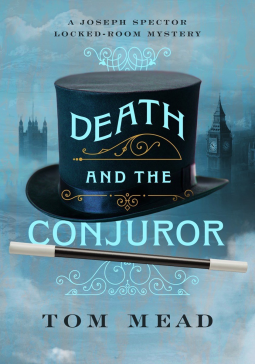
Death and the Conjuror by Tom Mead

Death and the Conjuror is a homage to the great locked room mysteries of the Golden Age and a clever and entertaining novel in its own right. I’m hoping it’s the first in a series as I would love to see more books like this from Tom Mead.

The novel is set in London in the 1930s where the renowned psychiatrist Anselm Rees has been found dead in his study. The door is locked, there’s no sign of a murder weapon and there’s no way for the killer to have escaped without being seen. Inspector Flint of Scotland Yard is baffled by this seemingly impossible murder and calls on retired magician Joseph Spector in the hope that he can use his knowledge of illusions and deceptions to help solve the mystery.

As the detective and the magician begin their investigations, they uncover another intriguing crime – an equally impossible theft – which seems to have links to Dr Rees’ death. Could one of the psychiatrist’s patients be responsible for one or both of these crimes? And can Flint and Spector catch the culprit before another murder takes place?

As with any good mystery novel, there are plenty of suspects, an assortment of clues and lots of red herrings! Suspicion falls not only on the doctor’s own household – including his daughter and her fiancé – but also on three of his patients, celebrities who are referred to as Patients A, B and C, to protect their identities. Each patient has been seeing Dr Rees for help with a specific problem, which we learn more about as the story unfolds. The psychiatric element of the plot is fascinating and reminded me very much of Helen McCloy’s Dr Basil Willing mysteries. It came as no surprise to me, then, to learn that McCloy is one of many classic crime novelists Tom Mead has named as an influence on his writing – along with John Dickson Carr, Ellery Queen, Nicholas Blake and others.

I loved the idea of a magician working alongside the police; Spector has lots of specialist knowledge when it comes to the sort of tricks a murderer or a thief might use to create confusion and cover their tracks. As a locked room mystery it was very satisfying and although I didn’t manage to solve it myself, I enjoyed following the progress of the investigations and was happy for Spector to explain it all for me at the end. As a tribute to the Golden Age mystery I thought it was equally successful. I could almost have believed I really was reading a book from the 1930s, as the author seemed to have made an effort to avoid inappropriately modern language and modern sensibilities. The characters in the book even discuss and reference some of the detective novels of the time, but in such a way that the plots of those books aren’t spoiled for those of us who haven’t read them yet.

This was a great read and I will be hoping for another mystery for Joseph Spector to solve soon.

Thanks to Penzler Publishers, Mysterious Press for providing a copy of this book for review via NetGalley.

This is book 34/50 read for the Historical Fiction Reading Challenge 2022.
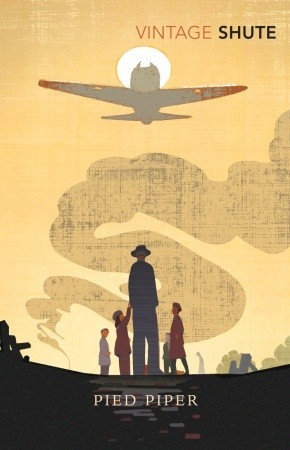
Pied Piper by Nevil Shute

Nevil Shute is an author I’ve been intending to try for a long time. His 1942 novel, Pied Piper, is on my Classics Club list and I decided to also put it on my 20 Books of Summer list to give me some extra motivation to pick it up and read it sooner rather than later! I have no idea whether this was the best Shute novel to begin with – A Town Like Alice and On the Beach are probably better known; however, it turned out to be a good choice for me.

The ‘pied piper’ of the title is John Sidney Howard, an elderly Englishman who goes to France in the spring of 1940 to spend some time fishing, relaxing and trying to come to terms with the death of his son whose plane came down in the Battle of the Heligoland Bight. It may seem a strange time to be taking a holiday in Europe, but Howard believes the situation in France is stable and that he won’t be in any danger. However, when the Nazis begin to advance much more quickly than he expected, Howard decides to return home immediately. His departure is delayed when an English couple staying in the same hotel ask him to take their two young children with him to the safety of England, but soon Howard, accompanied by little Sheila and Ronnie, is boarding the train to Paris for the first stage of his journey.

Of course, things don’t go according to plan and Howard and the children find themselves facing one obstacle after another, including sickness, cancelled trains and German bombing raids. Along the way, Howard collects more lost or orphaned children and together they try to avoid the rapidly advancing German army and make their way to safety.

I usually enjoy novels with World War II settings, but I find it particularly interesting when they were actually written during the war itself. It makes a book feel very different when you know that at the time of writing, the author had no idea what would happen next or how the war would eventually end. It’s intriguing to think of how a 1942 reader may have viewed a book like this compared to those of us who are reading it today with the benefit of hindsight and a knowledge of history.

Another thing which makes Pied Piper different from a lot of other wartime novels is that Shute’s protagonist is so ordinary – not a soldier or a spy or a romantic young lover, but a quiet, unassuming old man who becomes a hero unintentionally through a mixture of circumstance and his own basic decency and humanity. The only link between Howard and the sinister ‘Pied Piper of Hamelin’ (apart from the obvious connection with children) comes when we see Howard making whistles from hazel twigs for his young companions to play with.

Although Howard and the children witness and experience some terrible things during their journey, they also encounter several people who offer kindness and generosity, so the novel shows us both the best and the worst of human nature. The book is structured using a framing narrative where Howard is relating the story of his adventures in France to a friend in a London club during an air raid several weeks into the future. This means we know almost from the first page that Howard has survived to tell the tale, yet there’s still plenty of suspense and I was genuinely afraid for him and for the children at various points throughout the novel!

Which of Nevil Shute’s books should I read next?

~

This is book 7/20 from my 20 Books of Summer list.

~

This is also book 29/50 from my second Classics Club list.

Six in Six: The 2022 Edition

We’re more than halfway through the year and Six in Six, hosted by Jo of The Book Jotter, is back again! I love taking part in this meme as I think it’s the perfect way to look back at our reading over the first six months of the year.

The idea of Six in Six is that we choose six categories (Jo has provided a list of suggestions or you can come up with new topics of your own if you prefer) and then fit six of the books or authors we’ve read this year into each category. It’s more difficult than it sounds, especially as I try not to use the same book in more than one category, but it’s always fun to do – and always a bit different as my reading tastes and patterns seem to change slightly each year.

Here is my 2022 Six in Six, with links to my reviews where available:

~

Six authors I’ve read for the first time this year:

1. Janice Hallett (The Twyford Code)
2. Sophie Irwin (A Lady’s Guide to Fortune-Hunting)
3. Mathew West (The House of Footsteps)
4. Catriona McPherson (In Place of Fear)
5. Lianne Dillsworth (Theatre of Marvels)
6. Rosie Andrews (The Leviathan)

~

The six oldest books I’ve read this year:

1. Moll Flanders by Daniel Defoe (1722)
2. The Lady of the Camellias by Alexandre Dumas, fils (1848)
3. Diary of a Pilgrimage by Jerome K. Jerome (1891)
4. The Murder on the Links by Agatha Christie (1923)
5. The Man in the Brown Suit by Agatha Christie (1924)
6. Scarweather by Anthony Rolls (1934)

~

Six books set in countries other than my own:

1. Fortune by Amanda Smyth (Trinidad)
2. Death in the Andamans by M.M. Kaye (Andaman Islands)
3. The Sunken Road by Ciarán McMenamin (Ireland)
4. Death on Gokumon Island by Seishi Yokomizo (Japan)
5. The Second Sight of Zachary Cloudesley by Sean Lusk (Turkey)
6. A Bad Business by Fyodor Dostoevsky (Russia)

~

Six books about real people:

1. The Queen’s Lady by Joanna Hickson (Joan Vaux)
2. The Colour Storm by Damian Dibben (Giorgio Barbarelli or ‘Giorgione’)
3. The Stone Rose by Carol McGrath (Isabella of France)
4. The Rebel Daughter by Miranda Malins (Bridget Cromwell)
5. Booth by Karen Joy Fowler (The Booth family)
6. The Diamond Eye by Kate Quinn (Lyudmila Pavlichenko)

~

Six books with living things in the title:

1. The White Hare by Jane Johnson
2. The Eagle of the Ninth by Rosemary Sutcliff
3. Go Tell the Bees That I am Gone by Diana Gabaldon
4. Silver on the Tree by Susan Cooper
5. The Reindeer Hunters by Lars Mytting
6. The Dance Tree by Kiran Millwood Hargrave

~

Six books read but not yet reviewed:

1. That Bonesetter Woman by Frances Quinn
2. Stone Blind by Natalie Haynes
3. All the Broken Places by John Boyne
4. The Night Ship by Jess Kidd
5. Death and the Conjuror by Tom Mead
6. The Magician by Colm Tóibín

~

Have you read any of these books or authors this year? Will you be taking part in Six in Six?

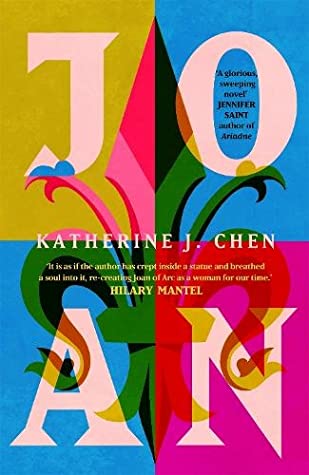
Joan by Katherine J. Chen

Against all odds, fate has brought us together. You, who are your kingdom’s future, and I who am no one.

It wasn’t until I started reading this impressive new novel by Katherine J. Chen that I realised how little I know about Joan of Arc; she’s someone I’ve always been aware of, obviously, and I knew a few basic facts but apart from where she has appeared in the background in other historical novels, I’ve never read anything where Joan is the main focus of the book.

After a brief description of the political situation in France in the early 15th century, the novel opens in Domrémy, the small French village where Joan was born. It’s 1422 and France is currently engaged in the Hundred Years’ War, a conflict with England over the succession to the French throne. In quiet Domrémy, Joan grows up far away from the fighting, but faces conflict of her own – with her father, Jacques d’Arc, a violent and abusive bully who has never got over his disappointment that Joan was born a girl and not a boy. Then, one day, the village is attacked and burned by the English, Joan’s sister is raped, and Joan is left swearing revenge on the men she now sees as her enemies: the future Henry VI of England, his regent the Duke of Bedford and Philip, Duke of Burgundy.

A lot of time is devoted to these early years of Joan’s life and I did wonder when we would leave the child Joan behind and meet the warrior Joan, leading her troops into battle – but I can see why it was necessary to cover Joan’s childhood in so much detail. Only by reading about her treatment at the hands of her father, the stories told to her by her beloved uncle, her anger at the fate of her sister and her desire for revenge can we understand what made Joan the strong, determined and inspirational young woman she became. And eventually, of course, we do see Joan meeting the Dauphin of France and riding off with his army to lift the siege of Orléans.

What we don’t see at any point in this novel are miracles, visions or any other religious phenomena of any sort. Katherine J. Chen explains in her author’s note that this was a deliberate decision; her portrayal of Joan is a personal one rather than a traditional one and is a ‘reimagining’ of her life. Removing the religious aspects from Joan’s story makes her feel human, flawed and real, but at the same time the 15th century was a period in which religion was an important part of most people’s daily lives and taking this away from the story of a woman who has been declared a saint seems a bit odd.

This is a beautifully written novel and although I wish authors would stop using the present tense, it does work quite well here, as it did in Annie Garthwaite’s Cecily (a book this one is being compared with – and I would definitely agree with that comparison). It was good to have the opportunity to learn a bit more about Joan of Arc, even if this is only one author’s interpretation and a largely fictional one; if anyone has read any other books about her, I would love to hear your recommendations.

Thanks to Hodder & Stoughton for providing a copy of this book for review via NetGalley.

This is book 33/50 read for the Historical Fiction Reading Challenge 2022.

Top Ten Tuesday: Upcoming releases

This week’s topic for Top Ten Tuesday, hosted by Jana of That Artsy Reader Girl, is “Most Anticipated Books Releasing In the Second Half of 2022”.

Here are ten books due to be published in the second half of this year that I’m looking forward to reading. Publication dates were correct for the UK as of today, but could change.

1. The Blood Flower by Alex Reeve (7 July) – The fourth book in the Leo Stanhope series, one of my current favourite historical mystery series.

2. The Bewitching by Jill Dawson (7 July) – A novel about the 16th-century case of the witches of Warboys. I have a copy of this one from NetGalley and have just started reading it.

3. The House of Fortune by Jessie Burton (7 July) – Has it really been eight years since The Miniaturist was released? I hope the sequel will be just as good!

4. The Twist of a Knife by Anthony Horowitz (18 August) – The next book in the Horowitz and Hawthorne mystery series. I’ve enjoyed all of the previous three (my review of the third one should be up in the next few weeks).

5. The Marriage Portrait by Maggie O’Farrell (30 August) – I didn’t love Hamnet as much as most people did, but I thought it was beautifully written and would like to try Maggie O’Farrell’s new book, set in Renaissance Italy.

6. Act of Oblivion by Robert Harris (1 September) – Robert Harris is one of my favourite authors, so a new book by him is always something to look forward to!

7. Ithaca by Claire North (6 September) – This Greek myth retelling about Penelope, Odysseus’ wife, is another book I have from NetGalley and will read nearer the publication date.

8. The Hidden Palace by Dinah Jefferies (15 September) – I’ve read all of Dinah Jefferies’ books and this one will be the second in her new World War II trilogy, which began last year with Daughters of War.

9. Shrines of Gaiety by Kate Atkinson (27 September) – Kate Atkinson is another author I always look forward to reading. I don’t know much about her new book but I’m sure it will be great.

10. Blue Water by Leonora Nattrass (20 October) – I enjoyed the debut novel by Leonora Nattrass, Black Drop, so I’m interested in reading this sequel.

~

Will you be reading any of these? Which new releases are you looking forward to in the second half of 2022?

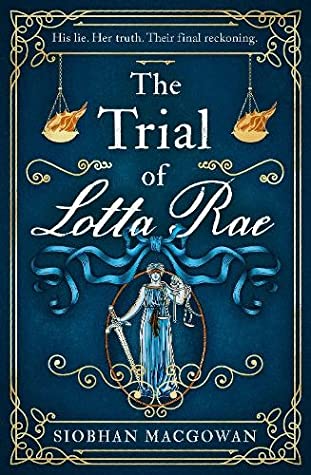
The Trial of Lotta Rae by Siobhan MacGowan

Sometimes the books that are the most difficult to read are also the most compelling. This was one of those books; although I was horrified by what I was reading, I was so engrossed in the story I didn’t want to put it down.

Charlotte Rae – known to her family and friends as Lotta – is an ordinary young woman working in the office of a London brewery in the early 1900s. After an argument with her boyfriend at the brewery Halloween party, Lotta wanders outside for some fresh air, where she is approached by an older man, Henry Allen Griffiths. Pretending that he has come to comfort her, Griffiths takes her arm, leads her down a secluded street and then rapes her. With the support of her parents, who report the crime to the police, Lotta decides to testify against her attacker in court. She has faith in the justice system and is sure her lawyer, William Linden, will do his best to defend her.

Once the trial is over and a verdict has been reached, Lotta tries to move on with her life, joining the Suffragette movement and working towards fairness and equality for women. Then she makes the unpleasant discovery that William Linden had betrayed her during the trial and her world falls apart again. Unable to forgive William for what he has done, Lotta begins to search for a way to take her revenge.

Although Lotta Rae, as far as I can tell, is a fictitious character, the description of her trial seemed so real I was convinced it must have been a true story! I have rarely felt so angry and frustrated when reading a novel as I did here; all the odds are stacked against Lotta from the beginning and some of the developments in court are disgusting and shocking to read about, even if not entirely surprising. During and after the trial things go from bad to worse for poor Lotta and her story is truly heartbreaking.

I found the second half of the book slightly weaker than the first, which is understandable after such a powerful opening. It does provide some fascinating insights into the suffragette movement, particularly as we see this partly through the involvement of William Linden’s son, Raff, one of a group of men actively campaigning for women’s suffrage. Lotta’s feelings for Raff are complicated because she loves him for the person he is, but hates the fact that he is the son of her corrupt lawyer, and this adds another interesting angle to the story.

There’s a supernatural element that feels a bit out of place and I wished the story could have ended in a different way, but otherwise I loved this book, despite it being so sad and infuriating! I wasn’t aware until after I’d finished the book that Siobhan MacGowan is the sister of Shane MacGowan from The Pogues, as well as a successful journalist and musician in her own right. This is her first novel and I hope she’ll be writing more.

This is book 32/50 read for the Historical Fiction Reading Challenge 2022.

Six Degrees of Separation: From Wintering to The Strangers in the House

It’s the first Saturday of the month which means it’s time for another Six Degrees of Separation, hosted by Kate of Books are my Favourite and Best. The idea is that Kate chooses a book to use as a starting point and then we have to link it to six other books of our choice to form a chain. A book doesn’t have to be connected to all of the others on the list – only to the one next to it in the chain.

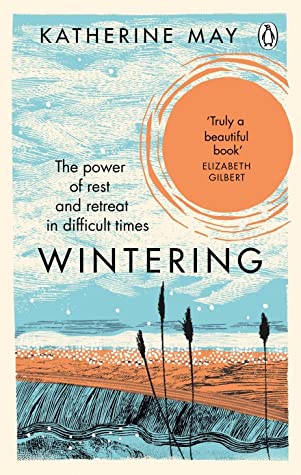
This month we’re starting with Wintering by Katherine May – yet another book that I haven’t read! This is what it’s about:

In Wintering, Katherine May recounts her own year-long journey through winter, sparked by a sudden illness in her family that plunged her into a time of uncertainty and seclusion. When life felt at is most frozen, she managed to find strength and inspiration from the incredible wintering experiences of others as well as from the remarkable transformations that nature makes to survive the cold.

This beautiful, perspective-shifting memoir teaches us to draw from the healing powers of the natural world and to embrace the winters of our own lives.

Although I haven’t read Wintering, it seems that Katherine May is using the idea of ‘winter’ as a metaphor for depression. In Mr Chartwell by Rebecca Hunt (1), depression is represented by a black dog. The ‘black dog’ is how Winston Churchill referred to his own periods of depression and in this very unusual novel, Rebecca Hunt brings the dog to life, giving him the name Mr Chartwell and describing his visits to Churchill’s home.

My next link is simply to another book with an author whose surname is Hunt: The Seas by Samantha Hunt (2), a novel about a young woman who lives in an isolated town by the sea and believes she is a mermaid. This is a beautifully written novel which combines mermaid mythology with the Iraq War, post traumatic stress disorder and the creation of a new dictionary, but it was a bit too strange for me and not a book I particularly enjoyed.

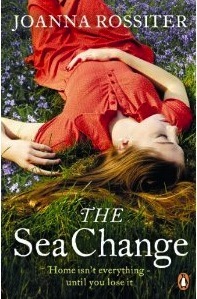
The sea also plays a part in the plot of The Sea Change by Joanna Rossiter (3). This is a novel set in two different countries and two different time periods: India in 1971 where a newly married couple are separated by a tsunami, and England during World War II, where the village of Imber is evacuated for use by the Army (and remains uninhabited to this day).

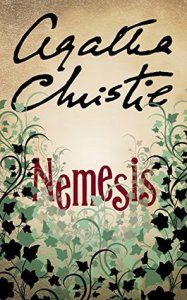
Some of the events of The Sea Change take place in 1971, so my next link is to a book that was published in 1971: Nemesis by Agatha Christie (4). This is a late Miss Marple novel in which Marple agrees to investigate a crime for an old friend – without having any idea of what the crime is or what she will need to do. During a coach tour of Britain’s historic houses and gardens, the details of her mission begin to unfold.

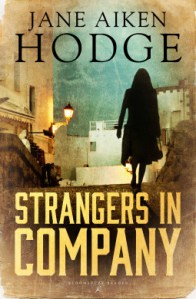
Strangers in Company by Jane Aiken Hodge (5) is also a mystery that takes place on a bus tour – this time it’s a tour of Greece’s famous archaeological sites. I’ve read quite a lot of Hodge’s novels now and this is the only contemporary one (the others I’ve read have been Gothic or Regency novels). It reminded me of Mary Stewart’s or M.M. Kaye’s romantic suspense novels, although I didn’t enjoy it quite as much as those.

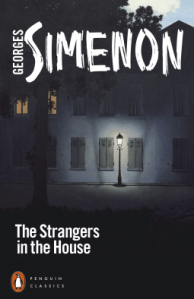
My final link takes us to another book with ‘Strangers’ in the title: The Strangers in the House by Georges Simenon (6). This is one of Simenon’s romans dur, or ‘hard novels’; I have read a few of them over the last year or two and enjoyed them (I’m actually reading another one at the moment which I’ll be reviewing soon). The Strangers in the House is about a lawyer who fell into a depression and became an alcoholic after his wife left him. When his daughter becomes implicated in a murder investigation, he finds that he has a chance to redeem himself and repair his damaged relationships.

The theme of depression and finding a way to heal links back to Wintering, so I’ve managed to bring the chain full circle this month!

In August we’ll be starting with the winner of the 2022 Women’s Prize, The Book of Form and Emptiness by Ruth Ozeki.