Six Degrees of Separation: From Passages to The Venice Train

It’s the first Saturday of the month, which means it’s time for another Six Degrees of Separation, hosted by Kate of Books are my Favourite and Best. The idea is that Kate chooses a book to use as a starting point and then we have to link it to six other books of our choice to form a chain. A book doesn’t have to be connected to all of the others on the list – only to the one next to it in the chain.

This month we’re starting with Passages by Gail Sheehy, a bestselling self-help title from the 1970s. I haven’t read this book and doubt I ever will, but here’s what it’s about:

At last, this is your story. You’ll recognize yourself, your friends, and your loves. You’ll see how to use each life crisis as an opportunity for creative change – to grow to your full potential. Gail Sheehy’s brilliant road map of adult life shows the inevitable personality and sexual changes we go through in our 20s, 30s, 40s, and beyond. The Trying 20s – The safety of home left behind, we begin trying on life’s uniforms and possible partners in search of the perfect fit. The Catch 30s – illusions shaken, it’s time to make, break, or deepen life commitments. The Forlorn 40s – Dangerous years when the dreams of youth demand reassessment, men and women switch characteristics, sexual panic is common, but the greatest opportunity for self-discovery awaits. The Refreshed (or Resigned) 50s – Best of life for those who let go old roles and find a renewal of purpose.

I couldn’t think of any way to link this book to anything else I’ve read so instead I’m linking to a book I haven’t read yet, but do have on my TBR – A Passage to India by EM Forster (1). So far I’ve only read Howards End and A Room With a View by Forster and although I enjoyed them both I still haven’t got round to trying any of his others. His 1924 novel set in India during the time of the British Raj will probably be the next one I read.

Damon Galgut’s Arctic Summer (2) is a fictional biography of Forster, concentrating on the time in his life when he was working on A Passage to India. I liked Galgut’s writing and the descriptions of India and Egypt, but otherwise found this book boring. I think my lack of familiarity with Forster’s life and work was partly to blame – all the more reason to read more of his books sooner rather than later – but I also felt that Galgut chose to focus too heavily on Forster’s sexuality and romantic relationships, which just didn’t interest me very much.

The Magician by Colm Tóibín (3) is another novel about the life of an author, in this case Thomas Mann. Again, my knowledge of Mann and his work is limited (I’ve only read Death in Venice and some of his short stories), but I’d seen a lot of praise for this book so tried it anyway. The book takes us through Mann’s childhood in Germany, his marriage, his experiences during World War II and his later years in Los Angeles and Switzerland. I found it interesting but didn’t connect with it on an emotional level and I prefer the way Tóibín writes about fictional characters.

The title of the Toibin novel makes me think of a book featuring a character who becomes a magician: Fifth Business by Robertson Davies (4). This is the first book in Davies’ Deptford Trilogy and although I enjoyed it, I still haven’t read the other two. Fifth Business is narrated by Dunstan Ramsay, who grows up in the small Canadian town of Deptford. Dunstan suffers from guilt after ducking to avoid a snowball with a stone in it which hits a pregnant woman instead and almost everything that happens to him from this point on can be traced back to that incident.

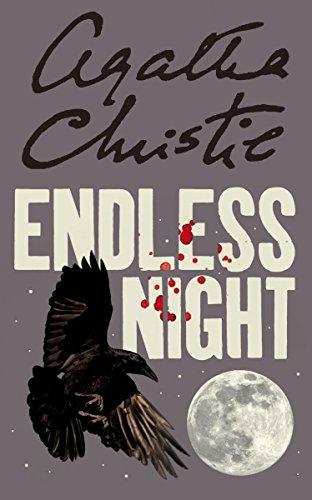
Another book in which snow plays a significant part in setting the plot in motion is Murder on the Orient Express by Agatha Christie (5). Hercule Poirot is a passenger on the Orient Express when the train comes to a stop in a heavy snowfall. When a man is found stabbed to death in his compartment, it seems clear that the murderer must be among the other passengers on the train. I already knew the solution before I started this book, but that didn’t stop me from enjoying it and I can see why it’s one of Christie’s most popular mysteries.

Christie has written several other novels set on trains, but I have chosen to end my chain with one by a different author: The Venice Train by Georges Simenon (6). This is one of Simenon’s standalone thrillers, which he described as romans durs or ‘hard novels’. On a train journey from Venice to Paris, Justin Calmar finds himself left with a briefcase belonging to another passenger and, unable to resist the temptation, breaks the locks and looks inside. The rest of this dark and suspenseful novel explores the psychological effects on Justin caused by the contents of the case.

And that’s my chain for March. My links included: the word ‘passage’, EM Forster, novels about authors, magicians, snow and trains. I like to look back and see whether I’ve made the chain come full circle, but the only connection I can find between the last and first book is the theme of journeys – The Venice Train deals with a physical journey and Passages with a journey through life.

In April we’ll be starting with Bruce Springsteen’s autobiography, Born to Run.

Top Ten Tuesday: Books with ‘Heart’ in the title

This week’s topic for Top Ten Tuesday (hosted by That Artsy Reader Girl) is a “Love/Valentine’s Day Freebie”.

To celebrate Valentine’s Day I have listed ten books I’ve read with the word ‘heart’ in the title. However, they are not all love stories – in fact, most of them aren’t!

~

1. Second Hand Heart by Catherine Ryan Hyde – A moving novel exploring the theory of cellular memory – the idea that a transplanted organ retains the memories and characteristics of its previous owner.

2. The Heart of Midlothian by Sir Walter Scott – This classic novel is set in Edinburgh during the 1736 Porteous Riots. It’s not my favourite of the few novels I’ve read by Scott, but I did like the heroine, Jeanie Deans, who walks all the way to London to try to save her sister’s life.

3. The Obscure Logic of the Heart by Priya Basil – The story of a Sikh man and a Muslim woman who fall in love as students, this is the only real ‘romance’ on my list, but it’s also so much more than that, touching on politics, poverty, gun crime and the work of the UN.

4. The Metal Heart by Caroline Lea – In this book set during World War II, Caroline Lea weaves the story of two twin sisters around the building of a chapel in the Orkney Islands by Italian prisoners of war. An interesting blend of fact and fiction.

5. Bleeding Heart Square by Andrew Taylor – This standalone historical mystery is set in 1930s London. It’s both an entertaining novel and a fascinating portrayal of the rise of Oswald Mosley and the British Union of Fascists.

6. The Heart’s Invisible Furies by John Boyne – The story of Ireland from the 1940s to the modern day as seen through the eyes of Cyril Avery, a gay man trying to come to terms with his sexuality, and written with John Boyne’s usual wit and humour.

7. With All My Heart by Margaret Campbell Barnes – A fictional account of the life of Catherine of Braganza, the Portuguese princess who marries King Charles II. First published in 1951, it does feel dated now but is interesting as Catherine is not a popular subject for historical fiction.

8. Written in My Own Heart’s Blood by Diana Gabaldon – The eighth book in Gabaldon’s Outlander series sees Claire and Jamie in America in the middle of the Revolutionary War. It’s not a favourite of mine – I loved the first four in the series, but have been gradually losing interest with each book after that.

9. The Oaken Heart by Margery Allingham – Better known for her Albert Campion detective novels, this is Allingham’s memoir of life in her small English village during the Second World War. Originally published in 1941, while the war was still taking place.

10. The Silvered Heart by Katherine Clements – Set in the 17th century, this novel is inspired by the real life highwaywoman, Katherine Ferrers, also known as ‘the Wicked Lady’. Not much is known about the historical woman, but Clements brings her story to life while also portraying England in the aftermath of Civil War.

~

Have you read any of these books? Which other books with ‘heart’ in the title can you think of?

Six Degrees of Separation: From Trust to Fire

It’s the first Saturday of the month, which means it’s time for another Six Degrees of Separation, hosted by Kate of Books are my Favourite and Best. The idea is that Kate chooses a book to use as a starting point and then we have to link it to six other books of our choice to form a chain. A book doesn’t have to be connected to all of the others on the list – only to the one next to it in the chain.
This month we’re starting with Trust by Hernan Diaz. Here’s what it’s about:
Trust by Hernan Diaz is a sweeping, unpredicatable novel about power, wealth and truth, told by four unique, interlocking voices and set against the backdrop of turbulent 1920s New York. Perfect for fans of Succession.

Can one person change the course of history?

A Wall Street tycoon takes a young woman as his wife. Together they rise to the top in an age of excess and speculation. But now a novelist is threatening to reveal the secrets behind their marriage, and this wealthy man’s story – of greed, love and betrayal – is about to slip from his grasp.

Composed of four competing versions of this deliciously deceptive tale, Trust brings us on a quest for truth while confronting the lies that often live buried in the human heart.

I haven’t read Trust and couldn’t find anything in the blurb to inspire my first link. I do know that it was longlisted for last year’s Booker Prize and I have read two of the other books on that list: Booth by Karen Joy Fowler, and the one I’m going to link to here, which is Small Things Like These by Claire Keegan (1). I read this beautifully written little book which touches on the scandal of Ireland’s Magdalene Laundries for last year’s Novellas in November.

My next book also has the word ‘small’ in the title. A Small Circus by Hans Fallada (2) was originally published in 1931 but I read it in a new edition translated from German to English by Michael Hofmann. It explores political tensions and corruption in a small town in Germany. I had previously read Fallada’s wonderful Alone in Berlin which I absolutely loved, so I was disappointed to find that I didn’t like this one much at all.

Another Fallada novel I did love is Little Man, What Now? (3). It tells the story of a young newly-married couple struggling to survive in the harsh economic climate of 1930s Germany. I found the two protagonists completely endearing and their story both funny and moving. This book is also now available in a Michael Hofmann translation, but I was very happy with the edition I read, with an earlier translation by Susan Bennett.

I think I have used novels with questions in the title in a previous Six Degrees post, but I’m going to do it again and link to Who Killed Dick Whittington? by E and MA Radford (4). Published by Dean Street Press, this is one of a series of detective novels written by a husband and wife team. This book, first published in 1947, involves a murder during a production of Dick Whittington where suspicion falls on the actor playing the Cat. A good choice if you like mysteries with theatrical settings.

Another book with a ‘cat’ that isn’t a real cat is The Ashes of London by Andrew Taylor (5). This is the first in a series of excellent historical mysteries set during and just after the Great Fire of London in 1666. The main characters are James Marwood and Cat (Catherine) Lovett. They are great books and I have just finished reading the newest one, The Shadows of London, which is published in the UK in March.

Fire by CC Humphreys (6) is also about the Great Fire of London. I was afraid at first that it might be too similar to the Andrew Taylor book, but I found the two to be quite different. This novel is the second in a series of entertaining historical thrillers following the adventures of reformed highwayman Captain Coke and ‘thief-taker’ Pitman. I also enjoyed the first book, Plague.

~

And that’s my chain for February! My links included: The Booker Prize longlist, the word ‘small’, Hans Fallada books, questions in titles, cats that aren’t real cats and the Great Fire of London. Have I brought the chain full circle? Well, both my first and last books have one-word titles, so I’m happy with that!

In March, we’ll be starting with Passages by Gail Sheehy, a self-help title from the 1970s.

Top Ten Tuesday: Authors I discovered in 2022

This week’s topic for Top Ten Tuesday (hosted by That Artsy Reader Girl) is “New-to-Me Authors I Discovered in 2022”. There were lots of authors I tried for the first time last year, but the ten I’m listing below are all authors I enjoyed and am hoping to read again.

~

1. Catriona McPhersonIn Place of Fear, a mystery set in 1940s Edinburgh, was my first book by Scottish author McPherson. I think I might try one of her Dandy Gilver mysteries next.

2. Nevil Shute – I finally got round to reading Pied Piper last year and enjoyed it. A Town Like Alice is probably going to be the next book I read by Shute.

3. Frances Quinn – Frances Quinn’s That Bonesetter Woman was one of my books of the year in 2022, so I’m looking forward to reading her previous novel, The Smallest Man.

4. F. Tennyson Jesse – I had wanted to read A Pin to See the Peepshow, Jesse’s retelling of the Thompson/Bywaters murder case, for years and was finally able to with this new British Library edition. Her other books seem to be more difficult to find.

5. Tom Mead – I loved Death and the Conjuror, a new mystery series set in the 1930s and featuring retired magician Joseph Spector. The next book, The Murder Wheel, is out in July!

6. Karen Joy Fowler – Another book I enjoyed last year was Booth, Karen Joy Fowler’s fictional biography of the theatrical Booth family. Her books had never appealed to me before, but I obviously need to look at them again,

7. Patricia Wentworth – I chose Fool Errant as my first Patricia Wentworth novel for last year’s 1929 Club. I didn’t love it but it was entertaining and I’m hoping to try another of her books soon, maybe one of her Miss Silver mysteries.

8. William Boyd – Another of my books of the year for 2022 was my first William Boyd novel, The Romantic. He has a very extensive backlist which I’m looking forward to exploring.

9. Jill Dawson – I enjoyed The Bewitching, based on the true story of the Witches of Warboys. Her previous books seem to cover a wide range of topics and settings – the problem will be deciding which one to try next!

10. ETA Hoffmann – I read The Life and Opinions of the Tomcat Murr for last year’s German Literature Month. It’s a very unusual and original novel and was a good introduction to his work!

~

Have you read any of these authors? Which new (or new-to-you) authors did you discover last year?

Six Degrees of Separation: From Beach Read to A Hero of Our Time

It’s the first Saturday of the month – and of the year – which means it’s time for another Six Degrees of Separation, hosted by Kate of Books are my Favourite and Best. The idea is that Kate chooses a book to use as a starting point and then we have to link it to six other books of our choice to form a chain. A book doesn’t have to be connected to all of the others on the list – only to the one next to it in the chain.

This month we’re starting with Beach Read by Emily Henry. It’s not a book I’ve read or plan to read, but here’s what it’s about:

Augustus Everett is an acclaimed author of literary fiction. January Andrews writes bestselling romance. When she pens a happily ever after, he kills off his entire cast.

They’re polar opposites.

In fact, the only thing they have in common is that for the next three months, they’re living in neighboring beach houses, broke, and bogged down with writer’s block.

Until, one hazy evening, one thing leads to another and they strike a deal designed to force them out of their creative ruts: Augustus will spend the summer writing something happy, and January will pen the next Great American Novel. She’ll take him on field trips worthy of any rom-com montage, and he’ll take her to interview surviving members of a backwoods death cult (obviously). Everyone will finish a book and no one will fall in love. Really.

~

My first link this month is to Evil Under the Sun by Agatha Christie (1), a novel set on a beach. Published in 1941, this is a Poirot mystery which takes place on a private island belonging to the Jolly Roger Hotel. When a woman is found murdered on the island, almost all of the other guests become suspects – but luckily Hercule Poirot is also staying at the hotel and is able to begin investigating immediately!

My copy of Evil Under the Sun has a postcard on the front cover, which reminds me of a book I read just a few months ago: Blue Postcards by Douglas Bruton (2). Set in Paris and weaving together three different narratives, this is a very unusual novella. It’s written in the form of five hundred numbered paragraphs – and each one contains the word ‘blue’! Very cleverly done, but not really a book for me.

Paris is always an interesting and atmospheric setting. One of my favourite books set in Paris during the time of the French Revolution is The Way to the Lantern by Audrey Erskine Lindop (3). Audrey Erskine Lindop wrote more than a dozen novels between 1954 and 1978 and sadly all of them are now out of print, despite being successful at the time and, in some cases, adapted into films. I keep hoping her books will be picked up again by a publisher, but no luck yet!

My next link is to another book with a title beginning with the words ‘the way’: The Way of All Flesh by Ambrose Parry (4). The name Ambrose Parry is actually a pseudonym for the husband and wife team Chris Brookmyre and Marisa Haetzman, who worked together on this historical mystery set in the medical world of 19th century Edinburgh. There are currently three books in the series; I’ve enjoyed all of them and am hoping for a fourth.

I’ve read lots of novels with a medical theme, but the first one that comes to mind is The Country Doctor’s Notebook by Mikhail Bulgakov (5), which I read in an English translation by Michael Glenny. This is a collection of semi-autobiographical short stories based on Bulgakov’s own experiences of working at a small village hospital between 1916 and 1918. I loved this book, although it’s completely different from The Master and Margarita, the only other Bulgakov novel I’ve read so far (and also loved).

Another author who shares a name with Mikhail Bulgakov is Mikhail Lermontov, who wrote A Hero of Our Time (6). This entertaining Russian classic was published in 1840 and consists of five stories which combine to produce a portrait of a young army officer, the flawed but fascinating Grigory Pechorin. I really enjoyed it and can recommend Nicolas Pasternak Slater’s translation.

~

And that’s my first chain of the year! My links included: beaches, postcards, Paris, ‘the way’, doctors and the name Mikhail.

In February we’ll be starting with Trust by Hernan Diaz.

Six Degrees of Separation: From The Snow Child to Murder Under the Christmas Tree

It’s the first Saturday of the month which means it’s time for another Six Degrees of Separation, hosted by Kate of Books are my Favourite and Best. The idea is that Kate chooses a book to use as a starting point and then we have to link it to six other books of our choice to form a chain. A book doesn’t have to be connected to all of the others on the list – only to the one next to it in the chain.

This month we’re starting with The Snow Child by Eowyn Ivey. I read this when it was first published and found it a beautiful, magical story – a perfect winter read.

A bewitching tale of heartbreak and hope set in 1920s Alaska, Eowyn Ivey’s THE SNOW CHILD was a top ten bestseller in hardback and paperback, and went on to be a Finalist for the Pulitzer Prize.

Alaska, the 1920s. Jack and Mabel have staked everything on a fresh start in a remote homestead, but the wilderness is a stark place, and Mabel is haunted by the baby she lost many years before. When a little girl appears mysteriously on their land, each is filled with wonder, but also foreboding: is she what she seems, and can they find room in their hearts for her?

Written with the clarity and vividness of the Russian fairy tale from which it takes its inspiration, The Snow Child is an instant classic.

~

Despite having read the first book, which often makes things easier, I struggled to get started this month. I tried linking The Snow Child to other books based on Russian fairy tales, to other books set in winter and to books with snow in the title, but in each case I only got two or three links along the chain before getting stuck. Eventually, I decided to start with a link to another book with ‘child’ in the title: A Word Child by Iris Murdoch (1). I really enjoyed this story of Hilary Burde, a London office worker who thinks he has arranged everything in his life just as he wants it, until a face from the past arrives and throws everything into disarray.

The Hilary in A Word Child is a man; a female character who shares the same name is Hilary Craven in Destination Unknown by Agatha Christie (2). This is one of Christie’s standalone thrillers and is set in Morocco, first in Casablanca and Fez and then in the High Atlas Mountains. Hilary finds herself agreeing to impersonate a dying woman so that she can go in search of the woman’s husband, a scientist who has disappeared without trace. I found this book entertaining but too far fetched and bizarre to be a favourite Christie.

The Country of Others by Leïla Slimani (3) is also set in Morocco. The book was written in French and is available in an English translation by Sam Taylor. It tells the story of Mathilde, a young woman from France who marries a Moroccan soldier at the end of WWII and goes to live with him in Meknes. The book describes how she struggles to settle into her new home and tries to find a place for herself in this ‘country of others’.

I seem to have read a lot of books translated into English from French – probably more than from any other language. One of these is The Princess of Cleves, or La Princesse de Clèves to give it its French title. This classic novel was first published anonymously (and translated anonymously too) in 1678, but was later believed to be the work of Madame de Lafayette. It’s set at the royal court of Henri II and is said to be one of the earliest psychological novels.

Thomas Hardy’s Under the Greenwood Tree (5) was also originally published anonymously. Set in the small village of Mellstock in Wessex, it follows the romance between Dick Dewy and Fancy Day and is a beautiful portrayal of rural life as one season turns into the next. This is an unusually cheerful, uplifting book for Hardy; I often recommend it to people who find him too bleak and depressing!

From under one tree to under another! I think I’ve used Murder Under the Christmas Tree (6) in a previous Six Degrees chain, but it’s too good a link not to use again here. Edited by Cecily Gayford, this is a collection of Christmas-themed short stories from classic and modern crime authors, ranging from Dorothy L. Sayers and John Dickson Carr to Val McDermid and Ian Rankin.

~

And that’s my chain for this month! My links have included: ‘child’ titles, the name Hilary, Morocco, French translations, books published anonymously and ‘under the tree’.

In January we’ll be starting with Beach Read by Emily Henry. Will you join us?

Spell the Month in Books: November – The Nonfiction Edition

I’ve seen Spell the Month in Books appearing on other blogs I follow for a long time now, but have never tried it myself until today. It’s hosted by Jana at Reviews From the Stacks on the second Saturday of each month and the idea is to spell the current month using the first letter of book titles. Sometimes there’s a monthly theme and the theme for November is non-fiction – which is very appropriate as Nonfiction November is one of the many reading/blogging events taking place this month! I thought this would be a good opportunity to join in and highlight some of the non-fiction I’ve read.

N

National Treasures: Saving the Nation’s Art in World War II by Caroline Shenton – I had hoped to do this using only books that I’ve read and reviewed, but it seems I haven’t reviewed a single non-fiction book beginning with N! Instead, I chose one that caught my eye on this year’s HWA Non-Fiction Crown Award shortlist. It’s a book about the people who moved London’s valuable museum, library and art gallery collections to safety during the war.

O

The Oaken Heart by Margery Allingham – I loved this book by Golden Age crime author Allingham, describing her life in a small English village (referred to as ‘Auburn’, but really her own village of Tolleshunt D’Arcy in Essex) during the early part of World War II. The book was published in 1941, making it a first-hand account of wartime life – I thought it was fascinating and I’m just sorry that she never wrote a sequel telling us how the people of Auburn coped with the remaining war years.

V

A Very Short Introduction: The Gothic by Nick Groom – I’ve read more than one book from the Very Short Introduction series but I found The Gothic particularly interesting. These little books are a great way to introduce yourself to a new subject and the series covers a wide range of topics. This one begins by looking at the history of the early Germanic tribes known as the Goths before moving on to explore Gothic architecture, classic Gothic literature and modern Gothic fashions, art and music.

E

England, Arise by Juliet Barker – This is an account of the Peasants’ Revolt of 1381 (which Barker refers to as the Great Revolt, due to the fact that it didn’t involve just peasants). The first part of the book puts things into context, explaining the background to the revolt and the living conditions in medieval England, before going on to describe the rebellion itself. I found it interesting, but there was a lot of repetitive detail that I felt I didn’t really need. I would still like to read Juliet Barker’s biography of the Brontës, if only it wasn’t so long!

M

Myself When Young by Daphne du Maurier – This autobiography, originally published in 1977 as Growing Pains: The Shaping of a Writer, is based on diaries kept by du Maurier throughout her childhood and early adulthood. She describes the homes she lived in as a child, her early life as part of a famous theatrical family, her friendships and romantic relationships and the things that inspired some of her later novels. It was good to learn more about one of my favourite authors!

B

Big Sister, Little Sister, Red Sister by Jung Chang – I loved Jung Chang’s Wild Swans and although I found this one slightly disappointing in comparison, it was still an interesting book. It tells the story of the three Soong sisters, Ei-ling, May-ling and Ching-ling, all of whom played important roles in Chinese politics and society in the 20th century. Unlike Wild Swans which is about Jung Chang’s own family, this book lacked a personal connection and that made it a less powerful read.

E

Elizabeth of York: A Tudor Queen and Her World by Alison Weir – There’s also a recent novel by Alison Weir about Elizabeth of York, but this earlier book is a non-fiction account of Elizabeth’s life and world. As the daughter of Edward IV, wife of Henry VII and mother of Henry VIII, who lived through the Wars of the Roses and the founding of the Tudor dynasty, Elizabeth’s story is fascinating. I did enjoy this long and very detailed book, but felt that there were places where it relied too heavily on speculation and Weir’s personal theories.

R

Rosie: Scenes from a Vanished Life by Rose Tremain – This is a childhood memoir by author Rose Tremain, finishing before she publishes her first book. Despite her wealthy, privileged background, Rose (or Rosie as she was known as a child) doesn’t seem to have received much love or affection from her parents and grandparents or any support in pursuing the education and career she wanted. I found it quite a sad book, but it was nice to get to know the young Rosie and her world.

~

Could you spell November in nonfiction books? Have you read any of the books I’ve mentioned here?