Six Degrees of Separation: From Time Shelter to Beauvallet

It’s the first Saturday of the month, which means it’s time for another Six Degrees of Separation, hosted by Kate of Books are my Favourite and Best. The idea is that Kate chooses a book to use as a starting point and then we have to link it to six other books of our choice to form a chain. A book doesn’t have to be connected to all of the others on the list – only to the one next to it in the chain.

This month we’re starting with the winner of the International Booker Prize, Time Shelter by Georgi Gospodinov and translated by Angela Rodel. This is not a book I’ve read, but here’s what it’s about:

In Time Shelter, an enigmatic flâneur named Gaustine opens a ‘clinic for the past’ that offers a promising treatment for Alzheimer’s sufferers: each floor reproduces a decade in minute detail, transporting patients back in time. As Gaustine’s assistant, the unnamed narrator is tasked with collecting the flotsam and jetsam of the past, from 1960s furniture and 1940s shirt buttons to scents and even afternoon light. But as the rooms become more convincing, an increasing number of healthy people seek out the clinic as a ‘time shelter’, hoping to escape from the horrors of our present – a development that results in an unexpected conundrum when the past begins to invade the present.

Georgi Gospodinov is a Bulgarian author, so I’m using Bulgaria as my first link. Elizabeth Kostova is an American author but her husband is Bulgarian and she obviously knows the country well, using it as the setting for her third novel, The Shadow Land (1). The novel follows a young American woman who is visiting Sofia and accidentally finds herself in the possession of an urn containing the ashes of a stranger and engraved with the name Stoyan Lazarov. She then sets out on a journey across Bulgaria in search of Stoyan’s family so that she can return the ashes.

Another book with the word ‘shadow’ in the title is Shadow of the Moon by M.M. Kaye (2), first published in 1957. I loved this book, although I didn’t find it quite as strong as her later novel, The Far Pavilions. Both books are set in India, where Kaye was born and lived for several years, but this one focuses on the Sepoy Mutiny of 1857 in which our heroine, Winter de Ballesteros, becomes entangled when she travels to Lunjore to join her fiancé. Kaye is one of my favourite authors; her descriptive writing is so beautiful and she seems to have a real understanding of all the historical incidents she writes about.

Zemindar by Valerie Fitzgerald (3) is also set before and during the Sepoy Mutiny and is another book I enjoyed. It follows the story of Laura Hewitt, who comes to India as her newly married cousin’s companion and finds herself caught up in the events leading to the Siege of Lucknow. Again, I loved the descriptions of India, as well as the relationship between the central characters, Laura and Oliver Erskine (the zemindar of the title), and the authentic 19th century writing style.

There are not many books whose title starts with a ‘Z’, but Zennor in Darkness by Helen Dunmore (4) is one of them! Zennor is the name of a village on the coast of Cornwall where the author DH Lawrence lived for a while during the First World War and the novel is part wartime love story and part reimagining of Lawrence’s time in Zennor. However, I felt that these two separate elements didn’t blend together very well and although I did enjoy the portrayal of life in a small village during the war, this is not one of my favourite Helen Dunmore books.

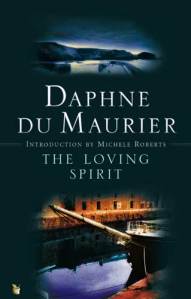
An author who will forever be associated with Cornwall is Daphne du Maurier. She spent most of her adult life there and it provided the setting for many of her novels, including Rebecca, The House on the Strand, and the one I’m using as my next link – Frenchman’s Creek (5). Du Maurier’s novels usually have a very strong sense of place and this one is no exception. I particularly loved the scene where our heroine, Dona St Columb, walks through the woods near her home and discovers a pirate ship hiding in a creek.

I can think of several other books featuring pirates, but the one I’m going to link to here to end my chain is Beauvallet by Georgette Heyer (6). This 1929 novel is set in Elizabethan England and Spain, so has a different feel from Heyer’s more famous Regency and Georgian novels, but I enjoyed it just as much. The pirate, Sir Nicholas Beauvallet, is a wonderful character and the plot is great fun – perfect escapism!

~

And that’s my chain for July. My links have included Bulgaria, the word ‘shadow’, the Sepoy Mutiny, book titles beginning with Z, Cornwall and pirates

In August we’ll be starting with Romantic Comedy by Curtis Sittenfeld.

Six Degrees of Separation: From Friendaholic to To the Lighthouse

It’s the first Saturday of the month, which means it’s time for another Six Degrees of Separation, hosted by Kate of Books are my Favourite and Best. The idea is that Kate chooses a book to use as a starting point and then we have to link it to six other books of our choice to form a chain. A book doesn’t have to be connected to all of the others on the list – only to the one next to it in the chain.

This month we’re starting with Friendaholic by Elizabeth Day. It’s not a book that I’ve read, but here’s what it’s about:

As a society, there is a tendency to elevate romantic love. But what about friendships? Aren’t they just as – if not more – important? So why is it hard to find the right words to express what these uniquely complex bonds mean to us? In Friendaholic: Confessions of a Friendship Addict, Elizabeth Day embarks on a journey to answer these questions.

I’m starting my chain by linking to a novel about complex friendships: China Dolls by Lisa See (1). It’s set in the 1930s and 40s and follows the stories of three young women – two Chinese and one Japanese – who meet while auditioning as dancers at a San Francisco nightclub. The three quickly become friends, until they are torn apart by secrets, betrayals and the events of World War II. I remember being both fascinated and confused by the friendship angle, as all three women repeatedly talk about how close they are while behaving more as if they hate each other!

Another book with the word ‘China’ in the title (but a different kind of china) is Bone China by Laura Purcell (2), a Gothic novel set in the 19th century on the coast of Cornwall. Our narrator, Hester Why, has just arrived from London to take up a new position as nurse to Louise Pinecroft, a woman who barely speaks or moves and sits all day in a room surrounded by china cups and plates. I found it an atmospheric book, let down slightly by a weak ending.

A subplot in Bone China involves a doctor carrying out some experiments to try to find a cure for consumption (tuberculosis). In The Lady of the Camellias by Alexandre Dumas fils (3) – the book that inspired Verdi’s opera La traviata – we know from the start that Marguerite Gautier is going to die of consumption. The novel tells the story of her time as a Parisian courtesan who uses bouquets of red and white camellias to send messages to her lovers. I read it in an English translation by Liesl Schillinger.

I did enjoy The Lady of the Camellias, but I prefer the work of Dumas’ father, the more famous Alexandre Dumas père. The Count of Monte Cristo, The Three Musketeers series and The Black Tulip are my favourites, but The Red Sphinx (4) is the one I’m including in my chain because it’s much less well known and deserves some attention! It’s a Musketeers sequel, although d’Artagnan and the other Musketeers don’t actually appear in it at all. I described it in my review as a story of ‘dashing young heroes and beautiful heroines; duels, battles and sieges; spies and smugglers; secret messages, clever disguises, letters written in code – and political and romantic intrigue in abundance.’

My next link is to another book with a colour in the title – not red this time, but green. It’s The Land of Green Ginger by Winifred Holtby (5), the story of a missionary’s daughter, Joanna Burton, who is born in South Africa but raised by her aunts in a small rural community in England. I prefer Holtby’s other books, but this one does have a lot of interesting elements, looking at the aftermath of the First World War, the contrast between post-war life in Britain and other parts of Europe, and attitudes towards immigrants.

The Land of Green Ginger was published in 1927. Another book also published in the same year was To the Lighthouse by Virginia Woolf (6). Although it’s one of Woolf’s best known books, it’s actually my least favourite of the four I’ve read by her so far, mainly because I’m not a fan of the stream of consciousness writing style. I can understand why other people love it, but it wasn’t for me.

~

And that’s my chain for June. My links have included friendships, the word China, tuberculosis, father and son authors, colours in titles and books published in 1927.

In July we’ll be starting with the winner of the International Booker Prize, Time Shelter by Georgi Gospodinov and translated by Angela Rodel.

Six Degrees of Separation: From Hydra to Cleopatra’s Daughter

It’s the first Saturday of the month, which means it’s time for another Six Degrees of Separation, hosted by Kate of Books are my Favourite and Best. The idea is that Kate chooses a book to use as a starting point and then we have to link it to six other books of our choice to form a chain. A book doesn’t have to be connected to all of the others on the list – only to the one next to it in the chain.

This month we’re starting with Hydra by Adriane Howell. Not a book I’ve read, but here’s what it’s about:

Anja is a young, ambitious antiquarian, passionate for the clean and balanced lines of mid-century furniture. She is intent on classifying objects based on emotional response and when her career goes awry, Anja finds herself adrift. Like a close friend, she confesses her intimacies and rage to us with candour, tenderness, and humour.
Cast out from the world of antiques, she stumbles upon a beachside cottage that the neighbouring naval base is offering for a 100-year lease. The property is derelict, isolated, and surrounded by scrub. Despite of, or because of, its wildness and solitude, Anja uses the last of the inheritance from her mother to lease the property. Yet a presence – human, ghost, other – seemingly inhabits the grounds.

I’m using the reference to furniture and antiques as my first link. Great House by Nicole Krauss (1) features four separate but interconnected stories, linked by an antique writing desk that once belonged to a Chilean poet. Although the desk touches the lives of all of the characters in some way, it barely appears in some of the stories and you need to read all four before you can put the pieces of the puzzle together and see all of the connections.

I’ve read a lot of other books with the word ‘house’ in the title, but as Daphne du Maurier Reading Week is starting on Monday I’ve chosen The House on the Strand (2). This is a wonderful time travel novel moving between the 1960s and the 14th century and is one of my favourites by du Maurier.

Like many of du Maurier’s novels, The House on the Strand is set in Cornwall, where she lived and worked for so many years. The White Hare by Jane Johnson (3) is also set in Cornwall, in a fictional valley which is beautifully and vividly described. Johnson works the legend of the white hare into the novel – a legend which really is a part of Cornish forklore.

I’m linking from hares to rabbits now – not the same animal, I know, but I think they’re close enough! When God Was a Rabbit by Sarah Winman (4) is the story of Elly Portman and her family across four decades from the 1960s to the 1990s (God is the name of the pet rabbit she has as a child).

Another book with a title beginning with the word ‘when’ is When Women Ruled the World by Kara Cooney (5). This is a non-fiction book which explores the lives of six female rulers from Ancient Egypt – Merneith, Neferusobek, Hatshepsut, Nefertiti, Tawosret and Cleopatra. I found it interesting because I knew nothing at all about some of these women, but I also felt that Cooney spent too much time drawing parallels with modern day world leaders, which seemed to be the main focus of the book.

I’m going to finish my chain with Cleopatra’s Daughter by Michelle Moran (6), a novel about Kleopatra Selene, the daughter of Cleopatra and Marc Antony, who joins the household of Octavian’s sister in Rome. I read this book twelve years ago and although I thought it lacked depth, I learned a lot from it as I’d previously read very little about Ancient Rome (something I’ve tried to rectify since then).

~

And that’s my chain for May! My links have included: furniture, the word ‘house’, Cornwall, rabbit, titles beginning with ‘when’ and Cleopatra.

In June we’ll be starting with Friendaholic by Elizabeth Day.

Top Ten Tuesday: Books with animals in the title

This week’s topic for Top Ten Tuesday (hosted by That Artsy Reader Girl) is “Books with animals in the title and/or covers with animals on them”.

I’ve read lots of books with animals in the title – the only problem was deciding on ten of them!

Here’s my list:

1. The Gabriel Hounds by Mary Stewart – I always enjoy Mary Stewart’s novels and I found this one, set in Syria and Lebanon, a particularly fascinating story. The ‘hounds’ of the title are owned by our narrator’s Great-Aunt Harriet who lives near Beirut and models herself on the real-life adventurer Lady Hester Stanhope.

2. Frog Music by Emma Donoghue – I’ve read several of Donoghue’s novels now and have found each one very different from the one before. This one takes place in 1870s San Francisco and features a nightclub dancer, a trapeze artist and a woman who catches frogs to sell to restaurants. The plot is based on a true story of an unsolved murder.

3. The Viper of Milan by Marjorie Bowen – Published in 1906, this was the first novel by the very prolific Marjorie Bowen and is set in 14th century Italy, following the rivalry between the Duke of Milan and the Duke of Verona. I was surprised to find that it was one of Graham Greene’s favourite books and influenced his own early work.

4. Started Early, Took My Dog by Kate Atkinson – The fourth book in Atkinson’s Jackson Brodie mystery series. I’ve read all of them but this one, which moves back and forth between a murder case in the 1970s and a modern day attempt to trace the origins of an adopted child, is not one of my favourites. Like the others in the series, I found that the crime element takes second place to the personal storylines of the characters.

5. The Pale Horse by Agatha Christie – A standalone Christie with neither Poirot nor Miss Marple, although another of her recurring characters, the crime writer Ariadne Oliver, does make an appearance. With a plot involving three women believed to be witches, this is an atmospheric and unsettling novel with a real sense of evil and a hint of the supernatural. It’s not one of my top few Christies but I did enjoy it.

6. Moon Tiger by Penelope Lively – The first and only one of Lively’s adult novels I’ve read, although I did read several of her children’s books when I was younger. The story unfolds through a series of memories and episodes which combine to form a portrait of our protagonist, Claudia. I found the book fragmented and confusing, but liked it overall, particularly the vivid descriptions of Claudia’s time in Egypt as a war correspondent.

7. Prince of Foxes by Samuel Shellabarger – A classic historical adventure novel published in 1947. Set in Renaissance Italy, it’s the story of Andrea Orsini, who is given the task of negotiating a marriage between Alfonso d’Este and Lucrezia Borgia. I described it in my review as involving “battles, duels, clever disguises, last-minute escapes, sieges, miracles and all sorts of trickery and deception”. I loved it, but still haven’t read any of Shellabarger’s other books.

8. A Marriage of Lions by Elizabeth Chadwick – This book, by one of my favourite authors of medieval historical fiction, tells the story of Joanna de Munchensy of Swanscombe and her marriage to William de Valence, the younger half-brother of Henry III. Set against the backdrop of the Second Barons’ War and the conflict between the King and Simon de Montfort, this is a fascinating read with a focus on two lesser known historical figures.

9. Thrice the Brinded Cat Hath Mew’d by Alan Bradley – This is the eighth book in Bradley’s mystery series starring child detective Flavia de Luce. Despite the young heroine, these are not really ‘children’s books’ and Bradley has said they were originally intended for adults. This adult reader has certainly found that they have a lot to offer!

10. Leopard at the Door by Jennifer McVeigh – This book is set in Kenya in the 1950s and is surprisingly dark, which you might not have guessed from the cover. That’s because it deals with the Mau Mau Uprising of 1952, during which the Mau Mau people began to rebel against British rule, with lots of ensuing violence and brutality. It’s an interesting and balanced novel and I learned a lot from it.

~

Have you read any of these? Which other books with animals in the title can you think of?

Six Degrees of Separation: From Born to Run to Bellarion

It’s the first Saturday of the month, which means it’s time for another Six Degrees of Separation, hosted by Kate of Books are my Favourite and Best. The idea is that Kate chooses a book to use as a starting point and then we have to link it to six other books of our choice to form a chain. A book doesn’t have to be connected to all of the others on the list – only to the one next to it in the chain.

This month we’re starting with Bruce Springsteen’s autobiography, Born to Run. I’m not much of a Springsteen fan so have no interest in reading his book, but here’s what it’s about:

In 2009, Bruce Springsteen and the E Street Band performed at the Super Bowl’s halftime show. The experience was so exhilarating that Bruce decided to write about it. That’s how this extraordinary autobiography began. Over the past seven years, Bruce Springsteen has privately devoted himself to writing the story of his life, bringing to these pages the same honesty, humour and originality found in his songs.

He describes growing up Catholic in Freehold, New Jersey, amid the poetry, danger and darkness that fuelled his imagination, leading up to the moment he refers to as ‘The Big Bang’: seeing Elvis Presley’s debut on The Ed Sullivan Show. He vividly recounts his relentless drive to become a musician, his early days as a bar band king in Asbury Park, and the rise of the E Street Band. With disarming candour, he also tells for the first time the story of the personal struggles that inspired his best work, and shows us why the song ‘Born to Run’ reveals more than we previously realized.

There are lots of pretty, multi-coloured book covers around at the moment, but I think monochrome can often be just as striking. Another book I’ve read and reviewed with a black and white cover is The Road to Wigan Pier by George Orwell (1). I’ve enjoyed a lot of Orwell’s fiction, but this is the only one of his non-fiction books I’ve read so far. Published in 1937, it documents Orwell’s observations of the lives of working class people living in the North of England, describing the shocking levels of poverty, the poor standard of housing and the dangerous working conditions.

Another book with the word ‘pier’ in the title is The Last Pier by Roma Tearne (2). It tells the story of Cecily, a teenage girl growing up on a farm in rural England just before the start of World War II and her relationship with the Italian family who live nearby. There’s an element of mystery as something tragic happens to Cecily’s sister, for which she gets the blame, but what I found particularly interesting was the exploration of the fate of Italian people living in Britain during the war, something I hadn’t read much about before.

The Last Pier is set in Suffolk. Sandlands by Rosy Thornton (3) is a collection of sixteen short stories all set in and around a small Suffolk village. I don’t always enjoy short stories and usually prefer fiction in longer forms, but I did find these very satisfying, with something to interest me in each of the sixteen. It’s a very varied collection – some are set in the present and some in the past, some are romantic, some are funny and others have a touch of the supernatural.

The title ‘Sandlands’ leads me to Blood and Sand by Rosemary Sutcliff (4). Sutcliff is better known for her books for younger readers, but this is one of several she wrote for adults. It’s based on the true story of Thomas Keith, a Scottish soldier who is taken captive in Egypt during the Napoleonic Wars and later converts to Islam, becoming Governor of Medina – a fascinating man I had previously known nothing about!

Beau Sabreur by PC Wren (5) is also set in the deserts of North Africa. It’s the sequel to Beau Geste, a book I absolutely loved, and follows the adventures of one of the characters from that book, Henri de Beaujolais. However, I found this one slightly disappointing in comparison; the first half is excellent, but a plot twist in the middle changes the entire tone and feel of the novel. I’m still planning to read the third book in the trilogy, Beau Ideal.

Beau Sabreur was published in 1926, as was Bellarion by Rafael Sabatini (6). This is not my favourite Sabatini novel (you should definitely start with Scaramouche, which is wonderful) but I did still enjoy it. It’s set in Renaissance Italy; I described it in my review as “a world of warring city states, tyrannical dukes and beautiful princesses, of powerful condottieri and bands of mercenary soldiers, of sieges and battles, poisonings and conspiracies.” Great fun, like most of Sabatini’s novels!

And that’s my chain for April. My links included: monochrome covers, piers, the county of Suffolk, the word ‘sand’, desert settings and books published in 1926.

In May we’ll be starting with Hydra by Adriane Howell.

Six Degrees of Separation: From Passages to The Venice Train

It’s the first Saturday of the month, which means it’s time for another Six Degrees of Separation, hosted by Kate of Books are my Favourite and Best. The idea is that Kate chooses a book to use as a starting point and then we have to link it to six other books of our choice to form a chain. A book doesn’t have to be connected to all of the others on the list – only to the one next to it in the chain.

This month we’re starting with Passages by Gail Sheehy, a bestselling self-help title from the 1970s. I haven’t read this book and doubt I ever will, but here’s what it’s about:

At last, this is your story. You’ll recognize yourself, your friends, and your loves. You’ll see how to use each life crisis as an opportunity for creative change – to grow to your full potential. Gail Sheehy’s brilliant road map of adult life shows the inevitable personality and sexual changes we go through in our 20s, 30s, 40s, and beyond. The Trying 20s – The safety of home left behind, we begin trying on life’s uniforms and possible partners in search of the perfect fit. The Catch 30s – illusions shaken, it’s time to make, break, or deepen life commitments. The Forlorn 40s – Dangerous years when the dreams of youth demand reassessment, men and women switch characteristics, sexual panic is common, but the greatest opportunity for self-discovery awaits. The Refreshed (or Resigned) 50s – Best of life for those who let go old roles and find a renewal of purpose.

I couldn’t think of any way to link this book to anything else I’ve read so instead I’m linking to a book I haven’t read yet, but do have on my TBR – A Passage to India by EM Forster (1). So far I’ve only read Howards End and A Room With a View by Forster and although I enjoyed them both I still haven’t got round to trying any of his others. His 1924 novel set in India during the time of the British Raj will probably be the next one I read.

Damon Galgut’s Arctic Summer (2) is a fictional biography of Forster, concentrating on the time in his life when he was working on A Passage to India. I liked Galgut’s writing and the descriptions of India and Egypt, but otherwise found this book boring. I think my lack of familiarity with Forster’s life and work was partly to blame – all the more reason to read more of his books sooner rather than later – but I also felt that Galgut chose to focus too heavily on Forster’s sexuality and romantic relationships, which just didn’t interest me very much.

The Magician by Colm Tóibín (3) is another novel about the life of an author, in this case Thomas Mann. Again, my knowledge of Mann and his work is limited (I’ve only read Death in Venice and some of his short stories), but I’d seen a lot of praise for this book so tried it anyway. The book takes us through Mann’s childhood in Germany, his marriage, his experiences during World War II and his later years in Los Angeles and Switzerland. I found it interesting but didn’t connect with it on an emotional level and I prefer the way Tóibín writes about fictional characters.

The title of the Toibin novel makes me think of a book featuring a character who becomes a magician: Fifth Business by Robertson Davies (4). This is the first book in Davies’ Deptford Trilogy and although I enjoyed it, I still haven’t read the other two. Fifth Business is narrated by Dunstan Ramsay, who grows up in the small Canadian town of Deptford. Dunstan suffers from guilt after ducking to avoid a snowball with a stone in it which hits a pregnant woman instead and almost everything that happens to him from this point on can be traced back to that incident.

Another book in which snow plays a significant part in setting the plot in motion is Murder on the Orient Express by Agatha Christie (5). Hercule Poirot is a passenger on the Orient Express when the train comes to a stop in a heavy snowfall. When a man is found stabbed to death in his compartment, it seems clear that the murderer must be among the other passengers on the train. I already knew the solution before I started this book, but that didn’t stop me from enjoying it and I can see why it’s one of Christie’s most popular mysteries.

Christie has written several other novels set on trains, but I have chosen to end my chain with one by a different author: The Venice Train by Georges Simenon (6). This is one of Simenon’s standalone thrillers, which he described as romans durs or ‘hard novels’. On a train journey from Venice to Paris, Justin Calmar finds himself left with a briefcase belonging to another passenger and, unable to resist the temptation, breaks the locks and looks inside. The rest of this dark and suspenseful novel explores the psychological effects on Justin caused by the contents of the case.

And that’s my chain for March. My links included: the word ‘passage’, EM Forster, novels about authors, magicians, snow and trains. I like to look back and see whether I’ve made the chain come full circle, but the only connection I can find between the last and first book is the theme of journeys – The Venice Train deals with a physical journey and Passages with a journey through life.

In April we’ll be starting with Bruce Springsteen’s autobiography, Born to Run.

Top Ten Tuesday: Books with ‘Heart’ in the title

This week’s topic for Top Ten Tuesday (hosted by That Artsy Reader Girl) is a “Love/Valentine’s Day Freebie”.

To celebrate Valentine’s Day I have listed ten books I’ve read with the word ‘heart’ in the title. However, they are not all love stories – in fact, most of them aren’t!

~

1. Second Hand Heart by Catherine Ryan Hyde – A moving novel exploring the theory of cellular memory – the idea that a transplanted organ retains the memories and characteristics of its previous owner.

2. The Heart of Midlothian by Sir Walter Scott – This classic novel is set in Edinburgh during the 1736 Porteous Riots. It’s not my favourite of the few novels I’ve read by Scott, but I did like the heroine, Jeanie Deans, who walks all the way to London to try to save her sister’s life.

3. The Obscure Logic of the Heart by Priya Basil – The story of a Sikh man and a Muslim woman who fall in love as students, this is the only real ‘romance’ on my list, but it’s also so much more than that, touching on politics, poverty, gun crime and the work of the UN.

4. The Metal Heart by Caroline Lea – In this book set during World War II, Caroline Lea weaves the story of two twin sisters around the building of a chapel in the Orkney Islands by Italian prisoners of war. An interesting blend of fact and fiction.

5. Bleeding Heart Square by Andrew Taylor – This standalone historical mystery is set in 1930s London. It’s both an entertaining novel and a fascinating portrayal of the rise of Oswald Mosley and the British Union of Fascists.

6. The Heart’s Invisible Furies by John Boyne – The story of Ireland from the 1940s to the modern day as seen through the eyes of Cyril Avery, a gay man trying to come to terms with his sexuality, and written with John Boyne’s usual wit and humour.

7. With All My Heart by Margaret Campbell Barnes – A fictional account of the life of Catherine of Braganza, the Portuguese princess who marries King Charles II. First published in 1951, it does feel dated now but is interesting as Catherine is not a popular subject for historical fiction.

8. Written in My Own Heart’s Blood by Diana Gabaldon – The eighth book in Gabaldon’s Outlander series sees Claire and Jamie in America in the middle of the Revolutionary War. It’s not a favourite of mine – I loved the first four in the series, but have been gradually losing interest with each book after that.

9. The Oaken Heart by Margery Allingham – Better known for her Albert Campion detective novels, this is Allingham’s memoir of life in her small English village during the Second World War. Originally published in 1941, while the war was still taking place.

10. The Silvered Heart by Katherine Clements – Set in the 17th century, this novel is inspired by the real life highwaywoman, Katherine Ferrers, also known as ‘the Wicked Lady’. Not much is known about the historical woman, but Clements brings her story to life while also portraying England in the aftermath of Civil War.

~

Have you read any of these books? Which other books with ‘heart’ in the title can you think of?