20 Books of Summer 2025: July Recap

The second month of this year’s 20 Books of Summer challenge is over and one of our hosts – Emma of Words and Peace – has compiled another questionnaire to help us recap our July reading. My answers aren’t as imaginative as the questions, but I’ve done my best!

I read eight books for the challenge this month, which means as I read nine in June I only have three more left to read in August (I’m halfway through one of them now). I’m behind with the reviews as usual, but the outstanding ones should be coming soon.

1. Which book surprised you the most this month?
Describe what made it stand out — was it a plot twist, unique character, or something unexpected?

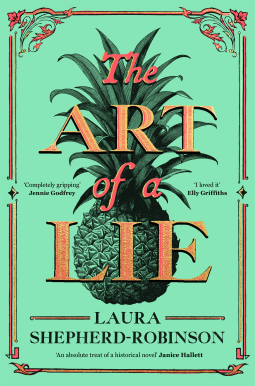
The Art of a Lie by Laura Shepherd-Robinson had plenty of plot twists, but what really surprised me was the way it ended! It wasn’t what I expected at all – and not what I would personally have liked, although other readers may disagree.

2. If your July reading experience was a weather forecast, what would it be and why?
Did your reads feel like sunny days, thunderstorms, gentle breezes, or heatwaves?

A real mixture of weather, just like a typical British summer! There were some hot, stormy days (Elizabeth Fremantle’s Sinners), some bleak, rainy ones (The End of the Affair by Graham Greene) and also a few brighter, breezier days (Sophie Irwin’s How to Lose a Lord in Ten Days and Hannah Dolby’s No Life For a Lady).

3. Name a setting from your July books where you’d love (or hate) to take a summer vacation.
What drew you to (or repelled you from) the place?

The Syria of the 1930s, as described by Agatha Christie in Come, Tell Me How You Live, sounds like a fascinating place to visit in many ways – and a glimpse into a world and a way of life now gone forever. However, her first night in the town of Amuda, in a house infested by rats and cockroaches sounded horrific!

4. If you could turn one book into a summer festival, what would the main event be?
Describe the vibe, activities, or the bookish highlight of your imagined festival.

I would turn The Art of a Lie into an 18th century food festival. The highlight would be a sample of Hannah Cole’s delicious homemade ice cream, a delicacy most of the guests will never have seen or tasted before! As additional entertainment, the author Henry Fielding will give readings from his recently published novel The History of Tom Jones, a Foundling.

5. Choose your own adventure — recap July in the style of your choice:
You might write a diary entry, poem, comic panel, or even a simple list. Be as creative as you like!

I’m not feeling very creative at the moment, I’m afraid, so here are some very simple one-word reviews for the books I read this month:

Sinners by Elizabeth Fremantle – Tragic
The Art of a Lie by Laura Shepherd-Robinson – Twisty
The Lily and the Lion by Maurice Druon – Informative
Come, Tell Me How You Live by Agatha Christie – Funny
How to Lose a Lord in Ten Days by Sophie Irwin – Amusing
The End of the Affair by Graham Greene – Sad
Fire from Heaven by Mary Renault – Powerful
No Life for a Lady by Hannah Dolby – Entertaining

~

Are you taking part in 20 Books of Summer? How did your July reading go?

Six Degrees of Separation: From The Safekeep to Enlightenment

It’s the first Saturday of the month which means it’s time for another Six Degrees of Separation, hosted by Kate of Books are my Favourite and Best. The idea is that Kate chooses a book to use as a starting point and then we have to link it to six other books of our choice to form a chain. A book doesn’t have to be connected to all of the others on the list – only to the one next to it in the chain.

This month, we’re starting with The Safekeep by Yael van der Wouden. I haven’t read it yet but do have a copy and am hoping to read it soon. Here’s what it’s about:

It is fifteen years after the Second World War, and Isabel has built herself a solitary life of discipline and strict routine in her late mother’s country home, with not a fork or a word out of place. But all is upended when her brother Louis delivers his graceless new girlfriend, Eva, at Isabel’s doorstep – as a guest, there to stay for the season…

In the sweltering heat of summer, Isabel’s desperate need for control reaches boiling point. What happens between the two women leads to a revelation which threatens to unravel all she has ever known.

I’ve read a lot of books about the war so it would have been easy to go down that route, but I was drawn to the phrase ‘the sweltering heat of summer’ so decided to use that as my first link instead. The Hounding by Xenobe Purvis (1), about five young women who don’t fit in with their small community in 18th century England, is a book I read recently that is also set during a hot summer. It’s so hot that the river starts to dry up, affecting the trade of Pete Darling, the ferryman, who takes out his frustration on the girls, claiming he has seen them turn into dogs.

Once Upon a River by Diane Setterfield (2) follows the story of a child rescued from a river on the evening of the winter solstice in 1887. The legend of Quietly, a ghostly ferryman said to guide those in danger on the river to safety, plays an important part in the novel.

The name ‘Quietly’ leads me to The Quiet Gentleman by Georgette Heyer (3). I loved this one – it’s one of Heyer’s Regency novels but has a strong mystery element (involving a series of accidents that befall Gervase Frant, 7th Earl of St Erth) as well as a romance. I wish we saw more of the heroine, though!

The Temporary Gentleman by Sebastian Barry (4) is another book with ‘gentleman’ in the title. Barry’s novels are always beautifully written and this one is no exception. It’s set in 1950s Ghana, where Jack McNulty is writing his memoirs, looking back on his early life in Ireland and his difficult relationship with his wife.

I don’t seem to have reviewed any other books by authors with the name Sebastian, but I did find one by a Seb: The Light Ages by Seb Falk (5). This is a non-fiction book in which Falk looks at some of the advances in science, mathematics and astronomy during the medieval period and tries to dispel the idea that the Dark Ages were a time of little progress.

A similar title and a shared theme of astronomy brings me to the final book in my chain: Enlightenment by Sarah Perry (6). Perry’s novel explores the relationship between two members of a Strict Baptist community in Essex, tied together through the story of a 19th century female astronomer, Maria Vǎduva, whose ghost is said to haunt a local manor.

~

And that’s my chain for August! My links have included: hot summers, ferrymen, the word ‘quiet’, the word ‘gentleman’, Sebs and Sebastians, and astronomy.

Next month we’ll be starting with Ghost Cities by Siang Lu.

Top Ten Tuesday: Classics Set in Italy

This week’s topic for Top Ten Tuesday (hosted by That Artsy Reader Girl) is “Books Set in/Take Place During X”. We can choose the time or place.

I have chosen ten books set in Italy and to narrow things down, they are all books that a) were published at least 60 years ago and b) have been reviewed on my blog.

1. Prince of Foxes by Samuel Shellabarger

From my review: “Andrea and Belli have a number of adventures involving battles, duels, clever disguises, last-minute escapes, sieges, miracles and all sorts of trickery and deception.”

2. Romola by George Eliot

From my review: “I was gripped by the plot, fascinated by the characters and loved the portrayal of Florence, its buildings, its art and culture and its people.”

3. The Enchanted April by Elizabeth von Arnim

From my review: “The images of Italy in the spring were beautifully described, with the sun shining and the flowers bursting into bloom. I defy anybody to read this story and not want to immediately book a trip to Italy this April!”

4. Flight of the Falcon by Daphne du Maurier

From my review: “In The Flight of the Falcon she succeeds in making Ruffano, with its medieval streets, historic churches and ducal palace, seem beautiful and picturesque but claustrophobic and forbidding at the same time.”

5. The Leopard by Giuseppe Tomasi di Lampedusa

From my review: “…a beautifully written book and although it’s surprisingly short, there’s so much packed into its pages I think a re-read would be necessary to be able to fully appreciate it.”

6. Bellarion by Rafael Sabatini

From my review: “…a world of warring city states, tyrannical dukes and beautiful princesses, of powerful condottieri and bands of mercenary soldiers, of sieges and battles, poisonings and conspiracies.”

7. Amours de Voyage by Arthur Hugh Clough

From my review: “Amours de Voyage follows a group of people who are visiting Italy during the political turmoil surrounding the fall of the short-lived Roman Republic in 1849. Their story is told in the form of letters written in hexameter verse and divided into five cantos.”

8. Death in Venice by Thomas Mann

From my review: “Mann’s descriptions of Venice are beautifully written, even though at the time of Gustav von Aschenbach’s arrival the weather is dark, gloomy and oppressive, matching the overall mood of the story.”

9. A Sicilian Romance by Ann Radcliffe

From my review: “…everything you would expect from a gothic novel: An old castle with crumbling staircases and dark, dusty chambers, locked doors, family secrets, lonely monasteries, bandits, shipwrecks, dungeons and underground tunnels, thunder and lightning, and almost anything else you can think of.”

10. A Room with a View by E.M. Forster

From my review: “The beginning of the book with the portrayal of the English in Italy made me think of The Enchanted April by Elizabeth von Arnim and as for the descriptions of Italy itself, they were beautiful and vivid.”

~

Have you read any of these? Are there any other classic novels set in Italy you can recommend?
Top Ten Tuesday: Books with Mrs in the title

This week’s topic for Top Ten Tuesday (hosted by That Artsy Reader Girl) is Books with Honorifics in the Title (“…an honorific is a form of address conveying esteem, courtesy or respect. These can be titles prefixing a person’s name, e.g.: Mr., Mrs., Miss, Ms., Mx., Sir, Dame, Dr., Cllr, Lady, or Lord, or other titles or positions that can appear as a form of address without the person’s name, as in Mr. President, General, Captain, Father, Doctor, or Earl.”) (Submitted by Joanne @ Portobello Book Blog)

I noticed that I’ve reviewed exactly ten books with the word Mrs in the title, so decided to just stick to those for this week’s post. They are listed below:

1. The Other Side of Mrs Wood by Lucy Barker – The story of a successful medium in 19th century London who gets more than she bargained for when she takes on a new apprentice!

2. The Autobiography of Mrs Tom Thumb by Melanie Benjamin – A fictional memoir of the American circus performer Lavinia Warren.

3. Mrs Poe by Lynn Cullen – This novel explores the relationship between Edgar Allan Poe and the poet Frances Sargent Osgood.

4. The Mermaid and Mrs Hancock by Imogen Hermes Gowar – Set in Georgian England, this book begins with a captain selling his ship in exchange for a mermaid!

5. Mrs England by Stacey Halls – A children’s nurse takes a new position with a family in Yorkshire and quickly sense that something is not quite right.

6. The Trouble with Mrs Montgomery Hurst by Katie Lumsden – A small, quiet community in 1840s England is shaken up by the arrival of Mr Montgomery Hurst’s new wife.

7. Mrs Engels by Gavin McCrea – A fictional look at the life of Lizzie Burns, common law wife of the German philosopher Friedrich Engels.

8. Good Evening, Mrs Craven by Mollie Panter-Downes – A collection of short stories written between 1939 and 1944 and giving some insights into Britain during the Second World War.

9. Dear Mrs Bird by AJ Pearce – The first in the Emmy Lake series, about a young woman who becomes an advice columnist in wartime London.

10. Mrs Whistler by Matthew Plampin – A fictional account of the life of Maud Franklin, the model and muse of the artist James McNeill Whistler

~

Have you read any of these? Which other books with ‘Mrs’ in the title have you read?

Six in Six: The 2025 Edition

Six in Six was the idea of Jo, who used to blog at The Book Jotter and was something I joined in with every July, as I thought it was a good way to look back on the first six months of the year. We would choose six categories (Jo provided a list of suggestions but participants could come up with new topics of their own if they preferred) and then try to fit six books or authors we’d read from January-June into each category.

Although Jo is no longer blogging, some of us still wanted to take part in this and so far I’ve seen posts at In Another Era and Hopewell’s Public Library of Life. My attempt is below – some of the books could have fit more than one category, but I only wanted to use each book once.

~

Six books set in countries other than my own

The Ghosts of Rome by Joseph O’Connor (Italy/Vatican)
Strange Pictures by Uketsu (Japan)
The Rush by Beth Lewis (Canada)
Clear by Carys Davies (Scotland)
The Sirens by Emilia Hart (Australia)
Woman in Blue by Douglas Bruton (Netherlands)

Six books with a bird or animal in the title

The Little Sparrow Murders by Seishi Yokomizo
Murder at Gulls Nest by Jess Kidd
The Hounding by Xenobe Purvis
Secrets of the Bees by Jane Johnson
The Tiger in the Smoke by Margery Allingham
We’ll Prescribe You a Cat by Syou Ishida

Six novels with a touch of fantasy or the supernatural

The Morrigan by Kim Curran
The Hymn to Dionysus by Natasha Pulley
Written on the Dark by Guy Gavriel Kay
Jennie by Paul Gallico
The Darkening Globe by Naomi Kelsey
The Secrets of the Rose by Nicola Cornick

Six books with a mystery to solve

Tea on Sunday by Lettice Cooper
Marble Hall Murders by Anthony Horowitz
The Edinburgh Murders by Catriona McPherson
Traitor’s Legacy by SJ Parris
A Schooling in Murder by Andrew Taylor
A Caribbean Mystery by Agatha Christie

Six books about real people

The Queen and the Countess by Anne O’Brien (Margaret of Anjou/Countess of Warwick)
Britain’s Greatest Private Detective by Nell Darby (Henry Slater)
Cleopatra by Natasha Solomons (Cleopatra)
The Cardinal by Alison Weir (Cardinal Wolsey)
That Dark Spring by Susannah Stapleton (Olive Branson)
Love, Sex & Frankenstein by Caroline Lea (Mary Shelley)

Six books I’ve read but still need to review:

The Portrait Artist by Dani Heywood-Lonsdale
The Greek House by Dinah Jefferies
The Game is Murder by Hazell Ward
A Case of Life and Limb by Sally Smith
Glorious Exploits by Ferdia Lennon
White Corridor by Christopher Fowler

~

What do you think of my six sixes? Have you read any of these books? Did you enjoy your reading in the first six months of the year?

Six Degrees of Separation: From Theory & Practice to Murder in the Crooked House

It’s the first Saturday of the month which means it’s time for another Six Degrees of Separation, hosted by Kate of Books are my Favourite and Best. The idea is that Kate chooses a book to use as a starting point and then we have to link it to six other books of our choice to form a chain. A book doesn’t have to be connected to all of the others on the list – only to the one next to it in the chain.

This month we’re starting with Theory & Practice by Michelle de Kretser. As usual, this is a book I haven’t read! Here’s what it’s about:

In the late 1980s, the narrator of Theory & Practice — a first generation immigrant from Sri Lanka who moved to Sydney in her childhood — sets up a life in Melbourne for graduate school. Jilted by a lover who cheats on her with another self-described “feminist,” she is thrown into deeper confusion about her identity and the people around her.

The narrator begins to fall for a man named Kit, who is in a “deconstructed relationship” with a woman named Olivia. She struggles to square her feminism against her jealousy toward Olivia—and her anti-colonialism against her feelings about Virginia Woolf, whose work she is called to despite her racism.

What happens when our desires run contrary to our beliefs? What should we do when the failings of revered figures come to light? Who is shamed when the truth is told? In Theory & Practice, Michelle de Kretser offers a spellbinding meditation on the moral complexities that arise in this gap. Peopled with brilliantly drawn characters, the novel also stitches together fiction and essay, taking up Woolf’s quest for adventurous literary form.

I’m going to use an immigrant from Sri Lanka as my first link. The Swimmer by Roma Tearne (1) begins with Ria, a woman in her forties, discovering a young man swimming in the river behind her house in Suffolk. His name is Ben and he’s a Tamil refugee who has fled violence in Sri Lanka and made his way to England. I enjoyed watching Ria and Ben’s relationship develop until a sudden change of narrator sent the story in a different direction.

Staying with the theme of swimming, Wonder Girls by Catherine Johnson (2) is set in 1928 and tells the story of Ida Gaze, who at the age of sixteen sets out to become the first person ever to swim the Bristol Channel between Wales and England. Although it’s a fictional story, it’s still a very inspirational one!

Another book with ‘wonder’ in the title is The Wonder by Emma Donoghue (3), a dark but fascinating novel about an eleven-year-old girl in 19th century Ireland whose parents claim she has eaten nothing at all for four months. To prove whether the girl really is a miracle or whether it’s a hoax, a nurse, Lib Wright, is hired to watch over her and see if the claims are true. Lib has been serving in the Crimean War and was trained by Florence Nightingale, which leads me to the next book in my chain…

The Nightingale Girls by Donna Douglas (4) is the first in a series about a group of student nurses at London’s Nightingale Hospital in the 1930s. I enjoyed meeting the three main characters and stated in my review that I was looking forward to the rest of the series – well, that was twelve years ago and I still haven’t picked up any of the others!

Nightingale is the name of the author of the next book in my chain. Murder in Tinseltown by Max Nightingale (5) sounded fun, but was a disappointment. It’s an interactive ‘choose your own adventure’ style book, where you play the role of a detective investigating a murder and at various points in the story you choose what happens next by turning to different pages. A good idea, but it needed a lot more editing, unfortunately.

A book starting with the same two words in the title is Murder in the Crooked House by Soji Shimada (6). This is one of several Japanese crime novels I’ve read over the last few years, but not one of my favourites as I found the mystery far too convoluted and too concerned with alibis, timings, room layouts and other little details rather than the characters and their motives. It was originally published in 1982 but I read a reissue in an English translation by Louise Heal Kawai.

~

And that’s my chain for July. My links have included: Sri Lanka, swimming, the word ‘wonder’, Florence Nightingale, the name Nightingale and titles beginning with ‘Murder in’.

In August we’ll be starting with The Safekeep by Yael van der Wouden. I have that book on my TBR – I wonder if I’ll be able to read it before August!

20 Books of Summer 2025: June Recap

Now that the first month of this year’s 20 Books of Summer challenge is over, one of our hosts – Emma of Words and Peace – has compiled a list of five questions to help us recap our June reading. I had fun answering these, although I’m afraid some of my answers aren’t quite as creative as the questions!

I read nine books for the challenge in June and have only reviewed five of them so far. The other four reviews will be coming soon, I promise!

1. If your #20BooksofSummer25 TBR were a beach, what’s the most surprising thing you’ve unearthed so far – a hidden gem, a total shipwreck, or something unexpectedly delightful?
This question gets at whether you’ve discovered a new favorite, encountered a book you didn’t enjoy, or found something pleasantly surprising.

Of the books I’ve read for 20 Books of Summer so far, two were by authors who were new to me – The Rush by Beth Lewis and The Stepdaughter by Caroline Blackwood – and both were surprisingly good! I’m sure I’ll be reading more by both of those authors. Agatha Christie’s 1964 Miss Marple novel, A Caribbean Mystery, is another book I enjoyed more than I was anticipating – it hadn’t appealed to me much as it’s not a setting I associate with Miss Marple.

There were no total shipwrecks on my beach as the other books I read in June were by authors already familiar to me, so I knew what to expect!

2. Imagine your reading progress as a summer road trip. Which book has been the scenic route, which has been the highway, and is there a rest stop book you’re looking forward to?
This question explores reading pace and anticipation. A scenic route book might be slower-paced and atmospheric, while a highway book is a fast-paced read. The rest stop book is one you’re looking forward to for a break or change of pace.

The scenic route would be A Schooling in Murder by Andrew Taylor, a slow-paced historical mystery novel set in and around a girls’ school in the 1940s. Caroline Blackwood’s The Stepdaughter would be the highway book – it’s a novella that I finished in one day.

The rest stop book I’m looking forward to is this month’s Read Christie 2025 selection, Come, Tell Me How You Live? It will be the first non-fiction book I’ve read for 20 Books of Summer, so should be a nice change from all the fiction I’ve been reading.

3. If one of the books you’ve read this month was turned into an ice cream flavor, what ingredients would it have, and what would it be called?
This question encourages your creative thinking and helps you express the essence of a book in a fun, summery way.

My Gold Rush Crunch ice cream, inspired by The Rush, includes a scoop of vanilla to represent the snowy mountains of the White Pass Trail and chunks of honeycomb to represent gold nuggets. As the book is set in Canada, it can be served with optional maple syrup!

4. If you could swap places with a character from one of the books you’ve read this month, purely for the summer, who would it be and what items would you absolutely take with you?
This question taps into escapism and personal connection. It also allows you to highlight a character or book you particularly enjoyed.

It’s actually easier for me to say which ones I wouldn’t want to swap places with! I certainly wouldn’t want to be Helen Capel from Ethel Lina White’s The Spiral Staircase and have to spend the whole summer locked in a creepy house with a murderer on the loose, nor would I want to live in any of the equally unsettling buildings described in Uketsu’s Strange Houses. Turning into a cat like Peter in Paul Gallico’s Jennie doesn’t appeal either, although it might be fun for a little while – and much as I enjoyed The Rush, the Klondike in the 19th century sounds like a harsh and dangerous place for a woman. I wouldn’t like to be a ghost like Annabel in A Schooling in Murder either, or part of the miserable household in The Stepdaughter. If I chose Love & Other Poisons by Lesley McDowell I would have to be either a murderer or a murder victim and These Wicked Devices by Matthew Plampin would give me the options of a nun, a slave or a scheming noblewoman.

Having ruled everybody else out, I’m left with Miss Marple, so it looks like I’m off to the Caribbean for the summer – with my knitting, of course. Maybe I’ll be able to solve a mystery or two while I’m there!

5. “Plot twist!”: If your summer reading challenge were a book, what unexpected event just happened to shake things up? Or did life get in the way of your reading plans?
This question acknowledges the unpredictable nature of life and reading, and allows you to share any challenges or unexpected joys you’ve encountered.

June was a surprisingly uneventful month for me, with nothing in particular that got in the way of my reading. Of course, that could change over the next two months of the challenge – only in a good way, I hope!

~

Are you taking part in 20 Books of Summer? How did your June reading go?