My Commonplace Book: October 2020

A selection of words and pictures to represent October’s reading:

commonplace book
noun
a book into which notable extracts from other works are copied for personal use.

~

“It must have been her peak period,” Stephen smiles. “People sometimes go through their whole lives without ever reaching the moment when they are exactly the person they want to be.”

As he talks away, building upward and outward like a sleepy child with bricks, I think about the hidden talent or uniqueness of character that lies sealed within most of us; how it is like the work of a sculptor who sees within a block of marble a trapped masterpiece and must chip and grind until it is released.

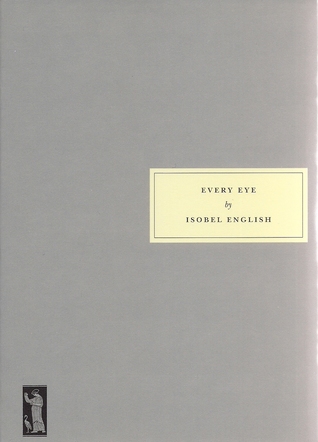
Every Eye by Isobel English (1956)

~

Replica East Indiaman of the Dutch East India Company

The downtrodden yearned for stories to explain their misfortunes, though what they really wanted was somebody to blame for their misery. It was impossible to set fire to the blight that had ruined your crops, but a blight was easily summoned by a witch, at which point any poor woman or man would do.

The Devil and the Dark Water by Stuart Turton (2020)

~

‘Ridiculous. They ought not to allow so much to be printed! Why, if you read a hundred pages a day, which is more than anyone ought to read – that would be thirty-five thousand a year – say a hundred thousand in three years, a million in thirty years. If you started to read on the day you were born you would have read this library – just once, mind you – when you were between a hundred and twenty and a hundred and fifty years old. Fiddlesticks.’

The Ghost It Was by Richard Hull (1936)

~

‘Yes, sir, although I shouldn’t really, you know. It’s bad for servants talking about their masters outside.’

This seemed to voice the well-known below-stairs ethics of bygone days. You mustn’t, if you were in service, talk to your ‘betters’ about your employers, although, to your equals in similar jobs, you could say as much as you liked.

Dead March for Penelope Blow by George Bellairs (1951)

~
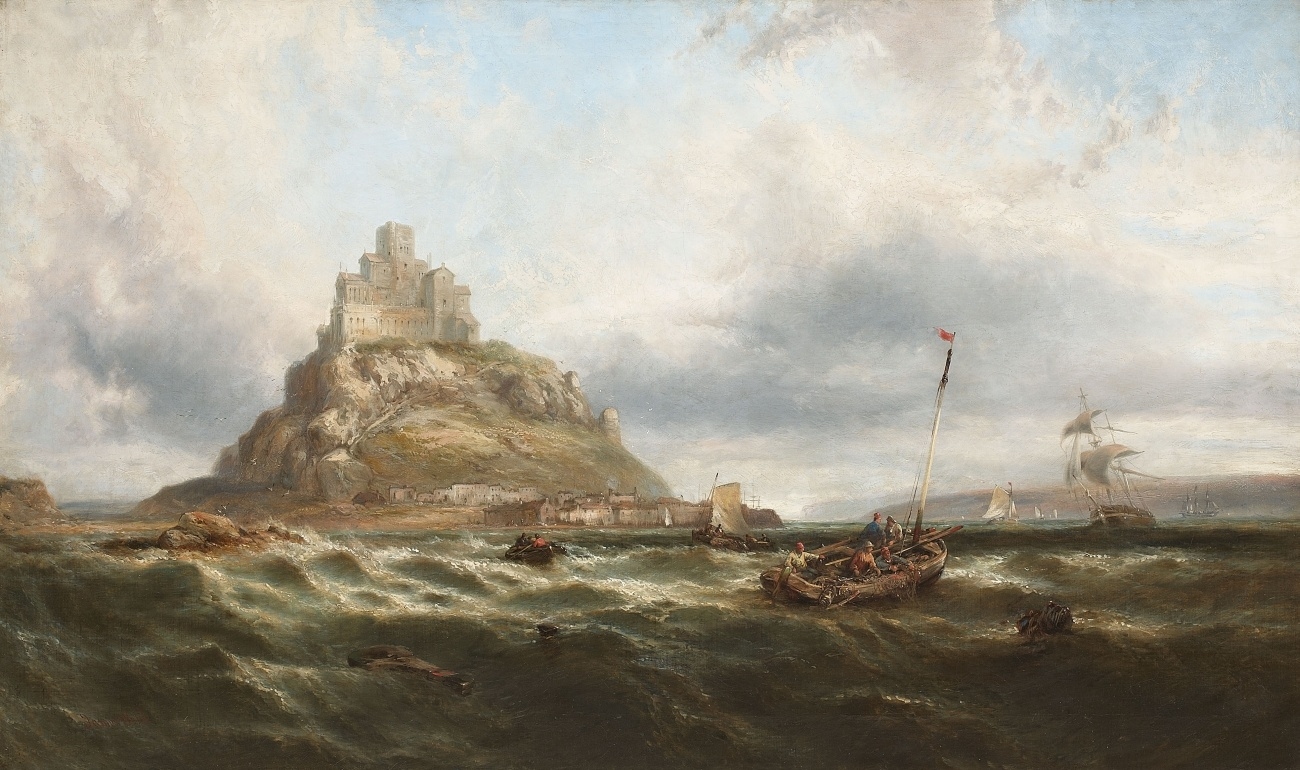
St Michael’s Mount, Cornwall

There had to be a flaw, since there is no such thing as perfection, in life or art or anything else. Perfection tempts fate. I remember reading that ancient Japanese potters always worked a tiny flaw into each pot they created, for fear of angering the gods…

The Tenth Gift by Jane Johnson (2008)

~

Favourite books read in October:

Every Eye and Dead March for Penelope Blow

New authors read in October:

Isobel English

Countries visited in my October reading:

Indonesia, England, Morocco

~

Have you read any of these books? Which books did you enjoy reading in October?

Dead March for Penelope Blow by George Bellairs – #RIPXV

This is the third of George Bellairs’ Inspector Littlejohn mysteries I’ve read. I enjoyed the other two (A Knife for Harry Dodd and Death in Room Five), but I think this one is the best so far.

First published in 1951, Dead March for Penelope Blow is set in the small English town of Nesbury, home to the Blow family who live in the big house adjoining the bank which used to be the family business. The novel opens with Penelope Blow, one of the two surviving daughters of old William Blow, the banker, calling at Scotland Yard in the hope of seeing Inspector Littlejohn. Littlejohn, however, is away attending a murder trial and Penelope is forced to return to Nesbury, leaving a message for the Inspector to call her as soon as possible. Unfortunately, before Littlejohn has time to contact her and find out what she had been so desperate to tell him, Penelope falls to her death from a window while leaning out to water flowers in a window box.

As Littlejohn, with the help of his assistant Cromwell, begins to investigate the circumstances of Penelope Blow’s death, an intricate mystery unfolds involving family secrets, wills and inheritances, forgeries and thefts, and a suspected case of poisoning. The novel is carefully plotted, with some clever red herrings, and various revelations coming at just the right points in the story. It’s not really a very original mystery, but I still found it intriguing and although I correctly guessed who did it, I didn’t manage to work everything out before Littlejohn and Cromwell did.

What makes this a particularly enjoyable novel, though, is the strong, almost Dickensian, characterisation (in fact, when Cromwell is listening to the housekeeper, Mrs Buckley, talking about her ‘umble home, he thinks of Uriah Heep from David Copperfield). From Mr Jelley, the frail, elderly butler, and John Slype, the cheerful little window cleaner, to the fierce and beautiful Lenore Blow and her father Captain Broome, whom Littlejohn describes as ‘like a character out of Kipling’, they are all very strongly drawn and each of them, however minor, adds something special to the story. In contrast, Littlejohn and Cromwell are quite ordinary, but I do like them both!

Another interesting thing about this book is that, although it’s set in the post-war period and there are a few references to this (we are reminded that food rationing is still in place, for example), the story feels as though it could have been taking place in a much earlier period. The Blow family almost seem to be frozen in time, with relationships between the male and female members of the household and between servants and employers as rigidly structured as they would have been in Victorian times. The social history aspect of the novel is almost as fascinating as the mystery.

Having enjoyed this one so much, I’m looking forward to reading more from the Littlejohn series!

Thanks to Agora Books for providing a copy of this book for review via NetGalley.

This is my third and final book read for this year’s RIP Challenge.

Top Ten Tuesday: Halloween Titles

This week’s Top Ten Tuesday (hosted by That Artsy Reader Girl) is a ‘Halloween Freebie’. There were lots of ways I could have approached this topic, but I decided to list ten words that are often associated with Halloween and find a book I’ve read with each of those words in the title.

Here are the ten books I’ve chosen. I think most of these would make great Halloween reads!

1. Blood Upon the Snow by Hilda Lawrence – First published in 1944, this is one of three crime novels to feature the private investigator Mark East and his two friends, the amateur detectives Bessy and Beulah. This atmospheric novel is set in a lonely town in the mountains during a snowy winter.

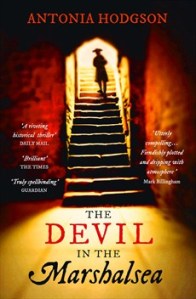
2. The Devil in the Marshalsea by Antonia Hodgson – The first in a series of historical mysteries set in the eighteenth century. This book is set almost entirely within London’s notorious Marshalsea Prison and although all of the other books in the series are excellent too, I particularly loved this one because of the fascinating setting.

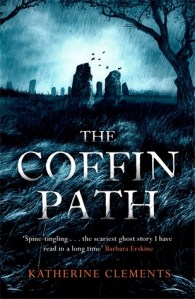
3. The Coffin Path by Katherine Clements – A seventeenth century ghost story set on a sheep farm in the Yorkshire moors. Although I found the book quite slow, it’s also very atmospheric and steeped in English folklore.

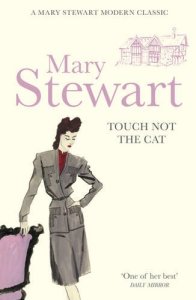
4. Touch Not the Cat by Mary Stewart – This is not one of my favourites of Mary Stewart’s suspense novels, but I still enjoyed it. Published in 1976, it has a few touches of the supernatural and a wonderful country house setting, complete with moat and maze.

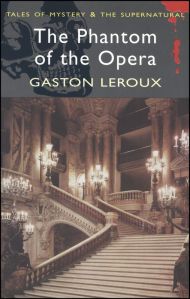
5. The Phantom of the Opera by Gaston Leroux – I didn’t love this 1911 classic quite as much as I’d hoped to, but it’s very entertaining and has a great setting – an opera house with an underground lake, a maze of tunnels and a torture chamber. Worth reading whether or not you’re a fan of the musical.

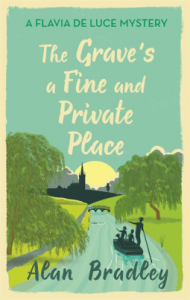
6. The Grave’s a Fine and Private Place by Alan Bradley – Twelve-year-old detective Flavia de Luce is investigating the death of a young actor who is found drowned in a river. I prefer the earlier books in the Flavia series, but this is still a good one.

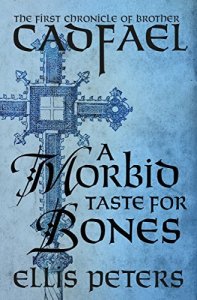
7. A Morbid Taste for Bones by Ellis Peters – This is the first book in the Cadfael mystery series featuring the monk, Brother Cadfael, and set in the medieval period. I really enjoyed this book and still need to continue with the rest of the series.

8. Midnight is a Lonely Place by Barbara Erskine – I find I usually like the sound of Barbara Erskine’s books more than the books themselves! In this one, a writer rents a cottage on the Essex coast, only to discover that the house appears to be haunted by the ghost of a Roman soldier. I didn’t love the book, but I did find it very creepy!

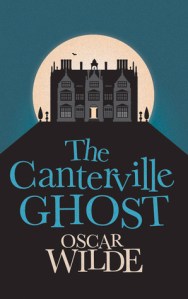
9. The Canterville Ghost by Oscar Wilde – This classic satirical comedy is a ghost story with a difference; an American family move into an English country house which is said to be haunted, but no matter how hard the resident ghost tries, the family refuse to be frightened!

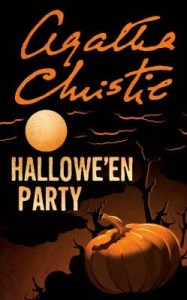
10. Hallowe’en Party by Agatha Christie – The obvious choice to finish my list! It’s one of the later Poirot novels, published in 1969, and I don’t think it’s one of the best, but with the murder taking place during a Halloween party it’s the perfect Christie novel to read at this time of year.

~

Have you read any of these? Which other books with Halloween-related words in the title can you think of?

If you’re wondering why there are no witch-related books in my list, I used them in a previous Halloween Top Ten Tuesday here!

The Ghost It Was by Richard Hull – #RIPXV

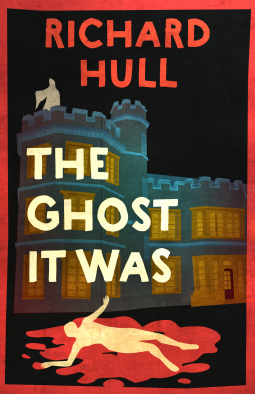
I’ve enjoyed several of Richard Hull’s novels over the last few years – particularly The Murder of My Aunt and Left-Handed Death – and with Halloween quickly approaching, The Ghost It Was (first published in 1936) sounded like a good one to read next.

The novel begins with aspiring journalist Gregory Spring-Benson trying to get a job as a newspaper reporter. Having failed to impress the editor, Gregory is given new hope when he comes across a badly written article about James Warrenton’s purchase of the supposedly haunted Amberhurst Place. James Warrenton happens to be his uncle – his very rich uncle – and perhaps if Gregory goes to visit him in his new home he will be able to gather material for a much more interesting article that will help to launch his career in journalism. If he can also persuade Uncle James to leave him as much money as possible in his will, even better!

On his arrival, however, Gregory finds that he is not the only one hoping to secure his inheritance; three other nephews and a niece have also descended upon the house in an attempt to ingratiate themselves with their uncle. But while the cousins are busy plotting and scheming against each other, the ghost of Amberhurst Place makes an appearance at the top of a tower. Deaths soon follow, but is the ghost responsible or is there a human culprit?

Although all of the books I’ve read by Richard Hull so far have been very different, unlikeable characters seem to be the one thing they have in common! This worked very well in The Murder of My Aunt, where the characters were so horrible they were funny, but in this book they are just thoroughly unpleasant and not much fun to spend time with at all. I could easily have believed that almost any of them was the murderer and didn’t really care which of them was. It didn’t help that after a strong opening, introducing us to Gregory Spring-Benson and describing his ordeals at the newspaper office, the narrative then jumps around between the other cousins, the butler, a clergyman and some Scotland Yard investigators. We barely see Gregory after this and I felt that the novel lost focus through trying to involve too many different characters at once.

The ghost story aspect of the novel is well done – not at all scary, but it adds some atmosphere and makes it more difficult to work out exactly how the murders are being carried out. Despite the unpleasant characters and the lack of focus I’ve mentioned, it’s quite an enjoyable mystery to try to solve and the denouement, when it comes, is unusual and unexpected. Instead of tying everything up for the reader, Hull leaves us to make up our own minds and to decide whether we’ve correctly interpreted what we have been told. Not a favourite Hull novel, then, but still worth reading and I will continue to explore his other books.

Thanks to Agora Books for providing a copy of this book for review via NetGalley.

This is my second book read for this year’s R.I.P. Challenge.

The Devil and the Dark Water by Stuart Turton – #RIPXV

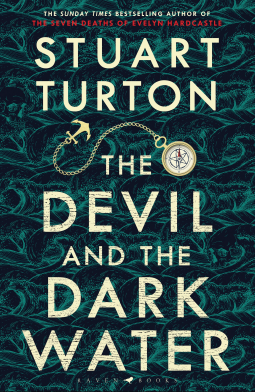
I loved Stuart Turton’s first novel, The Seven Deaths of Evelyn Hardcastle, which I thought was one of the most original and unusual mystery novels I’ve ever read, so I had high hopes for his new book, The Devil and the Dark Water. However, although this is another complex and cleverly plotted novel, it has a very different structure, setting and feel, and didn’t impress me as much as the previous book did.

The Devil and the Dark Water opens in 1634 in Batavia (now Jakarta, Indonesia), an outpost of the United East India Company. The Dutch ship Saardam is about to set sail for Amsterdam, carrying a cargo of spices, a mysterious object known as The Folly – and a prisoner, Sammy Pipps, the world’s greatest detective. Nobody knows what crime Sammy is supposed to have committed, but his friend and bodyguard, Lieutenant Arent Hayes, has vowed to protect him during the journey and to prove him innocent if possible. As the passengers and crew prepare to embark, a leper wrapped in blood-stained rags appears on the dock and has time to place a curse on the ship before his body is consumed by flames.

The curse appears to set in motion a chain of eerie, unexplained events which begin to occur as soon as the ship sails out to sea. Is the Saardam really being haunted by the devil, Old Tom, or is a human being behind these sinister occurrences? With Sammy locked in a cell, it falls to Arent to investigate…but he is not the only person on the ship who is trying to solve the mystery. Sara Wessel, wife of the Governor General, is also determined to uncover the truth, with the help of her daughter, Lia, and her husband’s mistress, Creesjie.

This is a wonderfully atmospheric book, with a real sense of evil and foreboding, beginning in the first chapter with the leper’s curse – ‘Know that my master sails aboard the Saardam. He is the lord of hidden things; all desperate and dark things…’ – and continuing to build throughout the novel, with strange symbols appearing on the sails, a lantern that shines out at sea where no lantern should be, stories of witchfinders and burning villages, and a series of ‘unholy miracles’. I found it genuinely spooky and although the plot itself seemed to move along very slowly at times (I read it on my Kindle and hadn’t really appreciated what a long book it was), the atmosphere more than made up for it. The revelations at the end of the book also took me by surprise; I’d had my suspicions about one of the characters, but I certainly didn’t guess everything correctly!

There were things I liked, then, but the main problem I had with the book was that I never at any point felt fully immersed in the seventeenth century. There’s no real attempt to use language appropriate to the period, Sara and Lia are both modern women with modern attitudes, and the depiction of Sammy Pipps as a sort of Sherlock Holmes character whose cases had been written about (by Arent) for all the world to read seemed completely implausible. To be fair, Stuart Turton acknowledges in an author’s note at the end of the book that he ‘did his research, then threw away the bits that hindered the story’, but I personally prefer a story set in the past to actually feel historical – otherwise, why bother setting it in the past at all? If you’re not too bothered about historical accuracy and are just looking for a dark and atmospheric mystery novel, I’m sure you’ll find a lot to enjoy here, but I don’t think I was the right reader for this book.

Thanks to Raven Books for providing a copy of this book for review via NetGalley.

I am counting this book towards this year’s R.I.P. Challenge.

Beau Sabreur by PC Wren

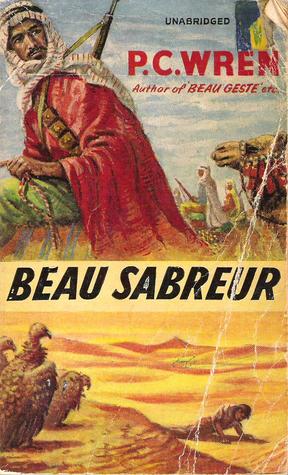
I loved PC Wren’s 1924 classic Beau Geste and when I discovered that it was the first in a trilogy I knew I would have to read the other two. It has taken me more than five years, but a few weeks ago I finally got around to picking up the second book, Beau Sabreur, which was first published in 1926. Although this is a sequel to Beau Geste and features a few of the same characters, it’s not really a direct continuation of the story so would probably work as a standalone; however, some parts of the plot will make more sense if you have already read the previous book.

Beau Sabreur is divided into two sections and really is a book of two very distinct and different halves! The first half, Failure: The Making of a Beau Sabreur, is narrated by Major Henri de Beaujolais, whom you may remember as the French army officer who discovered the eerie abandoned fort at the beginning of Beau Geste. Henri’s narrative follows his early days with his regiment, the friends and enemies he makes, each of whom will have an impact on his future career, and the challenges he faces in settling into army life.

After completing his training, Henri is sent to North Africa with the cavalry where he has a series of adventures that wouldn’t be out of place in Lawrence of Arabia: camel rides across the desert; encounters with bands of Touareg robbers; and negotiations with Emirs and Viziers. It is here in the Sahara that Henri meets the beautiful Mary Vanbrugh, a guest of the colonel of the French-occupied city of Zaguig, who is ‘doing Algeria and seeing something of the desert’ with her brother and her maid-companion, Maudie. Henri is captivated by Miss Vanbrugh, but when the city comes under attack, he must decide whether she is more important to him than his duty to France.

I really enjoyed the first section of the book. Henri de Beaujolais is an engaging narrator and although his story encompasses serious themes of love, honour and duty, it is told with a lot of humour; I found the part where he visits a tailor to be fitted with his army uniform particularly funny. Bearing in mind that this is a novel written in the 1920s and some of the views on race and gender would be considered problematic today, I was pleased to find that Mary Vanbrugh is depicted as a courageous, independent and intelligent woman with a mind of her own (although Maudie, who dreams of being carried off on horseback by a handsome Sheikh, is less so). This first half comes to an end with a surprising plot twist that I hadn’t seen coming, before the whole style and tone of the novel changes entirely as we enter Part Two – Success: The Making of a Monarch.

The second half of the novel, sadly, didn’t live up to the promise of the first half. The focus moved away from Henri to concentrate on two of the characters from Beau Geste whom I liked in that book but didn’t care for in this one. The dry wit of Henri’s narrative was replaced by a much less subtle humour and I found the story in Part Two became quite tedious after the excitement and drama of Part One. I was still interested enough to keep reading to the end and I was rewarded with several more plot twists which made me glad I had persevered, but the abrupt change in the middle of the book didn’t work for me at all. I will probably still try the third book, Beau Ideal, and will hope for something more consistent from that one!

Every Eye by Isobel English – #1956Club

This week Karen from Kaggsy’s Bookish Ramblings and Simon from Stuck in a Book are hosting another of their club events, where we all read and write about books published in a chosen year. This time the year is 1956, which seems to have been a fantastic year for publishing! There were a lot of books that sounded very appealing to me, but there were only two already on my TBR and I decided on this one, Every Eye by Isobel English. This short novella, published by Persephone, has fewer than 150 pages (including the preface by Neville Braybrooke), so was perfect for me at the moment when I’m struggling to concentrate on longer books; my usual reading patterns seem to have been disrupted all year and I don’t know when they will get back to normal.

Anyway, Every Eye is narrated by Hatty, a woman in her thirties who is married to Stephen, a younger man. At the beginning of the book, she and Stephen are preparing to go on a belated honeymoon to Ibiza, when she receives the news that Cynthia has died. Who is Cynthia? Well, she’s the woman who married Hatty’s Uncle Otway many years earlier and who was to become one of the most influential figures in her young life. As Hatty and Stephen travel by train across France and Spain, the story moves back and forth between past and present as Hatty reflects on her childhood and her memories of Cynthia, Uncle Otway – and the older man, Jasper, with whom she had her first romantic relationship.

The book is structured in a way that I would often have found irritating; one continuous narrative with no chapter breaks and sudden jumps between past and present tense as Hatty alternates between telling the story of her trip to Ibiza and reminiscing about episodes from her past. Here, though, the structure works very well and, perhaps because the book is so short, it doesn’t have time to become annoying or confusing. And Isobel English writes beautifully! I am in the habit now of looking out for interesting, inspiring or thought-provoking passages to quote in my monthly Commonplace Book posts; with some books I struggle to find any, but with Every Eye there was a line or a paragraph worthy of being quoted on almost every page. There’s a lovely sense of place too; the descriptions of the scenery through which Hatty and Stephen pass on their journey across Europe are gorgeous and vivid:

Trailing banks of giant blue convolvulus, purple bougainvillea twisted into the formal intricacy of black wrought iron – all hang downward toward the sea. Lemons in the hotel garden, still green but ripening in patches, and below the shelving gardens, the wilder unfenced land parceled into small plots, sloping away to the sea’s edge: everywhere the stunted grey of the olive trees. With our small rationed vision we are like greedy children looking everywhere for more and more; we stare into the brilliance like seers, seeking an unsimple and deeper quality; when we do not find it, we call it surfeit.

The title of the book refers to Hatty’s ‘lazy eye’, which gives her the appearance of not looking straight ahead. She considers this to be a deformity – something that makes her unattractive and undesirable – and even after having an operation to correct it, it still has an impact on her self-confidence. Sight and vision are important themes in the novel, not just in the sense of Hatty having eye problems, but also in how we see other people and how they see us. For example:

After the first six months of our knowing each other, I found it impossible to carry within my mind a clear picture of myself in relation to Jasper. My vision was blurred, because I had outwardly accepted the state.

Or this:

I thought always before the operation on my eye that the source of discordancy between myself and other people lay in the distortion of my own vision; I did not know then as I do now that this outward sign was only the visible proof of inward impediment.

Despite her problems with vision, or maybe because of them, it seems that by the end of the story Hatty can see things more clearly than anyone else. I had heard that this book had one of those amazing last lines that make you catch your breath, so I was expecting something special – and yes, it was worth waiting for (but not quite as powerful as the last sentence of another Persephone, Little Boy Lost). This is a beautiful, atmospheric book and although it’s not one of my absolute favourite Persephones, it’s certainly one I’m glad I read and a great choice for 1956 Club!

Here are some other books from 1956, previously reviewed here on my blog:

Death in Cyprus by MM Kaye
Sprig Muslin by Georgette Heyer
Death on a Quiet Day by Michael Innes
Mary of Carisbrooke by Margaret Campbell Barnes