Nonfiction November Week 3: Be (and ask) the Expert – Victorian true crime

For Week 3 of Nonfiction November, the topic is as follows:

Week 3: (Nov 11 to 15) – Be the Expert/Ask the Expert/Become the Expert (hosted by Doing Dewey)

Three ways to join in this week! You can share 3 or more books on a single topic that you’ve read and can recommend (be the expert); you can put the call out for good nonfiction on a specific topic that you’ve been dying to read (ask the expert); or you can create your own list of books on a topic that you’d like to read (become the expert).

~

I don’t read enough non-fiction to be able to call myself an expert on any topic, but here are three books I’ve read on Victorian true crimes. I enjoyed them all, particularly the third one.

Murder by the Book by Claire Harman

This book looks at some possible links between the murder of Lord William Russell in London in 1840 and the influence of the popular crime novels of the time known as ‘Newgate Novels’. In particular, Harman discusses the book Russell’s murderer was thought to have been reading just before committing the crime: Jack Sheppard by William Harrison Ainsworth. I was disappointed by the true crime aspects of this book, but loved learning more about the Newgate Novels!

The Wicked Boy by Kate Summerscale

This book is on a very similar subject. It deals with a murder committed by a thirteen-year-old boy in London’s East End in 1895 and how blame was placed on the availability of cheap adventure novels, or ‘penny dreadfuls’ as they were known. I’ve also read and enjoyed Kate Summerscale’s more famous The Suspicions of Mr Whicher, an account of the Road Hill House Murder of 1860.

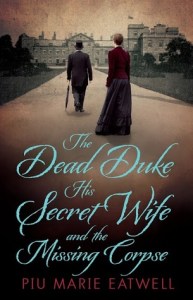
The Dead Duke, His Secret Wife and the Missing Corpse by Piu Marie Eatwell

This fascinating book explores the life of the eccentric, reclusive 5th Duke of Portland and the sensational claim of Anna Maria Druce that the Duke was actually the alter ego of her father-in-law, T.C. Druce. The story is as bizarre as the title would suggest and involves secret wives and illegitimate children, fraud and forgery, stolen evidence and unreliable witnesses, lies and deception and double identities. I loved it!

~

Now I’m going to ‘Ask the Expert’…

Have you read any of these books – or any other books about Victorian true crimes? Which ones would you recommend?
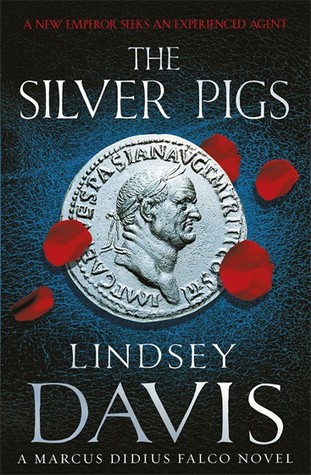
The Silver Pigs by Lindsey Davis

I love historical mysteries but have never felt drawn to Lindsey Davis’ Falco series as the setting – Ancient Rome – is not one of my favourites. Recently, though, I have discovered a few books set in Rome that I’ve enjoyed and have been open to reading more, so I thought I would give the first book, The Silver Pigs, a try. When I noticed that my library had the first four in the series available to download as audiobooks, I decided that as I was stepping slightly out of my comfort zone anyway with the Roman setting, I may as well step out of it completely with a format I usually avoid.

Audiobooks tend not to work for me because I find that my attention wanders more easily when I’m listening to a book than it does when I’m reading it on paper, but I did my best to concentrate on this one and was mostly successful. It is read by the British actor Christian Rodska and although I wasn’t sure about his voice at first (he sounded too old for the thirty-year-old Falco) I changed my mind after a while and decided that his voice was well suited to the down to earth, humorous style of the writing.

The novel opens in the year 70 AD with an encounter between our narrator, ‘private informer’ Marcus Didius Falco, and a young woman who is being chased through the Forum. After helping her to escape from her pursuers, Falco learns that the girl’s name is Sosia Camillina and that she is the niece of a powerful senator. It seems that Sosia has become embroiled in a conspiracy involving a secret stockpile of silver ingots (known as ‘silver pigs’) – a conspiracy which could pose a threat to the rule of the Emperor Vespasian.

To find out who is behind the plot, Falco is sent to the silver mines of Britannia, something he is less than thrilled about because Britannia is a cold, miserable place in winter. During his time there he meets the senator’s daughter Helena Justina, Sosia’s cousin, an intelligent, opinionated young woman to whom Falco takes an instant dislike – and the feeling is mutual. Given the job of escorting her back to Rome, Falco is unsure which task will give him more trouble: solving the mystery of the silver pigs or dealing with Helena!

As I’ve said, Ancient Rome is not one of my usual subjects when it comes to reading historical fiction, so this was an educational read for me as well as an entertaining one. Knowing that Lindsey Davis seems to be highly regarded for her research and accuracy, I could trust that what I was learning was correct (apparently since the book was first published in 1989 new evidence emerged showing that the description she gives of the process used in the formation of silver pigs may not be accurate, but that’s just proof of how our knowledge of history is still changing and evolving).

I wasn’t sure what to think of Falco as a character; I found him a bit off-putting in the opening chapters where his first thought on seeing sixteen-year-old Sosia Camillina is that she’s ‘wearing far too many clothes’ and then, when she tells him she’s not married, he thinks ‘she looked like a person who soon should be’. As I read on, though, I found that he is maybe not quite the sophisticated womaniser he wants us to think he is, but a young man who is trying to get out from under the thumb of his domineering mother and the shadow of his late brother, the military hero Didius Festus, and who is a beloved uncle to his little niece Marcia.

The mystery itself didn’t really interest me, to the point where I started to lose track of what was happening towards the end, although that could have been partly because, as I’ve mentioned, I find it harder to concentrate on the spoken word than the written word. This is the first book in the series, though, so it’s possible that some of the later ones have stronger plots. I will try the second one, but probably in traditional book format rather than audiobook.

Since I finished The Silver Pigs, it has been announced that there are plans for a new adaptation of the Falco novels by ITV and Mammoth Screen, so it seems I have chosen a good time to start reading them!

Historical Musings #55: Lest we forget

Welcome to my monthly post on all things historical fiction. As tomorrow is Remembrance Sunday, I thought it would be appropriate to devote this month’s post to historical novels which explore the impact and legacy of the First World War. I’ve always found this an interesting and moving period to read about and have come across books which cover almost every aspect of the war you can think of.

I’ve read books about wartime nurses (The Daughters of Mars by Thomas Keneally and The Poppy Field by Deborah Carr), the horrors of life in the trenches (The Lie by Helen Dunmore) and men left suffering from shell shock (Dead Man’s Embers by Mari Strachan), what it means to be a conscientious objector (The Absolutist by John Boyne and If You Go Away by Adele Parks), the class and social changes that came about because of the war (The Last Summer by Judith Kinghorn and The Summer Before the War by Helen Simonson), and even the bravery of the horses that served in the war (War Horse by Michael Morpurgo).

I’ve also discovered family sagas which are set at least partly during the war (Post of Honour by RF Delderfield and The Daughter of Hardie by Anne Melville), historical mysteries set during or just after the war (The Return of Captain John Emmett and The Strange Fate of Kitty Easton by Elizabeth Speller) and fictional accounts of real people and their wartime experiences (Mr Mac and Me by Esther Freud and Zennor in Darkness by Helen Dunmore).

A good range of books there, I think, and although I can’t say that I loved all of them, I do think they all have something to offer and provide some insights into different aspects of the war. One thing I can say for certain is that reading about the war has helped me to appreciate the courage and resilience faced by both those on the front line and those left behind at home.

Now it’s your turn. Which books set during World War I would you recommend?

Nonfiction November: Week 2 – Book Pairings

For Week 2 of Nonfiction November, the topic is as follows:

Week 2: (Nov 4 to 8) – Fiction / Nonfiction Book Pairing (hosted by Sarah’s Bookshelves)

This week, pair up a nonfiction book with a fiction title. It can be a “If you loved this book, read this!” or just two titles that you think would go well together. Maybe it’s a historical novel and you’d like to get the real history by reading a nonfiction version of the story.

I have chosen three of the non-fiction books I’ve read so far this year and paired each of them with a novel that I think is a good match.

~

Following in the Footsteps of Henry Tudor by Phil Carradice/The Tudor Crown by Joanna Hickson

Earlier in the week, I reviewed this new biography of Henry VII which focuses on his years in exile and his march to the battlefield at Bosworth in 1485 where he would defeat Richard III and become king of England. A good fictional accompaniment would be Joanna Hickson’s The Tudor Crown, which covers the same period. Although my own sympathies tend to be with Richard III and the House of York, Hickson almost managed to make me like Henry Tudor!

~

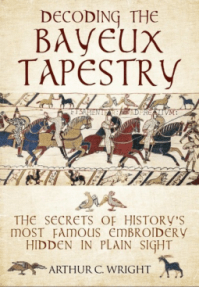
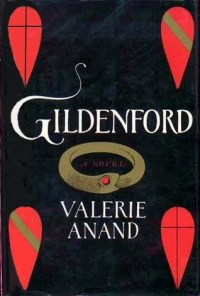
Decoding the Bayeux Tapestry by Arthur C. Wright/Gildenford by Valerie Anand

We know that the Bayeux Tapestry tells the story of the Norman Conquest and Battle of Hastings, but Arthur C. Wright’s book looks at the often-ignored images in the margins of the Tapestry and discusses what they add to our knowledge of the period. A fiction title which goes well with this book is Gildenford by Valerie Anand as it’s set in the years just prior to the Conquest. I have the second book in the series, The Norman Pretender, ready to read soon.

~

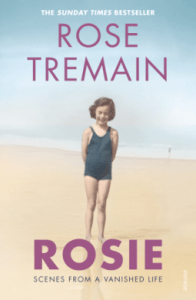
Rosie: Scenes from a Vanished Life by Rose Tremain/The Gustav Sonata by Rose Tremain

Another of my recent non-fiction reads was the author Rose Tremain’s childhood memoir, Rosie. In the book, Tremain talks about her memories of visiting Switzerland at the age of seven and later being sent to ‘finishing school’ there. Her 2016 novel, The Gustav Sonata, is set in Switzerland, which I think makes these two books a good pair.

~

Can you think of any good fiction/non-fiction book pairings?

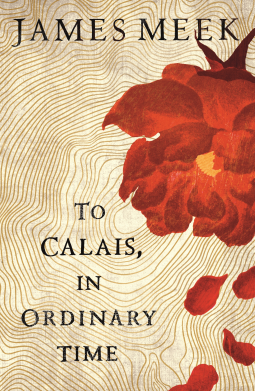
To Calais, in Ordinary Time by James Meek

It’s 1348, two years after England’s victory over France at the battle of Crécy, which led to the capture of the French port of Calais. And it is to Calais that we are headed in James Meek’s latest novel, in the company of a large and diverse group of characters.

First, there’s Lady Bernadine, a young noblewoman betrothed to a man her father’s age. Dreaming of the sort of love described in her favourite poem, Le Roman de la Rose, Bernadine has run away from her home and her arranged marriage in pursuit of the man she hopes to marry instead, the knight Laurence Haket. Haket has raised a band of archers to send to the English garrison at Calais and they are all on their way to Melcombe in Dorset where their ship awaits.

The newest recruit to the company of archers is Will Quate, a young bondsman from Bernadine’s village, Outen Green. Will hopes that Bernadine’s father, Sir Guy, will grant him his freedom in return for serving with the bowmen. The other archers are rough, battle-hardened men who were together at Crécy and are not the most pleasant of people, as Will quickly discovers – but it seems that they will not go unpunished for the crimes they have committed.

Finally, we meet Thomas Pitkerro, a Scottish proctor who has been working at the papal court in Avignon and is returning there after carrying out a commission at Malmesbury Abbey in England. The Abbot has asked him to travel with the archers and to listen to their confessions as the nearest thing to a priest they will have. And they certainly have a lot to confess!

To Calais, in Ordinary Time doesn’t have a huge amount of plot – the whole story consists of the journey through the south of England towards Melcombe, but there’s still a lot going on. We get to know more about the archers and the girl known as Cess who has come back with them from France; the characters find themselves asked to perform in a morality play; and there’s an exploration of identity and gender through the story of Hab the swineherd and his ‘sister’ Madlen. Meanwhile, unknown to the characters, every step they take towards Calais is taking them closer to the Black Death, the great pestilence coming in the opposite direction. The choice of Melcombe as the point where they will embark for France is significant because Melcombe will become known as the ‘Plague Port’ – one of the first locations where the Black Death would enter England. You can find parallels with modern catastrophes (James Meek has said that he was thinking of climate change) but any comparisons are lightly drawn and they are more something to keep in mind rather than an important part of the story.

But the most notable aspect of this book – and one you’ll probably either love or hate – is the language. Meek uses three very distinct styles to convey the different backgrounds and social classes of each of the three main characters or groups of characters. Thomas Pitkerro’s narrative, mainly in the form of letters to his friends in Avignon, is written in very formal prose with long sentences and big words, evoking the Latin used by the clergy at that time. As an English noblewoman in the 14th century, Bernadine would have spoken a form of Norman French, so this is indicated by peppering her speech with words like the French negative ‘ne’ (‘you ne understand’, ‘ne speak his name’). The others – Will, Hab and the archers – speak in their local Cotswold dialect (‘they say steven in place of voice, and shrift and housel for confession and absolution, and bead for prayer’). They also say neb for face, which I found quite jarring as where I live it means nose!

While I appreciated the imaginativeness and cleverness behind all of this, I have to admit that I just found it a distraction. Ironically, instead of helping to immerse me in the setting and the story, it kept pulling me back into the present day and reminding me that I was reading a modern work of fiction. As I’ve said, though, I’m sure other readers will love the use of language and so will probably enjoy this book a lot more than I did. It’s the sort of book I would expect to see being nominated for awards; it just wasn’t right for me personally.

Thanks to Canongate Books for providing a copy of this book for review via NetGalley.

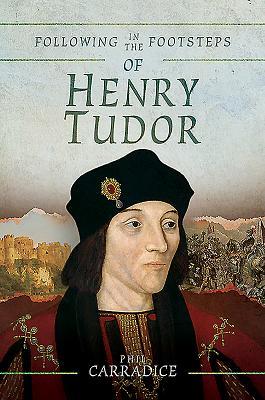
Following in the Footsteps of Henry Tudor by Phil Carradice

As those of you who have been following my blog for a while will probably know, my favourite period of English history is the Wars of the Roses, the conflict that dominated the second half of the fifteenth century as the rival houses of York and Lancaster fought for control of the throne. The Wars of the Roses came to an end shortly after the Battle of Bosworth in 1485, during which Richard III was killed and the victorious Henry Tudor came to the throne as Henry VII. In Following in the Footsteps of Henry Tudor, Phil Carradice looks at Henry’s life from childhood to death, but with a special focus on his journey to Bosworth Field.

Beginning with Henry’s birth at Pembroke Castle in Wales to Margaret Beaufort and Edmund Tudor, Carradice goes on to give us an overview of the period, explaining how the throne changed hands several times between York and Lancaster and describing Henry’s fourteen years in exile under the protection of the Duke of Brittany. In 1485, with Richard III’s reign becoming increasingly troubled, Henry returned to Wales ready to launch his own claim to the English throne. His long march into England at the head of an army – a journey which took more than two weeks – where he would meet Richard on the battlefield at Bosworth, is the main subject of this book.

Carradice goes into a lot of detail on why the place usually described as the site of Henry’s landing in Wales may be incorrect and attempts to establish exactly where he did begin his journey. He then looks at some of the legends that surround the various stages of the march and whether they are likely to be true or not. He draws on primary sources such as The Ballad of Bosworth Field and the chronicles of Polydore Vergil, but also refers to the work of more recent historians and even includes some excerpts from his own interview with a man who decided to mark the 500th anniversary of Bosworth in 1985 by recreating Henry’s march. The one thing that was missing and would have really added to my enjoyment of the book was a map showing the route taken by Henry and his men; there was plenty of other additional material, such as photographs and illustrations, a bibliography and an index, so it’s disappointing that no map was included.

The account of the Battle of Bosworth itself was particularly well written and interesting, giving a good idea of how both Richard and Henry may have felt as they made their preparations and how each of their fates rested on winning the support of Thomas and William Stanley, who waited until the very last minute to enter the battle. The author makes no secret of the fact that his sympathies are with Henry and the Lancastrians rather than with Richard and the House of York – and he gives his reasons for his bias in the prologue at the beginning of the book. However, he does acknowledge some of Richard’s good points, such as his courage on the battlefield and his skill as a soldier, and in general I thought the book was quite fair and balanced – certainly not as biased as others that I’ve read.

As for accuracy, I noticed a few small errors such as a reference to the white rose of Lancaster and red rose of York (it’s the other way round, of course) but I’m sure these were silly mistakes rather than a lack of knowledge from the author. Overall, I found this an enjoyable and informative read; even though it’s a period I have read about many times before, I felt that I was learning new things from it – and I think it would be accessible for readers with little or no knowledge of the period too.

Following in the Footsteps of Henry Tudor is published by Pen & Sword Books as part of their ‘Following in the Footsteps’ series. The other books in the series explore the stories of Edward II, Oliver Cromwell and The Princes in the Tower. Thanks to Pen & Sword for providing me with a copy of this book for review.

Six Degrees of Separation: From Alice’s Adventures in Wonderland to Uprooted

It’s the first Saturday of the month which means it’s time for another Six Degrees of Separation, hosted by Kate of Books are my Favourite and Best. The idea is that Kate chooses a book to use as a starting point and then we have to link it to six other books of our choice to form a chain. A book doesn’t have to be connected to all of the others on the list – only to the one next to it in the chain.

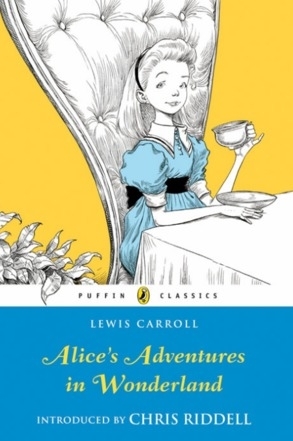
This month we are starting with the children’s classic Alice’s Adventures in Wonderland by Lewis Carroll. It’s not often that I have read the first book in the chain, but this is one that I have read several times, although not for years.

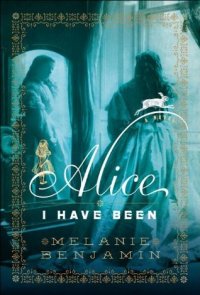
The character of Alice was inspired by a real life child, Alice Liddell. Melanie Benjamin’s novel, Alice I Have Been (1), is a fictional account of Alice Liddell’s life, with a focus on her relationship with Charles Lutwidge Dodgson (Lewis Carroll) and how her connection with his book changed her life forever.

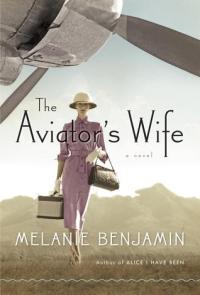
I have read a few of Melanie Benjamin’s other books and enjoyed them. The Aviator’s Wife (2) is my favourite. It tells the story of Anne Morrow Lindbergh, wife of the famous American aviator Charles Lindbergh and later an accomplished aviator in her own right, as well as a successful author.

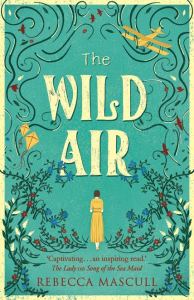
Another novel I’ve read about a female aviator, a fictional woman this time, is The Wild Air by Rebecca Mascull (3). Although I’m not particularly interested in aviation myself, I loved Rebecca Mascull’s book – it really made me appreciate just how brave those early pioneers of flying were.

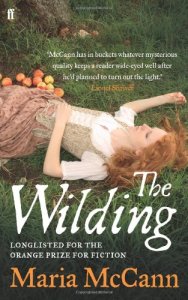
My next link takes the word ‘Wild’ and leads me to The Wilding by Maria McCann (4), a historical mystery set in 17th century England and narrated by a young man who works as a cider-maker.

With its recreation of life in a small rural community and the descriptions of orchards and trees and apple-pressing, The Wilding shares some themes with The Woodlanders by Thomas Hardy (5). The Woodlanders is one of my favourite Hardy novels; I loved getting to know the people who built their lives in and around the woods of Little Hintock.

My final link is to another book in which a wood plays an important part in the story: Uprooted by Naomi Novik (6). Uprooted is a fantasy novel set in a village under threat from evil forces gathering in The Wood, a sinister place which is much more than just a collection of trees!

~

Well, that’s my chain for this month, with links including Alice Liddell, female aviators, the word ‘Wild’, apples and woods. Next month we will be starting with Jane Austen’s unfinished manuscript, Sanditon.