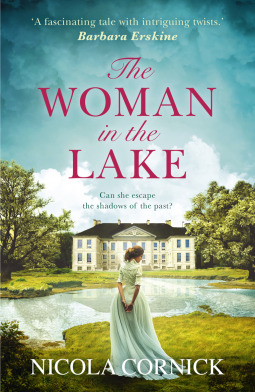
The Woman in the Lake by Nicola Cornick

One day in 2004, thirteen-year-old Fenella Brightwell is on a school trip to Lydiard House in Swindon when she becomes separated from the rest of the class. Following a disturbing encounter with a drunken old man who appears to be dressed in period costume, Fen manages to find her way out of the stately home to rejoin her friends – but not before picking up a beautiful golden dress left carelessly on a chair and pushing it into her bag. Fen doesn’t know why she keeps feeling such a compulsion to take things that aren’t hers, but perhaps it is a way of coping with her difficult home life. She hasn’t seen her father for years, and with her mother away on a series of archaeological digs, Fen has been left to care not only for herself but for her alcoholic grandmother, Sarah, as well.

In the present day, Fen is now a woman of twenty-seven trying to build a new life for herself as an antique dealer after leaving her abusive husband. Sarah has recently died and has left Fen a package containing the gold dress, which Fen has never even thought about for years, along with a cryptic message warning her to be careful. Fen has no idea what her grandmother means – how can a dress be dangerous? – but now that she has it in her possession she becomes aware of the strange, almost supernatural powers it wields.

To understand the history of the dress and the secrets it holds in its fabric, we need to follow another storyline, this one set in the eighteenth century. In 1765, Lady Isabella Gerard is surprised when she receives a lovely golden gown as a gift from her husband. Eustace, Lord Gerard, is a cruel and manipulative man and doesn’t usually show her any generosity. She doesn’t really want to accept his gifts, but tells her maid, Constance, to take the dress away and keep it until the day comes when she feels like wearing it. Constance, however, is later approached by Lord Gerard, who seems to have changed his mind about the dress and tells her to destroy it. Who should she obey? What is so important about the golden gown? And what effects might it have on Constance herself?

This is the third Nicola Cornick novel I’ve read (The Phantom Tree and House of Shadows are the previous two) and it has many of the things I’ve come to expect from her books: multiple narratives set in different time periods, a big country house, objects from the past finding their way into the present, and a touch of the supernatural. The house in this book is based on a real place, Lydiard House, set in beautiful parkland in Swindon, Wiltshire, and can still be visited today. In reality, it was home to the St John family, rather than the Gerards in the novel, although one of its residents – Lady Diana – was apparently the inspiration for Isabella Gerard. A mixture of fact and fiction, then, but with the emphasis more towards the fiction.

I preferred the historical storyline to the modern day one, although I can’t say that I liked either of our historical narrators, Isabella and Constance. They had both been treated badly in various ways, so I felt that I should have had more sympathy for them, but I just didn’t – I found Isabella self-absorbed and Constance bitter and spiteful. Having said that, the story probably wouldn’t have worked if they had been different sorts of people. I did appreciate the fact that neither of them revealed everything about themselves too early in the book, which meant that there were secrets to be discovered later on.

As for Fen, I never quite warmed to her either, but I did enjoy seeing her storyline tie together with Isabella’s and Constance’s as the book headed towards its conclusion. There are lots of little snippets of information on Swindon’s history which helps to form links between the two periods and I particularly loved a subplot involving a gang of ‘Moonrakers’ (smugglers). I couldn’t help feeling that there were too many things left unexplained, though. The time travel that seemed to occur in Lydiard House at the beginning of the book never happened again, which was disappointing, and I didn’t fully understand why the dress exerted so much power over the present day characters either – except to add a spooky, Gothic element to the story.

I found more to like than to dislike about The Woman in the Lake, but if you’re new to Nicola Cornick I would recommend starting with The Phantom Tree.

Thanks to HQ for providing a copy of this book for review via NetGalley.

This is book 2/20 of my 20 Books of Summer.
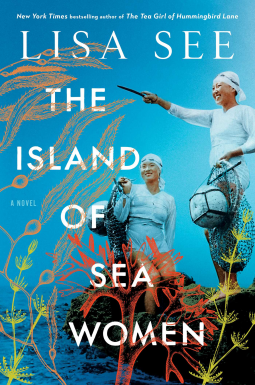
The Island of Sea Women by Lisa See

One of the things I love about reading is that it gives me the opportunity to learn about places and cultures I would otherwise be likely to go through life knowing little or nothing about. Before reading Lisa See’s latest novel, The Island of Sea Women, I had never heard of the haenyeo communities of Jeju in South Korea, but now I have been enlightened!

The haenyeo, for anyone else who doesn’t know, are female divers who gather seafood such as abalone, octopus and conch from the waters surrounding the island of Jeju. The Island of Sea Women is narrated by Young-sook, a haenyeo whom we follow over a period of many years, from the 1930s to 2008. It’s a story of friendship and betrayal, war and suffering, and the importance of forgiveness – but most of all, it’s a fascinating study of a society of ‘sea women’ and how their way of life changes as the decades go by.

At the beginning of the novel, we see Young-sook joining her village’s diving collective, of which her mother is the leader, and starting to learn the skills she will need in her career as a haenyeo. Although she is excited about taking her first dives with the other women, she is also nervous about the many dangers lurking in the depths of the sea. Fortunately for Young-sook, she has a friend the same age – a girl called Mi-ja – with whom to share her experiences.

Mi-ja is the daughter of a ‘Japanese-collaborator’, at a time when Japanese colonists are disliked and resented across Jeju, but Young-sook loves and trusts her and is closer to her than to her own brothers and sisters. The friendship between Mi-ja and Young-sook endures through loss and tragedy and political turmoil, through marriage and motherhood, through times of peace and times of war, until the day comes when one of the women is faced with a difficult choice – and the decision she makes that day means that nothing will be the same again.

I enjoyed The Island of Sea Women, but it wasn’t always an easy or pleasant book to read – Young-sook and her family live through a very eventful and turbulent period of Korea’s history, including Japanese colonialism, World War II and the Korean War, and Jeju’s strategic location means it is often at the heart of the action. The most memorable part of the book for me was the section covering the ‘4.3 Incident’, the horrific massacre of protesters by police and government forces that took place in April 1948. Although I’d felt that for the first half of the book, the balance between fact and fiction wasn’t quite right and that we were being given a lot of information and detail at the expense of characterisation and plot, from the 4.3 Incident onwards, the story became much more compelling and the characters began to feel very real to me.

Lisa See writes so well about female friendships. Like Pearl and May in Shanghai Girls, Lily and Snow Flower in Snow Flower and the Secret Fan, and the three girls in China Dolls, Young-sook and Mi-ja have a special, unbreakable bond, yet they also go through some very dark and difficult times that stretch their bond to its limits. As I read, I kept thinking about how important perspective is; we only see things from Young-sook’s point of view in this novel, but had we been given Mi-ja’s side of the story it would have become a different book entirely.

The haenyeo culture is fascinating to read about and See weaves several of their myths, legends and proverbs into the story, showing us the importance haenyeo place on praying to the goddess of the wind and attending religious rituals led by their female shaman. It is in many ways a matriarchal society where the women are the ones who go out to work and provide for their household, while the men stay at home to look after the children. In the haenyeo community, the birth of a girl is welcomed as much as a boy because she will eventually be able to earn money and feed the family, yet it is only men who can perform the ritual of ‘ancestor-worship’ and who are allowed to inherit property.

I thought it was interesting that Young-sook’s husband is insistent that their daughters should be sent to school and given the same opportunities as their sons, while Young-sook, illiterate herself, can’t see the need for female education because it won’t be necessary for a life spent diving into the sea. There is logic behind her viewpoint, because when the story comes up to date in the 21st century, we see that with improvements in education, many of the island’s young women are leaving Jeju for less dangerous jobs on the mainland. Most of the remaining haenyeo are aged over fifty-five – and some are in their seventies and eighties, still spending hours each day submerged in cold water, holding their breath for more than two minutes at a time.

If you would like to find out more about these amazing women and their work, Lisa See has a collection of photographs and videos of the haenyeo on her website.

Thanks to Simon & Schuster for providing a copy of this book for review via NetGalley.

This is book 1/20 of my 20 Books of Summer

The Adventurers by Jane Aiken Hodge

I’m enjoying working my way through Jane Aiken Hodge’s novels but, as I suppose is the case with many authors’ work, I’m finding that the quality varies a lot. The Adventurers (first published in 1965) is certainly much better than the last one I read, First Night, but not as enjoyable as Marry in Haste, Watch the Wall, My Darling or Strangers in Company.

The novel is set towards the end of the Napoleonic Wars when, following the Battle of Leipzig in 1813, the defeated French army begin their retreat through Germany. The von Hugel castle lies in their path and seventeen-year-old Sonia von Hugel hides in the hayloft as her family and servants are massacred around her. When the violence is over, Sonia escapes from the castle disguised as a boy, intending to make her way to her aunt’s home across the mountains. Stopping at an inn along the way, she has an encounter with the mysterious Charles Vincent, who makes her an offer which causes her to change her plans and agree to accompany him to France instead.

In England, meanwhile, we meet Lord Denbigh and his nephew Philip Haverton, who are preparing to travel to France on diplomatic business. What will happen when their paths cross with Charles and Sonia’s? What is their connection with Sonia’s friend, Elizabeth Barrymore? And, most importantly, where does Charles keep disappearing to without explanation?

As this novel, like many of Aiken Hodge’s, is set in the Regency period, it’s difficult not to make comparisons with Georgette Heyer. The opening sequence, with the heroine dressing as a boy and meeting the hero at an inn – and the misunderstandings that follow – is exactly the sort of storyline that will be familiar to Heyer readers. After this promising beginning, though, the story becomes much less Heyer-like, with very little humour and lightness and a more serious, sombre feel. The politics of the period also form quite an important part of the novel, with Napoleon facing defeat and a plot to restore the Bourbon monarchy gathering pace.

I have described Charles and Sonia as the hero and heroine – and it did seem that way at first – but I quickly began to lose interest in them, especially as Charles was absent for such long sections of the novel (for reasons I found too easy to predict). It was disappointing that their plan to travel across Europe as ‘adventurers’, making their living from winning money at cards, didn’t really come to much and there was far less adventure in the book than I had hoped for. One character who did interest me was Elizabeth Barrymore; I felt that it was her story rather than Sonia’s that the author really wanted to tell. She is given a romantic interest of her own and although I found the way it develops predictable as well, I thought it was more engaging and more moving than Sonia’s – a story of mistakes, regrets and second chances, a bit like Anne Elliot’s in Jane Austen’s Persuasion. Aiken Hodge wrote biographies of both Austen and Heyer, so it’s not surprising that their influence can be seen in her work.

The Adventurers is not a favourite by this author, then, but I did enjoy getting to know Elizabeth and learning a little bit about the political situation in Europe in the aftermath of the Battle of Liepzig.

Thanks to Agora Books for providing a copy of this book for review via NetGalley.

Amours de Voyage by Arthur Hugh Clough – A book for the Persephone Readathon

This week Jessie of Dwell in Possibility is hosting another of her Persephone Readathons. My choice of book this time proved to be very different from any of the other Persephones I’ve read, for several reasons. For one thing, it is one of only a few Persephones written by a man. With an original publication date of 1858, it must also be one of the oldest books they publish – the majority are from the first half of the twentieth century. Finally, it is written in verse, something which filled me with trepidation as I’m not really a fan of narrative poems (although, to be fair, I haven’t read all that many of them).

Anyway, Amours de Voyage follows a group of people who are visiting Italy during the political turmoil surrounding the fall of the short-lived Roman Republic in 1849. Their story is told in the form of letters written in hexameter verse and divided into five cantos. One of the letter-writers is Claude, a young man who is spending some time in Rome as part of his ‘grand tour’ and keeping a friend, Eustace, updated on everything he has seen and experienced. It seems that so far Rome has entirely failed to impress him:

Rome disappoints me much; I hardly as yet understand it, but

RUBBISHY seems the word that most exactly would suit it.

And then:

What do I find in the Forum? An archway and two or three pillars.

Well, but St. Peter’s? Alas, Bernini has filled it with sculpture!

I love Rome and ‘rubbishy’ is certainly not how I would describe it, but Claude is the sort of person who appears not to like or admire anything or anybody. This includes his fellow tourists, particularly the Trevellyns, who find Rome ‘a wonderful place’ and are ‘delighted of course with St. Peter’s’. This is Claude’s initial impression of the Trevellyns:

Middle-class people these, bankers very likely, not wholly

Pure of the taint of the shop; will at table d’hote and restaurant

Have their shilling’s worth, their penny’s pennyworth even:

Neither man’s aristocracy this, nor God’s, God knoweth!

As he gets to know the family better, however, he changes his opinion slightly and the tone of his letters to Eustace starts to suggest that he has fallen in love with Mary Trevellyn. Through Mary’s own letters to her friends Louisa and Miss Roper, we learn that although her own first impression of Claude was that she thought him ‘agreeable, but a little repulsive’, she is also beginning to change her mind:

Yes, repulsive; observe, it is but when he talks of ideas

That he is quite unaffected, and free, and expansive, and easy.

Unfortunately, before a romance has time to develop, violence breaks out on the streets of Rome and the Trevellyns leave the city just before it becomes besieged by the French. Claude has no intention of fighting for or against the Roman Republic (he doesn’t have a musket, he tells Eustace, and even if he did, he wouldn’t know how to use it) so he sets off in search of the Trevellyns instead. Due to bad luck and a series of misunderstandings, they keep missing each other as they move around Italy. Will Claude and Mary ever be reunited – or has the opportunity been lost forever?

I found Amours de Voyage much easier to get through than I had expected; it hasn’t become a favourite Persephone but it was still an enjoyable one and the rhythm, structure and colloquial language make it very readable. Despite Claude being such an annoying character, the way his story plays out is quite sad and moving as he begins to regret not speaking to Mary and telling her how he felt while he had the chance. Mary could have made the first move, but she knows that Claude ‘thinks that women should woo him; Yet, if a girl should do so, would be but alarmed and disgusted.’

The poem’s historical background is interesting too. Arthur Hugh Clough himself was in Rome in 1849 during the siege so was writing from personal experience, which explains why the parts of the poem that deal with the conflict – such as Claude’s account of witnessing a priest being killed and Mary’s description of Garibaldi riding into the city – feel vivid and authentic. I know nothing about Clough as a person other than the little I’ve been able to find online so I don’t know to what extent the rest of the story is autobiographical or how much of himself he put into Claude’s character.

Amours de Voyage endpapers

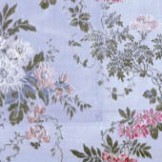
Because Amours de Voyage is in the public domain, it is available as a free ebook from sites like Project Gutenberg, but the Persephone edition has an introduction by Julian Barnes, illustrations, and gorgeous endpapers, taken from a woven dress silk from 1850. It isn’t a Persephone that gets much attention, so if you’ve read it (in any format) I’d love to hear your thoughts!

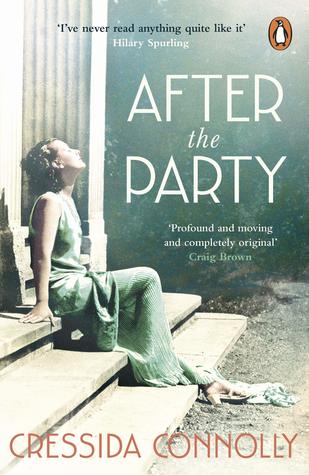
After the Party by Cressida Connolly

When I saw the list of titles shortlisted for this year’s Walter Scott Prize for Historical Fiction, After the Party was not one that particularly appealed to me but I have set myself a challenge of reading all of the shortlisted books since the prize began in 2010, so as my library conveniently had a copy available I brought it home and gave it a try.

The story is divided between two time periods. In 1938 we meet Phyllis Forrester, who has just returned to England with her husband and children after a long absence abroad. The narrative takes us through the events of that year and the wartime years which follow. There are also some sections set in 1979 with Phyllis looking back on that earlier time and on the choices and mistakes which led to her imprisonment. Yes, we know from the beginning that she has been to prison – but we don’t know exactly how or why that happened because the reasons are deliberately kept quite vague throughout most of the novel.

The 1930s storyline follows Phyllis as, back in England for the first time in three years, she occupies herself by helping her sister, Nina, to run a summer camp for young people. The camp is part of a new political movement which Nina and her husband are very enthusiastic about and they are hoping that the charismatic man they call ‘The Leader’ will visit at some point that summer. Unless I wasn’t paying attention, the name of this political group and its leader are rarely, if ever, mentioned in the book – certainly not until near the end, anyway – but with a little bit of knowledge of the period it’s easy enough to guess who they are.

If you believe that Phyllis is being honest with the reader, it seems that she has little idea of the true nature of the group or the values it represents. There’s a sense that her involvement has happened mainly because she has been at a loose end and looking for something useful to do to fill her days, and because she likes the idea of ‘belonging’ somewhere. For a while it all seems quite innocent; the main aims of the organisation appear to be to promote peace and avoid another war and it’s quite understandable that many people at the time would have supported those aims, with the horrors of the recent Great War fresh in their minds. Gradually, though, we start to see some uglier ideas being expressed and we can only assume that Phyllis must be aware of these views and agrees with them or at least can see nothing wrong with them. I thought it was quite an effective way of showing how people can become slowly indoctrinated into dangerous ways of thinking, something which is still as relevant today as it was in 1938.

I’m not sure how much sympathy we were intended to have for Phyllis but, although the circumstances of her arrest and the descriptions of her time imprisoned in Holloway are certainly horrible, I struggled to warm to her at any point, and I didn’t like any of the other people in her family and social circle either. They were the sort of people that, if I knew them in real life, I wouldn’t really want anything to do with; people who move in a world of snobbery and gossip, thinking they are better than everyone else. That was maybe the point – that the superiority and sense of status that these characters feel is partly why they are so open to the views of The Leader – but I didn’t particularly enjoy reading about them and their lives. I also felt that the incident at the party which is made to sound so dramatic in the novel’s blurb – the incident where Phyllis ‘lets down her guard for a single moment, with devastating consequences’ – was not as significant as it sounded and after reading so many pages waiting for that moment to come, it was an anti-climax when it did.

For the reasons above, this is not my favourite of the books I’ve read so far from this year’s Walter Scott Prize shortlist but I can see why it has been nominated as it’s a much more interesting and layered novel than I had initially thought it would be and one that left me with a lot to think about after reaching the end.

Six Degrees of Separation: From Murmur to Great House

It’s the first Saturday of the month which means it’s time for another Six Degrees of Separation, hosted by Kate of Books are my Favourite and Best. The idea is that Kate chooses a book to use as a starting point and then we have to link it to six other books of our choice to form a chain. A book doesn’t have to be connected to all of the others on the list – only to the one next to it in the chain.

This month we are starting with a book I haven’t read and know nothing about: Murmur by Will Eaves. Goodreads tells me that “taking its cue from the arrest and legally enforced chemical castration of the mathematician Alan Turing, Murmur is the account of a man who responds to intolerable physical and mental stress with love, honour and a rigorous, unsentimental curiosity about the ways in which we perceive ourselves and the world.”

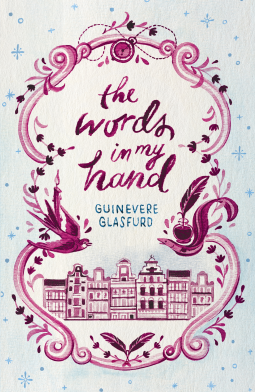
I struggled to think of how to link this to another book, especially as I prefer to only use books in my chains that I’ve actually read and reviewed. I’ve never read anything else by Will Eaves or anything about Alan Turing and neither the book cover nor the word ‘murmur’ gave me any inspiration either. Eventually, I decided that, as Alan Turing was a mathematician, I would simply choose another novel I’ve read about a mathematician – The Words in My Hand by Guinevere Glasfurd.

The Words in My Hand tells the story of Helena Jans van der Strom, a Dutch woman who was in a relationship with the 17th century French philosopher and mathematician René Descartes for more than a decade. The novel explores the significance of the roles they played in each other’s lives and the barriers of class and gender that meant their relationship could never be an equal one.

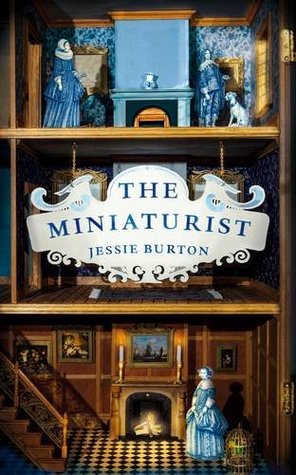
The story is set mainly in Amsterdam, which is where Helena is working as a maid at the time when Descartes comes to stay in the city. Another book set in 17th century Amsterdam is Jessie Burton’s The Miniaturist, a novel inspired by Petronella Oortman’s doll’s house which is on display in the Rijksmuseum.

In The Miniaturist, a young woman is given a special wedding present by her husband: a cabinet containing a doll’s house that resembles their own home. She writes to a ‘miniaturist’ asking for some tiny items and figures to put inside it, but when they begin to arrive she is surprised to find how closely they correspond to people and things from her own life. I enjoyed the book but was also disappointed by it because I felt that the mystery of the miniaturist was never fully resolved.

In 2014, The Miniaturist was voted Waterstones Book of the Year, a prize which has been running since 2012. Last year’s winner was Normal People by Sally Rooney, a book I haven’t read, but one that I have read and loved is Stoner by John Williams, which won the award in 2013.

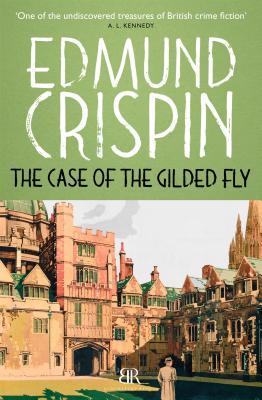
Stoner, published in 1965, is the story of farmer’s son William Stoner who attends the University of Missouri to study agriculture but discovers a passion for literature instead and stays on at the university to teach for the next forty years. Stoner becomes a Professor of English Literature and that makes me think of Edmund Crispin’s detective Gervase Fen, who was Professor of English Language and Literature at Oxford University. Fen stars in a series of mystery novels, the first of which is The Case of the Gilded Fly.

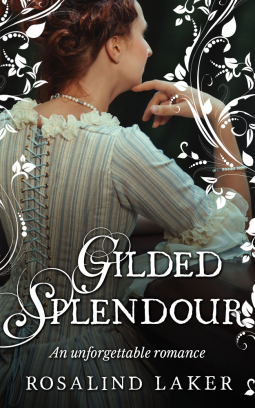
In The Case of the Gilded Fly, Fen is investigating a locked room murder which takes place during rehearsals for the premiere of a new play. An Egyptian-style gilded ring is found on the dead woman’s finger. The word ‘gilded’ in the title leads me to Gilded Splendour by Rosalind Laker, a fictional account of the life of the 18th century cabinet-maker and furniture designer Thomas Chippendale.

Despite the cover, I didn’t find this a very romantic story, especially as I really disliked the hero and wished the heroine would just forget about him! However, I did love the descriptions of Chippendale’s work and the techniques he used to create his furniture. I particularly enjoyed reading about a doll’s house that he built and furnished in miniature – which of course links this book back to an earlier book in my chain, The Miniaturist!

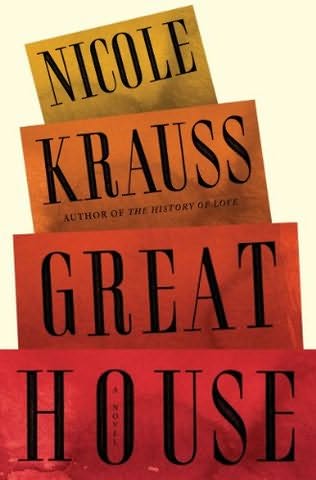
I need one more link to finish the chain, though, and I have chosen another novel where an item of furniture plays an important part. Great House by Nicole Krauss consists of several stories set in different times and places which are all linked by a writing desk with a dramatic and complex history.

And that’s my chain for this month! My links have included mathematicians, Amsterdam, prize winners, English professors, the word ‘gilded’ and items of furniture. Have you read any of these books?

In July, we will be starting with the children’s classic, Where the Wild Things Are by Maurice Sendak.

My Commonplace Book: May 2019

A selection of words and pictures to represent May’s reading:

commonplace book
noun
a book into which notable extracts from other works are copied for personal use.

~

‘I am come on a painful errand. I am sorry not to find you looking better.’

‘So you have said. But if it is painful, shall we not do best to get it over with? Hard things are best said quickly.’

The Adventurers by Jane Aiken Hodge (1965)

~

Then all at once she turned to me, her face pale, her eyes strangely alight. She said, ‘Is it possible to love someone so much, that it gives one a pleasure, an unaccountable pleasure to hurt them? To hurt them by jealousy I mean, and to hurt oneself at the same time. Pleasure and pain, an equal mingling of pleasure and pain, just as an experiment, a rare sensation?’

The Doll: Short Stories by Daphne du Maurier (2011)

~

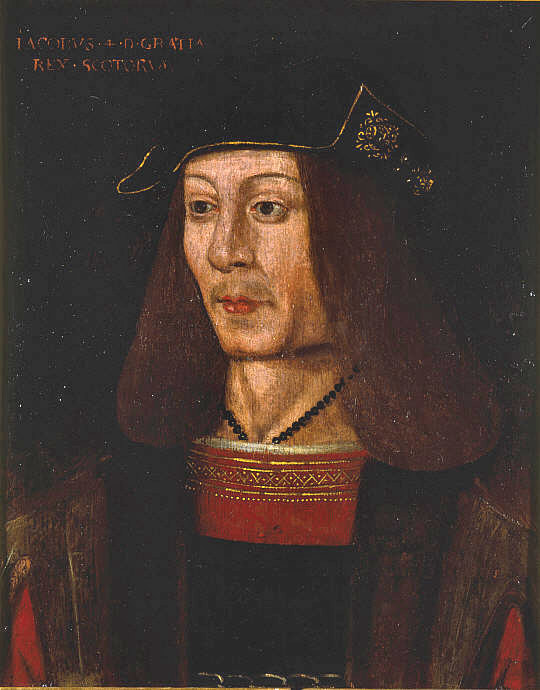
James IV of Scotland

But this tantalising clue unfortunately does not lead to finding a full version of the tale that the king lived for three full years after Flodden. It is like a bookmark stuck between the leaves of a legend, imprinted with some of the words but not enough detail. Where was James supposed to be for those three years – on the road to Jerusalem perhaps, or in the dungeon of Home Castle? And how did he finally die?

The Afterlife of King James IV by Keith J. Coleman (2019)

~

And so the barge drives onwards, through the river din, for the river is wakening, quickening, as they pass. Sounds carried over the water: church bells, waterman’s oaths, paddles and thrumming steam-engines, children playing and the ever-present sound of the water-birds that fly overhead. Onwards drives the barge. Past quays and boatyards, warehouses and landing stages, houses and spires. Past ramshackle old public houses that teeter down to the water. Onwards drives the barge. Amid mail boats and passenger boats, paddle and screw steamers, rowing boats and skiffs, steam-yachts, steam-ferries and tugs. Watercraft of every size negotiating the beneficient, polluted, bottomless, shallow, fast-rushing, mud-slickened, under-towed Thames.

Things in Jars by Jess Kidd (2019)

~

Charles II performing the royal touch, said to cure scrofula or ‘the king’s evil’.

We exchanged glances, he and I, and I guessed that we were thinking along the same lines: that both of us took orders from people who preferred not to know precisely how their wishes were carried out, especially beforehand; that sometimes they preferred to hint at their desires to us rather than speak them plainly; and that in a manner of speaking we were their left hands, which operated in the dark, so their right hands might be seen to be spotlessly clean by the unforgiving light of day.

The King’s Evil by Andrew Taylor (2019)

~

A dog is a great promoter of friendly intercourse. Our interest and liking for Bob had quite broken down the natural stiffness of the good servant. As we went up to the bedroom floors, our guide was talking quite garrulously as she gave us accounts of Bob’s wonderful sagacity. The ball had been left at the foot of the stairs. As we passed him, Bob gave us a look of deep disgust and stalked down in a dignified fashion to retrieve it. As we turned to the right I saw him slowly coming up again with it in his mouth, his gait that of an extremely old man forced by unthinking persons to exert himself unduly.

Dumb Witness by Agatha Christie (1937)

~

The mourner banquets on memory; making that which seems the poison of life, its ailment. During the hours of regret we recall the images of departed joys; and in weeping over each tender remembrance, tears so softly shed embalm the wounds of grief.

The Scottish Chiefs by Jane Porter (1809)

~

The French Revolution. 1804 engraving of a painting by Jean-Louis Prieur.

My waking moments were bitter with remorse at the way in which I had abused my freedom when I had had it. One takes liberty for granted, and until it’s gone one doesn’t realise that one has been imprisoning oneself all the time.

The Way to the Lantern by Audrey Erskine Lindop (1961)

~

Favourite books read in May:

The Way to the Lantern, The King’s Evil, Dumb Witness and Things in Jars. Yes, four favourites this month!

New authors read in May:

Keith J. Coleman, Jess Kidd, Jane Porter, Audrey Erskine Lindop

Countries visited in May:

Scotland, England, Ireland, Germany, France

~

Have you read any of these books? Which books did you enjoy in May?