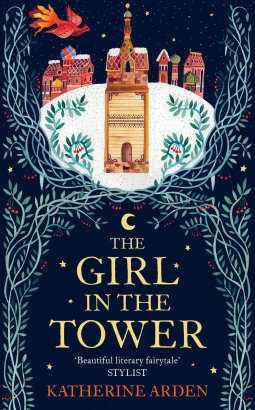
The Girl in the Tower by Katherine Arden

I enjoyed The Bear and the Nightingale when I read it almost exactly a year ago and I remember my excitement on discovering that it was actually the first in a planned trilogy. We haven’t had to wait too long for the second book, The Girl in the Tower, and I’m pleased to say that I loved it even more than the first.

Katherine Arden’s books are a wonderful mixture of history, folklore and fairytales with an atmospheric and wintry Russian setting. If you haven’t read The Bear and the Nightingale yet, I would highly recommend starting with that one – and I should warn you that there may be spoilers for the first book in the rest of this post.

At the beginning of The Girl in the Tower, our heroine Vasilisa Petrovna (Vasya) is fleeing her childhood village of Lesnaya Zemlya. Despite her efforts to rescue the villagers from a great evil, the way in which her father and stepmother died has caused Vasya to be branded a witch, regarded with suspicion and distrust. Accompanied by her magnificent stallion Solovey, Vasya sets off on a journey across northern Rus’ to Moscow, home of her sister Olga – a journey which will be filled with danger as Vasya encounters a group of bandits sweeping across the countryside burning villages and kidnapping children. First, though, she must pay a visit to Morozko, the frost-demon, in his fir-grove deep in the forest…

This novel has a much wider geographical scope than the previous one, in which the action takes place almost entirely in and around Lesnaya Zemlya. I liked this aspect of the book; medieval Moscow is an interesting setting and, with Olga’s family close to the Grand Prince, Dmitrii Ivanovich, we are given some insights into the political situation during this period of Russian history. At the time of the story, the Rus’, as it was known then, is still part of the domain of the Great Khan and the Golden Horde, but with their influence weakening as the Grand Prince grows in power, it seems that things could be about to change.

I was also pleased to see Vasya reunited with her siblings, not just Olga but also their brother Sasha, who is now a priest. Sadly, her relationships with both Olga and Sasha are very strained, partly because of what happened in Lesnaya Zemlya, for which Vasya is unable to give an adequate explanation, and also because of her behaviour on arriving in Moscow, which they consider unladylike and inappropriate. To the modern reader, Vasya is a wonderful character – brave, independent and rebellious – but her refusal to conform to the 14th century ideal of what a woman should be leads her into a great deal of trouble. In contrast, Olga has accepted her place in society and expects her young daughter, Marya, to follow the same course in life. Marya, though, appears to have other ideas!

I’ve said very little so far about the fantasy elements of the novel. We don’t see very much of the household spirits who played such an important part in The Bear and the Nightingale, but there are some appearances by intriguing new figures from Russian myth including the Firebird – and another, more sinister, character whose name I won’t give here so as not to spoil anything! I also enjoyed Vasya’s interactions with her magical horse, Solovey, who has begun to form a personality of his own. Last, but certainly not least, there’s Morozko, frost-demon and god of the dead.

There were hints in the previous book of a possible romance between Vasya and Morozko, and in this book their relationship is developed further. It’s definitely not a conventional love story and because of who Morozko is and the role he has to play in Russian folklore, he has a tendency to come and go throughout the novel. It’s frustrating but it worked for me and I found myself looking forward to the scenes they shared. I loved The Girl in the Tower – and the good news is that the third book in the trilogy, The Winter of the Witch, is expected this August!

Thanks to Ebury Publishing for providing a copy of this book for review via NetGalley.

This book counts towards this year’s What’s in a Name? Challenge: A title containing the word ‘the’ used twice.

Top Ten Tuesday: Last year’s love affairs

This week’s Top Ten Tuesday (hosted by That Artsy Reader Girl) is a ‘Love Freebie’. I have decided to approach this topic by choosing ten of the most interesting, moving or memorable romances and love affairs from my last year of reading (February 2017 to February 2018).

***

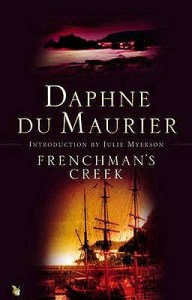
1. Frenchman’s Creek by Daphne du Maurier

This isn’t one of my favourite du Maurier novels but I still enjoyed this story of Dona St Columb who, having grown bored and disillusioned with her marriage, heads for Cornwall to spend some time away from her husband and his friends. Here she meets the pirate Jean-Benoit Aubéry and as she begins to fall in love with him, she struggles to reconcile her impressions of the polite, cultured Frenchman with the terrible tales she has heard from the neighbours.

~

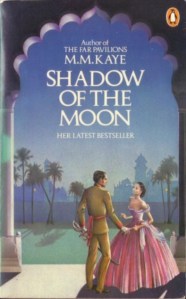
2. Shadow of the Moon by MM Kaye

I loved this book which I read as part of a readalong last summer. Set before and during the Sepoy Mutiny of 1857 it follows the story of Winter de Ballesteros, who travels across the sea to India to marry her fiance, the Commissioner of Lunjore. Captain Alex Randall is sent to escort her on the journey, but falls in love with her himself. Will he be able to prevent the marriage or is Winter too infatuated with the Commissioner to see clearly?

~

3. Wuthering Heights by Emily Brontë

I’m sure this one needs no introduction! This is one of my favourite books and I re-read it last February for the first time in years. As I said in my review, “the relationship between Heathcliff and Cathy is hardly a conventional romance and although there is love, it is an obsessive and unhealthy love”. It may not be the most romantic of love stories, but I have always liked the darkness, the passion and the melodrama.

~

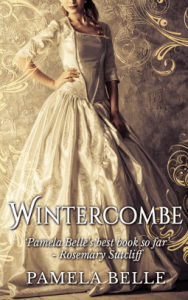
4. Wintercombe and Herald of Joy by Pamela Belle

During the English Civil War, the home of Silence St Barbe, wife of a Parliamentarian officer, is garrisoned by Royalist soldiers. The romance between Silence and one of the enemy captains, which develops slowly over the course of two novels, was one of my favourites of last year. There’s more to these books than romance, though, and I would recommend them to anyone interested in this period of history.

~

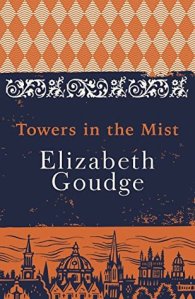
5. Towers in the Mist by Elizabeth Goudge

The romance in this one forms a relatively small part of the novel. Published in 1937, it’s set in Oxford during the Elizabethan period and follows the story of fourteen-year-old Faithful Crocker who is welcomed into the household of Canon Leigh of Christ Church. We get to know all of the members of the family, but the romance between eldest daughter Joyeuce Leigh and the student Nicolas de Worde was one of my favourite storylines.

~

6. Long Summer Day by RF Delderfield

The first volume in Delderfield’s A Horseman Riding By trilogy introduces us to Paul Craddock who uses his inheritance to buy an estate in rural Devon. There are two love interests for Paul: sensible, kind-hearted Claire Derwent, daughter of one of his tenant farmers, and the strong and independent suffragette, Grace Lovell. I won’t tell you which way the story plays out!

~

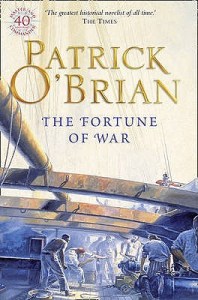
7. The Fortune of War by Patrick O’Brian

Surgeon and spy Stephen Maturin and Diana Villiers met in the second book in O’Brian’s Aubrey/Maturin series; this is book number six and their tempestuous relationship still hasn’t been resolved. Will they find any happiness in the next volume? I have the seventh book lined up to read soon, so I’ll be able to find out!

~

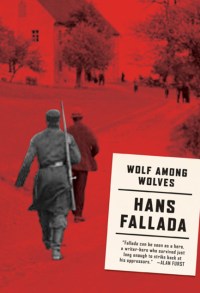
8. Wolf Among Wolves by Hans Fallada

Set in Germany in 1923, gambler Wolfgang Pagel loses his money at roulette – and loses his fiancee, Petra Ledig, who refuses to see him again until he reforms. The two are separated for most of the novel, as Wolfgang tries to build a new life away from the temptations of the city, but their relationship and the question of whether they will ever be reunited was one of my favourite aspects of the book.

~

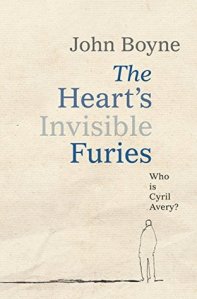
9. The Heart’s Invisible Furies by John Boyne

A very one-sided love affair! Our hero Cyril, whom we follow from birth to old age, is still a teenager when he falls in love with his more popular, more sophisticated friend, Julian Woodbead. Will he ever have the courage to tell Julian how he feels – and if he does, will his feelings be returned?

~

10. Anne Boleyn: A King’s Obsession by Alison Weir

This may seem an unusual one to include in a list of romances, especially when you consider how it ended, but surely the love affair between Henry VIII and Anne Boleyn was one of the most important in English history. After all, it was one of the factors leading to the king’s divorce from Katherine of Aragon, the break with Rome and the start of the Reformation. Alison Weir’s novel tells Anne’s story right from her early years through to her beheading.

~

What about you? Have you read any books with interesting romances or love affairs recently? What are your all-time favourites?

Historical Musings #35: Historical Fantasy

I have just finished writing my review of The Girl in the Tower, the second in Katherine Arden’s fantasy trilogy which began with The Bear and the Nightingale. The trilogy is set in 14th century Russia (or Rus’, as it was called then), a world which has been researched and recreated to resemble the real 14th century Rus’ – apart from the existence of household spirits, frost-demons, firebirds and magical horses. This made me think about other books I’ve read which have both historical and fantasy elements.

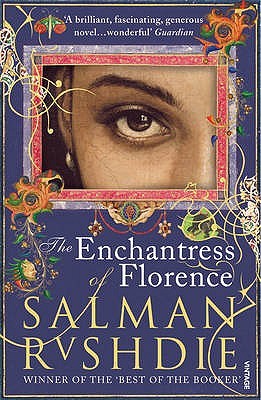
First, there are the books I consider to be mainly historical fiction with some elements of magical realism. A good example would be The Miniaturist by Jessie Burton, which is set in 17th century Amsterdam but has a supernatural twist in the form of a dolls’ house and a mysterious miniaturist. Another recent read, The Mermaid and Mrs Hancock by Imogen Hermes Gowar is set in Georgian England with only a few brief touches of fantasy, while The Bedlam Stacks by Natasha Pulley, about a quinine-collecting expedition to Peru, incorporates moving statues and exploding trees. At the other end of the scale there’s The Enchantress of Florence by Salman Rushdie, which takes us to a 16th century India populated with giants and witches, where emperors have imaginary wives and artists hide inside paintings.

Naomi Novik’s Temeraire series (of which I’ve still only read the first one!) is set during the Napoleonic Wars in a world very much as it would have been at the time, with one important difference: dragons exist and are used by both the British and French as a sort of early air force. Another book with the Napoleonic Wars for a setting, one which I read pre-blogging this time, is Jonathan Strange and Mr Norrell by Susanna Clarke. I remember loving the mixture of magic and history and the fascinating footnotes describing the world of Faerie.

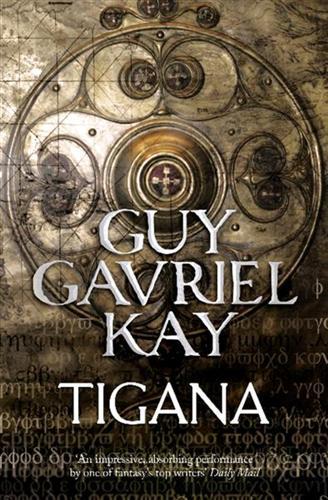
Then there are Guy Gavriel Kay’s books, which are set in fantasy worlds which resemble real historical worlds. Tigana, my favourite, takes place in a world with one blue moon and one white, but there are clear parallels with Renaissance Italy, while The Lions of Al-Rassan has a setting similar to medieval Spain. The Last Light of the Sun takes us to a land where magical forces gather in the forests and faeries wait to claim the souls of the dead, yet this land is identifiable as Northern Europe in the time of the Vikings, the Anglo-Saxons and the Celts. Finally, Children of Earth and Sky is set in thinly-disguised versions of Venice, Dubrovnik and Constantinople during the Renaissance period. These are the only books I have read by Kay so far, but I will certainly be reading more.

How do you feel about fantasy or magical realism combined with historical fiction? Have you read any of the books I’ve mentioned here? Can you recommend more?

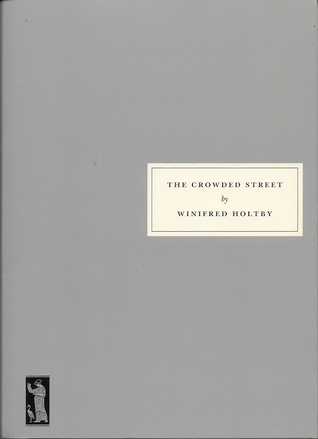
The Crowded Street by Winifred Holtby

The Crowded Street is on my Classics Club list, so when I saw that Jessie of Dwell in Possibility was hosting a Persephone Readathon this week, my choice was obvious. This particular book has also been published as a Virago Modern Classic, but my edition is the Persephone one, with the endpapers pictured below. Having already enjoyed several of Holtby’s books – South Riding, The Land of Green Ginger and Poor Caroline – I’ve been looking forward to this one for a while and I’m pleased to say that I loved it even more than I hoped I would.

The novel was published in 1924, at a time when it was assumed that most young women wanted nothing more than to find a husband and then stay at home to raise their children. In The Crowded Street, Holtby looks at what it was like to be a woman who, for one reason or other, was unable to conform to these expectations. Through the stories of Muriel Hammond, her sister Connie and her friends Clare and Delia, she explores the very different routes through life taken by four very different women.

We first meet Muriel in December 1900 when she is eleven years old and attending her first ‘grown-up’ party. Her excitement soon turns to shame when she finds that none of the boys want to dance with her and her dance card remains almost blank. Muriel is confused: The unforgivable sin at a party is to have no partners. To sit quietly in the drawing-room at home was a virtue. The sense that she has somehow let her mother down is a feeling which will stay with her for the next two decades as she continues to go through life partnerless, waiting and hoping for something to happen. She does initially have ambitions – to study astronomy, to go to college – but she doesn’t pursue these as she receives no encouragement from her mother or from her school teacher, who says:

“Character, my dear, to be a fine womanly woman, that matters so much more than intellectual achievement. To serve first your parents, then, I hope, your husband and your children, to be pure, unselfish and devoted, that is my prayer for each one of my girls.”

As a single woman myself, there were times when Muriel’s story resonated with me, but thankfully not all the time! I may not be married, but nobody ever prevented me from going to university or getting a job. Muriel watches with envy as Delia, another unmarried girl from the same Yorkshire village, goes off to Cambridge University, then heads for London and throws herself into political activism.

“But then, she has her work. Women who have their work have an immense thing, even if they are unfortunate in the people whom they love. It is when you have nothing, neither work, nor love, nor even sorrow, that life becomes rather intolerable.”

Of course, some women today are happy to stay at home with their parents, there are some who find plenty of fulfilment in marrying and having children, while others want to move away to pursue their career. There is no right or wrong way to live, but the point is that we have a choice. What makes Muriel’s story so tragic is that she feels she has no choice. She believes that marriage is the only possible way to escape, but if that doesn’t happen, all she can do is continue to help her mother around the house, doing what she sees as her duty (even though her help isn’t particularly necessary). As a result, she becomes more and more depressed, feeling that life is passing her by but lacking the confidence to do anything about it and making excuses to justify why she can’t.

Her younger sister, Connie, tries to break away from the stifling confines of life in Marshington, but she is so desperate that she makes a bad decision which has disastrous consequences. It seems that the only one who is likely to be happy is Muriel’s old school friend, the cheerful and sophisticated Clare, who goes through life without a care in the world and catches the eye of Godfrey Neale, the one man Muriel dreams of as her own potential husband. Clare, though, has the opposite problem. Having had a very different upbringing from Muriel and Connie, will she be able to adapt to living in a small Yorkshire village?

At one point, Muriel thinks to herself:

“All books are the same – about beautiful girls who get married or married women who fall in love with their husbands. In books things always happen to people. Why doesn’t somebody write a book about someone to whom nothing ever happens – like me?”

Well, Winifred Holtby has written that book and I don’t think it’s quite true that nothing happens to Muriel. She does develop as a person as the novel progresses and, although it takes a long time, she slowly becomes aware that if she is to have any happiness she will have to take matters into her own hands. I loved the way her story ended: she has an important decision to make and in my opinion she does the right thing.

As well as following the characters I’ve mentioned above, we are also given some insights into the effects of the First World War on small communities like the fictional Marshington. I particularly enjoyed the vivid depiction of the bombardment of Scarborough in 1914, something Winifred Holtby could draw on personal experience to describe. The Crowded Street is a wonderful book in so many ways and a great choice for both the Classics Club and the Persephone Readathon!

This is Book 2/50 from my second Classics Club list

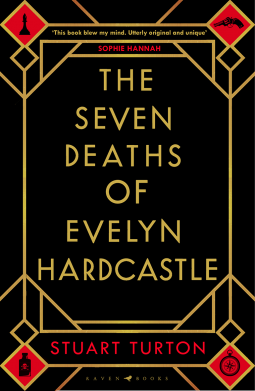
The Seven Deaths of Evelyn Hardcastle by Stuart Turton

I can’t even begin to imagine how much time and effort must have gone into the writing of this novel! I’ve never read anything like it before and I hardly know how to begin to describe it. It has all the elements of a classic murder mystery – but there’s a clue in the title: the same murder happens not just once but seven times.

The novel opens with a man waking up in a forest with no memory of who he is or how he came to be there. He has the name ‘Anna’ in his mind, although he has no idea who Anna might be. Hearing a woman scream, he rushes to help but is stopped by a stranger who pushes a compass into his pocket and whispers ‘East’. Following these instructions, he finds his way out of the woods and into the grounds of nearby Blackheath House, where the situation becomes even more bizarre. He discovers that he is a doctor called Sebastian Bell and that he is a guest at Blackheath where the Hardcastle family are throwing a party to mark the nineteenth anniversary of their son’s death.

All through the long and bewildering day which follows, Bell tries to make sense of what is happening, only to end up more confused than ever. Eventually, he is approached by a man wearing the costume of a Plague Doctor, who appears to have some of the answers. It seems that the Hardcastles’ daughter, Evelyn, is going to be murdered later that night and Bell’s task is to solve the murder. Should he fail, he will have the chance to live through the day again…but this time he will be someone else. Eight days and eight different ‘host bodies’; if at the end of that time he can provide a solution, he will be allowed to leave Blackheath. If not, he will go back to day one and the whole sequence will begin again…as it already has, many times before.

Everything I’ve said so far is explained to our narrator early in the novel. Once he begins waking up as the other hosts, however, things quickly become very complicated, with new clues and pieces of information coming to light on almost every page. I won’t say any more about the story itself, then, other than in general terms. I won’t even tell you who the other hosts are, as part of the fun is in wondering who the narrator is going to be next. Each host, though, has different strengths and weaknesses and is connected to the murder in a different way. It’s fascinating to see how each of them alone sees only a small part of the picture, and the truth only begins to emerge when all of their collective experiences and observations are taken into account.

This is an incredibly clever novel and so intricately plotted I have no idea how Stuart Turton managed to keep track of it all. Although it’s a long book, my recommendation is to read it in as few sittings as possible so you can try to hold on to all the threads of the story in your head. If your experience is anything like mine you’ll quickly become so engrossed that you won’t want to stop anyway. And experience is the right word for it. This doesn’t feel like a normal novel at all. It reminded me in some ways of one of those ‘choose your own adventure’ books I loved as a child where you could make choices that led to different routes through the story. That’s how I felt as the narrator lived through the same events again and again, trying to decide what he did wrong last time.

The novel is written in the first person present tense – a style I usually dislike but which is used very effectively here. It gives the reader a sense of being dropped directly into the middle of the action and sharing the narrator’s panic and disorientation. I don’t think it would have worked had it been written any other way. I thoroughly enjoyed this unusual and wonderfully imaginative novel!

Thanks to Raven Books for providing a copy of this book for review via NetGalley.

Top Ten Tuesday: Books that have been on my TBR the longest

This week’s Top Ten Tuesday, hosted by That Artsy Reader Girl, asks us to list the ten books that have been on our TBR the longest. I keep track of my TBR through Goodreads so I decided that the easiest way to approach this week’s topic was simply to take the first ten books on my Goodreads ‘to-read’ shelf, which were all added in 2010/2011. Before I started blogging I was very good at reading the books that I’d bought before buying more, so I don’t have any very old books on my TBR.

***

1. The Rose of Sebastopol by Katharine McMahon

Historical fiction set during the Crimean War. I remember buying this on a visit to my favourite bookshop, Barter Books; I did start to read it once but didn’t get very far with it.

2. The House at Riverton by Kate Morton

I added this to my TBR – and then read two other Kate Morton books instead. Because I was disappointed by The Distant Hours, I never went back to read this one. Maybe I should.

3. The Blasphemer by Nigel Farndale

A dual timeline novel divided between the First World War and the modern day. I won this one in a giveaway by the publisher, so I feel very guilty that I still haven’t read it!

4. Mornings in Jenin by Susan Abulhawa

I don’t know much about this one except that it’s set in Palestine, but I remember reading some glowing reviews from other bloggers a few years ago, which was why it was added to my TBR.

5. Year of Wonders by Geraldine Brooks

This novel about a 17th century village ravaged by plague has been recommended to me many times, but every time I’ve picked it up I’ve found that I was in the wrong mood for it.

6. Annie Dunne by Sebastian Barry

I love Sebastian Barry’s writing and have read several of his other books about the Dunne and McNulty families, but this one has been languishing on my shelf for years while I’ve been drawn to the newer ones instead.

7. Trespass by Rose Tremain

I added this to the TBR at a time when I hadn’t read anything else by Rose Tremain and I wasn’t sure whether or not I would like her writing. I’ve now read three of her other books and enjoyed them, so I think it could be time to try Trespass!

8. Oscar and Lucinda by Peter Carey

The Booker Prize winner from 1988. It has never felt like the right time to read it, but I said recently that I wanted to read more books set in Australia, so perhaps the time has now come.

9. Blood Harvest by Sharon Bolton

This is the only one of Sharon Bolton’s crime novels that I still haven’t read. I’ve no idea why not as I’ve loved all of her other books and her standalones, like this one, tend to be my favourites.

10. Beloved by Toni Morrison

I included this book on my original Classics Club list but removed it to replace it with something else. I do still want to read it and will hopefully find time for it soon.

***

Have you read any of these? Which books have been on your TBR the longest?

Six degrees of separation: Lincoln in the Bardo to The Ashes of London

I took part in Six Degrees of Separation hosted by Kate of Books are my Favourite and Best for the first time last month and enjoyed it, so I thought I’d try it again this month. The idea is that Kate chooses a book to use as a starting point and then we have to link it to six other books of our choice to form a chain. A book doesn’t have to be connected to all of the others on the list – only to the one next to it in the chain.

The first book this month is Lincoln in the Bardo by George Saunders, last year’s Booker Prize winner, which I read just before Christmas. With its unusual and experimental structure it wasn’t really my sort of book, but I did appreciate the originality and creativity.

In Lincoln in the Bardo, Abraham Lincoln visits Oak Hill Cemetery to grieve over the body of his eleven-year-old son, Willie. This brings to mind another book set in a cemetery: Pure by Andrew Miller. Pure is the story of a young engineer from Normandy who arrives in Paris to begin work on the destruction of the overcrowded and unsanitary cemetery of Les Innocents.

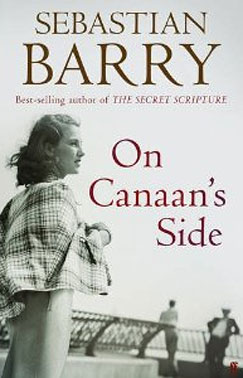
Pure appeared on the shortlist for the Walter Scott Prize in 2012. Another book shortlisted in the same year – the eventual winner, in fact – was On Canaan’s Side by Sebastian Barry. This beautifully written novel is narrated by Lilly, an elderly woman looking back on the eighty-nine years of her life.

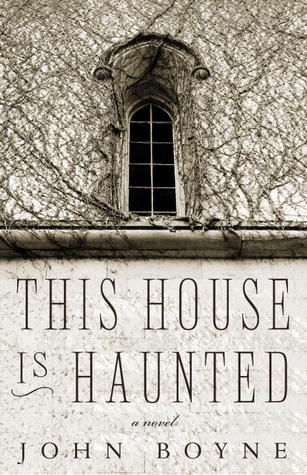
Sebastian Barry is one of my favourite Irish authors. Another Irish author I love is John Boyne and the first of his books that I read was This House is Haunted.

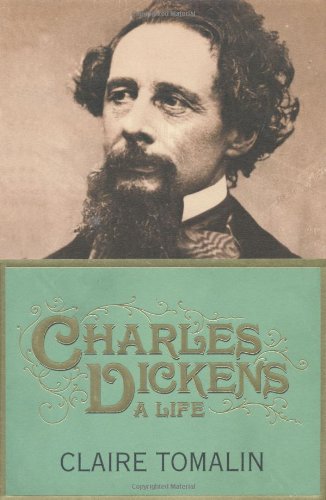
This House is Haunted is a wonderfully entertaining and atmospheric ghost story set in Victorian England. At the beginning of the book the narrator and her father go to watch a public reading by Charles Dickens. I could have chosen a Dickens novel as my next link, but instead I’m going to highlight Claire Tomalin’s biography, Charles Dickens: A Life.

Claire Tomalin has written several other biographies on subjects including Thomas Hardy, Jane Austen and Mary Wollstonecraft, but apart from the Dickens book the only other one I’ve read so far is Samuel Pepys: The Unequalled Self.

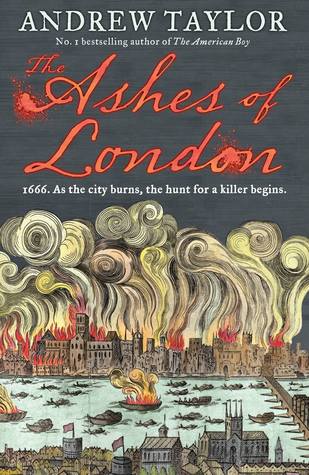
In his diary, Samuel Pepys famously wrote about the Great Fire of London of 1666. The fire provides the setting for The Ashes of London by Andrew Taylor. It’s the first in a series of historical mysteries, with the second book, The Fire Court, due to be published soon.

~

Have you read any of the books in my chain? What did you think of them?

Next month’s chain will begin with a book I haven’t read and know nothing about – The Beauty Myth by Naomi Wolf.