Six Degrees of Separation: From The Arsonist to Seven for a Secret

It’s the first Saturday of the month which means it’s time for another Six Degrees of Separation, hosted by Kate of Books are my Favourite and Best. The idea is that Kate chooses a book to use as a starting point and then we have to link it to six other books of our choice to form a chain. A book doesn’t have to be connected to all of the others on the list – only to the one next to it in the chain.

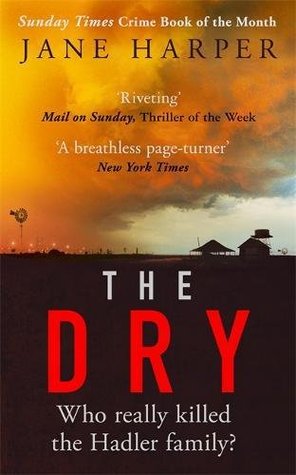
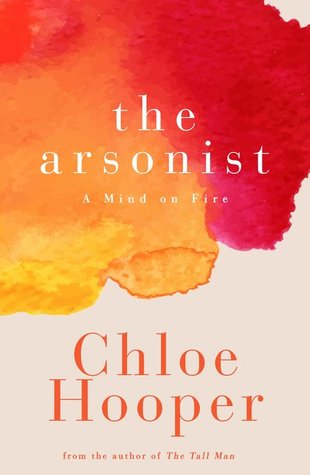
This month we begin with The Arsonist by Chloe Hooper. I haven’t read this book – in fact, it isn’t out in the UK until the end of May – but it does sound like an interesting Australian true-crime book about ‘Black Saturday’, the day in February 2009 when a man lit two fires in Victoria’s Latrobe Valley.

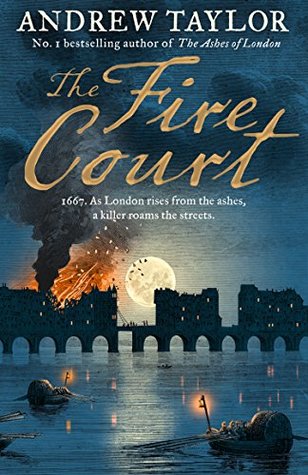
For my first link, I have chosen another book on a fire-related subject, although this one is fiction: The Fire Court by Andrew Taylor, a historical mystery set in the aftermath of the Great Fire of London. This is part of a series featuring the characters of Cat Lovett and James Marwood (I used the first book, The Ashes of London, in a previous Six Degrees post) and the next book, The King’s Evil, is on my shelf waiting to be read soon.

My next link is to another historical crime novel written by an author whose name is Andrew. He is Andrew Hughes and the book is The Convictions of John Delahunt. Set in Dublin in the 1840s, this is a dark, atmospheric novel with an unusual and intriguing narrator. I remember loving it.

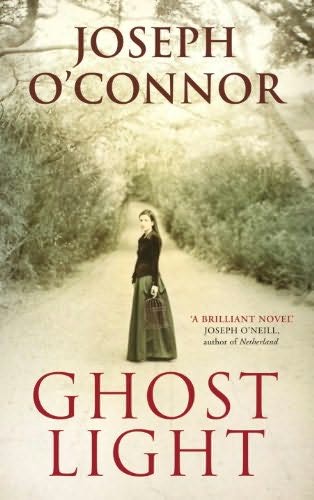
Another book set at least partly in Dublin – in the early twentieth century this time – is Ghost Light by Joseph O’Connor, the story of the Irish actress Molly Allgood and her relationship with the playwright John Millington Synge. I thought this was a beautifully written novel, but I still haven’t read any of Joseph O’Connor’s other books yet.

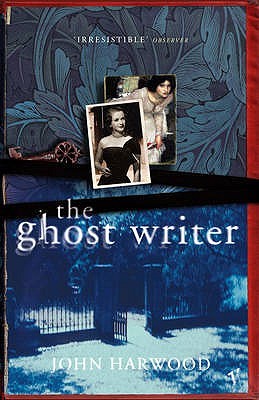
Despite the title, Ghost Light is not actually a ghost story. A novel with the word ‘ghost’ in the title that really does feature ghosts is The Ghost Writer by John Harwood. The main character discovers that his great-grandmother, Viola Hatherley, was a writer of ghost stories and some of the tales she had supposedly written are incorporated into the plot.

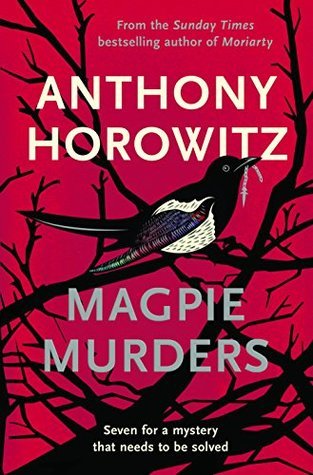
This leads me to another book which uses the story-within-a-story concept, but in a very different way: the wonderful Magpie Murders by Anthony Horowitz. The novel includes, almost in its entirety, an Agatha Christie-style murder mystery written by a fictional author called Alan Conway.

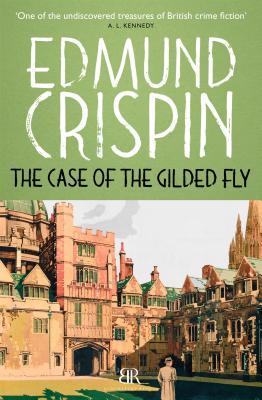
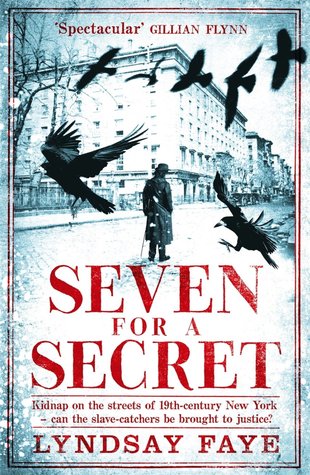
My final link is to Seven for a Secret by Lyndsay Faye, the middle book in her Timothy Wilde trilogy which I loved and was sorry to see come to an end. It can be linked to the previous book in the chain in two ways – as well as having birds pictured on the cover, the title refers to the famous rhyme about magpies (One for sorrow, two for joy, three for a girl, four for a boy, five for silver, six for gold, seven for a secret never to be told).

And that’s my chain for this month! Have you read any of the books I’ve mentioned?

In April we will be starting with How to be Both by Ali Smith.

Six Degrees of Separation: From Fight Club to Snow Flower and the Secret Fan

It’s the first Saturday of the month which means it’s time for another Six Degrees of Separation, hosted by Kate of Books are my Favourite and Best. The idea is that Kate chooses a book to use as a starting point and then we have to link it to six other books of our choice to form a chain. A book doesn’t have to be connected to all of the others on the list – only to the one next to it in the chain.

This month we are starting with Fight Club by Chuck Palahniuk. I’ve never read this book (or seen the film) and I’m not really interested in reading it, but I can see from Goodreads that it’s about an ‘enigmatic young man who holds secret after-hours boxing matches in the basement of bars’.

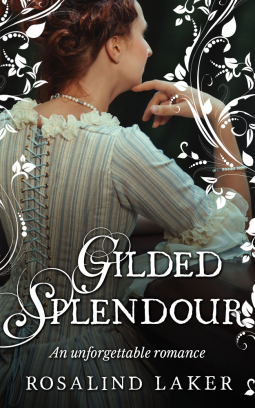
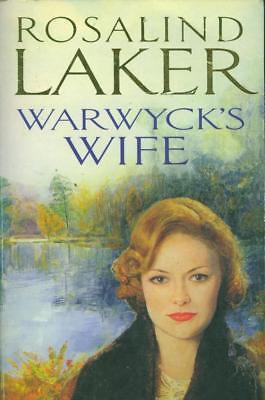
For my first link, I’ve chosen another book about a fighter – Warwyck’s Wife by Rosalind Laker. The protagonist (I refuse to call him a hero) is a boxer in the 1820s and although I have little interest in boxing, I did find it fascinating to read about what the sport involved in its early days.

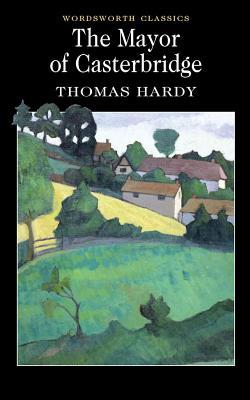
At the beginning of the book he buys a woman at auction who has been put up for sale by her husband, a custom which, unfortunately, really did take place in the 19th century. The Mayor of Casterbridge by Thomas Hardy opens with a very similar scene in which Michael Henchard sells his wife at a country fair, an impulsive act which he quickly regrets.

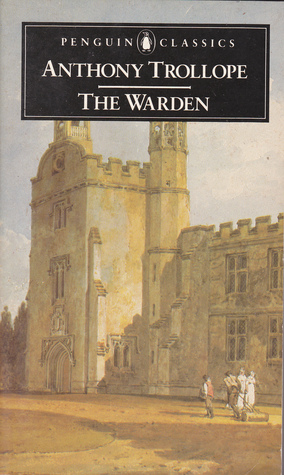
Like most of Hardy’s novels, The Mayor of Casterbridge is set in his fictional Wessex, based on the real landscape of south and south-west England. Another Victorian author who set several of his books in an imaginary region is Anthony Trollope. His Chronicles of Barsetshire take place in and around the fictitious English county of Barsetshire and its cathedral town of Barchester. The first book in the series is The Warden.

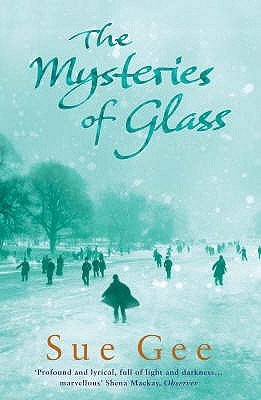
The warden of the title is the Reverend Septimus Harding (one of my favourite Trollope characters). Another novel with a clergyman as the main character is The Mysteries of Glass by Sue Gee, which I remember as a beautifully written, though very slow-paced, novel. Looking back at my review, I said at the time that “Although I was reading this book in July, I could still picture the cold, wintry landscape.”

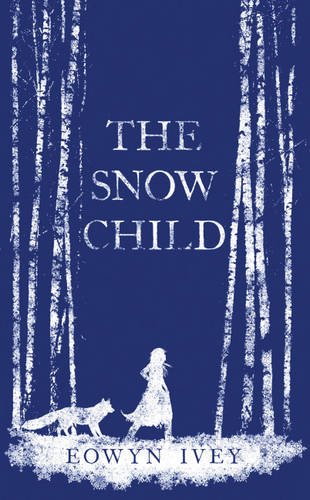
Today, I don’t need a book to show me a snowy landscape – I can see plenty of snow just by looking out of my window! Thinking of other novels that have a wintry setting and atmosphere, though, leads me to the next book in my chain: The Snow Child by Eowyn Ivey, a magical story inspired by a Russian fairy tale.

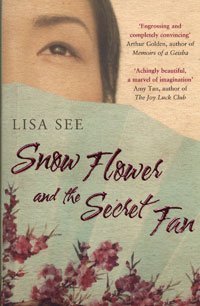
Staying on the same theme, another book with the word ‘Snow’ in the title is Snow Flower and the Secret Fan by Lisa See. This one is not a wintry read, though – it’s a novel set in 1820s China in which a girl communicates with her friend through messages written on a silk fan.

That’s my chain for this month! My links have included boxing, wife-selling, fictional lands, the church and snow.

In March we will be starting with The Arsonist by Chloe Hooper.

Six Degrees of Separation: From The French Lieutenant’s Woman to Death in Cyprus

It’s the first Saturday of the month (and of the year!) which means it’s time for another Six Degrees of Separation, hosted by Kate of Books are my Favourite and Best. The idea is that Kate chooses a book to use as a starting point and then we have to link it to six other books of our choice to form a chain. A book doesn’t have to be connected to all of the others on the list – only to the one next to it in the chain.

The book we are starting with this month is The French Lieutenant’s Woman by John Fowles, a book I read a few years ago and didn’t enjoy as much as I had thought I would. Published in 1969 but set in 1867, the style is an unusual blend of the Victorian and the modern, which didn’t quite work for me.

When I have read the first book in the chain, it usually makes it easier to get started, but not this time! I included The French Lieutenant’s Woman in a previous chain a few months ago where I linked it from another metafiction novel and to another book set in Lyme Regis. As I didn’t want to use the same links again, I had to think of something different and all I’ve been able to come up with is books with ‘French’ in the title. This leads me to Frenchman’s Creek by Daphne du Maurier.

The Frenchman of the title is the pirate Jean-Benoit Aubéry. A novel I read last year which also involves pirates (although these pirates are not as charming as Jean-Benoit) is The Sealwoman’s Gift by Sally Magnusson. Set in the 17th century, the novel tells the story of a group of people abducted during a Barbary pirate raid on Iceland and taken in captivity to Algeria.

Iceland and Algeria are both fascinating countries to read about and I enjoyed the contrast between both settings in The Sealwoman’s Gift. I’ve read a few other books set in Iceland and the one I’m going to link to here is Burial Rites by Hannah Kent, a beautifully written novel about an Icelandic woman, Agnes Magnúsdóttir, who is found guilty of murder and sentenced to death.

Thinking about Burial Rites reminds me of Alias Grace by Margaret Atwood. Alias Grace is set in Canada, not Iceland, but otherwise the two books have a lot in common. They both give fictional accounts of real women who were convicted of murder (Grace Marks, in the case of Atwood’s novel).

I have read a few of Atwood’s other books, most recently Hag-Seed, which is a clever re-telling of Shakespeare’s The Tempest. Also inspired, at least in a small part, by The Tempest is This Rough Magic, one of my favourite books by Mary Stewart. The title comes from a line spoken by Prospero in the play (“this rough magic I here abjure”).

Mary Stewart’s books (apart from her Arthurian series) are a combination of suspense, romance and mystery and feature young heroines in exotic or atmospheric settings. M.M. Kaye’s Death In… novels from the same era remind me of Stewart’s in many ways, although I find them slightly darker. I have read three, including Death in Cyprus, and still have the rest to look forward to.

And that’s my chain for this month…Frenchmen, pirates, Iceland, female prisoners, The Tempest and romantic suspense!

In February, we will be starting with Fight Club by Chuck Palahniuk.

Six Degrees of Separation: The Christmas Edition

It’s the first Saturday of a new month which means it’s time for another Six Degrees of Separation, hosted by Kate of Books are my Favourite and Best. The idea is that Kate chooses a book to use as a starting point and then we have to link it to six other books of our choice to form a chain. A book doesn’t have to be connected to all of the others on the list – only to the one next to it in the chain.

The book we’re going to begin with this month is, appropriately for December, A Christmas Carol by Charles Dickens. I still have the beautiful hardback copy I was given as a child with illustrations by Arthur Rackham. I talked about my memories of A Christmas Carol in a Classics Club monthly meme from a few years ao.

There were many different directions I could have taken from this starting point, but I decided to get into the festive spirit with a chain made entirely of Christmas-themed books. Shortly after I first started blogging in 2009, I took part in a Christmas reading challenge for which I read two books: the one above and The Christmas Mystery by Jostein Gaarder.

This is an unusual novel (like most of Gaarder’s), in which the story of an ancient pilgrimage to Bethlehem unfolds through scraps of paper found behind the doors of an Advent calendar. In the present day, meanwhile, a mystery begins to emerge involving the creation of the calendar itself.

Now, from one Christmas mystery to a whole collection of them…

Murder Under the Christmas Tree contains stories by classic crime authors such as Margery Allingham, Dorothy L Sayers and Arthur Conan Doyle. One author whose work doesn’t appear in that collection is Agatha Christie, but she did write a few books with a Christmas theme…including the next book in my chain, Hercule Poirot’s Christmas.

The book involves the murder of an old man who is found dead in his home while his family gather to celebrate Christmas. I enjoyed it, but it wasn’t a favourite Christie and I didn’t find it very Christmassy either. Another book with a very similar plot, published three years later, is Envious Casca by Georgette Heyer.

Envious Casca has also been published under the title A Christmas Party. However, the family featured in the novel were such a nasty, unpleasant group of people, I couldn’t think of anything worse than being a guest at that particular party! Another mystery set at Christmas with a dysfunctional family at its heart is I Am Half-Sick of Shadows, the fourth in Alan Bradley’s Flavia de Luce series.

In I Am Half-Sick of Shadows, eleven-year-old Flavia tries to catch Santa Claus on his way down the chimney. In the final book in my chain, Nora Bonesteel’s Christmas Past by Sharyn McCrumb, Sheriff Spencer Arrowood is also trying to catch a man on Christmas Eve – a criminal who lives on a remote farm in the Appalachian Mountains.

For the first time since I’ve started taking part in Six Degrees of Separation, I am able to bring the chain full circle. The title of my final book contains the words ‘Christmas Past’ – and the first book features the Ghost of Christmas Past!

Have you read any of these? What are your favourite Christmas-themed books?

Next month (January) we will be starting our chains with The French Lieutenant’s Woman by John Fowles.
Six Degrees of Separation: From Vanity Fair to The Red Lily Crown

It’s the first weekend of a new month which means it’s time for another Six Degrees of Separation, hosted by Kate of Books are my Favourite and Best. The idea is that Kate chooses a book to use as a starting point and then we have to link it to six other books of our choice to form a chain. A book doesn’t have to be connected to all of the others on the list – only to the one next to it in the chain.

The first book this month is Vanity Fair by William Makepeace Thackeray, for once a book that I’ve actually read! I used Vanity Fair in a previous chain a few months ago and linked it to Little Women, which has a chapter entitled “Meg Goes to Vanity Fair”. I don’t want to use the same link again, so I’ve come up with a different one this time.

Vanity Fair is a Victorian novel published in 1848, but set in the earlier Regency period. Another novel written in the Victorian era but with an earlier setting (much earlier in this case) is George Eliot’s Romola, a long and detailed story of Renaissance Italy. I found it a challenging book to read but definitely worth the effort.

My next link is easy. I love reading about Renaissance Italy and have read a lot of novels with that setting. Like Romola, Sarah Dunant’s The Birth of Venus is set in 15th century Florence just after the death of Lorenzo de’ Medici and therefore covers some of the same historical events – although the story is very different.

The title, The Birth of Venus, is the name of a painting by Botticelli (although that’s not what the story is about). Another novel which uses the name of a famous painting as its title is Girl with a Pearl Earring by Tracy Chevalier, set in Delft in the 1660s.

Scarlett Johansson played the title character in the film version of this book with Colin Firth as the artist Vermeer. Colin Firth has also appeared in several other adaptations of books and plays, including Oscar Wilde’s The Importance of Being Earnest in which he starred as Jack Worthing. I don’t often read plays but I loved that one so I’m going to use it as the next book in my chain.

Oscar Wilde is known for his humour and The Importance of Being Earnest has a lot of great lines. I don’t always find books funny that are supposed to be funny, but one that I do think is hilarious is Three Men in a Boat by Jerome K. Jerome. I sometimes find myself reaching for it to re-read favourite scenes when I need to cheer myself up.
One of those favourite scenes involves Harris getting lost in the Hampton Court Maze. I love mazes and labyrinths and I’ve actually just finished a book that would have been the perfect choice to link to next. I prefer to choose books that I’ve already reviewed here on my blog, though, so instead I am linking to The Red Lily Crown by Elizabeth Loupas, which features a labyrinth in the Boboli Gardens in Florence. Florence, of course, was also the setting for the second and third books in my chain.

And that’s it for this month! My links have included Renaissance Italy, paintings, actors, funny books and mazes. Have you read any of my choices?
Next month we will be starting with A Christmas Carol by Charles Dickens.
Six Degrees of Separation: From The Outsiders to Cat Among the Pigeons

It’s the first Saturday of the month which means it’s time for another Six Degrees of Separation, hosted by Kate of Books are my Favourite and Best. The idea is that Kate chooses a book to use as a starting point and then we have to link it to six other books of our choice to form a chain. A book doesn’t have to be connected to all of the others on the list – only to the one next to it in the chain.

The first book this month is The Outsiders by S. E. Hinton, As usual this is a book that I haven’t read and know almost nothing about. I have discovered that Hinton wrote the novel as a teenager and was only eighteen when it was published in 1967.

Another author who wrote her first novel as a teenager was Marjorie Bowen – sixteen at the time of writing The Viper of Milan, although the book didn’t find a publisher for a few more years because it was considered too violent for such a young woman to have written. Graham Greene described it as one of the books which influenced his own writing career, so I did try to use that fact as my next link, but found it too difficult as I have never actually read anything by Greene.

Instead, I am going to link to another book with ‘Viper’ in the title: Viper Wine by Hermione Eyre, a novel set at the court of Charles I. I haven’t read it yet, but hope to read it soon for my Walter Scott Prize Project (it was shortlisted for the prize in 2015). Reading the reviews, I’m not sure whether it will really be my sort of book, but I’m looking forward to trying it.

Seeing the name Hermione always reminds me of Harry Potter. That would be too obvious, though, so I tried to think of another book which features a character with that name and came up with Hermione Danglars, the wife of one of the villains in The Count of Monte Cristo by Alexandre Dumas. Unfortunately, on checking my copy of the book I discovered that Madame Danglars is actually Hermine, not Hermione – but I think that’s close enough and, anyway, The Count is one of my favourite books of all time, so I really want to include it in the chain!

My next link is another tenuous one, but because it’s October and Halloween is on its way I think it’s quite appropriate. In The Count of Monte Cristo, the main character, Edmond Dantès, is referred to several times as ‘Lord Ruthven’, because of the paleness of his skin. Lord Ruthven is the vampire in John Polidori’s 1819 story, The Vampyre, one of the earliest and most influential vampire stories in English literature.

Polidori was a friend of Lord Byron’s and The Vampyre was actually inspired by Byron’s own attempt at writing a vampire novel (which remained unfinished and has become known as Fragment of a Novel). I have read a few books in which Byron features as a character (Passion by Jude Morgan and Glorious Apollo by E Barrington come to mind) but the one I’m going to use in my chain is The White Devil by Justin Evans.

The White Devil is a ghost story set at the British public school, Harrow, where a new boy bearing a strange resemblance to Byron has just arrived. Another novel I enjoyed which is set in a school, but with no ghosts this time, is Cat Among the Pigeons by Agatha Christie. It’s a Poirot mystery, but Poirot only appears towards the end – it was the school setting which made this book so much fun to read.

And that’s my chain for October! Have you read any of these books?

Next month we will be starting with Vanity Fair by William Makepeace Thackeray – finally, a book that I’ve actually read!

Six Degrees of Separation: From Mara Wilson to Edgar Allan Poe

It’s the first weekend of a new month which means it’s time for another Six Degrees of Separation, hosted by Kate of Books are my Favourite and Best. The idea is that Kate chooses a book to use as a starting point and then we have to link it to six other books of our choice to form a chain. A book doesn’t have to be connected to all of the others on the list – only to the one next to it in the chain.

This month we begin with Where Am I Now? by Mara Wilson. When I first saw that this was the starting point for the chain, I struggled to think of who Mara Wilson was, but I discovered she was the child actress in Mrs Doubtfire and Matilda.

Roald Dahl’s Matilda is a great children’s book, but that’s not the book I’m going to choose for my first link. Instead I’m going to link to a non-fiction book about not just one Matilda, but four – Matilda of Flanders, Matilda of Scotland, Matilda of Boulogne and the Empress Matilda (sometimes known as Maud). The lives of these four medieval queens are explored in Alison Weir’s Queens of the Conquest.

One of the anecdotes I remember reading about Empress Matilda involves her escape from Oxford Castle during a siege wearing a white cape as camouflage against the snow. Thinking of women dressed in white leads me, quite obviously, to The Woman in White by Wilkie Collins.

The Woman in White is one of my favourite Victorian novels and the intelligent, resourceful Marian Halcombe is one of my favourite heroines. Another Victorian novel with a strong and memorable, though very different, female protagonist is Vanity Fair by William Makepeace Thackeray.

It’s been a long time since I last read Little Women by Louisa May Alcott, but it’s a book I loved when I was younger and read over and over again. I was sure I could remember a chapter with ‘Vanity Fair’ in the title, so I checked my old copy and yes – Chapter 9: Meg Goes To Vanity Fair. It’s amazing the things you remember!

Louisa May Alcott is one of several historical figures to appear as a character in Mrs Poe by Lynn Cullen, a novel telling the story of the poet Frances Sargent Osgood. Frances is known to have exchanged a series of romantic poems with Edgar Allan Poe and this book explores their relationship.

And that brings me to my final link: The Complete Tales and Poems of Edgar Allan Poe. I chose a selection of stories from the book to re-read last Halloween and I’m thinking about doing the same this year.

That’s my chain for this month! Have you read any of these books?

Next month we will be starting with The Outsiders by S. E. Hinton.