Historical Musings #41: Reading Georgette Heyer

Welcome to my monthly post on all things historical fiction!

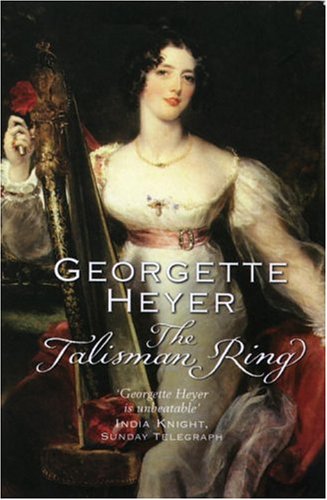
The author I have chosen to feature this month is one who, I’m sure, has the widest appeal of any I have written about so far in this series of posts. I know there are plenty of readers who don’t usually read other types of historical fiction but love her Regency and Georgian romances, which are so distinctive they belong in a sub-genre of their own. She is, of course, Georgette Heyer.

Heyer was born in London in 1902 and died in 1974, having published over fifty novels, including the romances I’ve already mentioned, six straight historical novels, four contemporary novels and twelve detective stories. I only started reading Heyer relatively recently (in 2010) so I haven’t read all of her books, or even most of them; I know there will be people reading this post who have read – and re-read – a lot more of them than I have, so I certainly don’t claim to be an expert on her work. However, I have read enough to be able to say that, whichever Heyer novel you pick up (of the Regency/Georgian ones, anyway), you can expect historical accuracy, witty, sparkling dialogue, engaging characters and an entertaining plot.

Here are the Heyer books I have read so far, with links to my reviews:

Romances

The Black Moth
Powder and Patch
The Masqueraders
The Convenient Marriage
Regency Buck
The Talisman Ring
The Corinthian
Friday’s Child
The Quiet Gentleman
April Lady
Snowdrift and Other Stories
Black Sheep
Cousin Kate
Charity Girl
Faro’s Daughter – review coming soon

Mysteries

Footsteps in the Dark
Envious Casca
Duplicate Death

If you’ve never read Heyer before, you may be wondering which of her books would be a good one to start with. Well, the first one I read was The Talisman Ring, and although I’ve read others since that I enjoyed more, it was obviously a very successful starting point for me! I also loved The Quiet Gentleman for the sense of mystery, The Masqueraders and The Corinthian for the adventure, The Convenient Marriage for the humour and Black Sheep for the hero and heroine! Really, I would recommend any that I’ve read, apart from maybe Powder and Patch.

You can find out more about Heyer and her work at Georgette-Heyer.com.

I will be looking at more historical fiction authors in future posts, but for now I would like to hear your thoughts on Georgette Heyer.

Have you read any of her books? Which are your favourites – and which would you recommend to readers who are new to her work?

Historical Musings #40: Reading Dorothy Dunnett

Welcome to my monthly post on all things historical fiction. After doing something slightly different in June with an attempt at completing the I-Spy book cover challenge, I’m returning to my guides to individual authors and their work. Previously I have written about Elizabeth Chadwick, Anya Seton and Edward Rutherfurd; this month it’s the turn of one of my absolute favourite authors of historical fiction – Dorothy Dunnett. If you have been following my blog for a while, you will probably have noticed that I never miss an opportunity to mention Dunnett’s novels and how wonderful they are, so you won’t be surprised to hear that she is the author I have been most looking forward to featuring here.

Dorothy Dunnett was born in Dunfermline, Scotland, in 1923 and died in 2001. You can find out more about her life and work at the Dorothy Dunnett Society website.

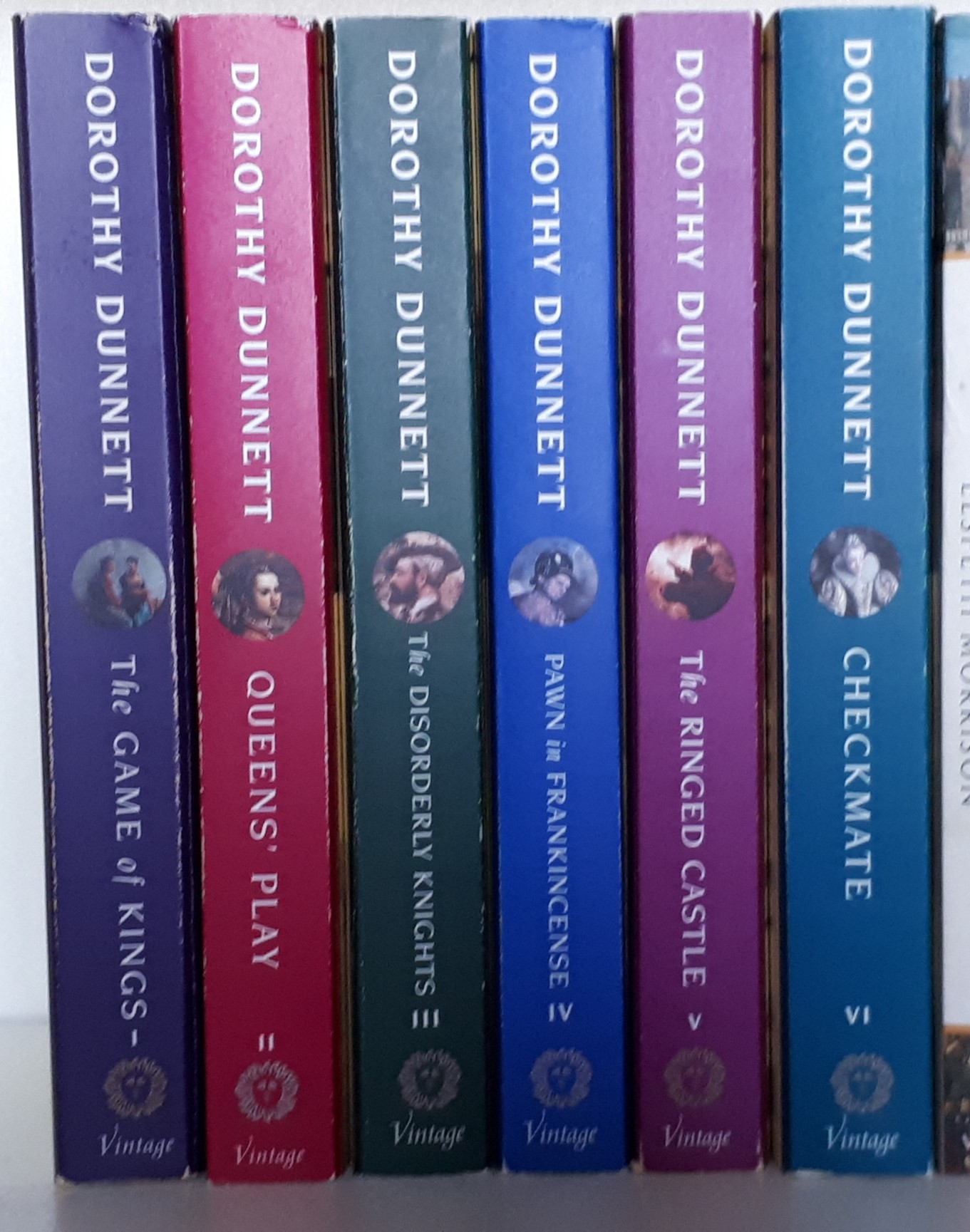
I read my first Dunnett novel in February 2012 and just over a year later I had read all fifteen of her historical novels – the six books that form her Lymond Chronicles, the eight in her other series, The House of Niccolò, and her standalone novel, King Hereafter. She also wrote a series of contemporary mystery novels, but I am still working through those, and for the purposes of this post I will concentrate on her historical fiction only.

If you’ve never read Dunnett before you will be wondering where you need to begin. My recommendation would be to start in the same place that I started – with The Game of Kings, the first book in the Lymond Chronicles. I have seen some people suggest that Niccolò Rising is more accessible and easier to read, and perhaps it is, but I personally didn’t find it quite the stunning, unforgettable read that The Game of Kings was.

The Lymond Chronicles

This series of six novels, published between 1961 and 1975, follow the adventures of Scottish nobleman Francis Crawford of Lymond in 16th century Europe and beyond. Here are my reviews of the books:

The Game of Kings
Queens’ Play
The Disorderly Knights
Pawn in Frankincense
The Ringed Castle
Checkmate

I think my comments on finishing the series back in April 2012 say everything that needs to be said:

“For anyone who has yet to read these books, I can promise you that although they’re not the easiest of reads, it’s definitely worth making the effort and getting to know Francis Crawford of Lymond, one of the most complex, charismatic, fascinating characters you’re ever likely to meet in literature. Working through the six books of the Lymond Chronicles has been one has been one of the greatest experiences in my lifetime of reading.”

The House of Niccolò

Dunnett’s second series, published from 1986 to 2000, is longer and, if such a thing is possible, even more complex and intricately plotted. It follows the rise in fortunes of Nicholas de Fleury, whom we first meet as a dyer’s apprentice in 15th century Bruges.

This is what I had to say after finishing the last book in 2013. As you can see, I did love this series too, but not quite as much:

“I’ve really enjoyed working my way through this series, but the House of Niccolò hasn’t had quite the same effect on me as the Lymond Chronicles, mainly because Nicholas himself, to me, is a less appealing character than Lymond – though I know others will disagree…Still, I did love the series as a whole and am looking forward to reading all the books again and looking out for some of the things I know I missed during the first read.”

The eight books, again with links to my reviews, are:

Niccolò Rising
The Spring of the Ram
Race of Scorpions
Scales of Gold
The Unicorn Hunt
To Lie With Lions
Caprice and Rondo
Gemini

Dunnett’s own advice was apparently to read The Lymond Chronicles first then The House of Niccolò, then Lymond again in order to pick up on the links between the two series (and they are linked in some very clever ways, although I won’t say any more about that here). I can almost guarantee you will want to read Dunnett’s books more than once anyway. There are so many layers that it’s impossible to fully understand everything the first time and re-reading will allow you to pick up on some of the things you missed.

The Dorothy Dunnett Companion and The Dorothy Dunnett Companion II

The amount of time and effort you want to put into reading these books depends on how much you’re hoping to get out of them. If, like me, you find that you want to shed more light on the literary allusions, fragments of poetry and appearances by real historical figures, both famous and obscure, help is at hand – the two-volume Dorothy Dunnett Companion provides translations, explanations, maps and sources.

King Hereafter

Dunnett’s only standalone historical novel is based around the idea that Macbeth, the 11th century King of Alba (Scotland), and Thorfinn, Earl of Orkney, were one and the same. King Hereafter is the result of a huge amount of research and as with all of Dunnett’s novels the writing is excellent. I can’t recommend this book highly enough!

My review of King Hereafter from 2013.

~

I have attempted to give a good overview of Dunnett’s work here, without going into too much detail. I hope I’ve succeeded! Next month I will be choosing another historical fiction author to feature, but for now I look forward to hearing your thoughts on Dorothy Dunnett…

Have you read any of her novels? If not, would you like to? And if you have, how did you discover them? Which of her books are your favourites? What can you say to encourage new readers to try Dunnett for the first time?

Historical Musings #39: I Spy Historical-Style

Welcome to my monthly post on all things historical fiction. I noticed this I Spy challenge appearing on lots of other blogs a month or two ago and wanted to give it a try, but didn’t get round to it at the time when everyone else was doing it. When I was thinking of a topic for this month’s Historical Musings post I thought it might be fun to put together a historical fiction (and non-fiction) version of the I Spy game which would give me an opportunity to highlight twenty books from my shelves, some of which I’ve read and some that I haven’t.

I’m not sure where this challenge first originated but these are the rules:

Find a book that contains (either on the cover or in the title) an example for each category. You must have a separate book for all 20, get as creative as you want and do it within five minutes!

I decided to ignore the five minutes rule and add a new rule of my own – that all twenty books must be from the historical fiction or non-fiction genres. And here are the results:

1. Food

The Lives of Tudor Women by Elizabeth Norton

I was nearly defeated before I’d even started. I couldn’t find a single historical fiction novel on my shelves with food either on the cover or in the title. Surely, I thought, I would be able to spot an apple or a cake or a plate on a table in the background…but no, nothing. Finally, I discovered some food on the cover of The Lives of Tudor Women by Elizabeth Norton, hence why I had to expand the scope of this challenge to include historical non-fiction as well as fiction! I haven’t read this book yet, but I will think about picking it up next time I’m in a non-fiction mood.

2. Transport

To Lie with Lions by Dorothy Dunnett

This one was also more difficult than I’d expected. I was sure I must have a book with a train on the cover or maybe a plane on a World War II cover, but when I started searching for them I couldn’t find any. There were plenty of pictures of ships, though! To Lie with Lions, set mainly in Scotland and Iceland, is a wonderful book (as are all of Dunnett’s historical novels), but be aware that it is the sixth in her House of Niccolò series and I would strongly recommend beginning with the first.

3. Weapon

The Sunne in Splendour by Sharon Penman

For ‘weapon’ there were a few books with swords on the cover that I could have chosen. I decided to feature The Sunne in Splendour, Penman’s fictional account of the life of Richard III, because it’s another book that I loved and the one that sparked my interest in the Wars of the Roses, which is now one of my favourite periods in English history. The picture on the cover shows, as well as a sword on the ground, what is obviously supposed to be the crown in the hawthorn bush, which is one of the legends surrounding the Battle of Bosworth.

4. Animal

The Fortune Hunter by Daisy Goodwin

I started seeing some overlap between categories at this point. I could have used To Lie with Lions for the animal book, but instead I decided to choose one with a picture of an animal on the cover – in this case, a horse. Horses play an important role in The Fortune Hunter, which tells the story of the 19th century horseman Bay Middleton and his relationships with the heiress Charlotte Baird and the Empress Sisi of Austria.

5. Number

Twenty Years After by Alexandre Dumas

This is the sequel to The Three Musketeers and the ‘twenty years’ in the title refers to the time that has passed between the events of the first book and the second. In this book, d’Artagnan, Athos, Porthos and Aramis become caught up in the conflict between the supporters and opponents of Cardinal Mazarin, are involved in the execution of Charles I in England, and face a new enemy, the sinister Mordaunt. I enjoyed this one as much as The Three Musketeers and went on to read the rest of the series.

6. Something you read

The Story Keeper by Anna Mazzola

You read stories, of course, and the stories in the title of Anna Mazzola’s new novel are folktales from the Isle of Skye which are collected by a young woman who visits the island in 1857. I haven’t read this book yet but it is on my 20 Books of Summer list and I am looking forward to it, having read her first novel, The Unseeing, last year.

7. Body of water

Sea of Poppies by Amitav Ghosh

Another ship on the cover of this book, but also a body of water and the word ‘sea’ in the title. The novel – the first in a trilogy – follows a diverse group of characters who come together on a voyage from India to Mauritius in the 1830s, just before the First Opium War. The second book in the trilogy, River of Smoke, could have been used for this category too and also for the next one…

8. Product of fire

The Fatal Flame by Lyndsay Faye

A surprising number of books to choose from here, with ‘smoke’, ‘ashes’ and even ‘soot’ in the title. I decided on this one because it gives me an opportunity to mention how much I enjoyed Lyndsay Faye’s Timothy Wilde novels, a trilogy of mysteries set in 19th century New York. I particularly loved the relationship between Tim and his brother Valentine. This is the last book, so read The Gods of Gotham and Seven for a Secret first.

9. Royalty

Edwin: High King of Britain by Edoardo Albert

As you might expect, there are many, many historical novels with references to royalty in the title or pictures of royalty on the cover. I simply picked up the first one that caught my eye on my shelf, which happened to be Edoardo Albert’s Edwin: High King of Britain. I loved this book about Edwin, the 7th century King of Northumbria, and the sequel Oswald: Return of the King. There is also now a third book on Oswiu, King of Bernicia, but I haven’t read that one yet.

10. Architecture

Larkswood by Valerie Mendes

I have plenty of books with houses, castles and other architectural structures on the cover too. Again, I just picked up one of the first I came to. Larkswood is the name of an English country house in which family secrets unfold over a period of forty years, taking us up to the beginning of the Second World War. I can’t remember very much about this book, but I know I liked it.

11. Clothing

Fingersmith by Sarah Waters

For ‘clothing’, it was tempting to choose one of the ‘faceless woman in pretty dress’ covers that are used so often by publishers of historical novels, but then I remembered my copy of Fingersmith with its picture of a pair of white gloves. I didn’t love this book quite as much as most people seem to, possibly because the plot reminded me so strongly of a certain Victorian novel, but I did enjoy it, as I have all of Sarah Waters’ books.

12. Family member

Daughter of Siena by Marina Fiorato

Lots of daughter, wife and sister titles – but few, if any, that mention male family members, which could be a discussion for a future Historical Musings post, do you think? Anyway, I haven’t read Daughter of Siena yet. I’ve enjoyed some of Marina Fiorato’s books but had problems with some of her others, so I wonder what I’ll think of this one, set in 18th century Italy.

13. Time of day

The Midnight Rose by Lucinda Riley

Like many of Lucinda Riley’s novels this one is set in two time periods – one historical and the other in the modern day. The historical storyline takes us to India in 1911, where a young girl is befriended by Princess Indira, the daughter of the Maharaja and Maharani of Cooch Behar. I have read most of Lucinda Riley’s books now – I would particularly recommend her Seven Sisters series – and am looking forward to the others.

14. Music

The Long Song by Andrea Levy

I was torn between this book and Songs of Willow Frost by Jamie Ford, but eventually settled on this one. There’s not much of a music connection, apart from the title, though…this is a novel about a girl born as a slave on a Jamaican sugar plantation who lives through the abolition of slavery in the 1830s.

15. Paranormal being

Ghost Light by Joseph O’Connor

This book may have a paranormal being in the title, but it’s not a paranormal story…it’s actually the story of the Irish actress Molly Allgood and her relationship with the playwright John Millington Synge. I’ve forgotten the plot but I remember the beautiful writing – and the unusual second person narration.

16. Occupation

Gutenberg’s Apprentice by Alix Christie

Peter Schoeffer, the protagonist of this novel, is originally a scribe but his father has other plans for him and arranges for him to become apprenticed to Johann Gutenberg, who is working to produce the first printed copy of the Bible. I remember feeling slightly disappointed with the story and characters, but as a book lover I did enjoy learning about the history of the printed word. The conflict between the new and the traditional is a theme I always find interesting too.

17. Season

The Spring of the Ram by Dorothy Dunnett

After I took my photograph I remembered Drums of Autumn by Diana Gabaldon and The Winter Palace by Eva Stachniak, but by then it was too late and I had already chosen this one. Anyway, it gives me another excuse (not that I needed one) to highlight Dunnett’s House of Niccolò series. This book has one of my favourite settings in the series: Trebizond in 1461.

18. Colour

Red Sky at Night by Jane Aiken Hodge

All book covers have a colour on them, I suppose, so I selected one with a colour in the title for this category instead. I have read a few Jane Aiken Hodge books and enjoyed them but haven’t read this one, set in the Regency period, which I found in a second-hand shop a while ago. I have one of her other novels on my NetGalley shelf, though, so I will really need to read that one first.

19. Celestial body

Shadow of the Moon by MM Kaye

This was the first book that came to mind here. I read it last year as part of a readalong and loved it – not quite as much as Kaye’s The Far Pavilions, but almost! I really like the way she writes about India in both of those books, with such a deep understanding, lack of bias and obvious love for the country. Her mystery novels are great too, but I’m really looking forward to reading her other historical novel, Trade Wind.

20. Something that grows

The Rose of Sebastopol by Katharine McMahon

This book has been on my TBR for a long time now, so I will really have to read it soon. It is set during the Crimean War, which is not a setting I have read very much about. It’s also the second book I have mentioned here which has ‘rose’ in the title – another example of books counting towards more than one category.

~

Well, those are my twenty I Spy books. Have you read any of them?

Historical Musings #38: Reading Edward Rutherfurd

Welcome to my monthly post on all things historical fiction. For the last few months, I have been looking at the work of some of my favourite historical fiction authors; having previously featured Elizabeth Chadwick and Anya Seton, this month it’s the turn of a very different author: Edward Rutherfurd.

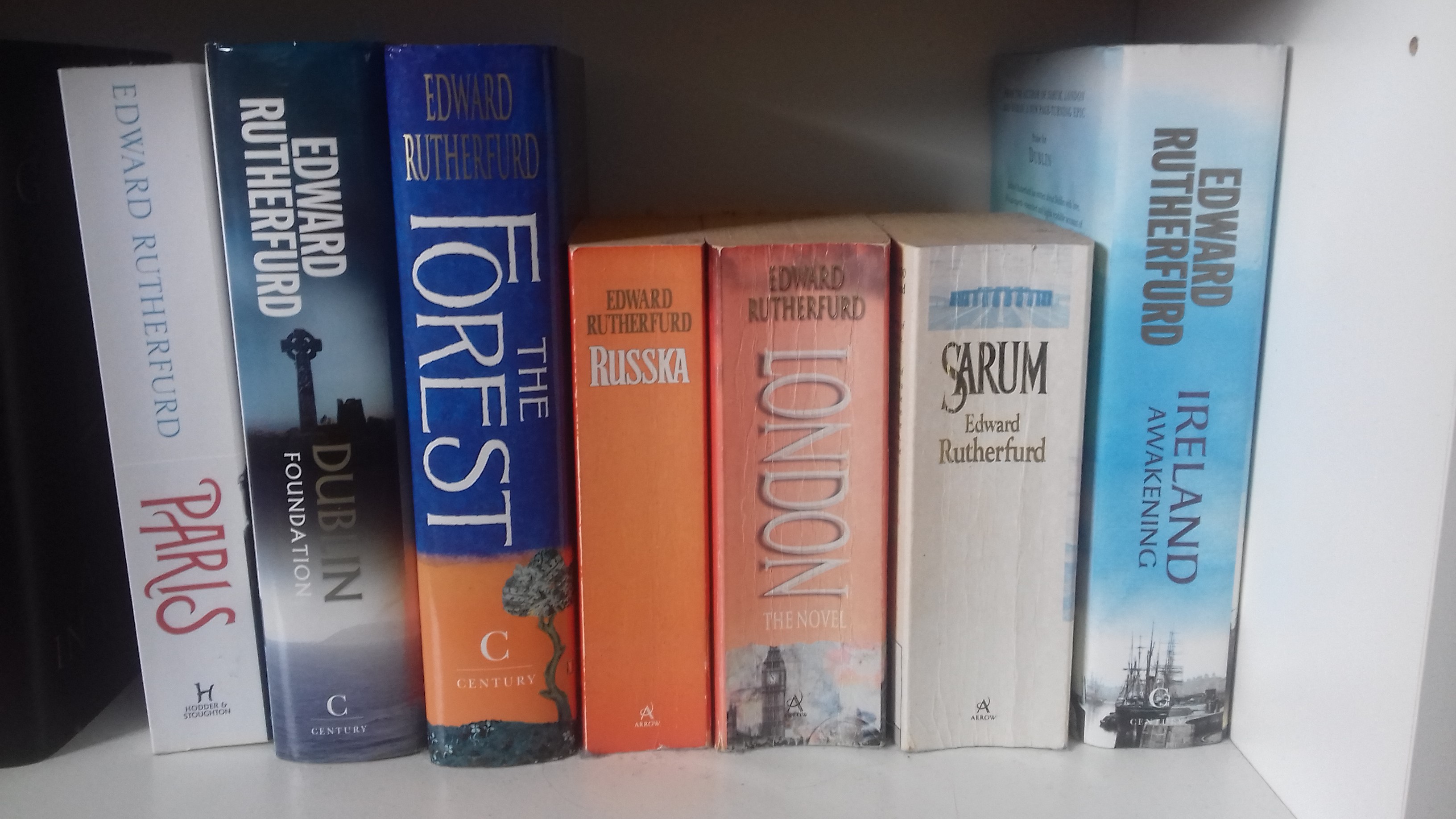
Edward Rutherfurd is the pseudonym of Francis Edward Wintle, born in Salisbury, England in 1948. His first novel, Sarum, was published in 1987, and since then he has written seven others, with a new one expected in 2019. Rutherfurd’s novels all follow a very similar format; they each tell the story of several families who live in one particular country, city or region over a period of many years. Sarum, for example, is set in and around the city of Salisbury; it begins in prehistoric times, then moves forward a few generations with each chapter, bringing us right up to the 1980s, and in this way, we watch the entire history of the city (and of England) unfold. His most recent book, Paris, is slightly different from the others as instead of moving forward chronologically in time, the narrative jumps backwards and forwards from one century to another, and although I didn’t find this as effective it did make a change!

As you can imagine, covering so much history means Rutherfurd’s novels are very long – most of them have around 1,000 pages, which I’m sure will put a lot of people off reading them. However, the way in which they are structured makes each novel feel almost like a collection of interrelated short stories, so once you start to read they are not quite as daunting as they seem! I have read all of his novels and own all of them apart from New York, which I borrowed from the library and didn’t like enough to want to buy my own copy.

Sarum (1987)
Russka (1991)
London (1997)
The Forest (2000)
Dublin: Foundation (2004)
Ireland: Awakening (2006)
New York (2009)
Paris (2013)

Of these, my favourites are Sarum, Russka and the two books set in Ireland. His new book, which I think should be coming next year, is apparently going to be about the history of China and I’m sure it will be another fascinating read.

You can find out more about Edward Rutherfurd and his work at his official website.

I will be looking at another historical fiction author in next month’s post, but for now:
Have you read any of Edward Rutherfurd’s novels? Which are your favourites?

Historical Musings #37: Reading Anya Seton

Welcome to my monthly post on all things historical fiction. Last month, I looked at the work of Elizabeth Chadwick; this month it’s the turn of another historical fiction author: Anya Seton.

Anya Seton was the pseudonym of Ann Seton Chase, an American author born in Manhattan in 1904. She died in 1990 aged eighty-six, having written twelve novels, some of which were bestsellers and some which were adapted for film.

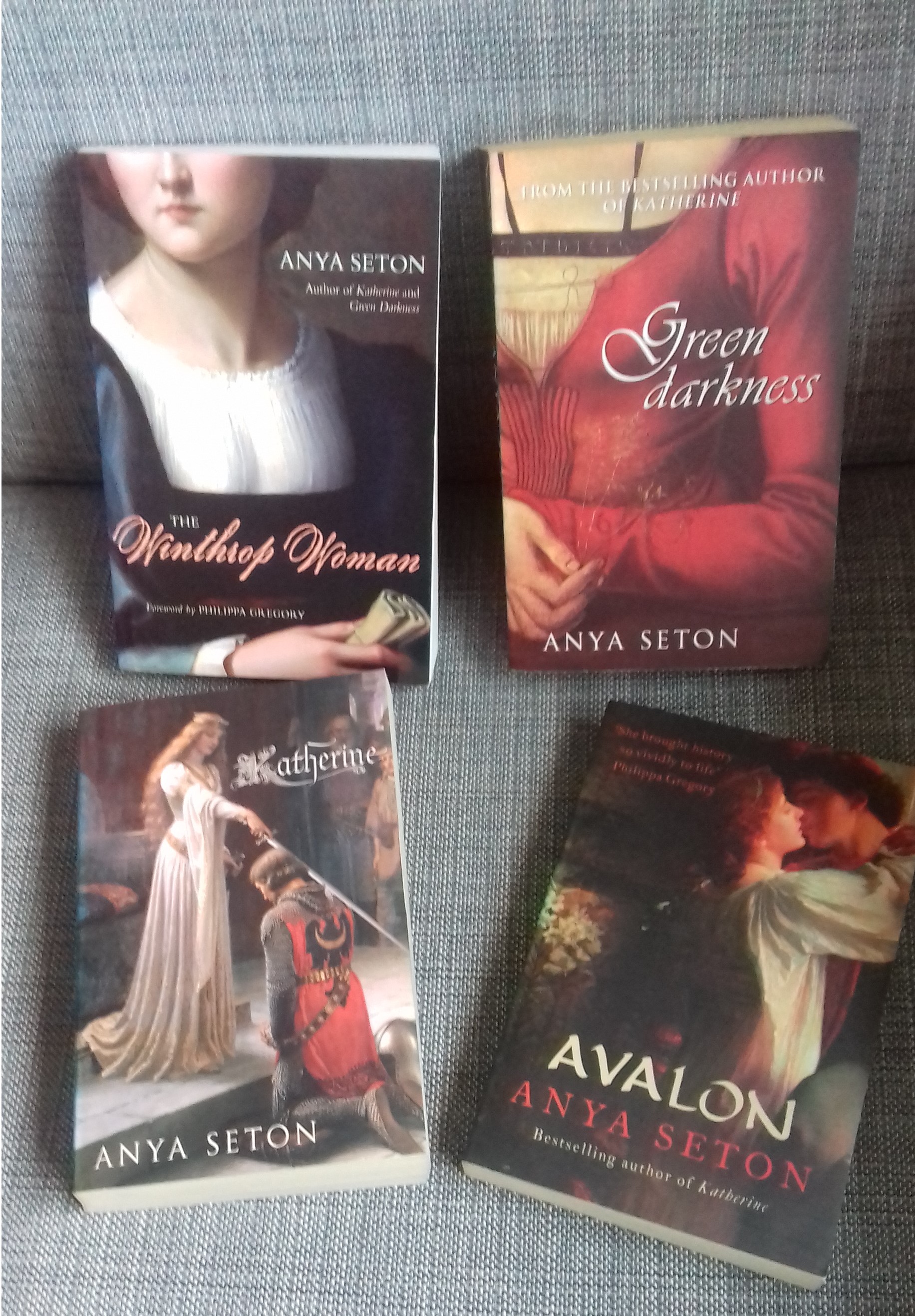
I have read six Anya Seton novels, although she was an author I discovered years before I started my blog, so I don’t have reviews to link to for most of these books.

Katherine (1954)

This is probably Seton’s most famous novel. It was my first introduction to her work and, in fact, I think it was the first book I read that dealt with real historical figures rather than fictional characters in a historical setting. The Katherine of the title is Katherine Swynford, mistress of Edward III’s son John of Gaunt. The descendants of Katherine and John were the Beauforts, who included Margaret Beaufort, mother of King Henry VII. I thought it was a wonderfully moving story and a vivid portrayal of 14th century England – the world of Edward III and Richard II, the Black Death and the Peasants’ Revolt, Geoffrey Chaucer and Julian of Norwich.

Green Darkness (1972)

Green Darkness was the second Anya Seton novel I read and, although I enjoyed some aspects of it, I thought it was slightly disappointing after Katherine. It’s a reincarnation story about a present day (1960s) woman who revisits her former life in Tudor England, during which she lived with the wealthy Browne family and fell in love with the family chaplain. The 16th century romance didn’t really work for me but I did like the setting, particularly the descriptions of the manor house, Ightham Mote.

The Winthrop Woman (1958)

This was another one I loved. It tells the story of Elizabeth Fones, a young Puritan woman who, in the 17th century, marries into the family of John Winthrop, the first governor of the Massachusetts Bay Colony. I can’t remember very much else about this book now, but I did find it interesting because I had never read anything about this period of American history before.

Avalon (1965)

Avalon is my least favourite of the Anya Seton books I’ve read, although that could be because, at the time when I read it, the setting didn’t particularly interest me as I preferred reading about later periods. The story takes place in the 10th century and follows the adventures of Rumon, a nobleman from Provence who is shipwrecked off the coast of Cornwall, and Merewyn, a Cornish girl who believes she is a descendant of King Arthur. Maybe I’ll try reading this book again one day to see if my opinion of it has changed.

Devil Water (1962)

Having read the four books above, it wasn’t until years later that I picked up my fifth, Devil Water, in the library. This one centres around the Jacobite Rebellions of 1715 and 1745, focusing on two English Jacobites, James Radcliffe, the 3rd Earl of Derwentwater, and his younger brother, Charles. Later in the book, Charles’ daughter travels to America, to the plantations of colonial Virginia. Although this wasn’t a favourite, it was of particular interest to me because the first half of the novel is set in the North East of England, which is where I’m from.

Dragonwyck (1944)

This was the last Anya Seton book I read, in 2013. This one is a gothic novel about a young woman from Connecticut who becomes a governess in the home of Nicholas Van Ryn in Hudson, New York. Again, not an absolute favourite, but I did love the historical setting – the Anti-Rent War, the Astor Place Riot of 1849, steamboat races on the Hudson River and even an appearance from Edgar Allan Poe!

I still haven’t read the rest of Seton’s novels, partly because I have already read the ones which appealed to me the most. The other titles are:

My Theodosia (1941)
The Turquoise (1946)
The Hearth and Eagle (1948)
Foxfire (1950)
The Mistletoe and Sword (1955)
Smouldering Fires (1975)

I do have a copy of The Turquoise, which I will read eventually, but if you have read any of the others please let me know what you thought of them!

I will be looking at another author of historical fiction in next month’s post, but for now:
Have you read any of Anya Seton’s novels? Which are your favourites?

Historical Musings #36: Reading Elizabeth Chadwick

Welcome to my monthly post on all things historical fiction. After putting thirty-five of these posts together since 2015 I’m starting to struggle for new ideas so while I rebuild my list of potential future topics, I thought I would try something slightly different for a few months: a series of posts on specific historical fiction authors. These should be relatively easy for me to write and will hopefully introduce new readers to some of my favourite authors. I’ve decided to start with Elizabeth Chadwick as I’ve just finished reading one of her books and am about to begin another.

Elizabeth Chadwick has written over twenty books set in the medieval period; her first, The Wild Hunt, was published in 1990 and her latest, Templar Silks, is out this month. Her earlier novels tend to feature fictional characters and storylines, while her more recent ones focus on the lives of real historical figures, particularly members of the Marshal and Bigod families. Let’s start by looking at the books I have already read (there are eight of them):

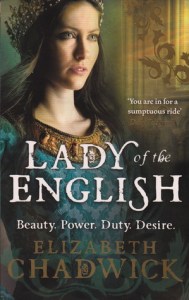
Lady of the English

Set during the period of civil war known as the Anarchy, this is the story of the Empress Matilda, daughter and heir of Henry I, who faces a battle with her cousin Stephen for the throne of England. Matilda’s son, Henry, will become the first Plantagenet king of England. We also follow the story of Matilda’s stepmother, Adeliza, another fascinating medieval woman.

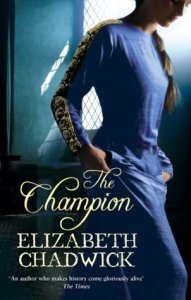
The Champion

This one is set in France, Wales and England towards the end of the 12th century and follows the story of fictional heroine Monday de Cerizay and knight Alexander de Montroi. I learned a huge amount about jousts, tournaments and other knightly pursuits!

The Eleanor of Aquitaine trilogy:

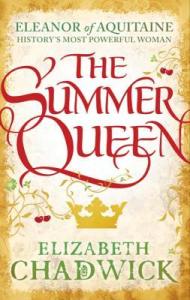
The Summer Queen
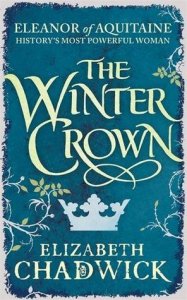
The Winter Crown
The Autumn Throne

This trilogy of novels about Eleanor of Aquitaine takes us through Eleanor’s entire life including her troubled marriage to King Louis VII of France, her relationship with her second husband, Henry II of England, her time in captivity following the breakdown of their marriage and the reigns of her sons Richard I and King John.

William Marshal books

The Greatest Knight
The Scarlet Lion – review coming soon

These two novels are based on the life of William Marshal – Earl of Pembroke, knight, statesman and adviser to five kings. I love Chadwick’s depiction of William and if the real man was anything like the fictional one, then he really deserved the title of ‘the greatest knight’.

Her newest novel, Templar Silks, is also part of the Marshal series, although I’m sure you would be able to read it as a standalone. I haven’t read it yet, but it follows William on his pilgrimage to Jerusalem in 1183.

To Defy a King

This one tells the story of Mahelt Marshal, the daughter of William Marshal. As England descends into turmoil during the reign of King John, Mahelt finds herself in a situation where she must choose between her own family, the Marshals, and the family of her husband, Hugh Bigod.

~

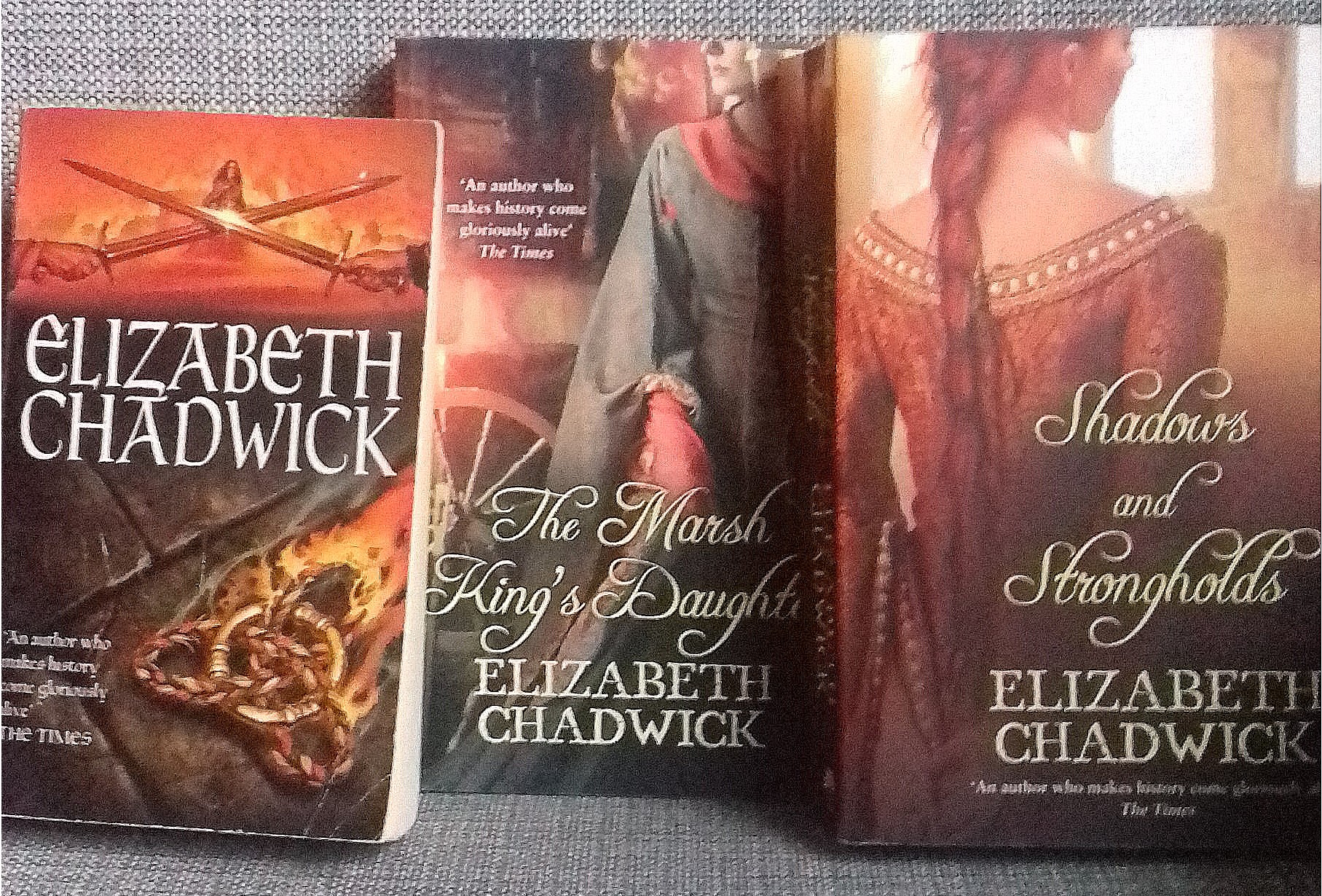
The books I’ve listed above are the only ones I’ve read so far, but I also have three more Chadwick novels on my shelf which I’ve bought as I’ve come across second-hand copies:

The Love Knot
The Marsh King’s Daughter
Shadows and Strongholds

And here are the titles of her other books:

The Wild Hunt
The Running Vixen
The Leopard Unleashed
Children of Destiny
Shields of Pride
First Knight
The Conquest
Lords of the White Castle
The Winter Mantle
The Falcons of Montabard
A Place Beyond Courage
The Time of Singing

I don’t know much about any of these, apart from Lords of the White Castle which I started to read years ago and abandoned – although I can’t remember why, so I must try it again! I would like to read all of the others, except maybe First Knight which seems to be a novelisation of the 1995 film.

You can find out more about Elizabeth Chadwick by visiting her official website.

Look out for my reviews of The Scarlet Lion and Templar Silks in the next few weeks – and, of course, next month’s Historical Musings post when I will be choosing another author to write about.

Have you read any of Elizabeth Chadwick’s books? Which are your favourites?

Historical Musings #35: Historical Fantasy

I have just finished writing my review of The Girl in the Tower, the second in Katherine Arden’s fantasy trilogy which began with The Bear and the Nightingale. The trilogy is set in 14th century Russia (or Rus’, as it was called then), a world which has been researched and recreated to resemble the real 14th century Rus’ – apart from the existence of household spirits, frost-demons, firebirds and magical horses. This made me think about other books I’ve read which have both historical and fantasy elements.

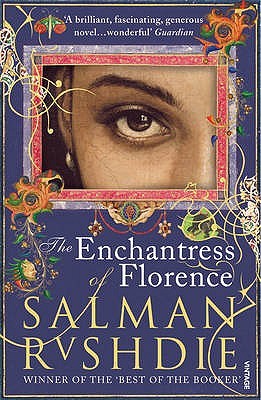
First, there are the books I consider to be mainly historical fiction with some elements of magical realism. A good example would be The Miniaturist by Jessie Burton, which is set in 17th century Amsterdam but has a supernatural twist in the form of a dolls’ house and a mysterious miniaturist. Another recent read, The Mermaid and Mrs Hancock by Imogen Hermes Gowar is set in Georgian England with only a few brief touches of fantasy, while The Bedlam Stacks by Natasha Pulley, about a quinine-collecting expedition to Peru, incorporates moving statues and exploding trees. At the other end of the scale there’s The Enchantress of Florence by Salman Rushdie, which takes us to a 16th century India populated with giants and witches, where emperors have imaginary wives and artists hide inside paintings.

Naomi Novik’s Temeraire series (of which I’ve still only read the first one!) is set during the Napoleonic Wars in a world very much as it would have been at the time, with one important difference: dragons exist and are used by both the British and French as a sort of early air force. Another book with the Napoleonic Wars for a setting, one which I read pre-blogging this time, is Jonathan Strange and Mr Norrell by Susanna Clarke. I remember loving the mixture of magic and history and the fascinating footnotes describing the world of Faerie.

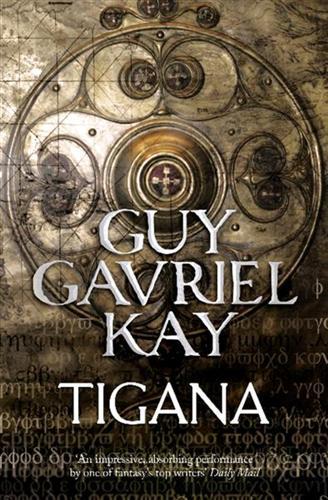
Then there are Guy Gavriel Kay’s books, which are set in fantasy worlds which resemble real historical worlds. Tigana, my favourite, takes place in a world with one blue moon and one white, but there are clear parallels with Renaissance Italy, while The Lions of Al-Rassan has a setting similar to medieval Spain. The Last Light of the Sun takes us to a land where magical forces gather in the forests and faeries wait to claim the souls of the dead, yet this land is identifiable as Northern Europe in the time of the Vikings, the Anglo-Saxons and the Celts. Finally, Children of Earth and Sky is set in thinly-disguised versions of Venice, Dubrovnik and Constantinople during the Renaissance period. These are the only books I have read by Kay so far, but I will certainly be reading more.

How do you feel about fantasy or magical realism combined with historical fiction? Have you read any of the books I’ve mentioned here? Can you recommend more?