Top Ten Tuesday: From One to Ten

This week’s topic for Top Ten Tuesday (hosted by Jana at That Artsy Reader Girl) is “Books with Numbers in the Title”. I’m sure a similar topic has come up before, but I didn’t take part that time so thought I’d join in today – and to make things more difficult, I have chosen a different title for each number from one to ten and have only used books that I have read and reviewed!

One Night in Winter by Simon Sebag Montefiore – There were a few books I could have used for number one, but I’ve chosen this thriller set in Stalin’s Moscow at the end of World War II and based on a true story.

Two on a Tower by Thomas Hardy – This is a lesser known Hardy novel, but I still really enjoyed this story of Lady Viviette Constantine and her love for the young astronomer, Swithin St Cleeve.

Three Singles to Adventure by Gerald Durrell – I avoided the more obvious choices here, such as The Three Musketeers and Three Men in a Boat and went with this non-fiction account of Durrell’s expedition to Guyana in 1950. I loved the descriptions of the animals and birds he finds there and the funny anecdotes about things that happen to Durrell and his companions during the journey.

The Four Emperors by David Blixt – Ancient Rome has never been one of my favourite periods to read about, but this novel brought to life the Rome of AD 69, the year in which four different emperors ruled in quick succession.

Five Little Pigs by Agatha Christie – This 1942 Poirot mystery is slightly unusual in that Poirot is trying to solve a crime that took place many years before the story begins. It’s one of several Christie novels with a title based on a children’s rhyme!

Daisy Jones and the Six by Taylor Jenkins Reid – I didn’t think this would be my kind of book, but I enjoyed it much more than I expected to. Written in a documentary style, it tells the story of a fictional 1970s rock band.

The Seven Sisters by Lucinda Riley – I had several choices for number seven too, but I decided on this one, the first in Lucinda Riley’s Seven Sisters series. Each book in the series tells the story of one of seven adopted sisters and in this first novel we meet the eldest, Maia, as she traces her family history back to Brazil during the creation of the statue of Christ the Redeemer.

Around the World in Eighty Days by Jules Verne – I’m cheating slightly here as I don’t seem to have read any books with ‘eight’ in the title. Anyway, I enjoyed this classic tale of a man who sets out to prove that it’s possible to travel round the entire world in eighty days – although it seemed such a waste to visit so many different countries and not have time to actually explore any of them!

Nine Coaches Waiting by Mary Stewart – I love Mary Stewart! This wonderful Gothic suspense novel set in France was the first of her books that I read and probably still my favourite.

Ten-Second Staircase by Christopher Fowler – This is the fourth novel in Fowler’s Bryant and May series about a pair of elderly detectives who work for the Peculiar Crimes Unit. In this book, Arthur Bryant and John May are on the trail of a mysterious serial killer dressed as an 18th century highwayman.

~

Have you read any of these books? Could you put your own ‘one to ten’ together?
Six Degrees of Separation: From Second Place to The Leopard

It’s the first Saturday of the month which means it’s time for another Six Degrees of Separation, hosted by Kate of Books are my Favourite and Best. The idea is that Kate chooses a book to use as a starting point and then we have to link it to six other books of our choice to form a chain. A book doesn’t have to be connected to all of the others on the list – only to the one next to it in the chain.

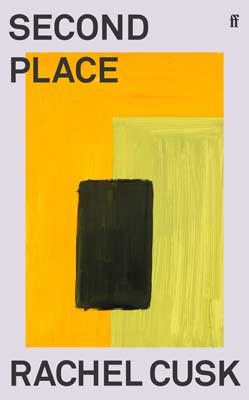
This month we’re beginning with Second Place by Rachel Cusk. I haven’t read it and probably never will, but here’s what it’s about:

A woman invites a famed artist to visit the remote coastal region where she lives, in the belief that his vision will penetrate the mystery of her life and landscape. Over the course of one hot summer, his provocative presence provides the frame for a study of female fate and male privilege, of the geometries of human relationships, and of the struggle to live morally between our internal and external worlds. With its examination of the possibility that art can both save and destroy us, Second Place is deeply affirming of the human soul, while grappling with its darkest demons.

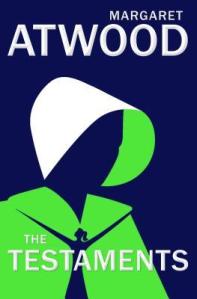
Second Place has been longlisted for this year’s Booker Prize. I haven’t read any of the other titles on the longlist either, although there are plenty of authors on there that I’ve read in the past such as Kazuo Ishiguro, Damon Galgut, Nadifa Mohamed and Francis Spufford. The last Booker Prize winner I read was The Testaments by Margaret Atwood (1), which shared the prize in 2019. It’s a sequel to her earlier novel, The Handmaid’s Tale, set in Gilead, a dystopian community ruled by a patriarchal regime.

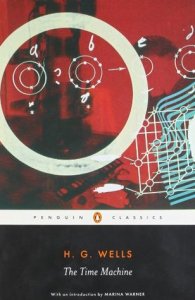
Gilead is a place I certainly wouldn’t want to live in. For a Top Ten Tuesday topic in 2018, I made a list of other unpleasant fictional worlds. One of these was ‘the future’, as described by HG Wells in his classic science fiction novel The Time Machine (2). The world Wells imagines, where humanity has evolved into the beautiful, childlike Eloi and the savage, brutal Morlocks is bleak and depressing, but difficult to forget once you’ve read it.

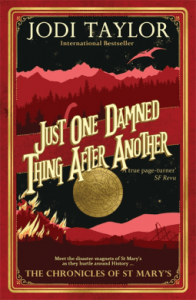
I think if I had my own time machine I would be too afraid to see what the future might hold, so I would prefer to visit the past. A book in which the characters use their time machines to travel back in time rather than forwards is Just One Damned Thing After Another by Jodi Taylor (3), the first of her Chronicles of St Mary’s. The series follows Madeleine Maxwell (known as Max), a time travelling historian who has some exciting adventures while personally experiencing some of the greatest events in history.

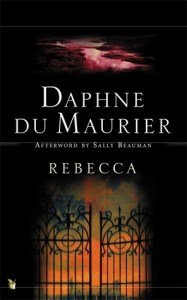
The name of the main character in the Jodi Taylor novel, Max, and the name of her mentor, Mrs de Winter, naturally makes me think of Max (or Maxim) de Winter in one of my favourite books, Rebecca by Daphne du Maurier (4). However, that’s where the similarities end because Taylor’s time travel novel has nothing else in common with du Maurier’s classic tale of Maxim’s young and innocent second wife, haunted by the memories of his first, whose presence is still felt throughout the estate of Manderley even after her death.

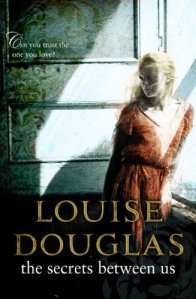
A novel that does closely mirror Rebecca is The Secrets Between Us by Louise Douglas (5). This modern Gothic novel tells the story of Sarah, who becomes housekeeper to Alex and his six-year-old son at their home, Avalon. But as Sarah begins to fall in love with Alex, she hears some disturbing rumours about his wife, Genevieve, who has disappeared without trace. I really enjoyed this book, with its twisting, turning plot, ghostly occurrences and dark, tense atmosphere.

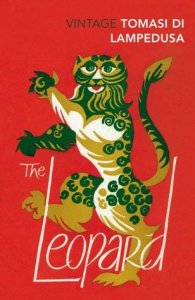
Although most of the above book is set in England, Sarah and Alex first meet while on holiday in Sicily and Louise Douglas also uses Sicily as the setting for one of her later novels, The House by the Sea. Another, very different book set in Sicily is The Leopard by Giuseppe Tomasi di Lampedusa (6), which explores the 19th century Risorgimento (movement for the unification of Italy) through the eyes of a Sicilian nobleman, Don Fabrizio Corbera, Prince of Salina.

~

And that’s my chain for September. My links included: Booker Prize winners, unpleasant fictional worlds, time machines, Max and de Winter, books inspired by Rebecca and the island of Sicily.

In October, we will be starting with The Lottery, a short story by Shirley Jackson.

Six Degrees of Separation: From Postcards from the Edge to The Return of the Soldier

It’s the first Saturday of the month which means it’s time for another Six Degrees of Separation, hosted by Kate of Books are my Favourite and Best. The idea is that Kate chooses a book to use as a starting point and then we have to link it to six other books of our choice to form a chain. A book doesn’t have to be connected to all of the others on the list – only to the one next to it in the chain.

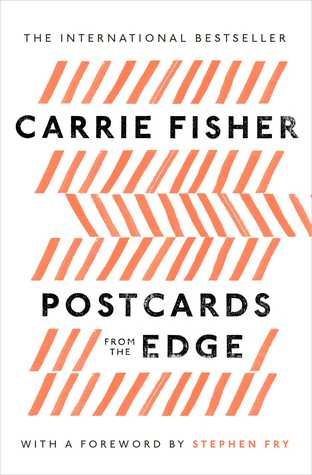
This month we’re beginning with Postcards from the Edge by Carrie Fisher, a book I haven’t read and don’t have any plans to read. Here’s what it’s about:

Carrie Fisher’s first novel is set within the world she knows better than anyone else: Hollywood, the all-too-real fantasyland of drug users and deal makers. This stunning literary debut chronicles Suzanne Vale’s vivid, excruciatingly funny experiences – from the rehab clinic to life in the outside world. Sparked by Suzanne’s – and Carrie’s – deliciously wry sense of the absurd, Postcards from the Edge is a revealing look at the dangers and delights of all our addictions, from success and money to sex and insecurity.

When I saw which book we were starting with this month I thought I would struggle to put a chain together, but actually a first link came to mind very quickly, using the theme of postcards. Alone in Berlin by Hans Fallada (1) is set during World War II and tells the story of Otto and Anna Quangel, an ordinary German couple who start a campaign of resistance by writing anti-Nazi messages on postcards and dropping them in public places across Berlin. Also titled Every Man Dies Alone, this wonderful novel was first published in German in 1947. I read it in 2011 and it was my favourite book read that year.

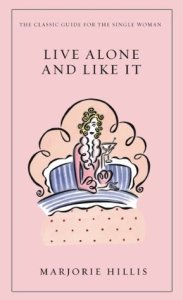
Another book with the word ‘alone’ in the title is Live Alone and Like It by Marjorie Hillis (2), a self-help book for single women from 1936 which I read earlier this year. As someone who lives alone, I hoped Hillis would have some good advice for me – and although some of the things in the book are obviously very dated, I was surprised by how much of it is still relevant today!

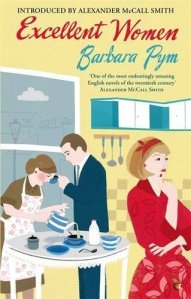
A fictional character who lives alone and likes it is Mildred Lathbury in Excellent Women by Barbara Pym (3). Mildred, an unmarried woman in her thirties, is thought of as one of those nice, dependable, ‘excellent women’ who can always be relied upon to provide advice, comfort and a cup of tea. At the beginning of the book, Mildred is leading a quiet life devoted to helping out at the parish church, but when new neighbours move in she finds herself becoming more involved in their problems than she really wants to be.

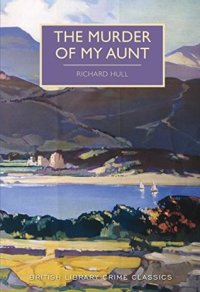
Mildred is not a very common name in fiction, but I can think of a few others – including Aunt Mildred in The Murder of My Aunt by Richard Hull (4). The story is set in the small Welsh village of Llwll and is narrated by Edward Powell, an unpleasant and unlikeable young man who spends the entire book thinking of various ways to murder his equally unpleasant aunt. Despite the dark-sounding plot, this is actually a very funny and entertaining novel and one of the best books I have read in the British Library Crime Classics series.

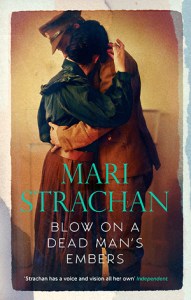
My next link is to another book set in Wales. There are plenty to choose from, but I have decided on Blow on a Dead Man’s Embers by Mari Strachan (5). This moving and atmospheric novel tells the story of Non Davies, one of the lucky women whose husbands come home alive at the end of World War I. However, Non’s husband Davey is suffering from shell shock and Non knows that before she can help him recover she needs to find out exactly what happened to him during the war.

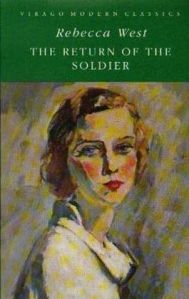
The final book in my chain, Rebecca West’s The Return of the Soldier (6), is also about a soldier whose experiences during the war have left him with shell shock and a result, he has lost his memory. Unable to remember marrying his wife, Kitty, he is still in love with another woman he knew fifteen years ago, which causes difficulties for everyone involved. This is a short book but a poignant and beautifully written one.

~

And that’s my chain for this month. My links have included postcards, the word ‘Alone’, women who live alone and like it, the name Mildred, books set in Wales and returning soldiers.

In September we will be starting with 2021 Booker Prize nominee, Second Place by Rachel Cusk.

Have you read any of the books in my chain? Are you taking part in Six Degrees of Separation this month?

Six in Six: The 2021 Edition

We’re more than halfway through the year and Six in Six, hosted by Jo of The Book Jotter, is back again! I love taking part in this as I think it’s the perfect way to look back at our reading over the first six months of the year.

The idea of Six in Six is that we choose six categories (Jo has provided a list of suggestions or you can come up with new topics of your own if you prefer) and then fit six of the books or authors we’ve read this year into each category. It’s more difficult than it sounds, especially as I try not to use the same book in more than one category, but it’s always fun to do.

Here is my 2021 Six in Six, with links to my reviews:

~

Six Agatha Christie novels read for the Read Christie 2021 challenge

1. JANUARY – A story set in a grand house…The Body in the Library
2. FEBRUARY – A story featuring love…Sad Cypress
3. MARCH – A story featuring a society figure…Sparkling Cyanide
4. APRIL – A story set before WWII…Murder in Mesopotamia
5. MAY – A story featuring tea…A Pocket Full of Rye
6. JUNE – A story featuring a garden…Nemesis

~

Six mysteries, thrillers or crime novels NOT by Agatha Christie

1. The Pact by Sharon Bolton
2. The Deadly Truth by Helen McCloy
3. The Royal Secret by Andrew Taylor
4. The Decagon House Murders by Yukito Ayatsuji
5. Hare Sitting Up by Michael Innes
6. Daughters of Night by Laura Shepherd-Robinson

~

Six non-fiction books read this year

1. Myself When Young by Daphne du Maurier
2. The Killer of the Princes in the Tower by MJ Trow
3. Live Alone and Like It by Marjorie Hillis
4. The Light Ages by Seb Falk
5. The Fall of the House of Byron by Emily Brand
6. The Haunting of Alma Fielding by Kate Summerscale

~

Six books that took me on a tour of Europe

1. The Manuscript Found in Saragossa by Jan Potocki (SPAIN)
2. Ashes by Christopher de Vinck (BELGIUM)
3. Ariadne by Jennifer Saint (GREECE)
4. Still Life by Sarah Winman (ITALY)
5. The Missing Sister by Lucinda Riley (IRELAND)
6. The Paris Library by Janet Skeslien Charles (FRANCE)

~

Six books with titles connected to rivers, seas and storms

1. The Land Beyond the Sea by Sharon Penman
2. Islands of Mercy by Rose Tremain
3. A Net for Small Fishes by Lucy Jago
4. The Drowned City by KJ Maitland
5. River of Stars by Guy Gavriel Kay
6. The Wrecking Storm by Michael Ward

~

Six books I’ve enjoyed reading this year but couldn’t fit into another category

1. Good by Stealth by Henrietta Clandon
2. The Rose Code by Kate Quinn
3. China by Edward Rutherfurd
4. The Metal Heart by Caroline Lea
5. The Hardie Inheritance by Anne Melville
6. The Last Daughter by Nicola Cornick

~

I was pleased to find that I’d read six non-fiction books so far this year – it’s not often that I’ve read enough to fill a whole category. However, I’m disappointed that I haven’t read six classics (apart from the classic crime). I’ll have to make up for that between now and December!

Have you taken part in Six in Six or are you planning to? Have you read any of the books I’ve mentioned?

Six Degrees of Separation: From Eats, Shoots & Leaves to The Diary of a Provincial Lady

It’s the first Saturday of the month which means it’s time for another Six Degrees of Separation, hosted by Kate of Books are my Favourite and Best. The idea is that Kate chooses a book to use as a starting point and then we have to link it to six other books of our choice to form a chain. A book doesn’t have to be connected to all of the others on the list – only to the one next to it in the chain.

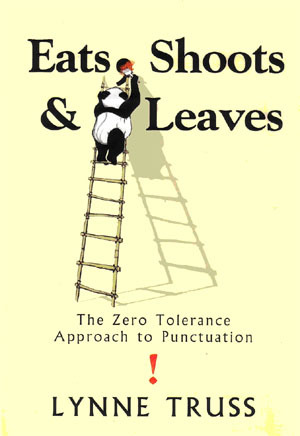
This month we’re starting with Eats, Shoots & Leaves by Lynne Truss. I own a copy of this non-fiction book about the importance of punctuation and read it years ago. I was working as a proofreader at the time, so it was quite appropriate! Here is the description from Goodreads:

Everyone knows the basics of punctuation, surely? Aren’t we all taught at school how to use full stops, commas and question marks? And yet we see ignorance and indifference everywhere. “Its Summer!” says a sign that cries out for an apostrophe, “ANTIQUE,S,” says another, bizarrely. “Pansy’s ready,” we learn to our considerable interest (“Is she?”), as we browse among the bedding plants.

In Eats, Shoots & Leaves, Lynne Truss dares to say that, with our system of punctuation patently endangered, it is time to look at our commas and semicolons and see them for the wonderful and necessary things they are. If there are only pendants left who care, then so be it. “Sticklers unite” is her rallying cry. “You have nothing to lose but your sense of proportion – and arguably you didn’t have much of that to begin with.”

This is the book for people who love punctuation and get upset about it. From the invention of the question mark in the time of Charlemagne to Sir Roger Casement “hanged on a comma”; from George Orwell shunning the semicolon to Peter Cook saying Nevile Shute’s three dots made him feel “all funny”, this book makes a powerful case for the preservation of a system of printing conventions that is much too subtle to be mucked about with.

Punctuation used incorrectly or not at all is something that always annoys me. Rather than single one book out for criticism, I’m going to move away from the subject of punctuation entirely and continue the chain with a completely different link. The cover of Eats, Shoots & Leaves has a ladder on it and this reminds me of the title of a John Boyne book I enjoyed a few years ago: A Ladder to the Sky (1), a novel about an aspiring author who can’t think of any stories of his own so decides to steal other people’s. John Boyne is an Irish author and I read this book in March 2019 for the Reading Ireland Month hosted every year by Cathy and Niall.

For a previous Reading Ireland Month in 2016, I read The Children of Dynmouth by William Trevor (2). This dark and unsettling novel is set in an English seaside town in the 1970s and follows the story of Timothy Gedge, a lonely and disturbed teenager who wanders the streets of Dynmouth intruding into the lives of people who don’t want him there.

Another book with ‘children’ in the title is The Children’s Book by AS Byatt (3). I loved this long and complex novel about the Wellwood family and all the social and cultural changes going on in the world around them during the late Victorian and Edwardian periods. One of the main characters, Olive Wellwood, is a writer of fairy tales and some of the stories she writes for her children are incorporated into the novel.

The Forgotten Garden by Kate Morton (4), a novel with multiple narratives and settings, moving between England and Australia and covering a period of more than a hundred years, also features a character who is a writer of fairy tales. Her name is Eliza Makepeace and some of her tales are also included in the novel. The title of the book refers to a house on the coast of Cornwall with a hidden walled garden, surely inspired by The Secret Garden by Frances Hodgson Burnett.

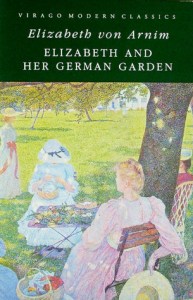
I can think of quite a few other novels about gardens or featuring a garden, but the one I’m going to link to is Elizabeth and Her German Garden by Elizabeth von Arnim (5). This novel from 1898 is written in the form of a diary in which the narrator takes us through a year in her life, describing all the changes she sees in the garden of her home in northern Germany.

I’m going to finish my chain with another novel written in diary form: The Diary of a Provincial Lady by EM Delafield (6). I had put off reading this for a long time because I wasn’t sure it would be my sort of book, but I enjoyed it much more than I thought I would – a perfect choice if you’re in the mood for something light and funny! I must read the other Provincial Lady books soon.

~

And that’s my chain for this month. My links have included ladders, Irish authors, the word children, fairy tale writers, gardens and diaries.

In August we will be starting with Postcards From the Edge by Carrie Fisher.

Six Degrees of Separation: From The Bass Rock to The Last Summer

It’s the first Saturday of the month which means it’s time for another Six Degrees of Separation, hosted by Kate of Books are my Favourite and Best. The idea is that Kate chooses a book to use as a starting point and then we have to link it to six other books of our choice to form a chain. A book doesn’t have to be connected to all of the others on the list – only to the one next to it in the chain.

This month we’re starting with The Bass Rock by Evie Wyld. I haven’t read this book, but it sounds like one I might enjoy:

Surging out of the sea, the Bass Rock has for centuries watched over the lives that pass under its shadow on the Scottish mainland. And across the centuries the fates of three women are linked: to this place, to each other.

In the early 1700s, Sarah, accused of being a witch, flees for her life.

In the aftermath of the Second World War, Ruth navigates a new house, a new husband and the strange waters of the local community.

Six decades later, the house stands empty. Viv, mourning the death of her father, catalogues Ruth’s belongings and discovers her place in the past – and perhaps a way forward.

Each woman’s choices are circumscribed, in ways big and small, by the men in their lives. But in sisterhood there is the hope of survival and new life. Intricately crafted and compulsively readable, The Bass Rock burns bright with anger and love.

I’m not feeling very creative this month, so I have chosen an obvious link to start with: witchcraft. Thornyhold by Mary Stewart (1) is the story of Gilly Ramsey, who inherits a cottage in the countryside which belonged to her mother’s cousin. On arriving at the cottage, Thornyhold, Gilly discovers that Cousin Geillis had a reputation as a witch and has left behind her collection of magic spells and herbology books. Despite the witchcraft theme, though, this is a lovely, gentle read!

Lesley Frewen, the heroine of The Flowering Thorn by Margery Sharp (2) also relocates to the countryside. Lesley is a London socialite who finds herself volunteering to adopt Patrick, a four-year-old orphan, and decides to start a new life for them both in a cottage in Buckinghamshire. I had already linked to this book through the country cottage setting before I noticed that the title also contains the word ‘thorn’ – a double link!

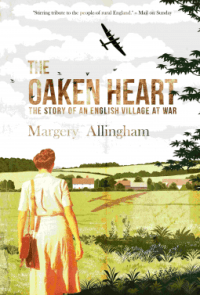
The next book in my chain is by another author called Margery. The Oaken Heart (3) is crime writer Margery Allingham’s memoir in which she writes about life in her village (Tolleshunt D’Arcy in Essex, renamed ‘Auburn’ in the book) during World War II. I found it particularly interesting that the book was written in 1941, so Allingham would have had no idea while she was writing it how much longer the war would last and what else might happen to the people of Auburn before it was over.

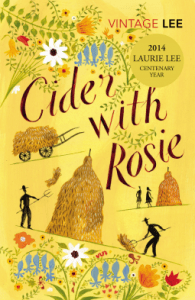
I don’t read a lot of authors’ memoirs, but another that does come to mind is Cider with Rosie by Laurie Lee (4), the first in Lee’s autobiographical trilogy. I still haven’t read the other two books, but in this first volume he looks back on his childhood, his school, his friends and family and the village of Slad in which he grew up. It’s a beautiful portrayal of a world on the brink of change and a way of life about to disappear forever.

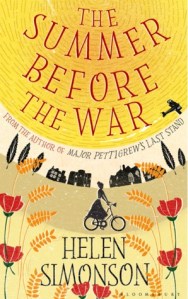
The cover of Cider with Rosie reminded me of the cover of The Summer Before the War by Helen Simonson (5) – similar colours, pictures of nature, figures in silhouette. The war referred to in the title is the First World War and the novel follows the story of Beatrice Nash, a young woman who starts a new job as a school Latin teacher in the summer of 1914.

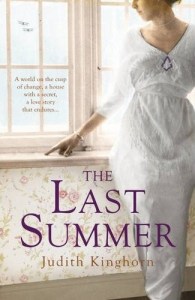
The Last Summer by Judith Kinghorn (6) is also set during that same idyllic summer with war just on the horizon. Through the story of seventeen-year-old Clarissa Granville, the novel shows us the effects the outbreak of war will have on society, class structure and the life Clarissa has always known. Although I didn’t do it deliberately, it has just occurred to me that all of the books in my chain this month are about people starting new lives or seeing the world around them beginning to change.

~

And that’s my chain for June! My links have included: witchcraft, moving to the countryside, the name Margery, memoirs, similar covers and the summer of 1914.

Next month we’ll be starting with Eats, Shoots and Leaves by Lynne Truss.

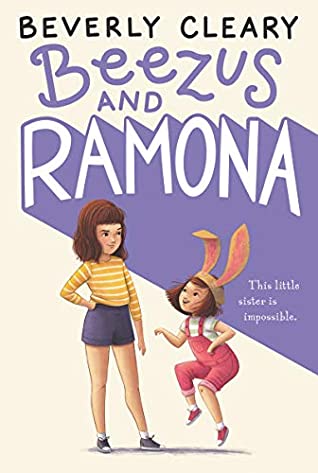
Six Degrees of Separation: From Beezus and Ramona to The Duke’s Children

It’s the first Saturday of the month which means it’s time for another Six Degrees of Separation, hosted by Kate of Books are my Favourite and Best. The idea is that Kate chooses a book to use as a starting point and then we have to link it to six other books of our choice to form a chain. A book doesn’t have to be connected to all of the others on the list – only to the one next to it in the chain.

Having a little sister like four-year-old Ramona isn’t always easy for Beezus Quimby. With a wild imagination, disregard for order, and an appetite for chaos, Ramona makes it hard for Beezus to be the responsible older sister she knows she ought to be…especially when Ramona threatens to ruin Beezus’s birthday party. Newbery Medal winner Beverly Cleary delivers a humorous tale of the ups and downs of sisterhood. Both the younger and older siblings of the family will enjoy this book.

This month we are starting with Beezus and Ramona by Beverly Cleary, who sadly died in March this year. This book was the first in her Ramona Quimby series for children and was published in 1955. I read some of the Ramona books as a child and although I can’t remember anything about them now, I know I used to enjoy them!

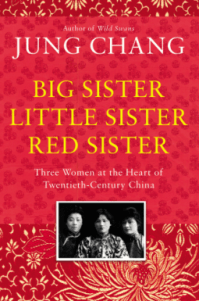
I’m sure I won’t be the only Six Degrees participant to use books about sisters as my first link this month, but as there are so many to choose from I’m hoping that nobody else will have linked to this one: Big Sister, Little Sister, Red Sister by Jung Chang (1). This is a biography of the three Soong sisters, all of whom played an important role in 20th century Chinese politics. Ei-ling or ‘big sister’ became one of China’s richest women through her marriage to the banker HH Kung, ‘little sister’ May-ling was First Lady of the Republic of China, and ‘red sister’ Ching-ling was a supporter of the Communist Party and the wife of revolutionary leader Sun Yat-sen.

I’m sure I have used books with ‘red’ in the title in a previous chain, so I’m going to link now to a book with a different colour in the title. There were lots of options here, but I’ve gone with blue and The Mystery of the Blue Train by Agatha Christie (2). This is a Poirot novel in which an heiress is murdered for her jewels during a train journey through France. I don’t think it’s one of Christie’s stronger novels (and in fact it was apparently her own least favourite), but it’s still quite enjoyable.

This makes me think of another novel set on a train, The Wheel Spins by Ethel Lina White (3), the book on which Alfred Hitchcock’s The Lady Vanishes was based. There are a lot of differences between the book and the film but they share the same basic plot: a young woman makes a new friend during a train journey who later disappears, only for the rest of the passengers to deny that she ever existed.

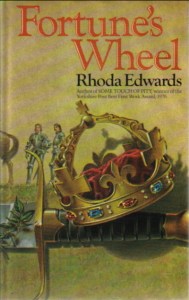
The idea of a wheel spinning leads me to Fortune’s Wheel (4), one of Rhoda Edwards’ two novels about Richard III. This book covers the earlier part of Richard’s life, taking us through the reign of his elder brother, Edward IV, and ending with Richard’s marriage to Anne Neville in 1472. I enjoyed it, but thought the second novel, Some Touch of Pity, was much better.

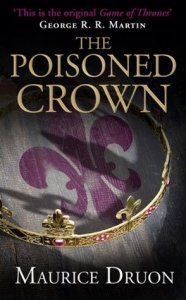
There’s a picture of a crown on the cover of Fortune’s Wheel and also on the cover of The Poisoned Crown by Maurice Druon (5). First published in French in 1956, this is the third book in the Accursed Kings series telling the story of Philip IV of France and his descendants, a line of kings “cursed to the thirteenth generation” by the Grand Master of the Knights Templar, whom Philip sent to burn at the stake. George R.R. Martin has described this series as the inspiration for his A Game of Thrones.

I haven’t finished The Accursed Kings yet; there are seven books in the series and so far I have only read the first five of them. It’s not the only series I’ve started and haven’t finished – I still need to read the final book in Anthony Trollope’s Palliser series, The Duke’s Children (6). I nearly always love Trollope but the length of his books sometimes puts me off. This one is on my Classics Club list, so I’m hoping to get to it soon.

And that’s my chain for this month! My links have included: sisters, colours, trains and wheels, pictures of crowns and an unfinished series.

In June we are starting with The Bass Rock by Evie Wyld. Will you be joining us?