Top Ten Tuesday: Halloween Titles

This week’s Top Ten Tuesday (hosted by That Artsy Reader Girl) is a ‘Halloween Freebie’. There were lots of ways I could have approached this topic, but I decided to list ten words that are often associated with Halloween and find a book I’ve read with each of those words in the title.

Here are the ten books I’ve chosen. I think most of these would make great Halloween reads!

1. Blood Upon the Snow by Hilda Lawrence – First published in 1944, this is one of three crime novels to feature the private investigator Mark East and his two friends, the amateur detectives Bessy and Beulah. This atmospheric novel is set in a lonely town in the mountains during a snowy winter.

2. The Devil in the Marshalsea by Antonia Hodgson – The first in a series of historical mysteries set in the eighteenth century. This book is set almost entirely within London’s notorious Marshalsea Prison and although all of the other books in the series are excellent too, I particularly loved this one because of the fascinating setting.

3. The Coffin Path by Katherine Clements – A seventeenth century ghost story set on a sheep farm in the Yorkshire moors. Although I found the book quite slow, it’s also very atmospheric and steeped in English folklore.

4. Touch Not the Cat by Mary Stewart – This is not one of my favourites of Mary Stewart’s suspense novels, but I still enjoyed it. Published in 1976, it has a few touches of the supernatural and a wonderful country house setting, complete with moat and maze.

5. The Phantom of the Opera by Gaston Leroux – I didn’t love this 1911 classic quite as much as I’d hoped to, but it’s very entertaining and has a great setting – an opera house with an underground lake, a maze of tunnels and a torture chamber. Worth reading whether or not you’re a fan of the musical.

6. The Grave’s a Fine and Private Place by Alan Bradley – Twelve-year-old detective Flavia de Luce is investigating the death of a young actor who is found drowned in a river. I prefer the earlier books in the Flavia series, but this is still a good one.

7. A Morbid Taste for Bones by Ellis Peters – This is the first book in the Cadfael mystery series featuring the monk, Brother Cadfael, and set in the medieval period. I really enjoyed this book and still need to continue with the rest of the series.

8. Midnight is a Lonely Place by Barbara Erskine – I find I usually like the sound of Barbara Erskine’s books more than the books themselves! In this one, a writer rents a cottage on the Essex coast, only to discover that the house appears to be haunted by the ghost of a Roman soldier. I didn’t love the book, but I did find it very creepy!

9. The Canterville Ghost by Oscar Wilde – This classic satirical comedy is a ghost story with a difference; an American family move into an English country house which is said to be haunted, but no matter how hard the resident ghost tries, the family refuse to be frightened!

10. Hallowe’en Party by Agatha Christie – The obvious choice to finish my list! It’s one of the later Poirot novels, published in 1969, and I don’t think it’s one of the best, but with the murder taking place during a Halloween party it’s the perfect Christie novel to read at this time of year.

~

Have you read any of these? Which other books with Halloween-related words in the title can you think of?

If you’re wondering why there are no witch-related books in my list, I used them in a previous Halloween Top Ten Tuesday here!

Six Degrees of Separation: From The Turn of the Screw to The Turn of the Key

It’s the first Saturday of the month which means it’s time for another Six Degrees of Separation, hosted by Kate of Books are my Favourite and Best. The idea is that Kate chooses a book to use as a starting point and then we have to link it to six other books of our choice to form a chain. A book doesn’t have to be connected to all of the others on the list – only to the one next to it in the chain.
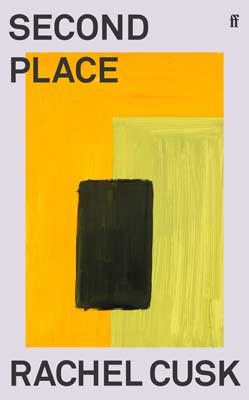
This month we are starting with a book that I have actually read – not something that happens very often! The book is The Turn of the Screw by Henry James and if you haven’t read it, here is the blurb from Goodreads:

In what Henry James called a ‘trap for the unwary’, The Turn of the Screw tells of a nameless young governess sent to a country house to take charge of two orphans, Miles and Flora. Unsettled by a dark foreboding of menace within the house, she soon comes to believe that something malevolent is stalking the children in her care. But is the threat to her young charges really a malign and ghostly presence or something else entirely?

John Harding’s Florence and Giles (1), a Gothic novel about two children who believe their lives are in danger after the arrival of a sinister governess, is inspired by The Turn of the Screw (as you might have guessed from the very similar names of the characters: Florence and Giles, and Flora and Miles).  I loved it, although I hadn’t actually read The Turn of the Screw at the time, so didn’t fully appreciate the extent to which it was a homage to that other book.     

Another book with lots of ghostly and Gothic elements and a plot involving a governess with two young charges is This House is Haunted by John Boyne (2).  The influence of The Turn of the Screw is clear here too, although the story probably owes as much to Charles Dickens or Wilkie Collins as it does to Henry James.  It was the first John Boyne novel I’ve read and still one of my favourites.

Sheridan Le Fanu’s classic novel, Uncle Silas (3), also features a governess – an evil and villainous one called Madame de la Rougierre, who arrives at the Ruthyn family estate of Knowl to become a companion to Maud Ruthyn. A very entertaining tale of “gloomy, eerie mansions, graveyards, laudanum addiction, an evil governess, locked rooms and locked cabinets, poison and family secrets.” 

Not all governesses are as evil as Madame de la Rougierre!  Linda Martin in Nine Coaches Waiting by Mary Stewart (4) is a governess and she is the heroine of the novel. As soon as Linda arrives at the de Valmy family chateau in France to become governess to young Philippe de Valmy, she is convinced that something is wrong and the tension builds and builds until the truth is revealed. I’ve read most of Stewart’s novels and this is probably my favourite; it’s certainly the most exciting and atmospheric. 

Nine Coaches Waiting shares some plot elements with Jane Eyre, as does Jane Steele by Lyndsay Faye (5).  Jane Steele herself is a fan of the Charlotte Bronte classic and becomes aware of some of the parallels between her own life and Jane Eyre’s.  After her unhappy schooldays come to an end, Jane returns to her childhood home, Highgate House, to take up a position as governess to Sahjara, the young ward of the house’s new master, Mr Thornfield.  Mystery, romance and suspense follow!

It’s not often that I am able to link the last book in one of my chains back to the first, but as soon as I saw that we were beginning this month with The Turn of the Screw I knew I would have to end with The Turn of the Key by Ruth Ware (6).  Not quite a governess, but a ‘live-in nanny’, our narrator Rowan Caine arrives at Heatherbrae House in Scotland to find that she is just the latest in a long string of nannies in a very short time period. Could the ghostly occurrences taking place in the house be the reason?

~

Well, that’s my chain for October. I usually try to link each book to the one before in a different way each time, but this month I’ve kept it very simple: all of the books in my chain include a governess, children and a house that is either haunted or hiding secrets of some sort.

For November’s starting point, we can use a book with which we’ve ended a previous chain and continue from there.

Six Degrees of Separation: From Rodham to Cold Comfort Farm

It’s the first Saturday of the month which means it’s time for another Six Degrees of Separation, hosted by Kate of Books are my Favourite and Best. The idea is that Kate chooses a book to use as a starting point and then we have to link it to six other books of our choice to form a chain. A book doesn’t have to be connected to all of the others on the list – only to the one next to it in the chain.

This month we are starting with Rodham by Curtis Sittenfeld. I haven’t read it, but I know that it’s an alternate history imagining what might have happened if Hillary Rodham had never married Bill Clinton.

However, I have read one of Curtis Sittenfeld’s earlier novels, Prep (1), which follows four years in the life of Lee Fiora, a teenage girl with social anxiety who attends a boarding school in Massachusetts. This seems to be a book that people either love or hate; I think whether or not you enjoy it probably depends on how strongly you can relate to the main character.

Another girl who goes to boarding school, in Canada this time, is Flavia de Luce in Alan Bradley’s As Chimney Sweepers Come to Dust (2). This is the seventh book in a series of mysteries starring Flavia and in this one she is investigating the disappearances of three girls at Miss Bodycote’s Female Academy. Not my favourite in the series, but I do love the Flavia books overall.

The title of that book comes from the lines from Shakespeare’s Cymbeline: “Golden lads and girls all must, As chimney-sweepers, come to dust.” Another book which also takes its inspiration from the same source is Golden Lads by Daphne du Maurier (3), a biography of two important Elizabethan figures, Francis and Anthony Bacon.

My next link is to another book with the word ‘Golden’ in the title: Golden Hill by Francis Spufford (4). I found this a very entertaining novel set in 18th century New York, in those days still a small community just beginning to expand into the city we know today.

Stella Tillyard’s Call Upon the Water (5) is also set, at least partly, in the same location – but a century earlier, when the settlement was known as New Amsterdam. The rest of the novel is set in England and follows a Dutch engineer working on the draining of the marshlands in the Fens.

Finally, I’m going to link to a book written by another Stella – Stella Gibbons. Gibbons wrote many novels, as well as some short stories and poetry, but the only one I have read is her most famous one, Cold Comfort Farm (6). Because I didn’t enjoy this book as much as I’d hoped to, I haven’t attempted any of her other work yet but maybe I will one day.

~

And that’s my chain for this month! My links included school stories, Cymbeline, the word ‘golden’, old New York and the name Stella. In October, we will be starting with The Turn of the Screw by Henry James – finally a book that I’ve read!

Top Ten Tuesday: Colourful titles on my TBR

The theme for this week’s Top Ten Tuesday (hosted by That Artsy Reader Girl) is Books with Colours in the Titles. Looking at the books I have waiting to be read on my TBR, I was surprised to see how many have a colourful title! Here are ten of them:

1. Red Sky at Night by Jane Aiken Hodge – I have had mixed experiences with Jane Aiken Hodge’s books so far – I’ve enjoyed some but been disappointed by others. I hope this book, which is set in England during the Napoleonic Wars, will be a good one.

2. Black Lamb and Grey Falcon by Rebecca West – I’ve been interested in reading this book about Rebecca West’s journey through 1930s Yugoslavia for years but have been put off by the length. I will make a start on it eventually!

3. Dawn of the White Rose by Mary Pershall – I found this in a charity shop last year. It looks a bit too light and romance-y for my taste, but I was drawn to it because it’s about Isabel de Clare and William Marshal, whom I’ve enjoyed reading about in Elizabeth Chadwick’s books.

4. The Scarlet Letter by Nathaniel Hawthorne – I’ve read some of Nathaniel Hawthorne’s short stories but none of his novels. I’ve had a copy of this one on my shelf for a long time and still haven’t read it.

5. The Black Count: Glory, Revolution, Betrayal, and the Real Count of Monte Cristo by Tom Reiss – This is a non-fiction book on the life of General Thomas-Alexandre Dumas, father of Alexandre Dumas, the author of The Count of Monte Cristo and The Three Musketeers (two of my favourite classics). It has been on my TBR since just after it was published in 2012.

6. Half Blood Blues by Esi Edugyan – Another book that has been on my TBR since 2012, when it was shortlisted for the Walter Scott Prize for Historical Fiction. I still want to read it; it’s just one of those books that I never seem able to get around to!

7. Red Adam’s Lady by Grace Ingram – I downloaded this when it was on special offer for Kindle a while ago. It sounds like an entertaining romantic adventure novel set in medieval England, originally published in the 1970s but recently reissued.

8. A Thread of Gold by Helen Cannam – I found this on the same day as the book above. From the blurb, it seems to be a family saga set in the vineyards of France in the late 19th and early 20th century.

9. The Turquoise by Anya Seton – I read a lot of Anya Seton’s books years ago and loved them, but there are still a few that I haven’t read. This book, set in 19th century New York and New Mexico is one of them.

10. White Corridor by Christopher Fowler – I enjoyed the first four books in Christopher Fowler’s Bryant and May detective series, then for some reason stopped and never continued with the fifth one, White Corridor. I’m determined to read it soon.

~

Have you read any of these? Do you have any colourful titles on your own TBR?

Six Degrees of Separation: From How to do Nothing to The Great Impersonation

It’s the first Saturday of the month which means it’s time for another Six Degrees of Separation, hosted by Kate of Books are my Favourite and Best. The idea is that Kate chooses a book to use as a starting point and then we have to link it to six other books of our choice to form a chain. A book doesn’t have to be connected to all of the others on the list – only to the one next to it in the chain.

This month we are starting with How to Do Nothing by Jenny Odell. As usual, I haven’t read it, but here is the blurb:

This thrilling critique of the forces vying for our attention re-defines what we think of as productivity, shows us a new way to connect with our environment and reveals all that we’ve been too distracted to see about our selves and our world.

When the technologies we use every day collapse our experiences into 24/7 availability, platforms for personal branding, and products to be monetized, nothing can be quite so radical as…doing nothing. Here, Jenny Odell sends up a flare from the heart of Silicon Valley, delivering an action plan to resist capitalist narratives of productivity and techno-determinism, and to become more meaningfully connected in the process.

I don’t think this is a book I would be interested in reading, but if you’ve read it let me know what you thought.

Another word for ‘nothing’ is ‘zero’, so my first link takes me to Towards Zero by Agatha Christie (1), one of only five Christie novels to feature the detective Superintendent Battle. In this book, which I remember enjoying, Battle is investigating the murder of Lady Tressilian in her home by the sea.

Tressilian is also the name of the main character in Rafael Sabatini’s The Sea-Hawk (2). Sir Oliver Tressilian is a gentleman from Cornwall who is betrayed and sold into slavery before being liberated by Barbary pirates who operate from the city of Algiers. I love Sabatini’s books and can highly recommend this one!

Pawn in Frankincense by Dorothy Dunnett (3) is also set partly in Algiers, as well as several other beautifully described locations around the Mediterranean and North Africa. This, and the other five novels that make up Dunnett’s Lymond Chronicles, are some of my absolute favourites, but if you haven’t read them yet you really need to start with The Game of Kings.

All of the books in the Lymond Chronicles have titles inspired by the game of chess. So does Queen’s Gambit by Elizabeth Fremantle (4), a novel set at the Tudor court and telling the story of Katherine Parr, Henry VIII’s sixth and final wife. The story is told partly from Katherine’s perspective and partly from her maid, Dorothy Fownten’s. Although I think some of Fremantle’s later books are better, I did enjoy this one.

My next link is to another book about a queen – a self-proclaimed queen this time, rather than a real one! Queen Lucia by EF Benson (5) is the first book in Benson’s Mapp and Lucia series; it was my choice for the 1920 Club earlier this year and kept me entertained during the early stages of lockdown when I really needed something fun and light!

Like Queen Lucia, The Great Impersonation by E Phillips Oppenheim (6) was also published in 1920 and is also a lot of fun to read. It has a very clever plot involving a case of mistaken identities and keeps the reader guessing until the end.

~

And that’s my chain for this month. My links have included synonyms for ‘nothing’, the name Tressilian, Algiers, chess-related titles, queens and the year 1920. In September we will be starting with Curtis Sittenfeld’s latest novel, Rodham.

Six in Six: The 2020 Edition

We’re more than halfway through the year and I’m pleased to see that Six in Six, hosted by Jo of The Book Jotter, is back again! I love to take part in this as I think it’s the perfect way to reflect on our reading over the first six months of the year. The idea of Six in Six is that we choose six categories (Jo has provided a list of suggestions or you can come up with new topics of your own if you prefer) and then try to fit six of the books or authors you’ve read this year into each category. It’s not as easy as it sounds and I usually find that there’s a lot of overlap as some books could fit into more than one category, but it’s always fun to do.

Here is my 2020 Six in Six, with links to reviews where possible (I’m behind with reviews and will be posting the rest of them eventually).

~

Six classic mysteries

1. Murder to Music by Margaret Newman
2. Answer in the Negative by Henrietta Hamilton
3. The Long Farewell by Michael Innes
4. Murder on the Orient Express by Agatha Christie
5. Blood Upon the Snow by Hilda Lawrence
6. The Hollow by Agatha Christie

Six books set in a country other than my own:

1. The Missing Sister by Dinah Jefferies (Burma/Myanmar)
2. Tsarina by Ellen Alpsten (Russia)
3. A Long Petal of the Sea by Isabel Allende (Spain and Chile)
4. Fifth Business by Robertson Davies (Canada)
5. The Split by Sharon Bolton (South Georgia)
6. The House by the Sea by Louise Douglas (Italy)

Six books by authors new to me this year:

1. Lord Jim by Joseph Conrad
2. The Almanack by Martine Bailey
3. Mrs Whistler by Matthew Plampin
4. A Thousand Ships by Natalie Haynes
5. Queen Lucia by EF Benson
6. Hamnet by Maggie O’Farrell

Six books about royalty:

1. Royal Flush by Margaret Irwin (Minette, sister of Charles II)
2. The Silken Rose by Carol McGrath (Eleanor of Provence)
3. The Great Matter Monologues by Thomas Crockett (Henry VIII, Anne Boleyn, Katherine of Aragon)
4. Blood Queen by Joanna Courtney (Macbeth and his wife Cora/Gruoch)
5. The Brothers York by Thomas Penn (Edward IV and Richard III)
6. The Irish Princess by Elizabeth Chadwick (Aoife, daughter of the King of Leinster)

Six books I’ve particularly enjoyed so far this year:

1. In a Dark Wood Wandering by Hella S Haasse
2. The Dutch House by Ann Patchett
3. A Murder is Announced by Agatha Christie
4. The Expendable Man by Dorothy B Hughes
5. A Vision of Light by Judith Merkle Riley
6. Dreamland by Nancy Bilyeau

Six pretty covers:

1. The Foundling by Stacey Halls
2. Requiem for a Knave by Laura Carlin
3. Becoming Belle by Nuala O’Connor

4. The Mercies by Kiran Millwood Hargrave
5. The Animals at Lockwood Manor by Jane Healey
6. The Lady of the Ravens by Joanna Hickson

~

Have you read any of these? Are you taking part in this year’s Six in Six too?

Six Degrees of Separation: From What I Loved to Britannia Mews

It’s the first Saturday of the month which means it’s time for another Six Degrees of Separation, hosted by Kate of Books are my Favourite and Best. The idea is that Kate chooses a book to use as a starting point and then we have to link it to six other books of our choice to form a chain. A book doesn’t have to be connected to all of the others on the list – only to the one next to it in the chain.

This month we are starting with What I Loved by Siri Hustvedt. It’s not a book that I’ve read, but here’s the blurb:

In 1975 art historian Leo Hertzberg discovers an extraordinary painting by an unknown artist in a New York gallery. He buys the work, tracks down its creator, Bill Weschler, and the two men embark on a life-long friendship.

This is the story of their intense and trouble relationship, of the women in their lives and their work, of art and hysteria, love and seduction and their sons – born the same year but whose lives take very different paths.

Like Leo, the heroine of Nicola Cornick’s supernatural time-slip novel, The Phantom Tree (1) finds a painting in a gallery which changes her life. The painting is of Mary Seymour, the daughter of Henry VIII’s sixth wife, Katherine Parr, and Thomas Seymour, whom Katherine married following Henry’s death.

Mary Seymour, born in 1548, disappears from historical records after 1550, but in The Phantom Tree, Cornick imagines that she was raised at Wolf Hall with her Seymour cousins. This provides an obvious link to Wolf Hall (2), the first book in Hilary Mantel’s trilogy of Tudor novels about Thomas Cromwell.

The word ‘wolf’ makes me think of Wolf Among Wolves by Hans Fallada (3), a novel first published in 1937. Set in Germany, it follows a group of people struggling to survive in the aftermath of the First World War with hyperinflation leaving the economy in ruins.

Wolf Among Wolves is translated from the original German. Another German novel I’ve read in translation is The Beggar King by Oliver Pötzsch (4), the third in a series of historical mysteries following the adventures of a 17th century Bavarian hangman and his daughter.

This leads me to The Weed that Strings the Hangman’s Bag (5), one of Alan Bradley’s Flavia de Luce novels, starring an eleven-year-old detective and chemistry genius. In this book, Flavia is investigating a murder which takes place during a puppet show.

In Britannia Mews by Margery Sharp (6), our heroine marries a man who creates wonderful hand-made puppets and she later opens a successful puppet theatre in a coach house in her street, Britannia Mews. I highly recommend this book; I loved watching the changing nature of Britannia Mews and its inhabitants over the course of the novel.

And that’s my chain for July. My links have included paintings in galleries, the Seymours of Wolf Hall, the word ‘wolf’, German translations, hangmen and puppets.

In August we will be starting with How To Do Nothing by Jenny Odell.