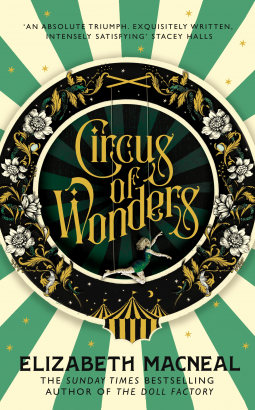
Circus of Wonders by Elizabeth Macneal

I enjoyed Elizabeth Macneal’s first novel, The Doll Factory, so was looking forward to reading her new one, Circus of Wonders.

Beginning in the year 1866, Circus of Wonders tells the story of Nell, a young woman who has always been made to feel like an outsider in her small village on the south coast of England. The unusual birthmarks which cover her skin set her apart from the rest of the community and although her brother does his best to protect her, Nell knows she will never fit in. When Jasper Jupiter’s travelling circus arrives in the village, Nell is horrified to learn that her father has sold her to Jasper, who is looking for a new ‘curiosity’ to draw in the crowds. Once she settles into her new life, however, she begins to think that joining Jasper’s show is the best thing that could have happened to her. Her performance as ‘the Queen of the Moon and Stars’ proves to be a huge success, but how will Jasper feel if she becomes a bigger star than he is himself?

Nell’s story alternates with chapters written from the perspectives of two other characters, Jasper and his brother Toby. There’s a strong bond between the brothers, but they are two very different men. Jasper is very much the leader, an ambitious and ruthless businessman who sees the exploitation of other people as his way to fame and fortune. Toby, who helps him to run the circus, is a gentle, compassionate man desperate to find a way out from his brother’s shadow, but still haunted by his experiences as a photographer in the recent Crimean War. As the novel progresses we learn more about all three main characters as each of them tries to find their place in the world.

Although this is not always a very comfortable book to read, I think Macneal handles a sensitive topic very well. Nell and the other ‘circus attractions’ are treated as commodities to be bought and sold by collectors and showmen, but they are all presented as fully developed characters who, despite their unusual appearances, are normal human beings like anyone else. I have read a few other novels that deal with the same subject, so I was pleased to come across references to Charles Stratton, who appears in The Autobiography of Mrs Tom Thumb by Melanie Benjamin and Julia Pastrana from Orphans of the Carnival by Carol Birch. Unlike Stratton and Pastrana, who both really existed, Nell is a fictional character but her story is no less moving and believable. I was also interested in the flashbacks to the Crimean War, where we gradually find out what really happened to Jasper and Toby, shaping them into the men they are when we meet them at the beginning of the novel.

Of Elizabeth Macneal’s two books, I think I preferred The Doll Factory, but I enjoyed both and will be looking out for whatever she writes next.

Thanks to Picador for providing a copy of this book for review via NetGalley.

Book 25/50 read for the 2021 Historical Fiction Reading Challenge.

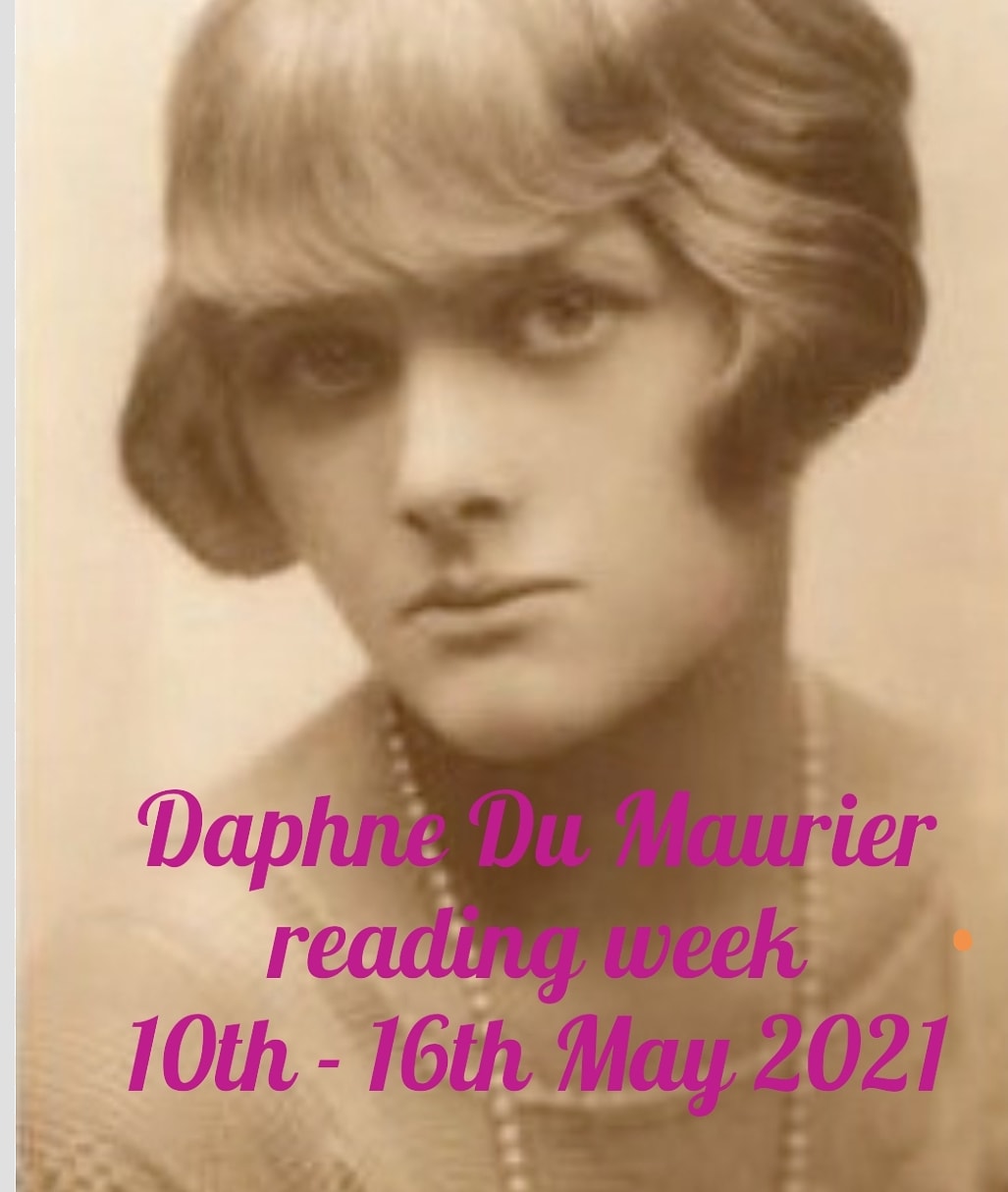
My Daphne du Maurier journey – #DDMreadingweek

This week Ali is hosting another of her Daphne du Maurier Reading Weeks. Du Maurier is one of my favourite authors and over the years I have managed to read all of her novels and short story collections, finishing last May with Castle Dor (my choice for the last Reading Week). I still have plenty of her non-fiction books left to read and hope to post a review of one of them later this week, but today I thought it would be interesting to look back at my journey through her fiction. Below are my thoughts on her novels and short story collections – and to make things more fun, I have ranked them in order of favourite to least favourite!

The Novels

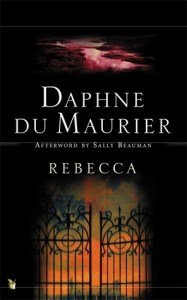
1. Rebecca – This was the first novel I read by Daphne du Maurier when I was sixteen and many years and several re-reads later it is still my favourite. This story of the second Mrs de Winter, haunted by the memory of her husband’s first wife, is a classic for a reason. From the famous opening line, “Last night I dreamt I went to Manderley again”, to the very last page, it’s a wonderful, atmospheric read.

2. The House on the Strand – I started reading this on New Year’s Day in 2011 and knew immediately that it was going to be one of my books of the year. It’s a time travel novel set partly in 14th century Cornwall, but it wasn’t the historical storyline that interested me so much as the method of time travel itself and the implications it has for the lives of our present day (1960s) characters.

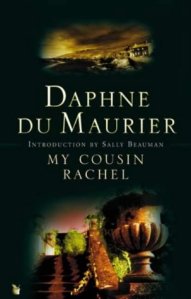
3. My Cousin Rachel – If a newcomer to du Maurier’s work asked me what they should read next after Rebecca, this story of a young man who can’t decide whether or not his cousin Rachel is a murderer would be my recommendation. The plot is obviously very different, but it has a similarly dark and brooding atmosphere.

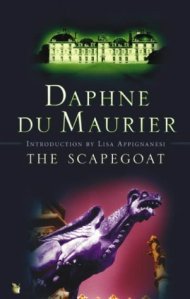
4. The Scapegoat – I love stories about mistaken identities, twins and doubles and this is a wonderful variation on that theme. It’s a book that I’m particularly looking forward to re-reading at some point, as I seem to have interpreted it quite differently from a lot of other readers and am curious to see if I still have the same theories about it.

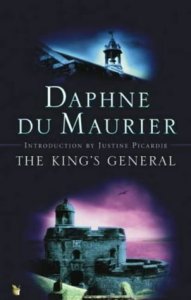
5. The King’s General – Although this well-researched historical novel didn’t make it into my top four, it’s another favourite. Set in 17th century Cornwall during the English Civil War, it’s the story of Honor Harris, the victim of a tragic accident that threatens to destroy her future, and Richard Grenvile, the King’s General in the West. Part of the novel takes place at Menabilly, du Maurier’s own home which was also the inspiration for Manderley in Rebecca.

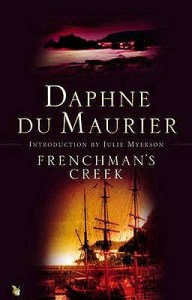
6. Frenchman’s Creek – It took me a while to get into this story of Dona St Columb and her love for a mysterious French pirate, but once I did I was swept away by it. I loved the dreamlike atmosphere and the beautifully described setting. Du Maurier’s sense of place is always wonderful but I found some of the images in this book particularly vivid.

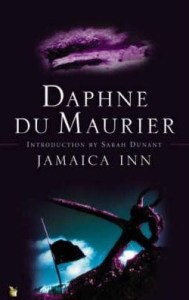
7. Jamaica Inn – I first read this as a teenager after finishing Rebecca, which proved to be a mistake as although it’s a great novel in its own right, I think it suffered from being read immediately after a book I had loved so much. I decided to read it again a few years ago and this time I really enjoyed this Gothic tale of smugglers and shipwrecks set on the Cornish coast.

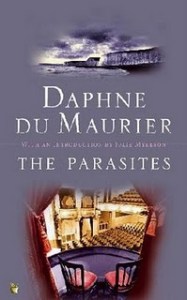
8. The Parasites – After a slow start, I loved this book about three siblings looking back on their childhood and wondering whether they really were ‘parasites’, as a family member once described them. Since reading this book several years ago, I have read some biographies of du Maurier and can see how some elements of the novel were inspired by her own childhood. Despite the title, this book contains some of the funniest scenes in all of du Maurier’s work.

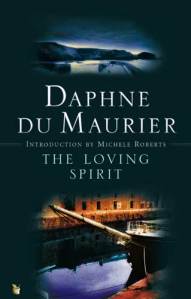
9. The Loving Spirit – This was du Maurier’s first novel and having heard that it wasn’t as good as her later books I wasn’t expecting too much from it. However, I was very pleasantly surprised. The book is divided into four parts each telling the story of a different generation of the Coombe family, a shipbuilding family from Cornwall, and is an impressive achievement from a twenty-four-year-old author.

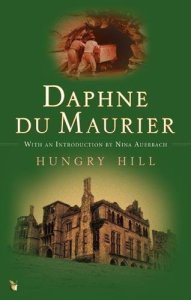
10. Hungry Hill – I love a good historical family saga and although this is a very bleak and depressing one, I still found it an interesting read – and nothing like The Loving Spirit, her other family saga. This one is set in 19th century Ireland and follows a copper-mining family over five generations. The characters are unpleasant and unlikeable and they suffer every kind of misfortune and tragedy you can imagine, but there was still something very compelling about this novel and I think it deserves a place in the middle of my list.

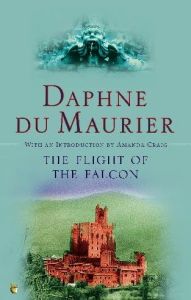
11. The Flight of the Falcon – Most of the details of this one have faded from my memory now, but although it wasn’t a favourite, I know I did enjoy it. I do remember some wonderful descriptions of the fictional Italian university town of Ruffano and a plot involving the re-enactment of the ‘flight’ of the city’s 15th century ruler, Duke Claudio.

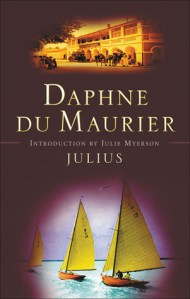
12. Julius – This is probably the darkest and most disturbing of du Maurier’s novels – the story of an ambitious, ruthless man who manipulates everyone around him in order to get what he wants. Despite the unlikeable character (one of the most horrible people I’ve come across in fiction), and some anti-Semitism, I found this a gripping novel with some beautifully atmospheric descriptive writing.

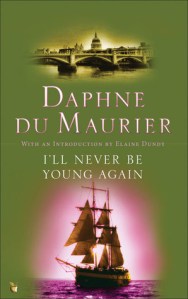
13. I’ll Never Be Young Again – This ‘coming of age’ story is one of several du Maurier novels to have a male narrator and I think she writes from a man’s perspective very well. Richard is an immature, selfish young man at the start of the novel but his life begins to change through his relationships with Jake, a friend with whom he travels around Norway, and Hesta, a woman he meets in Paris. I came to this book having only read Rebecca and Jamaica Inn and found it completely different, but surprisingly good despite the main character being so annoying!

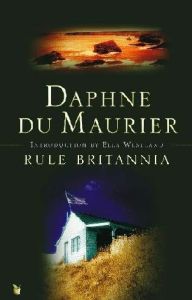
14. Rule Britannia – This is an unusual du Maurier novel in which our protagonist, Emma, wakes up one day to find that the UK has broken away from Europe to form an alliance with the US, creating a new country known as USUK. Published in 1972, this novel may once have seemed like pure fantasy but has a new relevance in post-Brexit Britain! It’s fascinating, but I didn’t enjoy it as much as most of her other books.

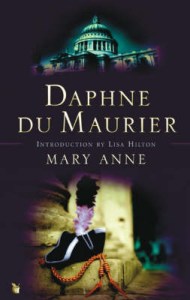
15. Mary Anne – A book of two very different halves for me. I loved the first half, which describes (in fictional form) the early life of Mary Anne Clarke, du Maurier’s great-great-grandmother, who is born into a poor London family in the 1770s but goes on to become the mistress of Prince Frederick, Duke of York. The second half of the novel is devoted to several political scandals and court cases in which Mary Anne became involved and I found these quite tedious to read about, which is why this book isn’t higher on my list.

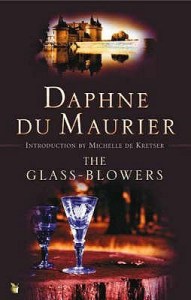
16. The Glass-Blowers – This historical novel based loosely on du Maurier’s own ancestors and set during the French Revolution should have been just my sort of book, so I was disappointed not to have enjoyed it more. I felt that it didn’t have quite the sense of time and place that some of her other books have, which was surprising considering the setting. However, even though it ranks as a lowly 16/17 on my list, I would still recommend reading it. It’s not a bad book at all – just not a personal favourite.

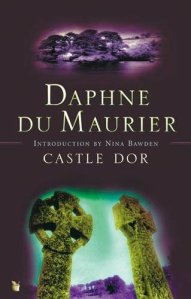
17. Castle Dor – It’s maybe not surprising that this is my least favourite du Maurier novel, as part of it was written by another author, Arthur Quiller-Couch, known as Q. Set in the 19th century and based on the legend of Tristan and Iseult, it should have been a great story, but I never felt fully engaged with either the plot or the characters and I would only really recommend this one if, like me, you’re planning to read all of du Maurier’s work.

The Short Stories

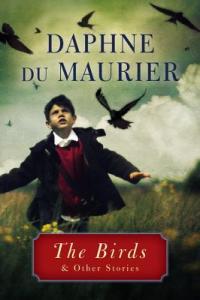
1. The Birds and Other Stories – I’m not usually a fan of short stories, but I love du Maurier’s. Her short story collections are harder for me to rank because each one contains some stories I loved and others I didn’t, but I think this one is the best. Many people are familiar with the title story, in which a family find their home under attack from a huge flock of birds, through the Alfred Hitchcock film, but the others are good too and I particularly enjoyed The Old Man!

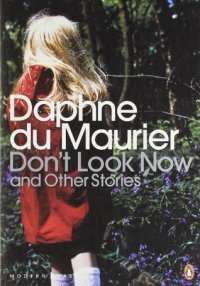
2. Don’t Look Now and Other Stories – Originally published as Not After Midnight and Other Stories. This collection only contains five stories, but that means they’re long enough for plenty of character and plot development. I loved Don’t Look Now (which was also adapted for film) and Not After Midnight, but my favourite story was A Border-Line Case.

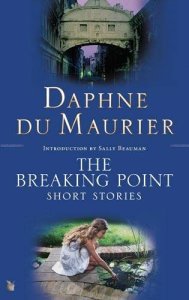
3. The Breaking Point: Short Stories – This is a dark and unsettling collection of stories written during a time in her life when du Maurier said she had been close to a nervous breakdown. Some of the stories are very enjoyable, such as The Alibi, The Blue Lenses and The Lordly Ones, but I found this collection more uneven than the two above, which is why it’s only third on my list.

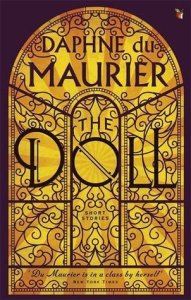
4. The Doll: Short Stories – These thirteen ‘lost’ stories were written very early in Daphne’s career but not published until more recently. Although some of the stories feel quite short and incomplete there are some very strong ones in this collection too and I noticed some themes, ideas and settings that would appear again later in du Maurier’s future work.

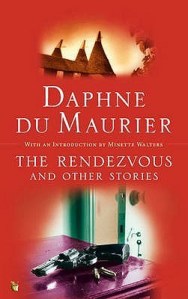
5. The Rendezvous and Other Stories – I read this in 2009 and it was the first Daphne du Maurier book I’d read since Rebecca and Jamaica Inn as a teenager. Like the stories in The Doll, these are early examples of du Maurier’s work and some are too short to be very satisfying, but again there are plenty of signs of the great writer she would become.

I know there are other editions available that contain different combinations of these stories, but I think these are the five main collections. I am now continuing to work through du Maurier’s non-fiction – so far I have read Golden Lads and The Infernal World of Branwell Brontë.

~

If you have read some or all of these books, let me know what you think of my list! Would you have put them in a different order? And if you’re new or nearly new to Daphne du Maurier, which of these are you looking forward to reading?

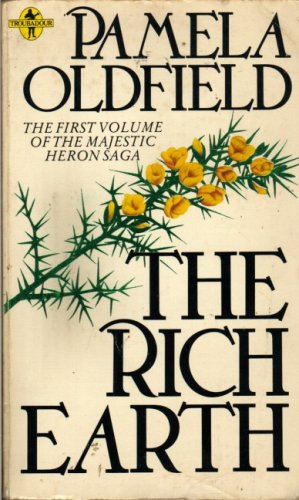
The Rich Earth by Pamela Oldfield

The Rich Earth is the first in a series of four novels following the story of one English family, the Kendals, over the course of more than a hundred years. This particular book, first published in 1980, is set during the Wars of the Roses, one of my favourite periods of history, which is what drew me to it; however, the historical setting is little more than a backdrop as the Kendals spend most of their time on their country estate in rural Devon and only have occasional involvement with the political and military conflict unfolding elsewhere.

The main protagonist of The Rich Earth is Elizabeth Sheldyke who, as the novel opens in 1468, is being married off to Daniel Heron, a much older man who has made his fortune from the tin mines for which Devon is famous. During the journey to her new home and the future that awaits her, Elizabeth briefly meets John Kendal, a young man from Yorkshire who is on his way to London where he is going to be apprenticed to a goldsmith. Time passes and Elizabeth settles into her new life at Heron Manor until, after twelve years of marriage, Daniel dies, leaving her a widow. Shortly afterwards she is reunited with John Kendal who becomes her second husband, but although she loves John, it will be a difficult relationship marred by John’s feelings of inadequacy at living off his wife’s money and by their inability to produce the child and heir they desperately want.

I wasn’t very impressed with this book at first – it seemed like too much of a romance novel with nothing else going on – but it improved as I got further into it and more characters and storylines were introduced. As I’ve said, the Kendals and their neighbours are usually quite detached from events taking place on the battlefield or at court (as far as they are concerned, it makes little difference to them which king wins the war, as either way people like themselves will be taxed to pay for it). However, later in the book, during the Cornish rebellions of 1497, our characters are drawn into the Battle of Deptford Bridge, the siege of Exeter and the invasion by the pretender to the throne, Perkin Warbeck.

The central relationship at the heart of the book – between Elizabeth and John – was difficult to read at times; Pamela Oldfield doesn’t shy away from portraying the misogyny of the period, which includes domestic abuse and cruelty. I felt that Elizabeth was much more forgiving of John’s faults than I would have been, but I suppose that’s easy enough to say from a modern point of view. On the other hand, Elizabeth does value her independence, involving herself in the running of the Heron mines and making decisions on behalf of the estate and its people.

The second book in the Heron saga is This Ravished Land. I haven’t been left feeling desperate to read it immediately, but I haven’t ruled it out either and will keep it in mind for the future.

Book 24/50 read for the 2021 Historical Fiction Reading Challenge.

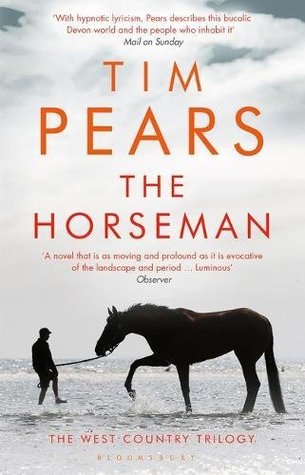
The Horseman by Tim Pears

Tim Pears’ The Horseman is the first in a trilogy of novels set in England’s West Country in the early 20th century. The final book, The Redeemed, was shortlisted for the Walter Scott Prize for Historical Fiction in 2020 and as some of you will know, working through the shortlists for that particular prize is one of my personal reading projects. As I don’t like to start a trilogy or series at the end, I decided to begin with The Horseman in the hope that I would like it enough to want to continue.

Starting in January 1911 and finishing in June 1912, the novel follows the daily life of young Leo Sercombe, the son of a carter who works on the estate of Lord Prideaux on the Devon-Somerset border. Leo has little interest in attending school, preferring to help his family with their work on the farm – and here he has gained a different kind of education: a knowledge of horses and an affinity with nature. Then one day, Leo meets Charlotte, Lord Prideaux’s daughter, and a friendship begins to form based on their shared love of horses.

There’s no doubt that The Horseman is a beautifully written novel, but I’m sorry to have to say that I didn’t enjoy it very much. I’m not necessarily the sort of reader who needs a very strong plot with lots of action on every page, but I do need at least a little bit of plot and this book didn’t seem to have any at all – just one description after another of various farming tasks. As the months go by and the seasons change we are given detailed accounts of grooming horses, gathering hay, ploughing fields, collecting eggs and anything else you can think of that takes place on a large country estate. I suppose it’s not quite true to say that absolutely nothing happens in the novel, because Leo is learning and growing all the time, but because there’s almost no conflict or drama in his life – until right at the very end of the book – I found it difficult to connect with him in any way.

Other reviews of this book are overwhelmingly positive and I can see why, as it’s a lovely, gentle portrayal of a rural community in a time gone forever; unfortunately, it just wasn’t the right book for me. This now leaves me with a dilemma as I had been expecting to go on to read the rest of the trilogy for my Walter Scott Prize project. Am I likely to enjoy the other two books any more than this one? I suspect not, so I might have to leave the 2020 shortlist incomplete.

Book 23/50 read for the 2021 Historical Fiction Reading Challenge.

Ariadne by Jennifer Saint

There have been several novels published recently retelling Greek myths from a feminine perspective; this is another – and one that I really enjoyed. As the title suggests, it’s the story of Ariadne, the daughter of King Minos and Queen Pasiphaë of Crete, but it’s also the story of another woman, her younger sister Phaedra.

As two princesses of Crete, Ariadne and Phaedra grow up in the comfort of the palace at Knossos, but their brother Asterion is not so lucky. Born half man and half bull, he has become known as the Minotaur and banished to the underground labyrinth designed by Daedalus. Each year fourteen young men and women arrive from Athens to be sacrificed to the Minotaur – until the year when Theseus, Prince of Athens, is one of the fourteen and Ariadne falls in love. Swept away by the prince’s good looks and courage, Ariadne decides to help him kill the Minotaur and escape from the labyrinth, but this means betraying her family and the people of Crete.

If you have any knowledge of Greek mythology, you probably already know all of this, but I think Ariadne’s adventures after she is forced to flee Crete with Theseus are less well known, so I won’t go into too much detail here. The Minotaur story only occupies the first few chapters of the novel, with much more time spent describing what happens after that, and it was fascinating to read about Ariadne’s relationship with the god Dionysus on the island of Naxos, as well as the fate of Phaedra, left behind to deal with the aftermath of her sister’s betrayal.

Jennifer Saint has a lot to say in this novel about heroes and hero worship, particularly in her depiction of Theseus (very much the villain of the book and certainly not the Theseus we meet in Mary Renault’s The King Must Die) and of the cult of Dionysus and his female followers, the maenads. She touches on why people feel the need to put their faith in heroes and what happens when their eyes are opened to the truth, as well as exploring the differences between mortals and gods, the position of women in Ancient Greek society and how, in Greek mythology, the gods usually make the women pay the price for the acts of men.

When I first began to read, I hadn’t expected part of the novel to be written from Phaedra’s perspective, but I think using her as a viewpoint character as well as Ariadne adds more scope to the story and makes it even more interesting than it would otherwise have been. However, I thought Phaedra’s storyline suffered near the end from the weak characterisation of Hippolytus, who plays such an important role in her later life. The conclusion of Ariadne’s story is slightly disappointing too; it felt rushed and didn’t have quite the impact it should have had. Still, I enjoyed this book, particularly the first half, and I think it compares well to Circe by Madeline Miller.

Thanks to Headline for providing a copy of this book for review via NetGalley.

Six Degrees of Separation: From Beezus and Ramona to The Duke’s Children

It’s the first Saturday of the month which means it’s time for another Six Degrees of Separation, hosted by Kate of Books are my Favourite and Best. The idea is that Kate chooses a book to use as a starting point and then we have to link it to six other books of our choice to form a chain. A book doesn’t have to be connected to all of the others on the list – only to the one next to it in the chain.

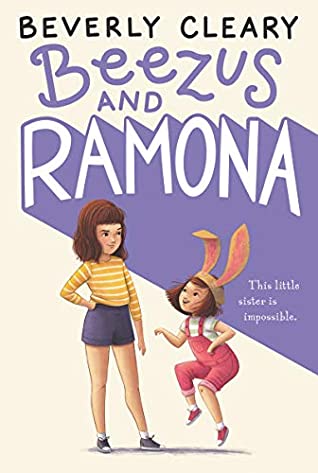
Having a little sister like four-year-old Ramona isn’t always easy for Beezus Quimby. With a wild imagination, disregard for order, and an appetite for chaos, Ramona makes it hard for Beezus to be the responsible older sister she knows she ought to be…especially when Ramona threatens to ruin Beezus’s birthday party. Newbery Medal winner Beverly Cleary delivers a humorous tale of the ups and downs of sisterhood. Both the younger and older siblings of the family will enjoy this book.

This month we are starting with Beezus and Ramona by Beverly Cleary, who sadly died in March this year. This book was the first in her Ramona Quimby series for children and was published in 1955. I read some of the Ramona books as a child and although I can’t remember anything about them now, I know I used to enjoy them!

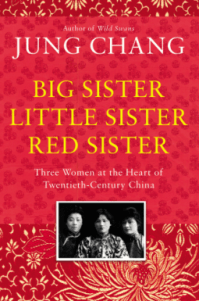
I’m sure I won’t be the only Six Degrees participant to use books about sisters as my first link this month, but as there are so many to choose from I’m hoping that nobody else will have linked to this one: Big Sister, Little Sister, Red Sister by Jung Chang (1). This is a biography of the three Soong sisters, all of whom played an important role in 20th century Chinese politics. Ei-ling or ‘big sister’ became one of China’s richest women through her marriage to the banker HH Kung, ‘little sister’ May-ling was First Lady of the Republic of China, and ‘red sister’ Ching-ling was a supporter of the Communist Party and the wife of revolutionary leader Sun Yat-sen.

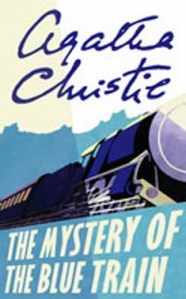
I’m sure I have used books with ‘red’ in the title in a previous chain, so I’m going to link now to a book with a different colour in the title. There were lots of options here, but I’ve gone with blue and The Mystery of the Blue Train by Agatha Christie (2). This is a Poirot novel in which an heiress is murdered for her jewels during a train journey through France. I don’t think it’s one of Christie’s stronger novels (and in fact it was apparently her own least favourite), but it’s still quite enjoyable.

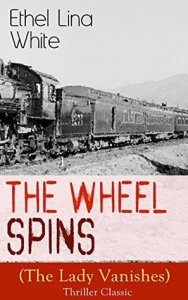
This makes me think of another novel set on a train, The Wheel Spins by Ethel Lina White (3), the book on which Alfred Hitchcock’s The Lady Vanishes was based. There are a lot of differences between the book and the film but they share the same basic plot: a young woman makes a new friend during a train journey who later disappears, only for the rest of the passengers to deny that she ever existed.

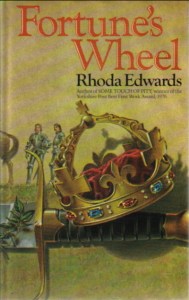
The idea of a wheel spinning leads me to Fortune’s Wheel (4), one of Rhoda Edwards’ two novels about Richard III. This book covers the earlier part of Richard’s life, taking us through the reign of his elder brother, Edward IV, and ending with Richard’s marriage to Anne Neville in 1472. I enjoyed it, but thought the second novel, Some Touch of Pity, was much better.

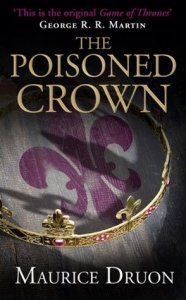
There’s a picture of a crown on the cover of Fortune’s Wheel and also on the cover of The Poisoned Crown by Maurice Druon (5). First published in French in 1956, this is the third book in the Accursed Kings series telling the story of Philip IV of France and his descendants, a line of kings “cursed to the thirteenth generation” by the Grand Master of the Knights Templar, whom Philip sent to burn at the stake. George R.R. Martin has described this series as the inspiration for his A Game of Thrones.

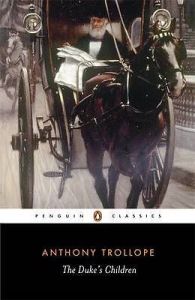
I haven’t finished The Accursed Kings yet; there are seven books in the series and so far I have only read the first five of them. It’s not the only series I’ve started and haven’t finished – I still need to read the final book in Anthony Trollope’s Palliser series, The Duke’s Children (6). I nearly always love Trollope but the length of his books sometimes puts me off. This one is on my Classics Club list, so I’m hoping to get to it soon.

And that’s my chain for this month! My links have included: sisters, colours, trains and wheels, pictures of crowns and an unfinished series.

In June we are starting with The Bass Rock by Evie Wyld. Will you be joining us?

My Commonplace Book: April 2021

A selection of words and pictures to represent April’s reading:

commonplace book
noun
a book into which notable extracts from other works are copied for personal use.

~

This business of making your own life may sound dreary – especially if you have a dated mind and still think of yourself as belonging to the Weaker Sex. But it really isn’t. You can have a grand time doing it. You can – within the limitations imposed on most of us, whether we live singly or in herds – live pretty much as you please.

Live Alone and Like It by Marjorie Hillis (1936)

~

Fodor accepted that Alma might be both truthful and dishonest, gifted and fraudulent. He rarely dealt with snow-white, morally upright individuals, but rather with people who were damaged and divided. It was well known that when mediums found their powers fading, they would compensate, invent, create illusions to please their admirers or protect themselves. Psychics were natural transgressors, crossing all kinds of boundaries, from waking to trance, from the earthly to the spirit world. Their weaknesses – moral, physical, emotional – were the fissures through which the phantoms came.

The Haunting of Alma Fielding by Kate Summerscale (2020)

~
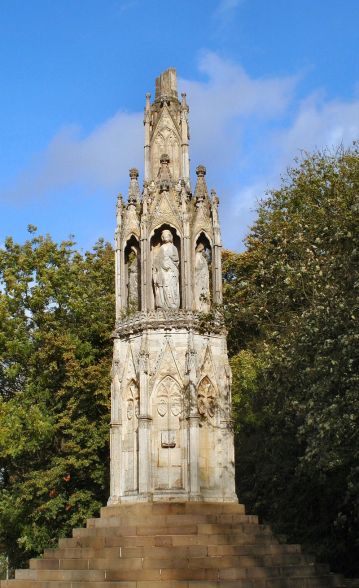
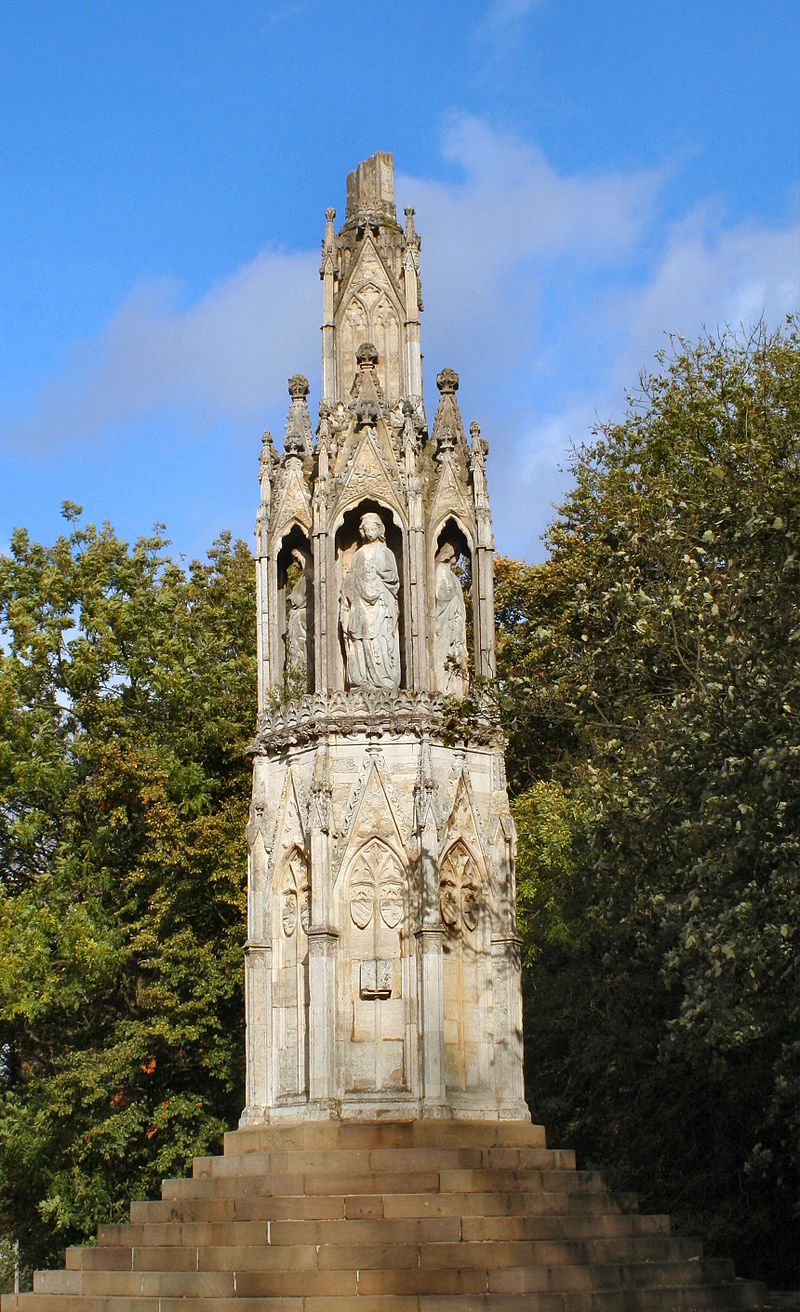
Eleanor Cross

‘I have helped heal soldiers wounded in battle. I’ve heard of many atrocities following sieges and all because one group or another thinks their right to this country is greater than another’s claim. In truth, Olwen, some leaders simply profit from war whilst others suffer. This cannot be God’s will.’ Glancing up she noted tears in his eyes and bowed her head.

She pondered his words as they walked on. He was right. So many wasted lives because they all sought God’s Kingdom on earth.

The Damask Rose by Carol McGrath (2021)

~

‘All of history is fiction,’ Jasper said, dipping a cloth in oil and polishing the barrel of his rifle. ‘I’ve said this to you before. Everyone is a liar whether they know it or not. Bias, you know? You might describe life here as untenable and dismal, and I’d say there’s a thrill in fighting, and who’s to say which one of us is right? Or – I might say Dash is a jolly good fellow, and the wife of a soldier he shot might call him a monster. There are no simple answers.’

Circus of Wonders by Elizabeth Macneal (2021)

~

He dropped his gaze to the pond’s rippling surface. Her voice had deepened a shade, he thought. Her lips were fuller too. He had not set eyes on her since the glimpse outside the chapel. Now her reflection shimmered, dissolving then magically restoring itself. But nothing would dissolve the nature of its owner, he reminded himself. No amount of sugar would sweeten Lady Lucy’s sourness.

John Saturnall’s Feast by Lawrence Norfolk (2012)

~
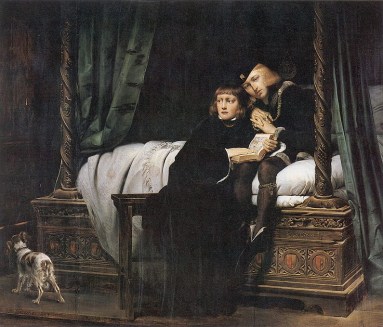
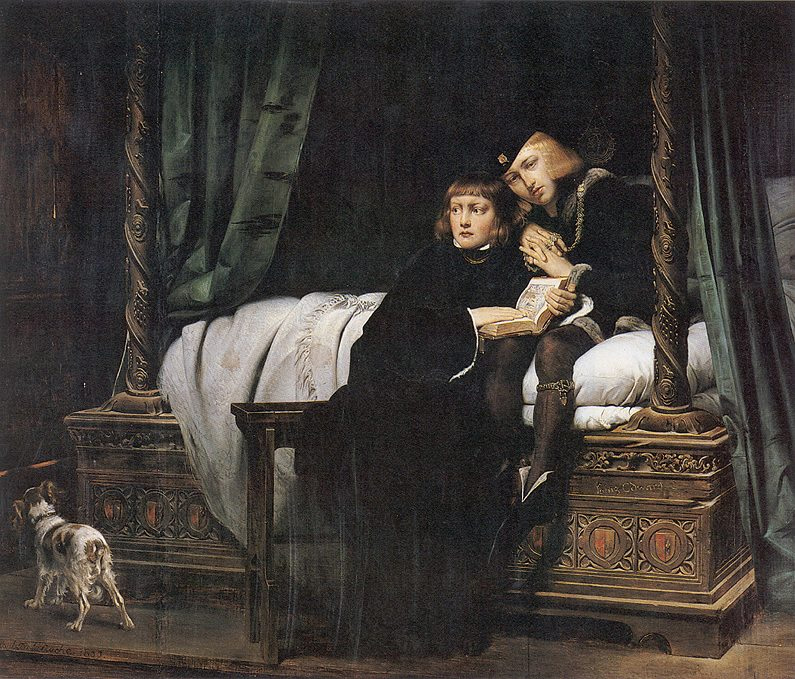
“King Edward V and the Duke of York in the Tower of London” by Paul Delaroche

If British royal children disappeared today, the media frenzy would be intolerable. There were no newspapers in the fifteenth century. The most we have is a scattering of private correspondence, for example the Paston and Cely letters. We have official documents that shed virtually no light on murky events like murder. We have chronicles, ‘histories’ both official and unofficial, often compiled by churchmen, miles from the action and written years afterwards.

There was no police force, no structure to investigate the boys’ disappearance. There was no forensic science, so that even had the boys’ bodies been found, the cause of death could not definitely have been ascertained, still less who was guilty of the murder.

The Killer of the Princes in the Tower by MJ Trow (2021)

~

I have never been much of one for letters, but I will admit a fondness for the scents that often attend them. I have twice visited a house boasting a library, the first time as a welcome guest, the second as a victorious invader with a carbine in my hand and a sabre at my hip. Both times I was struck by the peculiarly unique smell, and Moseley’s bookshop was the same way.

The Protector by SJ Deas (2015)

~

There were consequences, almost always, for what you did or failed to do in life. He believed that. Fate could play a role, and chance, but your choices and decisions mattered. Mattered to someone else, too.

River of Stars by Guy Gavriel Kay (2013)

~

“And his beard’s quite real,” I put in.

Ma soeur,” said Poirot, “a murderer of the first class never wears a false beard!”

“How do you know the murderer is of the first class?” I asked rebelliously.

“Because if he were not, the whole truth would be plain to me at this instant – and it is not.”

Murder in Mesopotamia by Agatha Christie (1936)

~
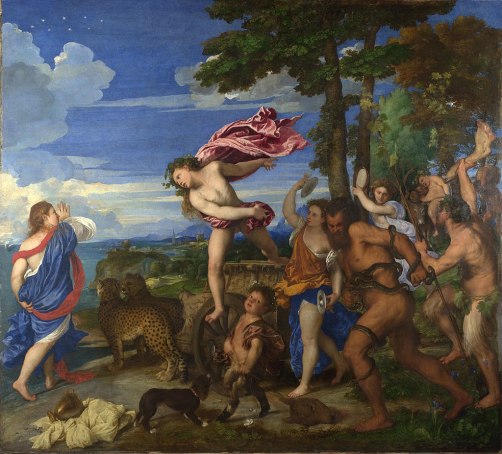
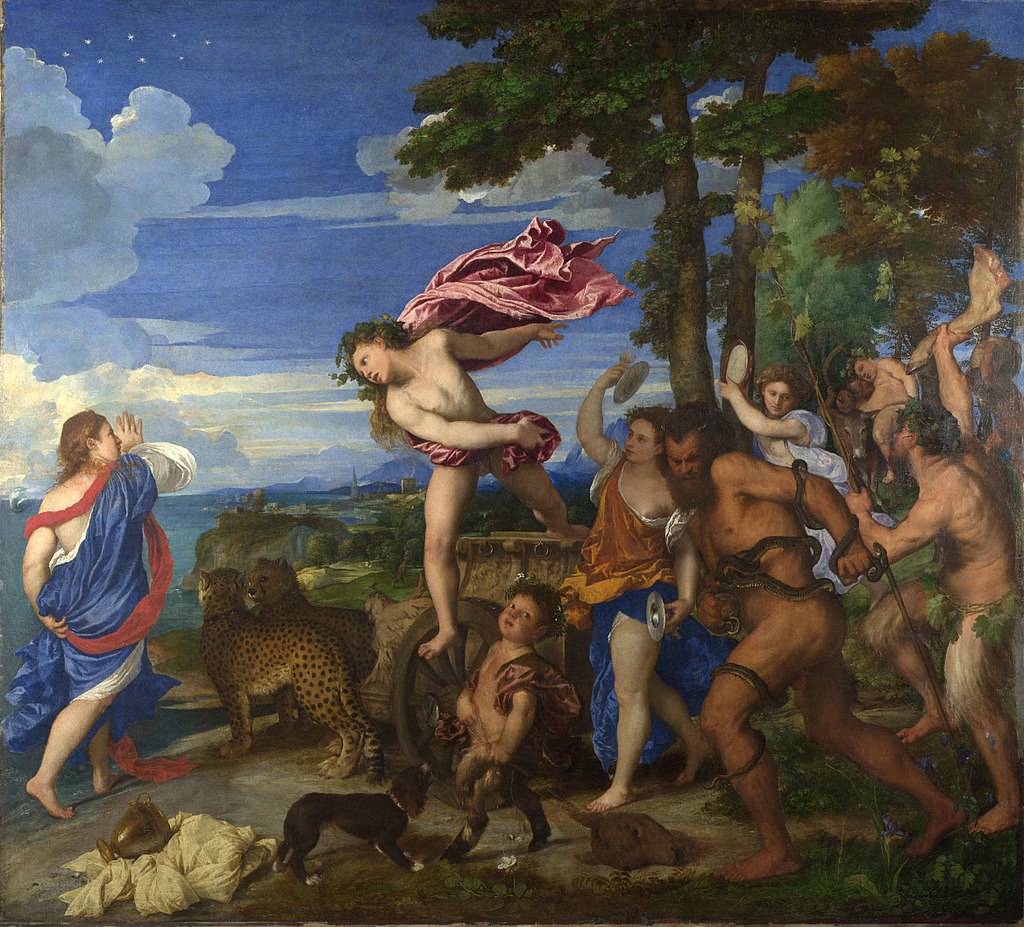
“Bacchus and Ariadne” by Titian

Asterion. A distant light in an infinity of darkness. A raging fire if you came too close. A guide that would lead my family on the path to immortality. A divine vengeance upon us all. I did not know then what he would become. But my mother held him and nursed him and named him and he knew us both. He was not yet the Minotaur. He was just a baby. He was my brother.

Ariadne by Jennifer Saint (2021)

~

He smiled, and his charm briefly enveloped me like a warm cloud of nothingness. I watched his tall figure receding down the passage, with the dog pattering after him.

Only a fool would rely on the goodwill of Charles Stuart. But the dog did, and so did I. A little kindness makes fools of us all.

The Royal Secret by Andrew Taylor (2021)

~

‘Elizabeth Woodville is out of favour,’ said Mark, ‘and has long been banished to a nunnery. They say she was intriguing with the Pretender before Stoke.’

‘And is it possible?’

He shrugged. ‘Anything is possible in this day and age,’ he said. ‘John will tell you. Tis hard to find an honest man in the Government of the country.’

The Rich Earth by Pamela Oldfield (1980)

~

Decagon

“What mystery novels need are – some might call me old-fashioned – a great detective, a mansion, a shady cast of residents, bloody murders, impossible crimes and never-before-seen tricks played by the murderer. Call it my castle in the sky, but I’m happy as long as I can enjoy such a world. But always in an intellectual manner.”

The Decagon House Murders by Yukito Ayatsuji (1987)

~

Trish had been brought up to believe that nothing was impossible. Any kind of achievement, she had been taught, was the result of determination, willpower, commitment – the adults in her life used different words but all said the same thing. Any kind of failure, in whatever sphere it might show itself, had its roots in the mind. It was hard for her to accept that there were some physical obstacles which could never be surmounted.

The Hardie Inheritance by Anne Melville (1990)

~

Favourite books read in April:

The Royal Secret and The Hardie Inheritance

Authors read for the first time in April:

MJ Trow, Marjorie Hillis, Lawrence Norfolk, Jennifer Saint, Yukito Ayatsuji and Pamela Oldfield

Places visited in my April reading:

England, China, USA, Iraq, Ancient Greece, Japan

~

Have you read any of these? What have you been reading in April?