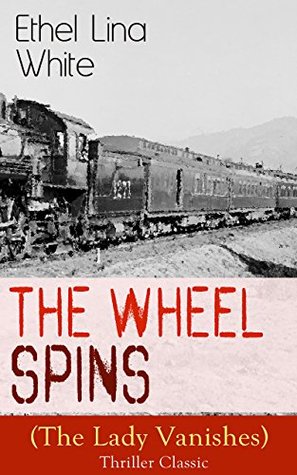
The Wheel Spins by Ethel Lina White

I was re-watching one of my favourite films, Alfred Hitchcock’s The Lady Vanishes, a few weeks ago and it occurred to me that I should probably try reading the book on which it was based – The Wheel Spins by Ethel Lina White, published in 1936. Luckily, I was able to find a Project Gutenberg version available to download, so I could start it immediately while I was in the mood. Now that I’ve read it, I think it’s one of the few cases where, for me, the film is better than the book! I did enjoy reading it, but I was surprised by how different it was and by how many of the elements I love from The Lady Vanishes are not part of the novel.

The Wheel Spins begins with Iris Carr, a young Englishwoman, staying at a small hotel in an unspecified country somewhere in Europe. Her friends have already left but Iris has decided to stay on alone at the hotel for a few more days. On the day she is due to catch the train home, she briefly loses consciousness at the station and assumes she must be suffering from sunstroke. Managing to board the crowded train just in time, Iris finds herself sharing a carriage with several other people, including Miss Froy, an English governess who is also on her way home. Iris accompanies Miss Froy to tea in the dining carriage where she listens to her new friend talk about her recent teaching jobs. After returning to their seats, Iris falls asleep – and awakens to find Miss Froy gone. When the rest of the passengers all deny that Miss Froy ever existed, Iris begins to panic: has the sunstroke affected her more than she’d realised or is something more sinister taking place?

After a slow start in which the author takes her time introducing us to Iris and the other guests at the hotel, all of whom seem to end up on the same train home, things soon pick up with the disappearance of Miss Froy and the efforts Iris makes to try to find out what has happened to her. There are only really two possible scenarios: either Iris has imagined things or everybody on the train is lying – and if they are lying, why? This is where the significance of those early chapters becomes clear as Iris is not the most pleasant of people and makes herself so unpopular with her fellow travellers that it’s easy to see why they don’t feel like helping her. Some of them also have other motives for not wanting to get involved and although I thought this was handled better in the film, the book does still give us a sense of how unsettling all of this is for Iris and how she begins to doubt her own sanity.

As I’ve said, there are so many things I love in the film which don’t appear in the novel: the significance of music to the plot; Charters and Caldicott, the two cricket-obsessed Englishmen determined to get home in time to see the Test Match; the relationship between Iris and the musicologist Gilbert; and the performances of Margaret Lockwood (a much more likable Iris than the one in the book), Michael Redgrave and May Whitty in the leading roles. On the other hand, there are also some interesting aspects of the novel that Hitchcock didn’t include – for example, some occasional glimpses of Miss Froy’s elderly parents at home in England looking forward to their daughter’s return.

Although I think I might have felt more enthusiastic about the book if I had read it first, rather than the other way around, I still enjoyed it and am curious about Ethel Lina White’s other books now.

Historical Musings #62: World War II

Welcome to my (almost) monthly post on all things historical fiction.

This month, I have taken inspiration from one of my current reads, V2 by Robert Harris. I won’t say too much about that book here, as I will be reviewing it later in the week, but it’s set during the Second World War and follows the stories of a German engineer launching V2 rockets at London and a British WAAF officer on a mission to stop him. Unless something happens in the final few chapters to change my opinion entirely, it’s going to be a very positive review. I’m finding it fascinating as it looks at several aspects of the war I haven’t read about before – and that has made me think about some of the other novels I’ve read set during the war and the many different ways in which authors decide to approach the subject and the different things on which they choose to focus.

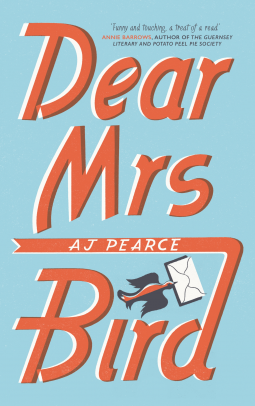
For those of us interested in reading about the roles of women in the war, for example, Kay in The Night Watch by Sarah Waters drives an ambulance, Constance in Lucinda Riley’s The Light Behind the Window is an SOE spy working in Occupied France, and in Carolyn Kirby’s When We Fall, Vee flies planes for the Air Transport Auxiliary and Ewa carries out secret missions for the Polish Resistance. On a more light-hearted note, Emmy in Dear Mrs Bird by AJ Pearce answers letters for the problem page in a women’s weekly magazine!

Some books concentrate on one single event or episode, such as The Report by Jessica Francis Kane, about the bombing of the Bethnal Green tube station, or The Conductor by Sarah Quigley and The Bronze Horseman by Paullina Simons (read before I started blogging), about the Siege of Leningrad, while others, like The Invisible Bridge by Julie Orringer, which follows the story of three Hungarian Jewish brothers, cover the whole span of the war.

Although most of the books I’ve read have been concerned mainly with the war in Europe, I have also read some set in America (The Postmistress by Sarah Blake and Hotel on the Corner of Bitter and Sweet by Jamie Ford) and North Africa (Jasmine Nights by Julia Gregson and Tapestry of War by Jane MacKenzie).

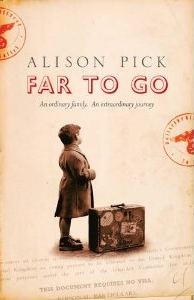
The Holocaust and the challenges faced by Jews during the war tend to feature strongly in wartime fiction. Far to Go by Alison Pick looks at the role of the Kindertransport and Love and Treasure by Ayelet Waldman focuses on the Hungarian Gold Train. There’s also Jakob’s Colours by Lindsay Hawdon, which is not about the Jewish Holocaust but the Gypsy Holocaust, which made an interesting change. And Japanese internment camps feature in Isabel Allende’s The Japanese Lover and Ghostwritten by Isabel Wolff.

There are plenty of historical mysteries which have the war as a setting too: Full Dark House by Christopher Fowler, the first book in the Bryant and May series, deals with a murder in a London theatre during the Blitz, and Death in Bordeaux by Allan Massie is the first in a quartet of mystery novels set in Occupied France.

The books I have mentioned here are all historical fiction, published many years after the war ended. Of course, there are also lots of wonderful contemporary novels written during or just after the war, but that would be a topic for another post, I think!

Have you read any of the books above or would you be interested in reading them? Are there any others you would recommend? Which aspects of the war do you find most interesting to read about?

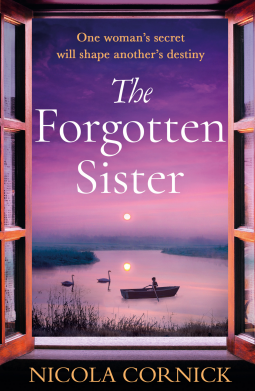
The Forgotten Sister by Nicola Cornick

The Forgotten Sister is the fourth book I’ve read by Nicola Cornick and, like the others (The Phantom Tree, House of Shadows and The Woman in the Lake), it is a dual time period novel with hints of the supernatural.

In the modern day, we meet Lizzie Kingdom, a television presenter and former child star. Having grown up in the public eye, Lizzie has always known how to manage her image and avoid bad publicity, but all of that is about to change with the death of Amelia Robsart. Amelia is the wife of Lizzie’s best friend, Dudley Lester, an ex-boyband member, and when she is found dead at the bottom of the stairs, Lizzie is drawn into the scandal that follows.

If you know your Elizabethan history, you may have already seen parallels here, so it’s no surprise that the historical thread of the novel is set in the 16th century and tells the story of Amy Robsart, trapped in an unhappy and loveless marriage to the courtier Robert Dudley. Everyone knows that the woman Robert really loves is Elizabeth I and he spends more and more of his time at court while Amy stays hidden away in the countryside. History tells us that in September 1560, Amy will be found dead, believed to have broken her neck falling down the stairs. Rumours immediately begin to circulate because, of course, Amy’s death leaves Robert free to marry the queen.

The fate of Amy Robsart remains an unsolved mystery to this day. Was her husband responsible for her death? Was it an accident? Was it suicide? Whatever the answer, we know that Robert Dudley never did marry Elizabeth I. As soon as those rumours began to spread, it became important for her to distance herself from them – which is exactly what Lizzie Kingdom does in the present day timeline of the novel when people begin to wonder whether she and Dudley Lester had something to do with Amelia’s death.

Whenever I read a book set in two time periods, I usually find that one of them appeals to me more than the other. With this book, it was the storyline set in the past. I enjoyed reading about Amy Robsart; I had a lot of sympathy for her as she gradually loses her youthful enthusiasm for life and her hopes for a loving, affectionate marriage and becomes aware that her husband wants very little to do with her. The mystery of Amy’s death is handled in an interesting way and if Nicola Cornick had just concentrated on telling this story and not the one set in the modern day, I would probably have been able to give this book a much more positive review.

Unfortunately, I didn’t like the present day story at all. The characters didn’t quite feel real to me and I think a large part of that was due to their names and relationships seeming so contrived and unnatural. Not only do we have Lizzie Kingdom (corresponding to Elizabeth I), Amelia Robsart (Amy Robsart) and Dudley Lester (Robert Dudley, Earl of Leicester), almost all of the other characters have similar names to their historical counterparts too. When even the Elizabethan noblewoman Lettice Knollys appeared in modern form as Letty Knollys, the wife of one of Dudley Lester’s bandmates, I started to find it all very distracting and I think the whole thing would have worked better for me if the parallels between past and present had been more subtle.

After finishing the book I looked to see what other people thought of it and it seems that most people have loved it, so I think this was probably just a case of book and reader not being right for each other! I enjoyed all of the other Nicola Cornick novels I’ve read, particularly The Phantom Tree, so I will continue to look out for more of her books in the future.

Thanks to HQ for providing a copy of this book for review via NetGalley.

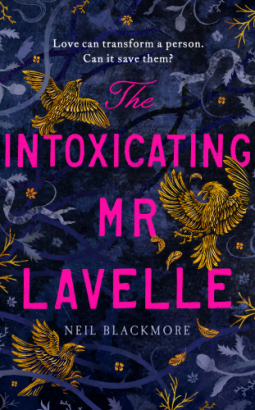
The Intoxicating Mr Lavelle by Neil Blackmore

I was drawn to this book first by the intriguing title. Who is Mr Lavelle and why is he ‘intoxicating’? Now that I’ve met him, I don’t think that’s the way I would choose to describe him; ‘annoying’, ‘rude’ and ‘unpleasant’ are better words, I think. However, I don’t suppose it matters how I feel about him; this is not a book about my own experiences with Mr Lavelle, after all – it’s a book about a young man called Benjamin Bowen and how Mr Lavelle is seen through his eyes. And to Benjamin, Lavelle really does seem to be as dangerously intoxicating as a drug.

Benjamin and his brother Edgar, both in their early twenties as the novel opens, have led sheltered, secluded lives, educated at home by a tutor and discouraged from mixing with other boys. Their Welsh father and Dutch mother want their sons to be accepted by the English upper classes in a way that they never could themselves, and have decided that now, in 1763, it is time to launch Benjamin and Edgar into the world and send them on a Grand Tour across Europe. This is their opportunity to meet ‘People of Quality’, to make impressive new friends and connections and to develop their knowledge of art and culture.

Edgar, desperate to please his parents, does his best to fit in with the people they meet and to give no hint of coming from a family who are ‘in trade’ (Mr Bowen owns a shipping business). Benjamin, on the other hand, is less enthusiastic and when he meets the beautiful, subversive, unconventional Mr Horace Lavelle, he is captivated and quickly finds himself falling in love. Knowing that his relationship with Lavelle could destroy Edgar’s chances and leave their parents’ dreams in ruins, Benjamin must decide whether his own happiness is more important to him.

I found The Intoxicating Mr Lavelle entertaining in parts and, being told from Benjamin’s point of view, written in a style that is usually quite readable and engaging. I say usually, because there are also several passages that feel more like pages from a philosophy textbook than a novel as characters have long discussions on Voltaire or Descartes in the sort of dialogue that doesn’t feel at all natural. In fact, there wasn’t much about this book that did feel convincing to me; I never felt as though I’d been truly submerged in the 18th century setting and the author’s decision to overlook anachronisms didn’t help (he admits in a note at the beginning that the terms Enlightenment and Renaissance weren’t in common use at that time, but he uses them anyway).

I did like the idea of having the Grand Tour as the backdrop for the story, although it would have been nice to have been given more vivid descriptions of the places the brothers visited and the things they saw there. Of course, Benjamin sees very little anyway once Lavelle comes into his life and he begins to disregard the itinerary of museum, art gallery and theatre visits carefully planned for him by his mother. Lavelle, as I’ve said, is someone I didn’t like at all; I can understand why Benjamin, coming from such a sheltered background, may have found his fearless, rebellious attitude exciting, but all I could see was a man who was needlessly cruel and insensitive and who thought it was clever to use crude language and offend and ridicule everyone around him. The author does a good job, though, of showing how easily Benjamin becomes ‘intoxicated’ by Lavelle and how he is made to think differently, as well as depicting some of the challenges faced by men like them in a time when homosexual relationships were not seen as acceptable.

Most of my sympathy was actually reserved for Edgar who wants so desperately to establish himself in society and make his parents proud. I really felt for him as he begins to discover the upsetting truth that no matter how hard he tries, his family’s position means that he will never be fully accepted – and that, as it must seem to him, his own brother is doing his best to embarrass them both and ruin their chances.

I was interested enough in the lives of Benjamin and Edgar to continue reading to the end, but the problems I’ve mentioned – particularly my dislike of Horace Lavelle – left me disappointed with this book overall.

Thanks to Random House Cornerstone for providing a copy of this book for review via NetGalley.

Six Degrees of Separation: From Rodham to Cold Comfort Farm

It’s the first Saturday of the month which means it’s time for another Six Degrees of Separation, hosted by Kate of Books are my Favourite and Best. The idea is that Kate chooses a book to use as a starting point and then we have to link it to six other books of our choice to form a chain. A book doesn’t have to be connected to all of the others on the list – only to the one next to it in the chain.

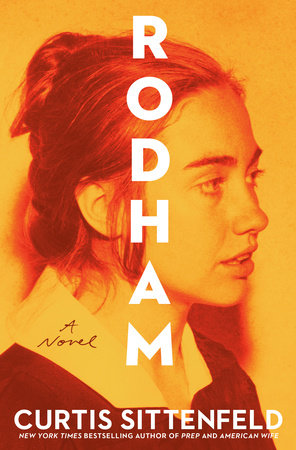
This month we are starting with Rodham by Curtis Sittenfeld. I haven’t read it, but I know that it’s an alternate history imagining what might have happened if Hillary Rodham had never married Bill Clinton.

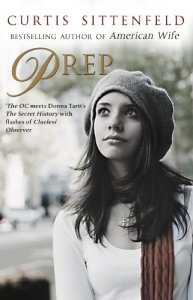
However, I have read one of Curtis Sittenfeld’s earlier novels, Prep (1), which follows four years in the life of Lee Fiora, a teenage girl with social anxiety who attends a boarding school in Massachusetts. This seems to be a book that people either love or hate; I think whether or not you enjoy it probably depends on how strongly you can relate to the main character.

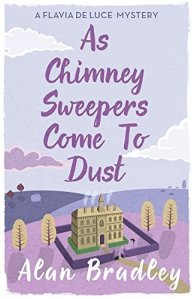
Another girl who goes to boarding school, in Canada this time, is Flavia de Luce in Alan Bradley’s As Chimney Sweepers Come to Dust (2). This is the seventh book in a series of mysteries starring Flavia and in this one she is investigating the disappearances of three girls at Miss Bodycote’s Female Academy. Not my favourite in the series, but I do love the Flavia books overall.

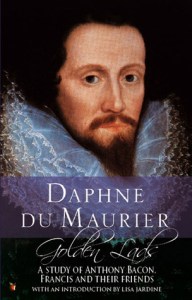
The title of that book comes from the lines from Shakespeare’s Cymbeline: “Golden lads and girls all must, As chimney-sweepers, come to dust.” Another book which also takes its inspiration from the same source is Golden Lads by Daphne du Maurier (3), a biography of two important Elizabethan figures, Francis and Anthony Bacon.

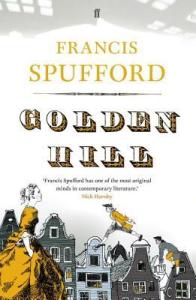
My next link is to another book with the word ‘Golden’ in the title: Golden Hill by Francis Spufford (4). I found this a very entertaining novel set in 18th century New York, in those days still a small community just beginning to expand into the city we know today.

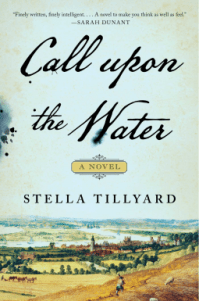
Stella Tillyard’s Call Upon the Water (5) is also set, at least partly, in the same location – but a century earlier, when the settlement was known as New Amsterdam. The rest of the novel is set in England and follows a Dutch engineer working on the draining of the marshlands in the Fens.

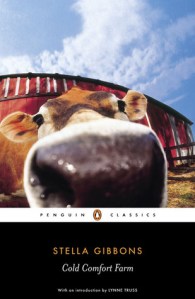
Finally, I’m going to link to a book written by another Stella – Stella Gibbons. Gibbons wrote many novels, as well as some short stories and poetry, but the only one I have read is her most famous one, Cold Comfort Farm (6). Because I didn’t enjoy this book as much as I’d hoped to, I haven’t attempted any of her other work yet but maybe I will one day.

~

And that’s my chain for this month! My links included school stories, Cymbeline, the word ‘golden’, old New York and the name Stella. In October, we will be starting with The Turn of the Screw by Henry James – finally a book that I’ve read!

My Commonplace Book: August 2020 – and 20 Books of Summer comes to an end

A selection of words and pictures to represent August’s reading:

commonplace book
noun
a book into which notable extracts from other works are copied for personal use.

~

“Leave it alone? Our very own murder mystery – if it was murder!”

“It was murder, I think. And that’s just why I should leave it alone. Murder isn’t – it really isn’t – a thing to tamper with lightheartedly.”

Sleeping Murder by Agatha Christie (1976)

~

‘Of course I am a hero,’ he said, getting up and laughing very cheerfully. ‘Every man is a hero of his own tale. Surely, Dr Maturin, every man must look on himself as wiser and more intelligent and more virtuous than the rest, so how could he see himself as the villain, or even as a minor character? And you must have noticed that heroes are never beaten. They may be undone for a while, but they always do themselves up again, and marry the virtuous young gentlewoman.’

The Surgeon’s Mate by Patrick O’Brian (1980)

~

She was conscious of a glow of spurious strength, followed by a rush of confidence, as she climbed out of the traitor’s hell into which she had hurled herself.

“Lost causes are the only causes worth fighting for,” she told herself.

The Wheel Spins by Ethel Lina White (1936)

~

Portrait miniature, thought to be Catherine Howard by Hans Holbein c. 1540

She had never stitched so much embroidery. Where once she had done nothing but dance, she could not now bear to have music, for she felt so fragile that it must surely break her. Music evoked joy or sadness; it brought back memories or lifted the soul. She could not take any of that now. She was merely existing, trying not to think too much. When her musicians knocked at her door, she told her women to tell them that it was not the time for dancing.

Katheryn Howard, the Tainted Queen by Alison Weir (2020)

~

People want love. People demand love. They prescribe love. They proscribe it, too. People make mistakes, and people grow afraid, and they fail and hurt each other. Some people talk about love like drunkards, and their words end up meaning nothing. But some people cannot talk about love; it kills them to do so, and with time, passing straight through the hurt itself, we come to see the nature of their love. We come to see how transformative it was, and what an honour it was to have it in our lives.

The Intoxicating Mr Lavelle by Neil Blackmore (2020)

~

“Oh dear,” she said impulsively, “I wish you could be happy.”

…But the hard-eyed Cornishwoman was looking at her with an odd surprised kind of approval. “A perilous wish!” she said. “For where one may be made happy by harmless things, another may find happiness only in hurting. But good may come of it.”

Greenwitch by Susan Cooper (1974)

~

Favourite books read in August:

Sleeping Murder, Greenwitch

New authors read in August:

Neil Blackmore, Ethel Lina White

Countries visited in my August reading:

England, Italy, France, Canada

~

Have you read any of these books? Which books did you enjoy reading in August?

~

This year’s 20 Books of Summer challenge has also come to an end now. I only managed to read 13 of the 20 books on my list, but I hadn’t expected to do much better than that so I’m quite happy!

Here are the books I read, with links to reviews where available:

1. Moonflower Murders by Anthony Horowitz
2. A Time to Die by Hilda Lawrence
3. The Silver Collar by Antonia Hodgson
4. The Honey and the Sting by EC Fremantle
5. Tsarina by Ellen Alpsten
6. The Sin Eater by Megan Campisi
7. When We Fall by Carolyn Kirby
8. Katheryn Howard, the Tainted Queen by Alison Weir
9. The Silken Rose by Carol McGrath
10. Sleeping Murder by Agatha Christie
11. City of Dragons by Robin Hobb
12. The Surgeon’s Mate by Patrick O’Brian
13. Greenwitch by Susan Cooper

Here are the books I didn’t read (although I have started two of them). I will have to make these autumn or winter reads instead of summer ones.

14. These Old Shades by Georgette Heyer
15. The Land Beyond the Sea by Sharon Penman
16. The Green Gauntlet by RF Delderfield
17. Confusion by Elizabeth Jane Howard
18. The Wheel of Fortune by Susan Howatch
19. Daniel Deronda by George Eliot
20. The Horseman by Tim Pears

~

How was your summer reading? Did you take part in 20 Books of Summer – and did you complete your list?

Ready for R.I.P. XV

It’s been a strange summer in many ways and I can’t really say that I’m sorry it’s nearly over. As we move into September and the darker nights and colder weather begin to arrive again, my favourite reading event – R.I.P. (or Readers Imbibing Peril) – is also returning for a fifteenth year.

This year the rules are much more relaxed than usual. There’s no need to officially sign up and there are no levels or targets to aim for. All you need to do to join in is read some spooky, mysterious or suspenseful books in September and October and, if you have Instagram or Twitter, you can follow the event @perilreaders.

Here is a list of some of the possible choices I have on my TBR. I won’t read all of these and could end up reading different books entirely, but I like to have plenty of options.

The Devil and the Dark Water by Stuart Turton
Dead March for Penelope Blow by George Bellairs
The Haunting of Alma Fielding by Kate Summerscale
The Butcher of Berner Street by Alex Reeve
The Silent Companions by Laura Purcell
The Printer’s Coffin by MJ Carter
A Gathering of Ghosts by Karen Maitland
Tombland by CJ Sansom
The Sussex Downs Murder by John Bude
The Mummy Case by Elizabeth Peters
The Grey King by Susan Cooper
Grim Tales by E Nesbit
Ghost Stories of an Antiquary by MR James

Will you be taking part in R.I.P. this year?