 Welcome to my (almost) monthly post on all things historical fiction.
This month, I have taken inspiration from one of my current reads, V2 by Robert Harris. I won’t say too much about that book here, as I will be reviewing it later in the week, but it’s set during the Second World War and follows the stories of a German engineer launching V2 rockets at London and a British WAAF officer on a mission to stop him. Unless something happens in the final few chapters to change my opinion entirely, it’s going to be a very positive review. I’m finding it fascinating as it looks at several aspects of the war I haven’t read about before – and that has made me think about some of the other novels I’ve read set during the war and the many different ways in which authors decide to approach the subject and the different things on which they choose to focus.
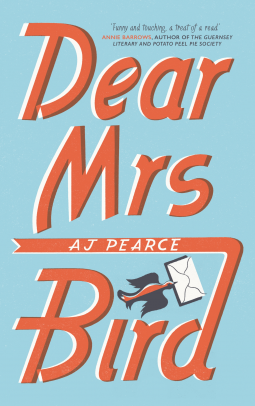 For those of us interested in reading about the roles of women in the war, for example, Kay in The Night Watch by Sarah Waters drives an ambulance, Constance in Lucinda Riley’s The Light Behind the Window is an SOE spy working in Occupied France, and in Carolyn Kirby’s When We Fall, Vee flies planes for the Air Transport Auxiliary and Ewa carries out secret missions for the Polish Resistance. On a more light-hearted note, Emmy in Dear Mrs Bird by AJ Pearce answers letters for the problem page in a women’s weekly magazine!
Some books concentrate on one single event or episode, such as The Report by Jessica Francis Kane, about the bombing of the Bethnal Green tube station, or The Conductor by Sarah Quigley and The Bronze Horseman by Paullina Simons (read before I started blogging), about the Siege of Leningrad, while others, like The Invisible Bridge by Julie Orringer, which follows the story of three Hungarian Jewish brothers, cover the whole span of the war.
Although most of the books I’ve read have been concerned mainly with the war in Europe, I have also read some set in America (The Postmistress by Sarah Blake and Hotel on the Corner of Bitter and Sweet by Jamie Ford) and North Africa (Jasmine Nights by Julia Gregson and Tapestry of War by Jane MacKenzie).
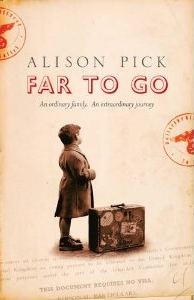 The Holocaust and the challenges faced by Jews during the war tend to feature strongly in wartime fiction. Far to Go by Alison Pick looks at the role of the Kindertransport and Love and Treasure by Ayelet Waldman focuses on the Hungarian Gold Train. There’s also Jakob’s Colours by Lindsay Hawdon, which is not about the Jewish Holocaust but the Gypsy Holocaust, which made an interesting change. And Japanese internment camps feature in Isabel Allende’s The Japanese Lover and Ghostwritten by Isabel Wolff.
There are plenty of historical mysteries which have the war as a setting too: Full Dark House by Christopher Fowler, the first book in the Bryant and May series, deals with a murder in a London theatre during the Blitz, and Death in Bordeaux by Allan Massie is the first in a quartet of mystery novels set in Occupied France.
The books I have mentioned here are all historical fiction, published many years after the war ended. Of course, there are also lots of wonderful contemporary novels written during or just after the war, but that would be a topic for another post, I think!
Have you read any of the books above or would you be interested in reading them? Are there any others you would recommend? Which aspects of the war do you find most interesting to read about?




 She Reads Novels