Top Ten Tuesday: 10 books about witches and witchcraft

This week’s Top Ten Tuesday, hosted by That Artsy Reader Girl, is a “Halloween/Creepy Freebie”. I seem to have read a lot of books about witches in the last few years, so I’ve chosen ten of them to list here.

~
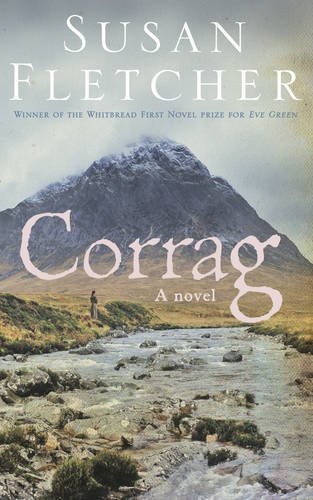
1. Corrag by Susan Fletcher

Also published as Witch Light and The Highland Witch, this is a beautiful, moving story about a young girl accused of witchcraft and the part she played in one of the most tragic moments in Scotland’s history – the Glencoe Massacre of 1692. The writing style is unusual and it took me a while to get used to it, but I’m glad I persevered because this really is a lovely book.

~

2. Thornyhold by Mary Stewart

Not a scary book at all, but a gentle, comforting one. When Gilly’s cousin Geillis dies, leaving her a cottage in the countryside, Gilly finds that she has also inherited a black cat and a collection of magic spells. Could Geillis have been a witch? As with most of Stewart’s novels, there are some beautiful descriptions of nature, a likeable heroine and a touch of romance.

~

3. The Witchfinder’s Sister by Beth Underdown

This novel is narrated by Alice Hopkins, a fictional sister of Matthew Hopkins, the self-styled Witchfinder General who was believed to be responsible for the deaths of hundreds of women in England during the 17th century. Alice’s story didn’t interest me much, but I found it fascinating to read about the methods Hopkins used to identify witches.

~

4. The Craftsman by Sharon Bolton
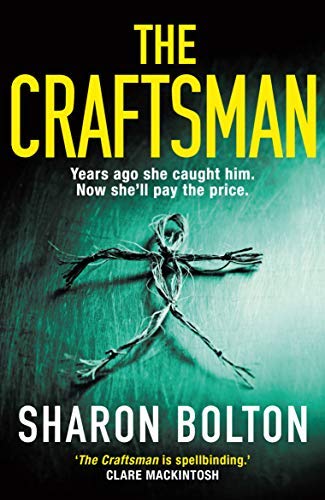
Sharon Bolton’s latest novel follows an investigation into the murder of three teenagers in a small Lancashire town near Pendle Hill, a place associated with witchcraft since the Pendle Witch Trials of the 17th century. As Florence Lovelady attempts to solve the crime she discovers a coven of modern day witches operating in the town. Could they be connected with the murders?

~

5. The Vanishing Witch by Karen Maitland
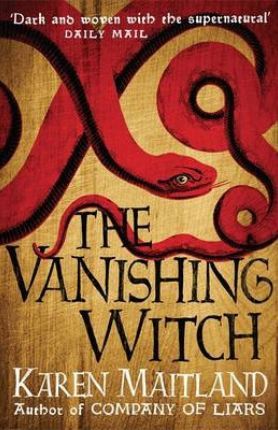
Set in the 1380s, this novel has everything I’ve come to expect from Karen Maitland: the dark atmosphere, the elements of the supernatural, and the twisting, turning plot. As well as hints of witchcraft, the story also features a ghost – and every chapter begins with a charm or a spell to protect oneself from witches.

~
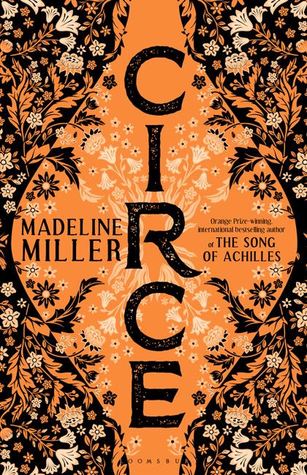
6. Circe by Madeline Miller

A mythological witch next! I loved this beautifully written novel by Madeline Miller which fleshes out the character of Circe, the witch from Homer’s Odyssey. I was surprised to see how many different Greek myths Miller incorporates into Circe’s story.

~

7. Widdershins by Helen Steadman
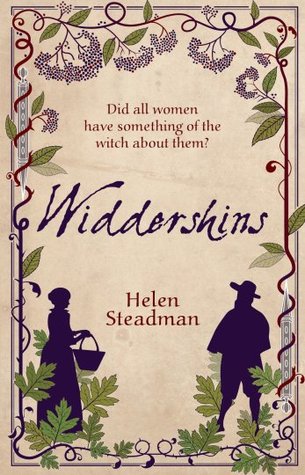
Set in the 17th century, this novel describes the events leading up to the Newcastle Witch Trials of 1650 which resulted in the largest number of people in England’s history being executed for witchcraft in a single day. With half of the book following the witchfinder responsible for hunting down the so-called witches, and the other half following one of the accused women, we are given both sides of the story. The sequel is coming next year!

~

8. A Discovery of Witches by Deborah Harkness

This is the first book in the All Souls Trilogy which follows the adventures of witch Diana Bishop and vampire Matthew Clairmont. I wasn’t at all sure that this would be my sort of book, but I found that I loved the combination of romance, history, adventure and fantasy.

~

9. The White Witch by Elizabeth Goudge
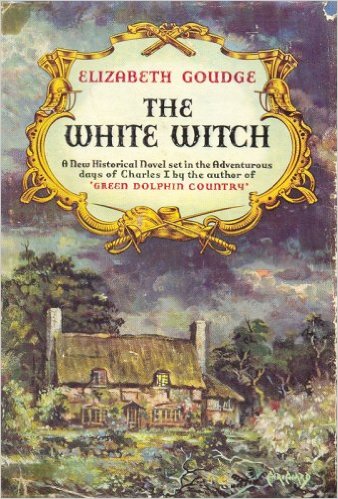
Set during the English Civil War, the white witch of the title is Froniga, a healer and herbalist. Like Thornyhold above, this is a gentle, beautifully written ‘witch’ story, rather than a creepy one. Although there are themes of magic, mystery and mythology, it was the details of 17th century village life and the lovely descriptions of the countryside that I enjoyed the most.

~

10. The Lost Book of Salem by Katherine Howe

Also published as The Physick Book of Deliverance Dane, the final novel on my list follows a 20th century history student as she attempts to track down a spell book belonging to Deliverance Dane, one of the women accused of witchcraft in the Salem Witch Trials of 1692.

~

Have you read any of these – or any other books about witches or witchcraft?
Nonfiction November: Week 1 – Your Year in Nonfiction

Today is the first day of 2018’s Nonfiction November, hosted by Kim of Sophisticated Dorkiness, Rennie of What’s Nonfiction, Katie of Doing Dewey, Julz of JulzReads and Sarah of Sarah’s Bookshelves. I’ve never taken part in this event before as I don’t tend to read nonfiction very often, but it has occurred to me that maybe that is precisely why I should be joining in – so that I can look back at the nonfiction I’ve already read, focus on the nonfiction I would like to be reading in the future, and hopefully pick up some good recommendations from other bloggers along the way.

This week’s topic is:

Week 1: (Oct. 29 to Nov. 2) – Your Year in Nonfiction

Take a look back at your year of nonfiction and reflect on the following questions – What was your favorite nonfiction read of the year? Do you have a particular topic you’ve been attracted to more this year? What nonfiction book have you recommended the most? What is one topic or type of nonfiction you haven’t read enough of yet? What are you hoping to get out of participating in Nonfiction November?

Here are all of the nonfiction books I have read so far this year (there aren’t many):

The Oaken Heart by Margery Allingham
A Distant Mirror: The Calamitous 14th Century by Barbara W Tuchman
Golden Lads by Daphne du Maurier
Murder by the Book by Claire Harman
A Tudor Christmas by Alison Weir
Henry VII by Gladys Temperley

I will be posting my reviews of the last three books during November.

Of these, the book I enjoyed the most was The Oaken Heart, Margery Allingham’s memoir of life in her small English village during the Second World War. However, A Distant Mirror was a fascinating read and I found that I was learning a huge amount from it. I would recommend it to anyone interested in the 14th century.

As usual, the topic I’ve been attracted to this year has been history. I’ve read some wartime history, some medieval history, a biography of Francis and Anthony Bacon, a book about a true historical crime, a book on Tudor Christmas traditions and a biography of Henry VII! Therefore my answer to the question “What is one topic or type of nonfiction you haven’t read enough of yet?” has to be anything other than history!

I’m hoping that participating in Nonfiction November will inspire me to read more nonfiction and will point me in the direction of some books I might enjoy.

~

How has your year in nonfiction been? What are the best nonfiction books you’ve read this year?

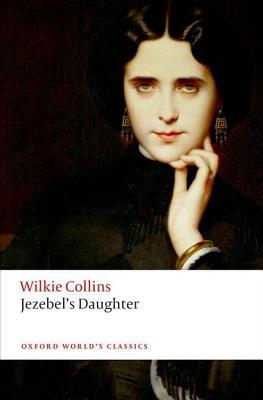
Jezebel’s Daughter by Wilkie Collins

I love Wilkie Collins but it’s been a while since I last read one of his books, so when the Classics Club recently challenged us to read a classic Gothic novel, thriller or mystery during the month of October, I thought Jezebel’s Daughter would be a good one to choose. Published in 1880, this was one of Collins’ later books, although it was based on a much earlier – and apparently unsuccessful – play of his, The Red Vial. I wasn’t really expecting it to be as good as his more famous novels such as The Woman in White, The Moonstone, No Name or my personal favourite, Armadale, all of which I read and loved in the years before I started blogging, but now that I’ve read Jezebel’s Daughter, I can say that while it’s not quite in the same class as those other books, it’s still very entertaining and enjoyable.

At the heart of the novel are two very different women who seem to have little in common other than the fact that they are both widows. First, in England, we meet Mrs Wagner, who has inherited her husband’s share of the business in which he had been a partner. Mrs Wagner is looking forward to becoming more involved in running the business and making some changes of her own – including employing more women. As a philanthropist, she also wants to use her money and position to help those less fortunate, such as Jack Straw, an inmate in the Bedlam lunatic asylum. Believing that Jack would benefit from some kindness and affection, she takes him into her own home, determined to prove that her theory is correct.

The action then switches to Germany, where we are introduced to Madame Fontaine, the widow of a French scientist who had devoted his life to the study of poisons. Since her husband’s death, she has found herself struggling financially, so when her daughter Minna falls in love with Fritz Keller, the son of Mrs Wagner’s wealthy business partner, she sees a possible solution to their money problems. Unfortunately, Madame Fontaine has a terrible reputation – she is the ‘Jezebel’ of the title – and Fritz’s father is strongly opposed to the idea of a marriage between his son and Minna. Can Madame Fontaine find a way to ensure that the marriage takes place before her debts are due to be paid?

Jezebel’s Daughter is a great read – it’s suspenseful and exciting and, because it’s a relatively short novel, it’s faster paced than some of his others as well. With a story involving poisonings, stolen jewels, unexplained illnesses, mysterious scientific experiments, morgues, asylums and plenty of plotting and scheming, there’s always something happening and for a long time I couldn’t imagine how it was all going to be resolved! As well as being fun to read, the book also touches on some important social issues, such as job opportunities for women (Mrs Wagner, like her late husband, believes that women should be employed in the office in positions that would normally be filled exclusively by men) and the humane treatment of people with mental illnesses.

The two central characters are wonderful – not the two young lovers, as you might expect, but the two middle-aged widows. They complement each other beautifully, one representing all that is good and the other all that is bad. But although Madame Fontaine can be seen as the villain of the story, Collins portrays her in a way that allows us to have some sympathy; she is an intelligent, ambitious woman for whom nothing has ever gone smoothly and most of the wicked acts she commits are done out of desperation or love for her daughter.

If anyone has read Collins’ better known works and is wondering what to read next, I would definitely recommend this one – or The Law and the Lady, Man and Wife or Poor Miss Finch, all of which I enjoyed too. I’m glad I decided to read this book for the Classics Club Gothic event – it was the perfect choice!

This is book 9/50 read from my second Classics Club list.

I am also counting this book towards the R.I.P. XIII Challenge (categories: suspense, Gothic).

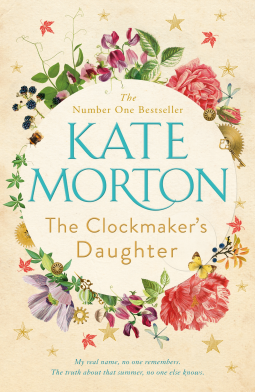
The Clockmaker’s Daughter by Kate Morton

A 19th century artist and his beautiful model; a young girl raised in India and sent to an English boarding school; a writer who takes her children to the countryside during World War II; and a 1920s biographer researching his latest work. These are just some of the characters whose stories are told in The Clockmaker’s Daughter and tied together by a present day archivist, Elodie Winslow, who is trying to make sense of it all.

At the beginning of the novel, in 2017, Elodie comes across two intriguing items in the archives of a man called James Stratton. One is an old photograph showing a woman dressed in Victorian clothing; the other is a sketchbook with a drawing of a house near the bend of a river. Elodie feels that the house looks familiar somehow…but where could she have seen it before? And who is the woman in the photograph?

To find the answers to these questions, we have to go back to the summer of 1862 when a group of young artists known as ‘the Magenta Brotherhood’ are gathering at Birchwood Manor, the home of the talented painter Edward Radcliffe. By the end of their stay, a woman has been killed, another has vanished without trace and a valuable jewel has disappeared. We know that these incidents must be linked in some way to the photograph and sketch that Elodie has found, but before we can fully understand their significance we must follow the stories of all the characters I mentioned above – and several more.

The Clockmaker’s Daughter is a complex novel and, I have to admit, I would have preferred it to have been a bit less complex! There were far too many different strands to the story and I struggled to keep track of what was happening and how the various characters were related to each other. New characters, often seemingly unconnected to any of the others, were still being introduced well into the second half of the book and it wasn’t always very clear how they were going to fit into the sequence of events. It all makes sense in the end, but I’m not sure it was really necessary for things to be so confusing.

Although I would have preferred a more straightforward, linear structure, I still found a lot to like about this book: there’s a supernatural element which I thought was used very effectively; I loved Birdie Bell, the eponymous clockmaker’s daughter; and I really enjoyed the last few chapters, in which we finally discover what really happened that summer in 1862. To compare it with the other two Kate Morton novels I’ve read, I thought this one was better than The Distant Hours but not as good as The Forgotten Garden. I’m not sure whether I will be reading any more of her books, although I could probably be tempted.

Thanks to Pan Macmillan for providing a copy of this book for review via NetGalley.

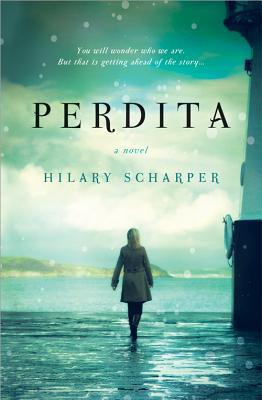
Perdita by Hilary Scharper

I have never been to the Bruce Peninsula in Ontario, but reading Hilary Scharper’s Perdita has made me want to add it to my list of places to visit. The author has described her novel as ‘eco-gothic’, which I think refers to elements of nature almost taking the role of characters in the story (think of the fog in Charles Dickens’ Bleak House or the moors in Emily Brontë’s Wuthering Heights) and she certainly does bring the beauty and atmosphere of her Canadian setting to life in Perdita.

The novel opens with Garth Hellyer of the Longevity Project collecting information on some of Canada’s oldest people. Having heard about some remarkable claims made by a woman called Marged Brice, Garth is visiting her in her nursing home in the hope of discovering the truth. Marged insists that she is 134 years old, but surely that can’t be right? Garth is cynical, but when Marged tells him that she is ready to die but can’t because of a mysterious presence known as ‘Perdita’ holding her back, he is intrigued enough to agree to hear her story.

Marged gives Garth some of her old journals, which he takes home to read, and through these the story of Marged’s life unfolds. In 1897, when her diaries begin, she is a young woman of nineteen living at Cape Prius on the Bruce Peninsula where her father is working as the lighthouse keeper. It can be a lonely place in the winter but comes alive in the summer when visitors begin to arrive. Among the summer visitors are the Stewarts, a wealthy family with two sons, one of whom – George – is a talented painter. With her own interest in art, Marged finds herself drawn to George, but will he ever return her feelings? And anyway, would Marged ever be able to leave the landscape she loves so much – the landscape which has become such an integral part of her life?

Well, circumstances dictate that Marged does have to leave her beloved bay behind, at least for a short period, while she spends some time in Toronto with her mother. By the time she returns she has changed and grown as a person; her world has widened, she has met different people – including Andrew Reid, a young doctor – and she has experienced things she would never have been exposed to on the peninsula. The rest of the novel follows the ups and downs of Marged’s relationships with George, with Andrew and with her environment, as well as exploring the presence of Perdita and who or what she really is. We also follow Garth in the modern day as he is reunited with an old friend, Clare, who helps him to make sense of Marged’s claims.

You won’t be surprised to hear that I preferred the historical storyline to the present day one. It’s not very often that I would say the opposite! Marged’s story was much more compelling, full of life and passion and emotion; Garth’s story, in comparison, felt as though it had been created just because a framing narrative was needed. He and Clare didn’t feel like real, fully-developed people to me and every time we returned to their storyline, I just wanted to get back to Marged and her diaries.

I liked the Perdita and longevity aspects of the story, which bring in some elements of mythology and some literary allusions, but I was less convinced by the blending of the real and the supernatural. For me, Perdita was a collection of intriguing ideas that, as a whole, I couldn’t quite manage to love. It seems to be Hilary Scharper’s only novel (although she has written a book of short stories on a very different subject) but if she writes another in the ‘eco-gothic’ genre, I would probably be interested in reading it.

Historical Musings #43: Wives, daughters, sisters…

Welcome to my monthly post on all things historical fiction. This month’s topic is something which occurred to me while I was in the middle of one of my recent reads, The Clockmaker’s Daughter by Kate Morton. Given that there are only one or two scenes in which the clockmaker actually appears, very few details on the science of clockmaking, and little relevance to the fact that one of the characters is the daughter of a clockmaker, I wondered why that particular title was chosen. Was it an allusion to the role of time in the story or is it just that books with titles which follow the format The __’s Daughter or The __’s Wife are easy to market?

As well as The Clockmaker’s Daughter, in the last two years I have also read The Witchfinder’s Sister by Beth Underdown, The Pharmacist’s Wife by Vanessa Tait, The Cursed Wife by Pamela Hartshorne, The Coroner’s Daughter by Andrew Hughes, Warwyck’s Wife by Rosalind Laker, and The Tea Planter’s Wife and The Silk Merchant’s Daughter, both by Dinah Jefferies. In that same period, the only book I’ve read with an equivalent ‘male’ title is Jean Teulé’s The Hurlyburly’s Husband. With the exception of Warwyck’s Wife, these are all recently published books and it does seem to me that it has been a growing trend.

It’s easy enough to see why these are popular titles for historical fiction in particular. Historically, a woman would not, in most cases, have had the opportunity to be a clockmaker, a pharmacist or a coroner, but she could certainly be the wife or the daughter of one. And of course, some books are specifically about a woman’s experience of being a man’s wife or daughter or sister, which in previous decades or centuries could be very different from modern day experiences. In that case, it’s probably less important to tell us what it was like to be a husband, a son or a brother, as men in those times tended to have so much more freedom than women anyway. But where a book is not specifically about being a wife, daughter or sister, as with The Clockmaker’s Daughter, is there no other way the woman could be defined instead of by her relationship to a man?

I would love to hear your thoughts on this. Why do you think there are so many books with titles like these? What are your favourite Wife, Daughter or Sister novels? You may also be interested in this article in which the author Emily St. John Mandel posts a detailed analysis of books with ‘Daughter’ titles and looks at the possible reasons why these titles are so popular with publishers, booksellers and readers.

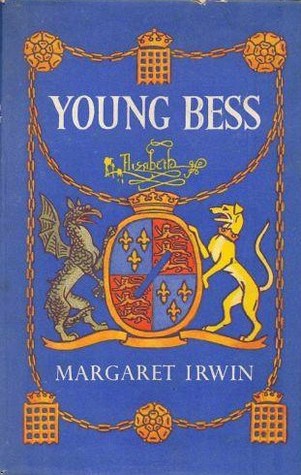
Young Bess by Margaret Irwin – #1944Club

Since reading Margaret Irwin’s 1925 fantasy novel, These Mortals, a few years ago, I have wanted to read one of the historical novels for which she was better known – and when I discovered that Young Bess was published in 1944, I thought it would be a good choice for the 1944 Club Simon and Karen are hosting this week.

The ‘Bess’ of the title refers to the young Elizabeth I and this book (the first in a trilogy) covers her life between the years 1545 and 1553. Having read about Elizabeth several times before, I hadn’t expected Young Bess to offer anything new – and it didn’t, really; however, it was a pleasure to read a good old-fashioned historical fiction novel with elegant prose and strong characterisation, no present tense, no experimental writing and no multiple time periods! It’s a book which completely immerses the reader in the Tudor period and the lives of Elizabeth and the historical figures who surround her, so that you reach the end feeling that you’ve read something fresh and worthwhile after all. I loved it and will definitely be going on to read the other two books in the trilogy.

The novel opens in the final years of Henry VIII’s reign; the King, now obese and in poor health, is as dangerous and unpredictable as ever, and his twelve-year-old daughter, Elizabeth – or Bess as I will call her for the remainder of this post – is already learning to navigate her way through the layers of political intrigue, betrayal and treachery that are part of everyday life for a Tudor. With the fate of her mother, Anne Boleyn, always at the back of her mind, Bess knows that nobody is safe at court and that fortunes can be made or lost in an instant.

One of the few people Bess does love and trust is her stepmother, Catherine Parr, and she goes to live with her following Henry’s death in 1547. But then Catherine marries Tom Seymour, and tensions in the household start to rise when what seem at first to be innocent games between Bess and Tom begin to develop into something more. As the brother of Henry’s third wife, Jane Seymour, and therefore the uncle of the newly crowned Edward VI, Tom’s behaviour puts him in a precarious position at court. He lacks the power of his elder brother, Ned Seymour, who has been named Protector until the young king comes of age, but at the same time he is too powerful for his actions to be ignored. If he and Bess continue to pursue their relationship there could be tragic consequences.

All of this will be very familiar to anyone who has read Elizabeth’s story before; as I’ve said, Margaret Irwin doesn’t really offer anything different or controversial (at least nothing that hasn’t been suggested by other authors as well). Where this novel really shines is in the characterisation – although Bess is the main focus of the story, all of the other characters feel fully developed too and because the book is relatively long for the short period of history that it covers, there’s enough time for the author to go into the necessary amount of depth. I particularly enjoyed the insights we are given into the thoughts of Henry VIII in the days before his death, the transformation of Edward VI from lonely, vulnerable boy to ruthless, calculating Tudor, and the appearance at court of the Seymours’ other brother, Henry, who is far more shrewd and observant than his unsophisticated exterior suggests.

Finally, reading this with the 1944 Club in mind, I was interested to see what Tom Seymour had to say to his brother Ned about the German mercenaries he had brought in to fight in Scotland:

“Their Emperor is not the Emperor of Germany, he’s the German Emperor – of the World…And it’s this Master Race of mechanic monsters that you’re bringing into this island to fight your battles for you, against fellows who speak the same language as yourselves – and to do the dirty work you can’t get Englishmen to do.”

I suppose the war was never far from anyone’s thoughts in the 1940s, even when writing about the 16th century!

I am now looking forward to reading the other two books, Elizabeth, Captive Princess and Elizabeth and the Prince of Spain. Has anyone seen the 1953 film version of Young Bess, starring Jean Simmons?