
The topic for this week’s Top Ten Tuesday hosted by That Artsy Reader Girl is: Bookish Worlds I’d Want to/Never Want to Live In. I decided to focus on the second option and list ten of the most unpleasant or unappealing settings from books previously reviewed on my blog…and here they are:
1. The Republic of Gilead (The Handmaid’s Tale by Margaret Atwood)
From my review: “In this new dystopian society, women no longer have any of the rights or freedoms they had before; they’re not allowed to work, not allowed to have their own bank accounts, not even allowed to read in case reading leads them into temptation.”
2. The room (Room by Emma Donoghue)
From my review: “The story is narrated by Jack, a five-year-old boy who has spent his whole life living with his mother in a converted shed measuring eleven foot square. His mother had been kidnapped seven years ago and Jack was born in captivity. He has no idea that a world exists outside Room and apart from Ma and Old Nick, the man who is keeping them captive, he has never seen another human being.”
3. Tregannon House, Cornwall (The Asylum by John Harwood)
From my review: “Most of the action takes place within the confines of Tregannon House (the private asylum on Bodmin Moor, Cornwall, in which Georgina becomes trapped) and the atmosphere Harwood creates is wonderfully claustrophobic and eerie. I really sympathised with Georgina’s situation and shared her terror and bewilderment.”
4. Melanie Langdon’s drawing room (The Victorian Chaise-Longue by Marghanita Laski)
From my review: “The book conveys a sense of confusion, panic and disorientation and I could really feel Melanie’s helplessness as she lay on the chaise-longue, trapped in Milly’s body, desperately trying to work out who she was and how she could escape.”
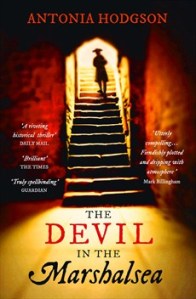
5. The Marshalsea Prison (The Devil in the Marshalsea by Antonia Hodgson)
From my review: “The prisoners who had some money to spend or who had influential friends, lived on the Master’s Side, which was almost like a complete town in itself, with coffee houses, bars, restaurants and even a barber. They had the freedom to move around and in some cases were even given permission to go out into London during the day. For the poor people on the Common Side, things were much worse. Crammed into tiny cells and suffering from starvation, disease and overcrowding, they died at a rate of up to twelve a day.”
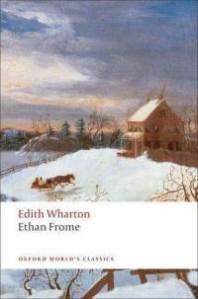
6. Starkfield, Massachusetts (Ethan Frome by Edith Wharton)
From my review: “The most striking thing about this book, for me, was the tense, claustrophobic atmosphere Wharton created, making the reader feel locked within Ethan’s miserable world. The town of Starkfield, Massachusetts is as stark as its name suggests; the descriptions of the snow, the ice and the cold all contribute to the heavy feeling of oppression which hangs over the entire book.”
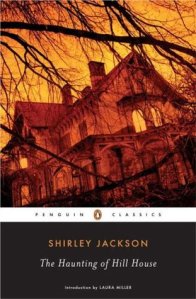
7. Hill House (The Haunting of Hill House by Shirley Jackson)
From my review: “I loved the descriptions of Hill House – it has all the characteristics you would expect a haunted house to have, including a tragic history – but there are very few physical manifestations of ghostly activity. The creepiness of the story comes mainly from the fact that we don’t know how much of the ‘haunting’ is caused by Hill House itself and how much is the product of Eleanor’s disturbed mind.”
8. Lexham Manor at Christmas (Envious Casca by Georgette Heyer)
From my review: “I have rarely read a novel with so many nasty, rude, unpleasant characters and I couldn’t think of anything worse than being a guest at the Herriards’ party, even without a murder taking place! From the obnoxious, sarcastic Stephen and the haughty butler Sturry to the cantankerous, bad-tempered Nathaniel, they were all so annoying I was surprised only one murder was committed.”
9. Green Town, Illinois at carnival time (Something Wicked This Way Comes by Ray Bradbury)
From my review: “Good versus evil is obviously one of the major themes of the novel. A feeling of malice and danger hangs over the carnival from the moment it arrives and the people connected with it are both strange and sinister – particularly the blind Dust Witch who hovers over the boys’ houses in a hot air balloon in one of the creepiest scenes in the book.”
10. The future (The Time Machine by HG Wells)
From my review: “Remembering when this novel was published, Wells’ vision of a future world has been developed from some of the issues which would have seemed relevant at the end of the 19th century, such as widening class divisions, theories of evolution and Darwinism. It’s a bleak and depressing view of the future – and if that really is what we have to look forward to, then imperfect as our current society may be, I’m very glad to be living in 2016!”
~
Have you taken part in this week’s Top Ten Tuesday? Can you think of some bookish worlds you wouldn’t want to live in?



















 She Reads Novels