Six Degrees of Separation: From House of Names to Rebecca

Thanks to everyone who wished me luck with my house move last week. I am starting to get settled in the new house but still have a lot to do! I’m a few days late with my Six Degrees of Separation post for August (I usually try to have my post ready for the first Saturday of the month) as I’m still waiting for my broadband to be activated so am having to do things where and when I can, but I’m hoping everything will be back to normal soon.

Six Degrees of Separation is hosted by Kate of Books are my Favourite and Best. The idea is that Kate chooses a book to use as a starting point and then we have to link it to six other books of our choice to form a chain. A book doesn’t have to be connected to all of the others on the list – only to the one next to it in the chain.

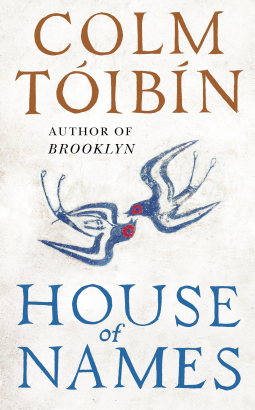
This month we are doing something slightly different; instead of Kate giving us the first title, we are starting with the book with which we finished last month’s chain! In my case, that was House of Names by Colm Tóibín, a novel which retells the tragic story of the House of Atreus from Aeschylus’ trilogy, the Oresteia.
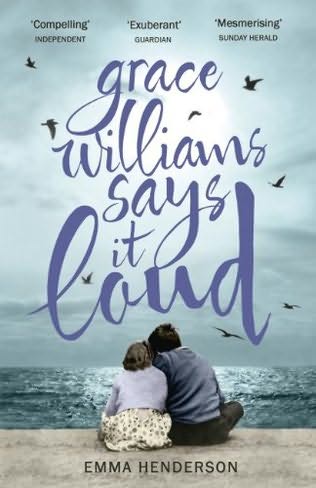
I have used the title ‘house of names’ as my first link and have chosen a book with a person’s name in its title. There are lots of those, so I had plenty of choice, but the one I’ve decided on is Grace Williams Says It Loud by Emma Henderson. This is the story of a young woman growing up in the 1950s who struggles to communicate verbally and is sent to live in a residential home for people with disabilities, the Briar Mental Institute. I found it both moving and inspirational – not the sort of book to be easily forgotten.
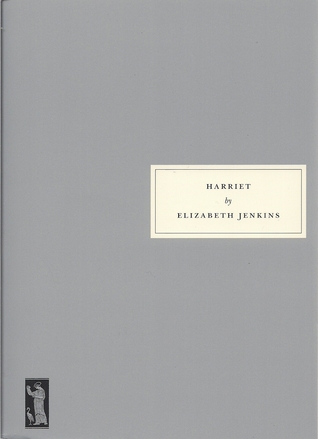
Another novel about a young woman who is considered to be ‘different’ is Harriet by Elizabeth Jenkins (another name in the title too). First published in 1934, it is based on a real life crime which took place in 1877 and is a very dark and disturbing story. It’s published by Persephone and I read it last year for a Persephone Readathon.
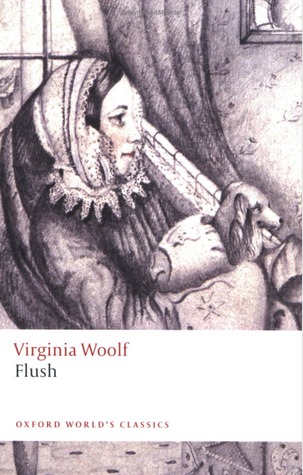
There are several other Persephones with names in the titles, including Virginia Woolf’s Flush. Flush is the name of the poet Elizabeth Barrett Browning’s dog and the novel is written from his perspective. It’s a fascinating and creative combination of fact and fiction; I loved it!
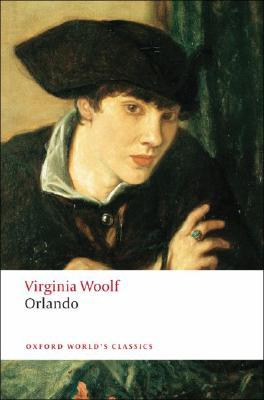
Virginia Woolf also wrote Orlando. It was the first of her books that I read and I remember finding it surprisingly accessible and entertaining. Orlando is the name of a very unusual protagonist: a character who lives for four hundred years and changes gender along the way!
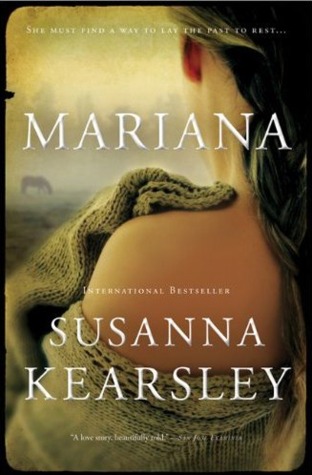
Another novel which plays with time in an interesting way is Mariana by Susanna Kearsley. In Mariana, we meet Julia Beckett, who moves into a lonely farmhouse called Greywethers and becomes obsessed with the life of Mariana Farr, a woman who lived in the house during the 17th century.
One of my favourite novels, Rebecca by Daphne du Maurier, also features a house (Manderley) and a former resident whose presence is still strongly felt. And, of course, the title of the book is a name – which links back to the first book in this chain, House of Names.

And that’s my chain for this month! Have you read any of the books I’ve mentioned?

Next month we’ll begin with A Gentleman in Moscow by Amor Towles.
My Commonplace Book: July 2019

A selection of words and pictures to represent July’s reading:

commonplace book
noun
a book into which notable extracts from other works are copied for personal use.

~

Once your vision adjusts to the strange appearance of the rooms, you feel like a hard-boiled egg that has been dropped on the floor and is trying to roll uphill. It’s a feeling that’s difficult to imagine without having stayed at the mansion. The longer you stay, the more confused your mind becomes.

The lord of the manor, Kozaburo Hamamoto, was reputed to have had a lot of fun at his guests’ expense, watching them try to navigate his twisted home. Quite an expensive way to get some childish laughs.

Murder in the Crooked House by Soji Shimada (1982)

~

I haven’t always found that it is our intentions, the decisions we make, that shape and guide our lives. The opposite, just as often, it seems to me. Impulse creates our stories, or chance, the entirely unforeseen. And what we remember of our own past can be unpredictable.

A Brightness Long Ago by Guy Gavriel Kay (2019)

~

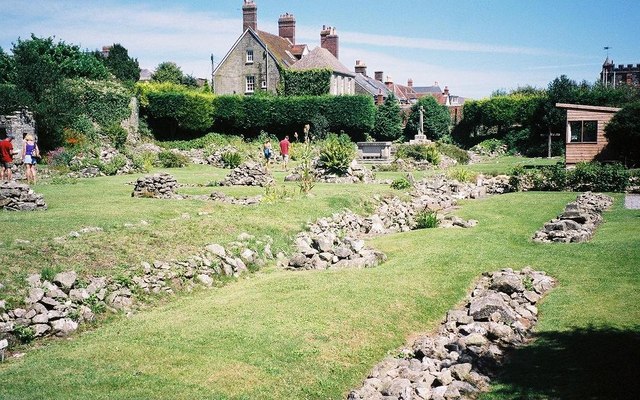
Ruins of Shaftesbury Abbey, destroyed during the Dissolution of the Monasteries.

It was Dorothy’s idea. She is a strange woman. ‘Not like other people’. That is what my father said about my mother. Perhaps Dorothy is indeed a witch, or could be. Perhaps my mother is a witch, or could be. Yet no one is ‘like other people’ once you really know them. If any one of us is a witch, then we are all witches.

The Butcher’s Daughter by Victoria Glendinning (2018)

~

‘So tell me, Dr Maxwell, if the whole of history lay before you like a shining ribbon, where would you go? What would you like to witness?’

‘The Trojan War,’ I said, words tumbling over each other. ‘Or the Spartans’ stand at Thermopylae. Or Henry at Agincourt. Or Stonehenge. Or the pyramids being built. Or see Persepolis before it burned. Or Hannibal getting his elephants over the Alps. Or go to Ur and find Abraham, the father of everything.’ I paused for breath. ‘I could do you a wish-list.’

Just One Damned Thing After Another by Jodi Taylor (2013)

~

Favourite book read in July:

The Butcher’s Daughter

New authors read in July:

Soji Shimada, Jodi Taylor, Victoria Glendinning

Countries visited in my July reading:

Japan, England, Egypt, a world very similar to Renaissance Italy

Progress made with 20 Books of Summer:

9/20 read and 7/20 reviewed.

~

Have you read any of these books? Which books did you enjoy in July?

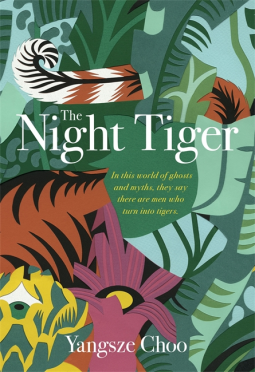
The Night Tiger by Yangsze Choo

First of all, this is a quick note to say that I am moving house this week so won’t have much time for blogging for a while – there are just so many other things that need to be done! I have prepared and scheduled some posts in advance, so you probably won’t notice any difference, but I might be slow to respond to comments or to catch up with commenting on your blogs. I’m hoping to get settled in quickly so that things can get back to normal, but meanwhile here is my review of one of last month’s reads, The Night Tiger.

***

The Night Tiger was a surprise. I had been drawn to it mainly by the colourful cover and the fact that it was set in Malaya (now part of Malaysia), a country I know very little about, but I didn’t really expect to like it very much. I hadn’t read Yangsze Choo’s first novel, The Ghost Bride, because the subject didn’t appeal to me, and it sounded as though this book, like that one, would have a very strong magical realism element – and I’m not much of a fan of magical realism. Well, I was wrong about that; although there are times when the story does veer towards the fantastical, most of it is concerned with simply describing the folklore and superstitions of the Chinese people of Malaya and asking us to accept that some of these things may actually be real.

The story is set in the 1930s and is told from two different perspectives. First there’s Ren, an eleven year-old houseboy whose master, Dr MacFarlane, has recently died. While on his deathbed, the doctor asked Ren to carry out a very special task for him: to find his severed finger and bury it in his grave beside his dead body. This must be done within forty-nine days, otherwise Dr MacFarlane’s soul will be condemned to roam the earth forever. In need of new employment, Ren enters the service of another doctor, William Acton, then begins his quest to locate the missing finger.

Our other main character is Ji Lin, a dressmaker’s apprentice who has been secretly working in a dance hall in Ipoh to earn the money to pay off her mother’s gambling debts. While dancing with a salesman one night, she sees a little glass bottle fall from his pocket and, catching it before it hits the ground, she finds that it contains a shrivelled finger. This gruesome discovery leads Ji Lin to cross paths with Ren and when they each begin to have recurring dreams involving a train journey, it seems that their lives are becoming intertwined in other ways as well.

I enjoyed The Night Tiger much more than I thought I would. The setting is fascinating, of course; I have read two other books set in Malaya (The Garden of Evening Mists by Tan Twan Eng and The Separation by Dinah Jefferies) but they are very different types of books and don’t explore Chinese and Malaysian myths and legends the way this one does. The folklore surrounding the legend of the weretiger was particularly intriguing; there are hints that one could be responsible for the unexplained deaths that have been occurring around the town, and we can either believe that this is true or we can just believe that the characters in the story believe it is true, if that makes sense!

Both main viewpoint characters are easy to like; I felt closer to Ji Lin, because her story is told in the first person whereas Ren’s is told in the third, but I did love Ren too. He often seems very mature for his age – probably because he has been forced to grow up quickly due to his personal circumstances – but at other times he behaves more like the child he still is.

I’m still not sure whether I want to read The Ghost Bride, but I will look out for Yangsze Choo’s next book and see if it appeals.

Thanks to Quercus Books for providing a copy of this book for review via NetGalley.

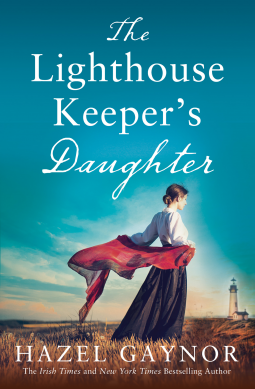
The Lighthouse Keeper’s Daughter by Hazel Gaynor

Being from the North East of England, Grace Darling is something of a local heroine, but although I remember hearing her story at school, I couldn’t really have told you very much about her. Hazel Gaynor is an author I’ve been interested in reading for a while and I already have one of her previous books, The Cottingley Secret, on the TBR, but when I saw that her latest book, The Lighthouse Keeper’s Daughter, was about Grace Darling I thought it might be a better one for me to start with.

The Lighthouse Keeper’s Daughter is divided between two different time periods, but unlike most dual timeline novels where one storyline is set in the past and the other in the present, both periods in this book are historical. One thread begins in 1838 and introduces us to Grace, a young woman whose father runs the lighthouse on Longstone Island, one of the Farne Islands just off the coast of Northumberland. The family live with him at the lighthouse and although it’s an isolated, unconventional lifestyle, Grace loves it and can’t imagine living anywhere else. One night, she helps her father with a rescue when a paddle steamer, the Forfarshire, gets into trouble during a storm and is wrecked on the rocks. News of Grace’s bravery quickly reaches the public and suddenly she finds herself the centre of attention, but all she wants is to continue living a quiet, simple life in her beloved lighthouse…how will she cope with her unexpected fame?

The other storyline is set in America in 1938 and follows Matilda, a young Irish woman who has been sent away from home in disgrace after becoming pregnant. Matilda is staying with an older relative, Harriet, who happens to be a lighthouse keeper in Newport, Rhode Island. At first she finds Harriet unwelcoming and difficult to talk to, but as she gets to know her better she starts to understand what has made Harriet the person she is.

I was interested in both storylines, but although it was the promise of learning more about Grace Darling that drew me to this book, I think I preferred reading about Matilda. To be honest, I didn’t feel that there was much difference between the narrative voices of Grace and Matilda, especially considering that they were living in different centuries, but of the two I felt closer to Matilda and more emotionally invested in her story. I wanted to understand the nature of her relationship with Harriet and I enjoyed watching that aspect of the story unfold, as well as discovering the connections between Matilda and Grace. Grace’s chapters deal mostly with the events of the sea rescue and the unwanted, unlooked for fame she experiences in the aftermath, but the author also imagines a romance for her, which feels believable and is also quite moving and poignant.

There was some added interest for me in that I was familiar with so many of the places which form the setting for Grace’s story, including North Sunderland, Seahouses, Alnwick and Bamburgh. The Matilda sections are more fictional, but do also incorporate some real places and events such as the New England Hurricane of 1938. Although there were one or two small things that stopped me from enjoying this book as much as I would have liked to – particularly the use of present tense, which I almost always find annoying – overall I thought this was a good, interesting read. I’m looking forward to reading more by Hazel Gaynor, starting with The Cottingley Secret.

Thanks to HarperCollins for providing a copy of this book for review via NetGalley.

This is book 7/20 of my 20 Books of Summer.

Historical Musings #52: Medicine through time

Welcome to my monthly post on all things historical fiction!

The history of medicine is something I’ve always found fascinating and clearly there are many historical fiction authors who find it fascinating too, given the number of historical novels which feature doctors, nurses and healers from times gone by, doing their best for their patients despite the limited equipment, medicines and knowledge available to them. I thought I would mention some of them here, and then, if you can think of any others, I would love to hear your recommendations.

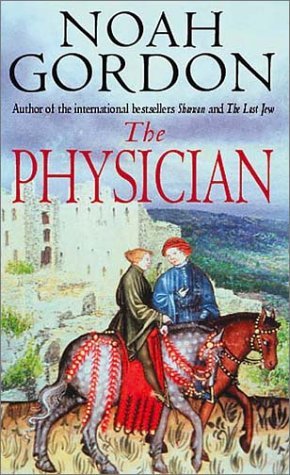
The first books that come to mind are three novels by Noah Gordon which I read before blogging and loved (or two of them, anyway – the third was slightly weaker). The Physician is set in the 11th century and follows the story of Rob Cole, a Christian boy from England who disguises himself as a Jew so that he can travel to Persia and study medicine with the great Ibn Sina. In the second book, Shaman, which is set in 19th century America, we meet one of Cole’s descendants, another Rob J. Cole and his son, a deaf boy known as Shaman who is determined not to let his deafness prevent him from carrying on the family tradition and becoming a doctor. The final book in the trilogy, Matters of Choice, has a contemporary setting and a female protagonist (Roberta J. Cole), but I remember feeling disappointed by it. The first two books are on my list for a re-read so I can see what I think of them now.

Thinking about books which aren’t specifically about medicine but have characters who are doctors, there’s Patrick O’Brian’s Aubrey and Maturin series. Stephen Maturin, one of the two main characters, is a physician and ship’s surgeon during the time of the Napoleonic Wars. One of the things I love about O’Brian’s portrayal of Stephen is the way he only allows him the knowledge that would have been available to him in that period and avoids any irritating anachronisms. There’s also Diana Gabaldon’s Outlander series. The books are narrated by Claire, a 1940s nurse who travels back in time to the 18th century, which provides an interesting perspective as Claire’s more advanced medical knowledge and skills mean that she is able to save people who would otherwise have died – but at the same time arouse suspicions that she is a witch.

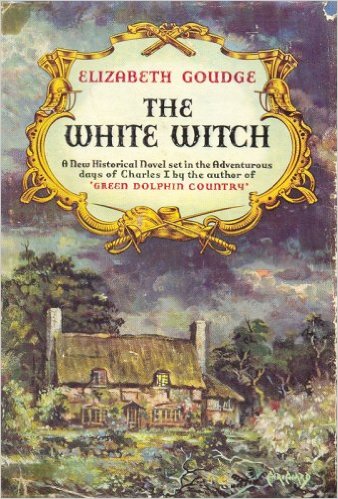
It didn’t take much for a woman to be described as a witch in less enlightened times. A reputation as a healer and an interest in herbs and remedies was usually all that was needed. Some examples are Froniga in The White Witch by Elizabeth Goudge, Frances Gorges in The King’s Witch by Tracy Borman or the title character in Corrag by Susan Fletcher. Ariana Franklin, in Mistress of the Art of Death and its sequels (set in the 12th century), tells us that her protagonist Adelia Aguilar studied at the medical school in Salerno which accepted female students, and in Margaret Skea’s 16th century novel By Sword and Storm, Maggie Munro is given an opportunity to study medicine in France, although not quite in the way she would have liked. But they are exceptions and usually, in historical fiction set in those early periods, if women had a gift for healing and wanted to use it, it was difficult for them to do so without leaving themselves open to accusations of witchcraft.

By the 19th century, things have improved, although still not enough. Bodies of Light by Sarah Moss is the story of Ally, a girl from Victorian Manchester who is among the first group of women to attend the first medical school in London to take female students. This book made me appreciate how challenging it must have been for these early female medical pioneers to enter a field dominated by men.

This post is starting to get very long and I still have a few more books I want to highlight, so I will just give them a brief mention:

Cutting for Stone by Abraham Verghese – the story of twins, Marion and Shiva, who grow up in and around a hospital in 1950s Ethiopia after the disappearance of their father, a British surgeon.

Restoration and Merivel – Robert Merivel is an aspiring physician in Restoration London, but not a very successful one, as he discovers when he is made ‘Surgeon to the King’s Spaniels’.

The Nightingale Girls by Donna Douglas – a fictional look at the lives of three trainee nurses at a teaching hospital in 1930s London.

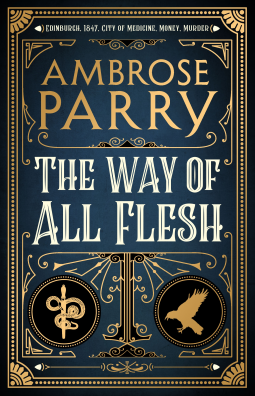
The Way of All Flesh by Ambrose Parry – the first in a new series of historical mysteries set in 19th century Edinburgh. The protagonist, Will Raven, is a student apprenticed to the famous Scottish obstetrician Dr James Simpson. I have the second book, The Art of Dying, on the TBR.

~

Have you read any of the books I’ve mentioned here? Do you have any other novels about medicine through time to recommend?

Six in Six: The 2019 Edition

We’re halfway through the year and I’m pleased to see that the Six in Six meme, hosted by Jo of The Book Jotter, is back again! I love to take part in this as I think it’s the perfect way to reflect on our reading over the first six months of the year. The idea of Six in Six is that we choose six categories (Jo has provided a list of suggestions or you can come up with new topics of your own if you prefer) and then try to fit six of the books or authors you’ve read this year into each category. It’s not as easy as it sounds and I usually find that there’s a lot of overlap as some books could fit into more than one category, but it’s always fun to do.

Here is my 2019 Six in Six, with links to reviews where possible (I’m behind with reviews and will be posting the rest of them eventually).

***

Six classic crime novels

1. The ABC Murders by Agatha Christie
2. Death of a Doll by Hilda Lawrence
3. Who Killed Dick Whittington? by E and MA Radford
4. A Knife for Harry Dodd by George Bellairs
5. The Secret of High Eldersham by Miles Burton
6. And Death Came Too by Richard Hull

***

Six books with a touch of fantasy

1. Under Heaven by Guy Gavriel Kay
2. The Binding by Bridget Collins
3. Dragon Keeper by Robin Hobb
4. The Woman in the Lake by Nicola Cornick
5. The Alchemist of Lost Souls by Mary Lawrence
6. The Night Tiger by Yangsze Choo

***

Six books that are not novels

1. The Mysterious Mr Quin by Agatha Christie (short stories)
2. Margaret Tudor by Melanie Clegg (non-fiction)
3. The Return of Mr Campion by Margery Allingham (short stories)
4. The Afterlife of King James IV by Keith John Coleman (non-fiction)
5. The Doll by Daphne du Maurier (short stories)
6. Amours de Voyage by Arthur Hugh Clough (narrative poem – I know this could be classed as a novel in verse, but I needed a sixth book!)

***

Six books set in different countries

1. The Glass Woman by Caroline Lea (Iceland)
2. Cashelmara by Susan Howatch (Ireland)
3. Gun Island by Amitav Ghosh (India and Italy)
4. Casanova and the Faceless Woman by Olivier Barde-Cabuçon (France)
5. The Island of Sea Women by Lisa See (Korea)
6. Death in Kenya by MM Kaye (Kenya)

***

Six authors read for the first time this year

1. E Phillips Oppenheim (The Great Impersonation)
2. Sarah Moss (Bodies of Light)
3. John Buchan (The Thirty-Nine Steps)
4. Michelle Paver (Wakenhyrst)
5. Alex Reeve (The House on Half Moon Street)
6. Samantha Harvey (The Western Wind)

***

Six of my favourite books so far this year

1. The Way to the Lantern by Audrey Erskine Lindop
2. How Green Was My Valley by Richard Llewellyn
3. The Devil’s Slave by Tracy Borman
4. Things in Jars by Jess Kidd
5. Sprig Muslin by Georgette Heyer
6. Over Sea, Under Stone by Susan Cooper

***

Have you read any of these books? Will you be taking part in Six in Six this year too?

Murder in the Crooked House by Soji Shimada

A remote, snow covered mansion; a group of people arriving for a Christmas house party; a seemingly impossible locked-room murder; a detective whose methods are unusual and unorthodox. These may sound like the ingredients of a classic British Golden Age mystery, but Murder in the Crooked House is actually a Japanese novel first published in 1982 which Pushkin Vertigo have now made available for the first time in an English translation by Louise Heal Kawai.

I was really looking forward to reading this book as it sounded like just my sort of thing, and it did get off to a great start. The descriptions of the Ice Floe Mansion in northern Japan are fascinating, with its sloping floors and drawbridge leading to a leaning tower (which gives the house its nickname, the Crooked House). Inside, the mansion resembles a fairground fun house with a maze of rooms, unusually positioned staircases, and a room containing a collection of Tengu masks and mechanical dolls, including a life-size Golem which is said to get up and walk around at night.

This weird and wonderful building is the home of retired businessman Kozaburo Hamamoto, who has invited his family and friends to spend the Christmas of 1983 with him. The guests include his daughter Eiko and her two suitors Togai and Sasaki, his great-nephew Yoshihiko, and a former business partner Eikichi Kikuoka, who brings several of his employees along with him. On their first night in the Crooked House, one of the guests is found dead inside a locked room, Kikuoka’s secretary is terrified by a face at her top-floor window, and Golem appears to have thrown himself into a snowdrift outside. The local police are baffled; there seems to be no explanation for any of these incidents and no obvious motive either. It is only after several more murders take place and the brilliant detective Kiyoshi Mitarai arrives on the scene that the truth is finally revealed.

Murder in the Crooked House is a very clever murder mystery. I found the culprit easy to guess – there was only one person it could have been, in my opinion – but what I didn’t know was how they carried out the murders. The solution is certainly very original and although Shimada states in a ‘Challenge to the Reader’ towards the end of the book that he has given us all the clues we need to solve it, I will be impressed if any reader has actually managed to work out the exact method used by the murderer! However, the cleverness of the novel was also one of the things I disliked about it.

The book contains a number of diagrams showing floor plans and layouts of rooms and sadly these weren’t included in the ebook I received for review, which obviously wasn’t the finished version. Although Amazon’s ‘Look Inside’ feature came to my rescue and allowed me to at least see the plan of the house, I think even if I’d been able to study all of the diagrams I would still have found the plot overly complicated. As well as a lot of importance being placed on alibis and who was in which room at what time, there’s also a lot of discussion of distances of windows from floors, positions of ventilation holes in walls and which rooms can be reached from which staircase. I do like mysteries with puzzles to solve, but I felt that this one became too technical – too concerned with the details rather than with the characters and their motivations. As a result, the characters seemed to lack depth and didn’t feel like real people to me, which wasn’t helped by the dialogue which felt a bit stilted, although that could have been due to the translation.

Most of the novel is written in the third person, so I was surprised to find that, when Kiyoshi Mitarai arrives at the Crooked House well into the second half of the book, the perspective switches to the first person (from the point of view of Kazumi Ishioka, Mitarai’s friend who has accompanied him to the house). It seemed unusual to have such a change so far into the book, but I got used to it quickly enough. Although this is the first novel I’ve read by Shimada, I’ve learned that this is one of a series of mysteries featuring the partnership of Mitarai and Ishioka, as a sort of Holmes and Watson. I would possibly try another book in the series – the first one, The Tokyo Zodiac Murders, is also now available in English and presumably some of the others will follow.

Thanks to Pushkin Vertigo for providing a copy of this book for review via NetGalley.

This is book 6/20 of my 20 Books of Summer.