Six Degrees of Separation: From Wifedom to The So Blue Marble

It’s the first Saturday of the month, which means it’s time for another Six Degrees of Separation, hosted by Kate of Books are my Favourite and Best. The idea is that Kate chooses a book to use as a starting point and then we have to link it to six other books of our choice to form a chain. A book doesn’t have to be connected to all of the others on the list – only to the one next to it in the chain.

This month we’re starting with Wifedom by Anna Funder. I haven’t read this book, but here’s what it’s about:

Looking for wonder and some reprieve from the everyday, Anna Funder slips into the pages of her hero George Orwell. As she watches him create his writing self, she tries to remember her own…

When she uncovers his forgotten wife, it’s a revelation. Eileen O’Shaughnessy’s literary brilliance shaped Orwell’s work and her practical nous saved his life. But why – and how – was she written out of the story? Using newly discovered letters from Eileen to her best friend, Funder recreates the Orwells’ marriage, through the Spanish Civil War and WWII in London. As she rolls up the screen concealing Orwell’s private life, she is led to question what it takes to be a writer – and what it is to be a wife.

~
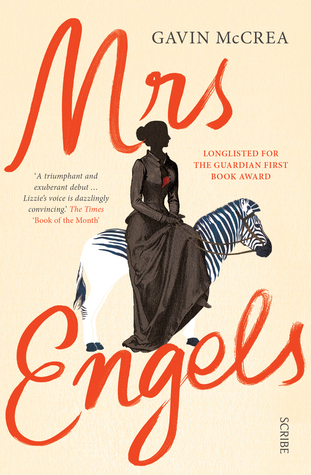
First, I’m linking to another book about the ‘forgotten’ wife of a famous person. Mrs Engels by Gavin McCrea (1) is a fictional portrayal of Lizzie Burns, the lover and eventual wife of the German philosopher Friedrich Engels. There’s not a lot of information available on the real Lizzie, but we know that she was probably illiterate, which makes it all the more important that books like this are written to give a voice to people who were unable to tell their own story. The novel describes Lizzie’s early life in 19th century Manchester where she worked at a cotton mill, before moving on to her relationships with Engels and his friend, Karl Marx.

The setting provides the link to my next book. North and South by Elizabeth Gaskell (2) is also set in a mill town in the north of England – the fictional Milton, thought to be based on Manchester. It’s the story of Margaret Hale, who moves from the south of England to the north after her father leaves his job as parson to take up a new position as a tutor in Milton. Here Margaret is exposed to new people and new ideas. This isn’t a favourite classic of mine, but I did find it interesting and have since gone on to read more of Gaskell’s books.
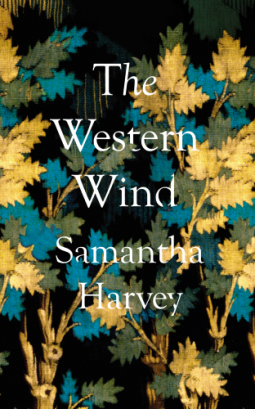
North and south are directions of the compass and so are east and west. The next book in my chain is The Western Wind by Samantha Harvey (3), a mystery set in a small English village in 1491. The novel is narrated by a priest, John Reve, who listens to the confessions of his parishioners and tries to piece together the truth about the disappearance of the wealthy Thomas Newman, who has been swept away by the river. Was it murder, suicide or a terrible accident? This is an unusual book, structured so that the story moves back in time rather than forwards, but it’s not one that I particularly liked due to feeling a lack of connection with the characters.
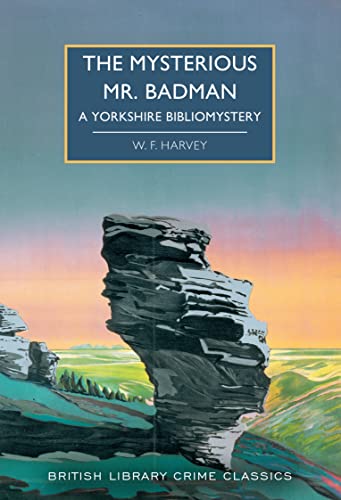
Another author who shares a surname with Samantha is W.F. Harvey, author of The Mysterious Mr Badman (4). This is a book from the excellent British Library Crime Classics series and one that I really enjoyed. Published in 1934, it’s described as a ‘bibliomystery’ and begins with Athelstan Digby helping out in his nephew’s village bookshop when three different people arrive one after the other, all asking for a copy of the same rare book. Although I found it more of a thriller than a traditional mystery, it’s very entertaining and a lot of fun to read.
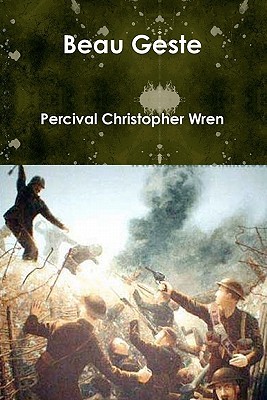
Digby is not a common name, but it also appears in Beau Geste by P.C. Wren (5). Digby Geste, his twin brother Michael (nicknamed Beau) and their younger brother John are orphans living with a rich aunt when her valuable sapphire, the ‘Blue Water’, disappears. Each of them, for various reasons, decides to confess to the theft before running away to join the French Foreign Legion. Part adventure novel set in North Africa and part whodunnit with two separate mysteries to solve, I loved this book and still need to finish the trilogy.
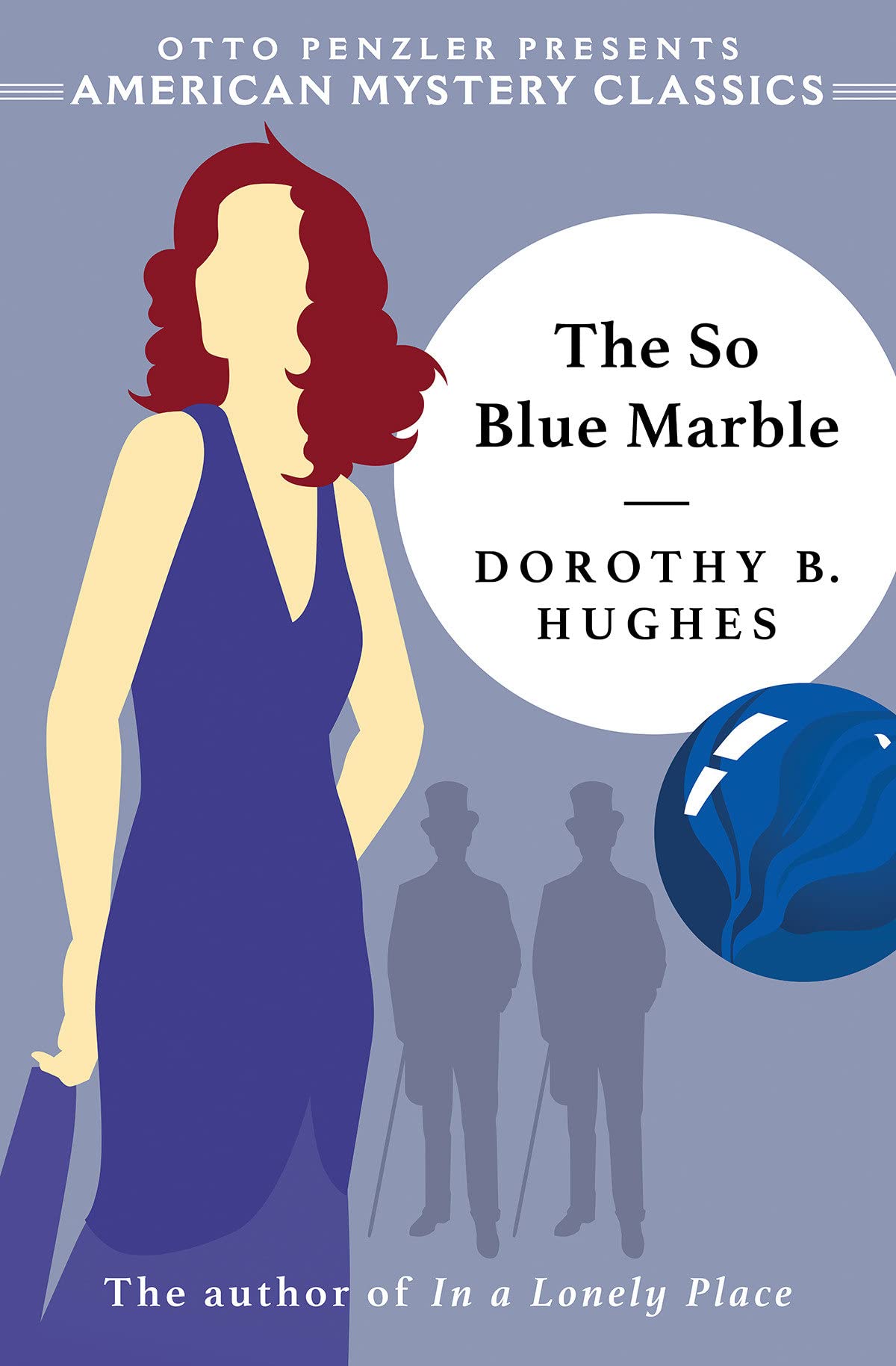
With two of the Geste brothers being twins, I started to think about other books featuring twins. There are a few I could have chosen, but I decided on a novel I read earlier this year, The So Blue Marble by Dorothy B. Hughes (6). Although this isn’t the strongest of the Hughes novels I’ve read so far, it’s still very enjoyable. The twin characters, Danny and David Montefierrow, are a sinister pair who are searching for a mysterious blue marble and will stop at nothing to find it!

~

And that’s my chain for September! My links have included: Forgotten wives, Manchester cotton mills, compass points, authors with the name Harvey, fictional Digbys and books featuring twins.

In October we’ll be starting with I Capture the Castle by Dodie Smith – finally, a book I’ve actually read!

Top Ten Tuesday: Historical novels I read pre-blog

This week’s topic for Top Ten Tuesday (hosted by That Artsy Reader Girl) is “Genre Freebie (Pick a genre and build a list around it.)”

As you all probably know by now, my favourite genre is historical fiction. For this week’s list, I decided to highlight some books I haven’t mentioned here very often because I read them before I started my blog in 2009. I’ve included a good variety of different time periods and geographical settings, so I hope there’ll be something to interest everyone.

~

1. Sarum by Edward Rutherfurd – I’ve read and enjoyed all nine of Edward Rutherfurd’s books, each of which explores the history of a specific city, region or country, usually over a period of many centuries. I’ve only reviewed his two most recent books, Paris and China, but I think his earlier ones were better, including Sarum which is set around Salisbury and Stonehenge and follows five families from the Ice Age to the present day.

2. North and South by John Jakes – The first in a trilogy in which we follow two families, the Mains from South Carolina and the Hazards from Pennsylvania, before, during and after the American Civil War. I enjoyed all three books, particularly the first two, and also loved the star-studded 1980s miniseries. I felt that the story being told from both perspectives – north and south, Union and Confederacy, slave owner and abolitionist – helped me understand the Civil War in more depth than other books I’ve read.

3. Cloud Mountain by Aimee Liu – I read this when it was first published more than twenty years ago and loved it. It’s about an American woman who marries a Chinese man in the early 20th century – a time when this was not considered acceptable – and it explores issues including racism and prejudice, war and revolution, all set during a fascinating period of Chinese history.

4. Katherine by Anya Seton – Again, I’ve reviewed a few of Anya Seton’s books on my blog, including Devil Water and Dragonwyck, but not my favourite, her 1954 novel Katherine, which tells the story of Katherine Swynford, mistress of John of Gaunt (son of Edward III). It’s much more than just a romance – I loved Seton’s vivid and memorable portrayal of medieval England.

5. The Thorn Birds by Colleen McCullough – Another classic family saga I enjoyed when I was younger, this time set on a fictional sheep station in Australia where the story of Meggie Cleary and the priest Ralph de Bricassart plays out. It’s also another one that was made into a successful TV miniseries, although in this case I think I preferred the book.

6. Into the Wilderness by Sara Donati – This is the first of a series of six novels, although I lost interest after the third one and haven’t read the rest. The first book introduces us to Elizabeth Middleton, who leaves England in 1792 to join her family in a remote New York mountain village. Donati has said the series was loosely inspired by James Fenimore Cooper’s The Last of the Mohicans.

7. The Bronze Horseman by Paullina Simons – The first in a trilogy set in Leningrad, now St Petersburg, during World War II and following the story of Tatiana Metanova and her love for the Red Army soldier Alexander Belov. The horrific descriptions of life during the Siege of Leningrad, where the people suffer from the actions of both the Nazis and their own communist government, will stay with me forever.

8. The Physician by Noah Gordon – I loved this book and its sequel, Shaman, and have been meaning to re-read both for years, although I never have. It tells the story of Rob J. Cole, a boy who grows up in 11th century England dreaming of becoming a physician and who later makes the long journey to Persia looking for an opportunity to study medicine and fulfil his dream.

9. Forever Amber by Kathleen Winsor – My edition of this book states “The original bodice-ripper is back in print”, which is quite amusing as this 1944 novel is very tame by today’s standards. It follows the adventures of Amber St Clare in Restoration England, during the plague and the Great Fire of London and although I can’t remember much of it now, I do remember being shocked by the unexpected ending!

10. Shogun by James Clavell – I haven’t read much historical fiction set in Japan, but I did read this one, about a 17th century sailor and navigator, John Blackthorne, who is shipwrecked on the coast of feudal Japan. The character is based on William Adams, the first Englishman to visit Japan. I remember finding the book interesting, but it wasn’t one I particularly enjoyed and haven’t been tempted to read again.

~

Have you read any of these? What are your favourite historical fiction novels?

Six Degrees of Separation: From Romantic Comedy to The Streets

It’s the first Saturday of the month, which means it’s time for another Six Degrees of Separation, hosted by Kate of Books are my Favourite and Best. The idea is that Kate chooses a book to use as a starting point and then we have to link it to six other books of our choice to form a chain. A book doesn’t have to be connected to all of the others on the list – only to the one next to it in the chain.

This month we’re starting with Romantic Comedy by Curtis Sittenfeld. This is not a book I’ve read, but here’s what it’s about:

With a series of heartbreaks under her belt, Sally Milz – successful script writer for a legendary late-night TV comedy show – has long abandoned the search for love.

But when her friend and fellow writer begins to date a glamorous actress, he joins the growing club of interesting but average-looking men who get romantically involved with accomplished, beautiful women.

Sally channels her annoyance into a sketch, poking fun at this ‘social rule’. The reverse never happens for a woman.

Then Sally meets Noah, a pop idol with a reputation for dating models. But this isn’t a romantic comedy – it’s real life.

Would someone like him ever date someone like her?

Skewering all our certainties about why we fall in love, ROMANTIC COMEDY is a witty and probing tale of how the heart will follow itself, no matter what anyone says. It is Curtis Sittenfeld at her most sharp, daring and compassionate best.

Romantic Comedy doesn’t sound like my sort of book, although I did enjoy one of Curtis Sittenfeld’s earlier novels, Prep. I nearly used that for my first link but remembered that I’d already used Prep in a previous Six Degrees post, so instead I’ve gone with another book with Romantic in the title: The Romantic by William Boyd (1). This is the first – and still the only – book I’ve read by William Boyd, although I’m definitely planning to read more. It tells the story of Cashel Greville Ross, following him through his life from birth to death as he befriends the Romantic Poets in Italy, searches for the source of the Nile, joins the army in Sri Lanka and uncovers family secrets in Ireland.

The Romantic was longlisted for this year’s Walter Scott Prize for Historical Fiction but didn’t make the shortlist – a big mistake, in my opinion! Another book I had read from the longlist that didn’t get shortlisted was The Second Sight of Zachary Cloudesley by Sean Lusk (2). The novel follows Zachary Cloudesley, son of an 18th century clockmaker and inventor of automata, as he travels to Constantinople in search of his missing father.

Automata is the link to my next book, The Clockwork Girl by Anna Mazzola (3). Inspired by the real life scandal of ‘The Vanishing Children of Paris’ in 1750 and the technological advances in the creation of clockwork dolls and automata at that time, this is a fascinating novel set in Paris just a few decades before the French Revolution. It has a wonderful atmosphere, a beautiful cover and was one of my favourite books that I read last year.

Another book set in Paris is It Walks by Night by John Dickson Carr (4), part of the British Library Crime Classics series. This is one of five novels Carr wrote featuring the French detective and juge d’instruction (examining magistrate), Henri Bencolin. It’s a clever locked room mystery which I did find interesting – and couldn’t solve! – but I didn’t much like Bencolin as a character. I preferred The Black Spectacles, one of his Gideon Fell mysteries which I read earlier this year.

It Walks by Night was published in 1930 and so was The Mysterious Mr Quin by Agatha Christie (5). I really enjoyed this collection of short stories featuring Mr Satterthwaite, an elderly English gentleman, and his mysterious friend, Harley Quin, who comes and goes without warning and stays just long enough to help Satterthwaite solve the mystery. Much as I love Christie’s Poirot and Miss Marple novels, it’s always interesting to venture beyond those books and see what else she wrote.

The author of the final book in my chain shares a name with Harley Quin (although he spells it with two ‘n’s). The book is The Streets by Anthony Quinn (6), in which a young newspaper reporter in 1882 visits some of London’s poorest slums to report on the living conditions. The book is fictional but based on real nineteenth century sources. I found it fascinating from a social history perspective, but the plot and characters didn’t interest me much and I struggled to finish it.

~

And that’s my chain for this month! My links have included the word ‘Romantic’, books longlisted but not shortlisted, automata, Paris, books published in 1930 and the name Quin or Quinn.

In September we’ll be starting with Wifedom by Anna Funder.

Six in Six: The 2023 Edition

We’re more than halfway through the year and Six in Six, hosted by Jo of The Book Jotter, is back again! I love taking part in this as I think it’s the perfect way to look back at our reading over the first six months of the year.

The idea of Six in Six is that we choose six categories (Jo has provided a list of suggestions or you can come up with new topics of your own if you prefer) and then fit six of the books or authors we’ve read this year into each category. It’s more difficult than it sounds, especially as I try not to use the same book in more than one category, but it’s always fun to do – and always a bit different as my reading tastes and patterns seem to change slightly each year.

Here is my 2023 Six in Six, with links to my reviews where available:

~

Six books set in a country other than my own:

1. Prize Women by Caroline Lea (Canada)
2. The Orange Girl by Jostein Gaarder (Norway)
3. Homecoming by Kate Morton (Australia)
4. Music in the Dark by Sally Magnusson (Scotland)
5. These Days by Lucy Caldwell (Ireland)
6. My Father’s House by Joseph O’Connor (Italy)

~

Six authors I’ve read for the first time this year:

1. Edgar Rice Burroughs (The Efficiency Expert)
2. Helen Scarlett (The Lodger)
3. Fiona McFarlane (The Sun Walks Down)
4. Geoffrey Household (Rogue Male)
5. Lucy Barker (The Other Side of Mrs Wood)
6. Isabelle Schuler (Lady MacBethad)

~

Six authors I had read before this year:

1. Georgette Heyer (The Spanish Bride)
2. RF Delderfield (Farewell, the Tranquil Mind)
3. Hilary Mantel (The Giant, O’Brien)
4. Thomas Hardy (A Laodicean)
5. Dorothy B. Hughes (The So Blue Marble)
6. Joan Aiken (The Embroidered Sunset)

~

Six classic mysteries:

1. The Inugami Curse by Seishi Yokomizo
2. The Black Spectacles by John Dickson Carr
3. Inquest by Henrietta Clandon
4. The Cat Saw Murder by Dolores Hitchens
5. Hickory Dickory Dock by Agatha Christie
6. Death of an Author by ECR Lorac

~

Six books with a touch of myth or magic:

1. Savage Beasts by Rani Selvarajah
2. Clytemnestra by Costanza Casati
3. Atalanta by Jennifer Saint
4. Once a Monster by Robert Dinsdale (review to follow)
5. Assassin’s Fate by Robin Hobb
6. The Summer Tree by Guy Gavriel Kay (review to follow)

~

Six books I loved and haven’t mentioned yet:

1. The Bird in the Tree by Elizabeth Goudge
2. The Square of Sevens by Laura Shepherd-Robinson
3. Random Harvest by James Hilton
4. The Scapegoat by Daphne du Maurier
5. The New Magdalen by Wilkie Collins
6. The Empty World by D.E. Stevenson

~

Have you read any of these books or authors this year? Will you be taking part in Six in Six?

Six Degrees of Separation: From Time Shelter to Beauvallet

It’s the first Saturday of the month, which means it’s time for another Six Degrees of Separation, hosted by Kate of Books are my Favourite and Best. The idea is that Kate chooses a book to use as a starting point and then we have to link it to six other books of our choice to form a chain. A book doesn’t have to be connected to all of the others on the list – only to the one next to it in the chain.

This month we’re starting with the winner of the International Booker Prize, Time Shelter by Georgi Gospodinov and translated by Angela Rodel. This is not a book I’ve read, but here’s what it’s about:

In Time Shelter, an enigmatic flâneur named Gaustine opens a ‘clinic for the past’ that offers a promising treatment for Alzheimer’s sufferers: each floor reproduces a decade in minute detail, transporting patients back in time. As Gaustine’s assistant, the unnamed narrator is tasked with collecting the flotsam and jetsam of the past, from 1960s furniture and 1940s shirt buttons to scents and even afternoon light. But as the rooms become more convincing, an increasing number of healthy people seek out the clinic as a ‘time shelter’, hoping to escape from the horrors of our present – a development that results in an unexpected conundrum when the past begins to invade the present.

Georgi Gospodinov is a Bulgarian author, so I’m using Bulgaria as my first link. Elizabeth Kostova is an American author but her husband is Bulgarian and she obviously knows the country well, using it as the setting for her third novel, The Shadow Land (1). The novel follows a young American woman who is visiting Sofia and accidentally finds herself in the possession of an urn containing the ashes of a stranger and engraved with the name Stoyan Lazarov. She then sets out on a journey across Bulgaria in search of Stoyan’s family so that she can return the ashes.

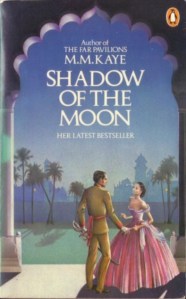
Another book with the word ‘shadow’ in the title is Shadow of the Moon by M.M. Kaye (2), first published in 1957. I loved this book, although I didn’t find it quite as strong as her later novel, The Far Pavilions. Both books are set in India, where Kaye was born and lived for several years, but this one focuses on the Sepoy Mutiny of 1857 in which our heroine, Winter de Ballesteros, becomes entangled when she travels to Lunjore to join her fiancé. Kaye is one of my favourite authors; her descriptive writing is so beautiful and she seems to have a real understanding of all the historical incidents she writes about.

Zemindar by Valerie Fitzgerald (3) is also set before and during the Sepoy Mutiny and is another book I enjoyed. It follows the story of Laura Hewitt, who comes to India as her newly married cousin’s companion and finds herself caught up in the events leading to the Siege of Lucknow. Again, I loved the descriptions of India, as well as the relationship between the central characters, Laura and Oliver Erskine (the zemindar of the title), and the authentic 19th century writing style.

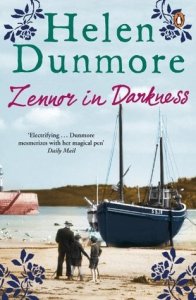
There are not many books whose title starts with a ‘Z’, but Zennor in Darkness by Helen Dunmore (4) is one of them! Zennor is the name of a village on the coast of Cornwall where the author DH Lawrence lived for a while during the First World War and the novel is part wartime love story and part reimagining of Lawrence’s time in Zennor. However, I felt that these two separate elements didn’t blend together very well and although I did enjoy the portrayal of life in a small village during the war, this is not one of my favourite Helen Dunmore books.

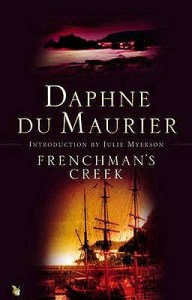
An author who will forever be associated with Cornwall is Daphne du Maurier. She spent most of her adult life there and it provided the setting for many of her novels, including Rebecca, The House on the Strand, and the one I’m using as my next link – Frenchman’s Creek (5). Du Maurier’s novels usually have a very strong sense of place and this one is no exception. I particularly loved the scene where our heroine, Dona St Columb, walks through the woods near her home and discovers a pirate ship hiding in a creek.

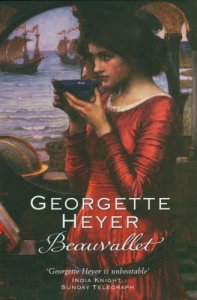
I can think of several other books featuring pirates, but the one I’m going to link to here to end my chain is Beauvallet by Georgette Heyer (6). This 1929 novel is set in Elizabethan England and Spain, so has a different feel from Heyer’s more famous Regency and Georgian novels, but I enjoyed it just as much. The pirate, Sir Nicholas Beauvallet, is a wonderful character and the plot is great fun – perfect escapism!

~

And that’s my chain for July. My links have included Bulgaria, the word ‘shadow’, the Sepoy Mutiny, book titles beginning with Z, Cornwall and pirates

In August we’ll be starting with Romantic Comedy by Curtis Sittenfeld.

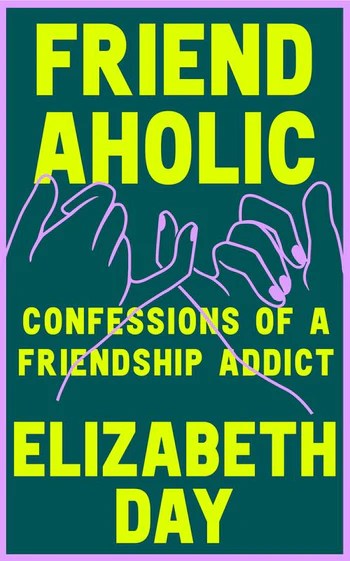
Six Degrees of Separation: From Friendaholic to To the Lighthouse

It’s the first Saturday of the month, which means it’s time for another Six Degrees of Separation, hosted by Kate of Books are my Favourite and Best. The idea is that Kate chooses a book to use as a starting point and then we have to link it to six other books of our choice to form a chain. A book doesn’t have to be connected to all of the others on the list – only to the one next to it in the chain.

This month we’re starting with Friendaholic by Elizabeth Day. It’s not a book that I’ve read, but here’s what it’s about:

As a society, there is a tendency to elevate romantic love. But what about friendships? Aren’t they just as – if not more – important? So why is it hard to find the right words to express what these uniquely complex bonds mean to us? In Friendaholic: Confessions of a Friendship Addict, Elizabeth Day embarks on a journey to answer these questions.

I’m starting my chain by linking to a novel about complex friendships: China Dolls by Lisa See (1). It’s set in the 1930s and 40s and follows the stories of three young women – two Chinese and one Japanese – who meet while auditioning as dancers at a San Francisco nightclub. The three quickly become friends, until they are torn apart by secrets, betrayals and the events of World War II. I remember being both fascinated and confused by the friendship angle, as all three women repeatedly talk about how close they are while behaving more as if they hate each other!

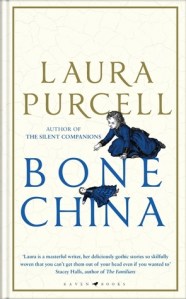
Another book with the word ‘China’ in the title (but a different kind of china) is Bone China by Laura Purcell (2), a Gothic novel set in the 19th century on the coast of Cornwall. Our narrator, Hester Why, has just arrived from London to take up a new position as nurse to Louise Pinecroft, a woman who barely speaks or moves and sits all day in a room surrounded by china cups and plates. I found it an atmospheric book, let down slightly by a weak ending.

A subplot in Bone China involves a doctor carrying out some experiments to try to find a cure for consumption (tuberculosis). In The Lady of the Camellias by Alexandre Dumas fils (3) – the book that inspired Verdi’s opera La traviata – we know from the start that Marguerite Gautier is going to die of consumption. The novel tells the story of her time as a Parisian courtesan who uses bouquets of red and white camellias to send messages to her lovers. I read it in an English translation by Liesl Schillinger.

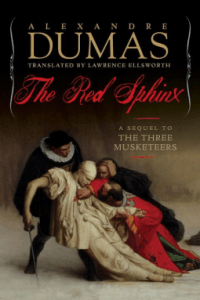
I did enjoy The Lady of the Camellias, but I prefer the work of Dumas’ father, the more famous Alexandre Dumas père. The Count of Monte Cristo, The Three Musketeers series and The Black Tulip are my favourites, but The Red Sphinx (4) is the one I’m including in my chain because it’s much less well known and deserves some attention! It’s a Musketeers sequel, although d’Artagnan and the other Musketeers don’t actually appear in it at all. I described it in my review as a story of ‘dashing young heroes and beautiful heroines; duels, battles and sieges; spies and smugglers; secret messages, clever disguises, letters written in code – and political and romantic intrigue in abundance.’

My next link is to another book with a colour in the title – not red this time, but green. It’s The Land of Green Ginger by Winifred Holtby (5), the story of a missionary’s daughter, Joanna Burton, who is born in South Africa but raised by her aunts in a small rural community in England. I prefer Holtby’s other books, but this one does have a lot of interesting elements, looking at the aftermath of the First World War, the contrast between post-war life in Britain and other parts of Europe, and attitudes towards immigrants.

The Land of Green Ginger was published in 1927. Another book also published in the same year was To the Lighthouse by Virginia Woolf (6). Although it’s one of Woolf’s best known books, it’s actually my least favourite of the four I’ve read by her so far, mainly because I’m not a fan of the stream of consciousness writing style. I can understand why other people love it, but it wasn’t for me.

~

And that’s my chain for June. My links have included friendships, the word China, tuberculosis, father and son authors, colours in titles and books published in 1927.

In July we’ll be starting with the winner of the International Booker Prize, Time Shelter by Georgi Gospodinov and translated by Angela Rodel.

Six Degrees of Separation: From Hydra to Cleopatra’s Daughter

It’s the first Saturday of the month, which means it’s time for another Six Degrees of Separation, hosted by Kate of Books are my Favourite and Best. The idea is that Kate chooses a book to use as a starting point and then we have to link it to six other books of our choice to form a chain. A book doesn’t have to be connected to all of the others on the list – only to the one next to it in the chain.

This month we’re starting with Hydra by Adriane Howell. Not a book I’ve read, but here’s what it’s about:

Anja is a young, ambitious antiquarian, passionate for the clean and balanced lines of mid-century furniture. She is intent on classifying objects based on emotional response and when her career goes awry, Anja finds herself adrift. Like a close friend, she confesses her intimacies and rage to us with candour, tenderness, and humour.
Cast out from the world of antiques, she stumbles upon a beachside cottage that the neighbouring naval base is offering for a 100-year lease. The property is derelict, isolated, and surrounded by scrub. Despite of, or because of, its wildness and solitude, Anja uses the last of the inheritance from her mother to lease the property. Yet a presence – human, ghost, other – seemingly inhabits the grounds.

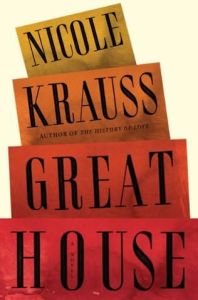
I’m using the reference to furniture and antiques as my first link. Great House by Nicole Krauss (1) features four separate but interconnected stories, linked by an antique writing desk that once belonged to a Chilean poet. Although the desk touches the lives of all of the characters in some way, it barely appears in some of the stories and you need to read all four before you can put the pieces of the puzzle together and see all of the connections.

I’ve read a lot of other books with the word ‘house’ in the title, but as Daphne du Maurier Reading Week is starting on Monday I’ve chosen The House on the Strand (2). This is a wonderful time travel novel moving between the 1960s and the 14th century and is one of my favourites by du Maurier.

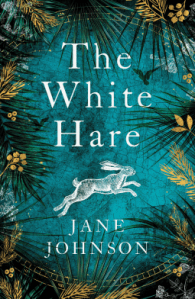
Like many of du Maurier’s novels, The House on the Strand is set in Cornwall, where she lived and worked for so many years. The White Hare by Jane Johnson (3) is also set in Cornwall, in a fictional valley which is beautifully and vividly described. Johnson works the legend of the white hare into the novel – a legend which really is a part of Cornish forklore.

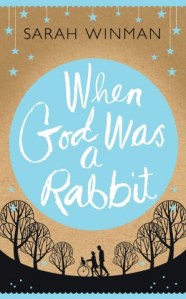
I’m linking from hares to rabbits now – not the same animal, I know, but I think they’re close enough! When God Was a Rabbit by Sarah Winman (4) is the story of Elly Portman and her family across four decades from the 1960s to the 1990s (God is the name of the pet rabbit she has as a child).

Another book with a title beginning with the word ‘when’ is When Women Ruled the World by Kara Cooney (5). This is a non-fiction book which explores the lives of six female rulers from Ancient Egypt – Merneith, Neferusobek, Hatshepsut, Nefertiti, Tawosret and Cleopatra. I found it interesting because I knew nothing at all about some of these women, but I also felt that Cooney spent too much time drawing parallels with modern day world leaders, which seemed to be the main focus of the book.

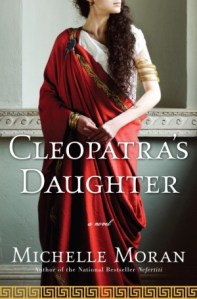
I’m going to finish my chain with Cleopatra’s Daughter by Michelle Moran (6), a novel about Kleopatra Selene, the daughter of Cleopatra and Marc Antony, who joins the household of Octavian’s sister in Rome. I read this book twelve years ago and although I thought it lacked depth, I learned a lot from it as I’d previously read very little about Ancient Rome (something I’ve tried to rectify since then).

~

And that’s my chain for May! My links have included: furniture, the word ‘house’, Cornwall, rabbit, titles beginning with ‘when’ and Cleopatra.

In June we’ll be starting with Friendaholic by Elizabeth Day.