 Welcome to my monthly post on all things historical fiction!
The history of medicine is something I’ve always found fascinating and clearly there are many historical fiction authors who find it fascinating too, given the number of historical novels which feature doctors, nurses and healers from times gone by, doing their best for their patients despite the limited equipment, medicines and knowledge available to them. I thought I would mention some of them here, and then, if you can think of any others, I would love to hear your recommendations.
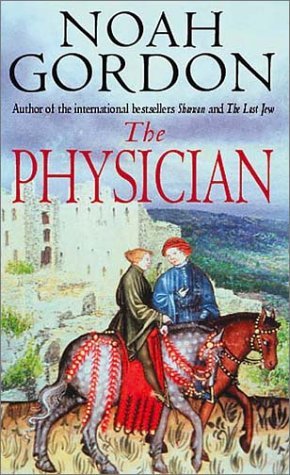 The first books that come to mind are three novels by Noah Gordon which I read before blogging and loved (or two of them, anyway – the third was slightly weaker). The Physician is set in the 11th century and follows the story of Rob Cole, a Christian boy from England who disguises himself as a Jew so that he can travel to Persia and study medicine with the great Ibn Sina. In the second book, Shaman, which is set in 19th century America, we meet one of Cole’s descendants, another Rob J. Cole and his son, a deaf boy known as Shaman who is determined not to let his deafness prevent him from carrying on the family tradition and becoming a doctor. The final book in the trilogy, Matters of Choice, has a contemporary setting and a female protagonist (Roberta J. Cole), but I remember feeling disappointed by it. The first two books are on my list for a re-read so I can see what I think of them now.
Thinking about books which aren’t specifically about medicine but have characters who are doctors, there’s Patrick O’Brian’s Aubrey and Maturin series. Stephen Maturin, one of the two main characters, is a physician and ship’s surgeon during the time of the Napoleonic Wars. One of the things I love about O’Brian’s portrayal of Stephen is the way he only allows him the knowledge that would have been available to him in that period and avoids any irritating anachronisms. There’s also Diana Gabaldon’s Outlander series. The books are narrated by Claire, a 1940s nurse who travels back in time to the 18th century, which provides an interesting perspective as Claire’s more advanced medical knowledge and skills mean that she is able to save people who would otherwise have died – but at the same time arouse suspicions that she is a witch.
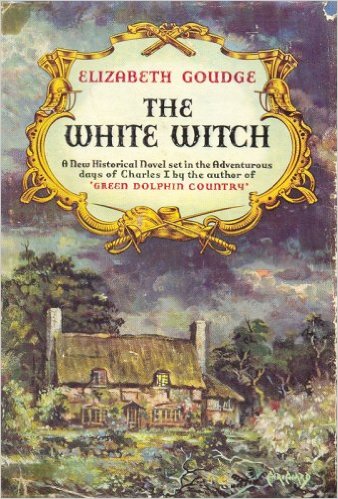 It didn’t take much for a woman to be described as a witch in less enlightened times. A reputation as a healer and an interest in herbs and remedies was usually all that was needed. Some examples are Froniga in The White Witch by Elizabeth Goudge, Frances Gorges in The King’s Witch by Tracy Borman or the title character in Corrag by Susan Fletcher. Ariana Franklin, in Mistress of the Art of Death and its sequels (set in the 12th century), tells us that her protagonist Adelia Aguilar studied at the medical school in Salerno which accepted female students, and in Margaret Skea’s 16th century novel By Sword and Storm, Maggie Munro is given an opportunity to study medicine in France, although not quite in the way she would have liked. But they are exceptions and usually, in historical fiction set in those early periods, if women had a gift for healing and wanted to use it, it was difficult for them to do so without leaving themselves open to accusations of witchcraft.
By the 19th century, things have improved, although still not enough. Bodies of Light by Sarah Moss is the story of Ally, a girl from Victorian Manchester who is among the first group of women to attend the first medical school in London to take female students. This book made me appreciate how challenging it must have been for these early female medical pioneers to enter a field dominated by men.
This post is starting to get very long and I still have a few more books I want to highlight, so I will just give them a brief mention:
 Cutting for Stone by Abraham Verghese – the story of twins, Marion and Shiva, who grow up in and around a hospital in 1950s Ethiopia after the disappearance of their father, a British surgeon.
Restoration and Merivel – Robert Merivel is an aspiring physician in Restoration London, but not a very successful one, as he discovers when he is made ‘Surgeon to the King’s Spaniels’.
The Nightingale Girls by Donna Douglas – a fictional look at the lives of three trainee nurses at a teaching hospital in 1930s London.
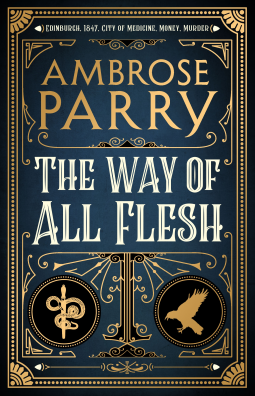
The Way of All Flesh by Ambrose Parry – the first in a new series of historical mysteries set in 19th century Edinburgh. The protagonist, Will Raven, is a student apprenticed to the famous Scottish obstetrician Dr James Simpson. I have the second book, The Art of Dying, on the TBR.
~
Have you read any of the books I’ve mentioned here? Do you have any other novels about medicine through time to recommend?






 She Reads Novels