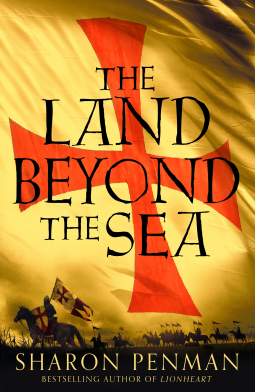
The Land Beyond the Sea by Sharon Penman

The first book I have finished in 2021 is actually one that I started last summer, but as with many of the books I tried to read last year I found that I wasn’t in the right frame of mind for anything long and complex. And at almost 700 pages, this novel is certainly long – and with a plot dealing with the history and politics of Outremer, or the Kingdom of Jerusalem, it is certainly complex! As I’m finding it a lot easier to concentrate on reading now, I picked the book up again and have enjoyed immersing myself in it over the last week or two.

Jerusalem was captured by the Crusaders in 1099, at the end of the First Crusade, and the kingdom they established there became known as Outremer or ‘the land beyond the sea’. The Crusaders who stayed in Outremer and made it their home were mainly of French origin and Penman refers to them (and their descendants) as Franks or Poulains. The novel covers the period from 1172 to 1187, a period when the kingdom is becoming divided by disputes over the succession to the throne and when the Muslim Arabs (referred to as Saracens in the book), led by their sultan Saladin, are taking advantage of this to try to reclaim their lands.

With Outremer under threat from Saladin’s armies, strong leadership is more important than ever, but the young king of Jerusalem, Baldwin IV, has been forced to confront an unwelcome truth: he is suffering from leprosy and can expect an early and unpleasant end to his life. As rival Poulain lords begin plotting and scheming to become the influence behind the next king or queen, the Saracens advance further into Outremer, with their eye on Jerusalem itself…

The Land Beyond the Sea is a fascinating novel. I have read a lot about Europe in the medieval period, but not so much about other parts of the world. Apart from Elizabeth Chadwick’s Templar Silks, I can’t really think of anything else I’ve read that focuses entirely on the Holy Land and its people. As my knowledge of the subject was so limited, I didn’t always know how or when a character would die, or who they would marry, or what the outcome of a battle would be, which made a nice change from reading about the Tudors or the Wars of the Roses, where I usually have a good idea of what is going to happen next! It also meant that it wasn’t a particularly easy read; the number of characters introduced in the first half of the book was overwhelming, especially as so many of them were used as viewpoint characters, which made it difficult to really settle into the story. By the middle of the novel, though, I felt that I was getting to know some of them much better and they were starting to feel like real people rather than just names on the page and from this point on I really enjoyed the rest of the book.

Most of the novel is written from the perspective of the Franks, with a focus on three of them in particular: Baldwin, the ‘Leper King’, who is depicted as a courageous and intelligent young man determined to take care of his kingdom until his illness makes it impossible; William, Archbishop of Tyre, tutor to Baldwin, whose chronicle History of Deeds Done Beyond the Sea is one of our most important sources of information on the Kingdom of Jerusalem; and Balian d’Ibelin, one of the leading Poulain noblemen who, due to the respect he commands amongst the other lords and his marriage to the king’s stepmother Maria Comnena, often finds himself drawn into the kingdom’s military and political affairs. I’ve noticed that a few other readers have said they found Balian too good to be true, or even anachronistic, but I disagree – there are plenty of other characters in the book who are selfish, weak or untrustworthy, so why shouldn’t there also be one who is decent and honourable? Balian was the only character I fully connected with emotionally; I sympathised with him as he struggled with some very difficult decisions and shared his frustration at the behaviour of some of the other Franks whose inability to put the welfare of the kingdom before their own interests led Jerusalem towards disaster.

We do occasionally see things from the Saracen point of view, particularly when Balian crosses paths with Saladin and his brother al-Adil, and I think Penman does give a balanced portrayal of both sides in the conflict. Although for most of the book the Saracens are the ‘enemy’, whenever the perspective switches to their side we see that Saladin and al-Adil are more admirable than many of the Franks, are prepared to be reasonable in negotiations and to show compassion where necessary. My only complaint is that I would have liked to have spent more time with them instead of just a few pages here and there.

As with Sharon Penman’s other books, this one has clearly been very well researched and her afterword and author’s note are almost as interesting as the story itself. Apart from maybe two or three words and phrases out of a 700 page book, I didn’t have any problems with inappropriately modern language (and I’m usually the first to complain about that sort of thing). However, I didn’t love this one as much as some of her others such as The Sunne in Splendour or Falls the Shadow, which I think is down to finding the writing slightly dry in places and the lack of emotional impact until nearer the end. Still, I really enjoyed The Land Beyond the Sea and am determined to find time soon to read the final book in Penman’s Welsh Princes trilogy, The Reckoning, which has been waiting on my shelf for years!
Book 1/50 read for the Historical Fiction Reading Challenge.

Thanks to Pan Macmillan for providing a copy of this book for review via NetGalley.
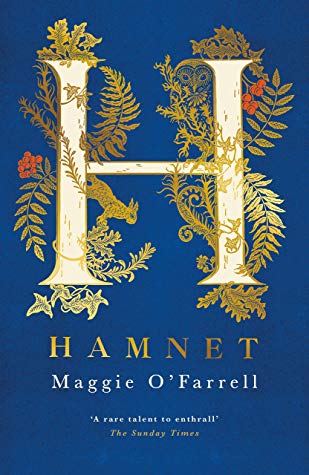
Six Degrees of Separation: From Hamnet to Macbeth

It’s the first Saturday of the month (and of the new year) which means it’s time for another Six Degrees of Separation, hosted by Kate of Books are my Favourite and Best. The idea is that Kate chooses a book to use as a starting point and then we have to link it to six other books of our choice to form a chain. A book doesn’t have to be connected to all of the others on the list – only to the one next to it in the chain.

This month we are beginning with Hamnet by Maggie O’Farrell. I read this book last year and although I thought the writing was beautiful, I didn’t love it as much as most other people seem to have done. It’s a great book to start this month’s chain with, though, because there are so many possible options for the first link!

Drawing on Maggie O’Farrell’s long-term fascination with the little-known story behind Shakespeare’s most enigmatic play, Hamnet is a luminous portrait of a marriage, at its heart the loss of a beloved child.

Warwickshire in the 1580s. Agnes is a woman as feared as she is sought after for her unusual gifts. She settles with her husband in Henley street, Stratford, and has three children: a daughter, Susanna, and then twins, Hamnet and Judith. The boy, Hamnet, dies in 1596, aged eleven. Four years or so later, the husband writes a play called Hamlet.

Award-winning author Maggie O’Farrell’s new novel breathes full-blooded life into the story of a loss usually consigned to literary footnotes, and provides an unforgettable vindication of Agnes, a woman intriguingly absent from history.

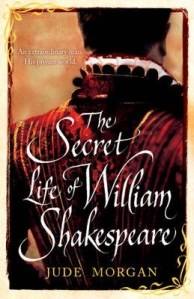
Shakespeare is not named in Hamnet; he is always referred to as ‘the husband’ or ‘the father’, which puts the focus on Agnes and their children. The Secret Life of William Shakespeare by Jude Morgan (1) does use Shakespeare’s name, as well as the more commonly used Anne Hathaway in place of Agnes, but it also focuses on Shakespeare as a husband and father and is written largely from his wife’s perspective.

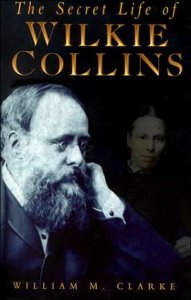
Another book I’ve read with a title beginning ‘The Secret Life of’ is The Secret Life of Wilkie Collins (2), a biography of one of my favourite Victorian authors. The writer of the biography, William M. Clarke, was married to Collins’ great-granddaughter, which gave him access to personal information about Collins’ private life, family relationships and romantic entanglements, and these things form the basis of the book. However, I found the writing style quite dry and I would also have preferred more discussion and analysis of Collins’ work as well as his life.

Next, I’m linking to a book by Wilkie Collins himself: The Frozen Deep (3), not one of his better known books but still one that I enjoyed reading. It’s a short one – a novella, really – but still an entertaining and compelling story, inspired by reports of Sir John Franklin’s famously doomed 1845 voyage to the Arctic in search of the Northwest Passage during which the ships became icebound and the members of the expedition disappeared.

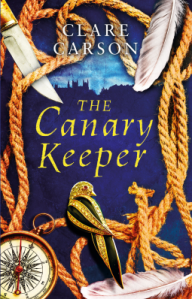
Clare Carson’s historical novel The Canary Keeper (4) is set just a few years after the Franklin Expedition. The novel follows Birdie Quinn, a young woman who finds herself a suspect in a murder case, as she travels to the Orkney Islands to try to identify the real killer and clear her name. As she investigates, she discovers some fascinating links between the murder and the expedition.

I can only think of one other novel I’ve read set in Orkney and that is King Hereafter by Dorothy Dunnett (5), a very different kind of story from The Canary Keeper and taking place many centuries earlier! This beautifully written and thoroughly researched novel is based around the theory that Macbeth, the historical King of Alba, and Thorfinn, Earl of Orkney, were the same person.

This, of course, leads me to Macbeth by William Shakespeare (6) and so brings the chain full circle! It’s not often that I manage to do that, so I’m pleased to have achieved it with my first chain of the year.

~

And that’s this month’s Six Degrees of Separation. My links included Shakespeare, secret lives, Wilkie Collins, the Franklin Expedition, Orkney and Thorfinn/Macbeth.

In February we will be starting with Redhead By the Side of the Road by Anne Tyler.

My Commonplace Book: December 2020

For the final time this year…

A selection of words and pictures to represent December’s reading:

commonplace book
noun
a book into which notable extracts from other works are copied for personal use.

~

‘We live on a river and it has a life of its own,’ Hermann said. ‘Like all waterways, it’ll eventually bring new people to us and also take people away. We don’t exist in a locked box and nor should we try to.’

The Running Wolf by Helen Steadman (2020)

~

Humans could never accept the world as it was and live in it. They were always breaking it and living amongst the shattered pieces.

Blood of Dragons by Robin Hobb (2013)

~

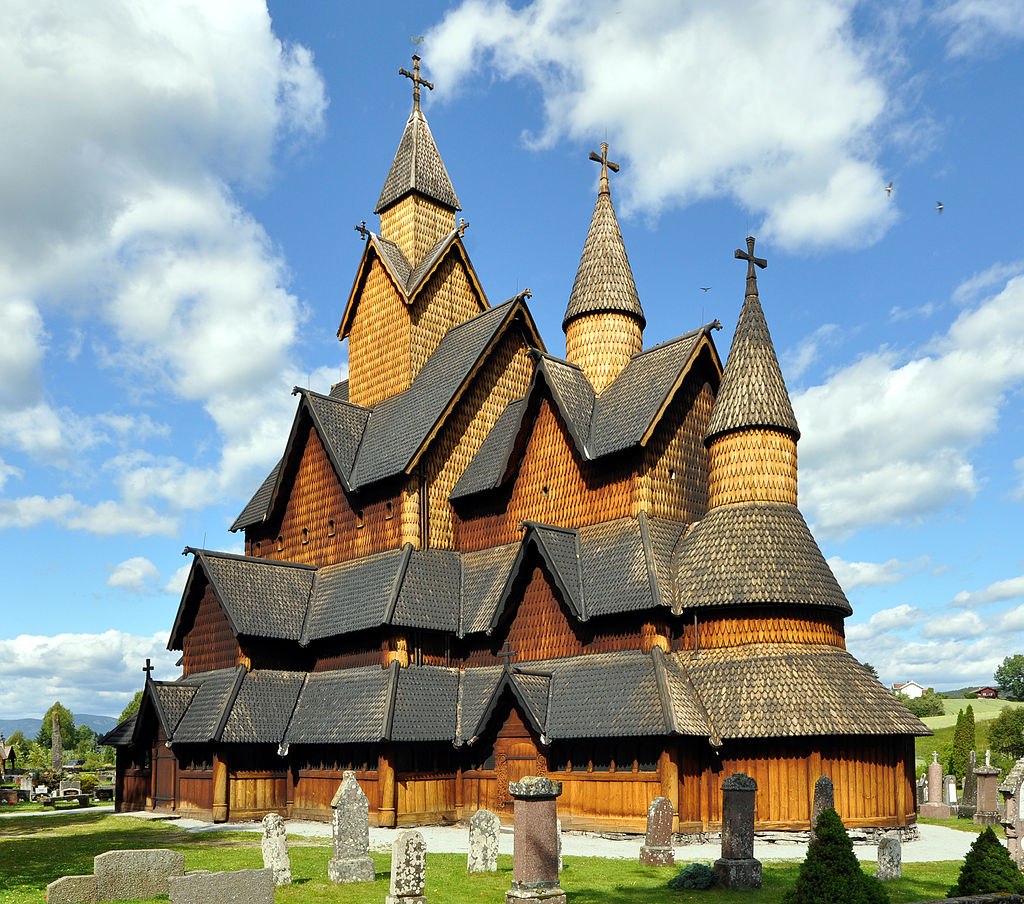
Norwegian stave church

Rumours are the seeds of legends, light enough to spread on the wind, and quick to grow. By the time a truth has put down its root, rumours will have blossomed and become their own truths, because even the wildest fantasy has been told by someone, and this – the fact of something being told by someone – gives it a veracity, even if what is told is more than a little unlikely.

The Bell in the Lake by Lars Mytting (2018)

~

She knew there were good, kind Germans like Wolf, who’d never wanted the war, who emphatically never wanted Hitler. Many Italians hadn’t wanted Mussolini either and so many families on both sides only wanted to get on with living their lives. But war was making monsters of them all.

The Tuscan Contessa by Dinah Jefferies (2020)

~

“A lie doesn’t reproduce external facts faithfully – it is a product of the liar’s own mind, and therefore a clue to the quality and content of his mind. The liar, like any other storyteller, must draw upon his remembered experiences to build his fantasy, and his choice of detail is guided by his tastes and emotions. So if you want to learn something about a man’s emotions and memories listen to his lies.”

The Man in the Moonlight by Helen McCloy (1940)

~

Favourite books read in December:

The Bell in the Lake and The Running Wolf

Countries visited in my December reading:

Norway, England, Italy, USA, Germany

Authors read for the first time in December:

Lars Mytting

~

Have you read any of these? What did you read in December?

Happy New Year!

Read Christie 2021 and Historical Fiction Reading Challenge 2021

I don’t take part in many year-long reading challenges, but there were two that I decided to participate in at the beginning of 2020 and that I will be joining in with again in 2021.

First there was Read Christie 2020, which was hosted by agathachristie.com and involved reading twelve Agatha Christie books, one per month, from twelve different categories. I got off to a great start with this and managed to read the following:

JANUARY – A book that changed Christie’s life…
Murder on the Orient Express

FEBRUARY – A story Christie loved…
A Murder is Announced

MARCH – A Christie story adapted for stage…
The Hollow

APRIL – A story Christie disguised…
Sleeping Murder

After drifting away from this challenge in April, I found it difficult to get back into the routine and didn’t read any more of the monthly books. I’ll be trying again in 2020!

You don’t need to officially sign up for this (the monthly book choice is announced on the website and on Twitter at the beginning of every month), but to get a copy of the postcard showing the categories for 2021, you will need to subscribe to the Agatha Christie newsletter.

~

One challenge that I participate in every year is the Historical Fiction Reading Challenge, hosted for the last few years by Amy at Passages to the Past, but moving back to one of its former hosts, Marg at The Intrepid Reader, for 2021. Before I post the details of the 2021 challenge, I want to look back at what I achieved in 2020.

I had signed up at the ‘Prehistoric’ level, which meant reading 50+ historical fiction novels during the year. Usually I don’t have a problem completing this, but this year I’ve fallen three short at 47. Here’s what I read:

1. Dreamland by Nancy Bilyeau
2. A Long Petal of the Sea by Isabel Allende
3. The Foundling by Stacey Halls
4. The Year Without Summer by Guinevere Glasfurd
5. The Almanack by Martine Bailey
6. Blood Queen by Joanna Courtney
7. The Mercies by Kiran Millwood Hargrave
8. The Great Matter Monologues by Thomas Crockett
9. Becoming Belle by Nuala O’Connor
10. Requiem for a Knave by Laura Carlin
11. A Thousand Moons by Sebastian Barry
12. In a Dark Wood Wandering by Hella S Haasse
13. The Animals at Lockwood Manor by Jane Healey
14. Lady of the Highway by Deborah Swift
15. The Missing Sister by Dinah Jefferies
16. Killing Beauties by Pete Langman
17. The Lost Boys of London by Mary Lawrence
18. The Familiars by Stacey Halls
19. The Ninth Child by Sally Magnusson
20. The Irish Princess by Elizabeth Chadwick
21. Tsarina by Ellen Alpsten
22. Mrs Whistler by Matthew Plampin
23. The Silken Rose by Carol McGrath
24. The Last Protector by Andrew Taylor
25. Hamnet by Maggie O’Farrell
26. A Vision of Light by Judith Merkle Riley
27. When We Fall by Carolyn Kirby
28. The Silver Collar by Antonia Hodgson
29. Katheryn Howard, the Tainted Queen by Alison Weir
30. The Honey and the Sting by EC Fremantle
31. The Surgeon’s Mate by Patrick O’Brian
32. The Intoxicating Mr Lavelle by Neil Blackmore
33. The Forgotten Sister by Nicola Cornick
34. V2 by Robert Harris
35. The Minion by Rafael Sabatini
36. The Lady of the Ravens by Joanna Hickson
37. Royal Flush by Margaret Irwin
38. The Black Arrow by Robert Louis Stevenson
39. The Devil and the Dark Water by Stuart Turton
40. The Tenth Gift by Jane Johnson
41. Still She Wished for Company by Margaret Irwin
42. The Butcher of Berner Street by Alex Reeve
43. Shadowplay by Joseph O’Connor
44. The Bell in the Lake by Lars Mytting
45. The Tuscan Contessa by Dinah Jefferies
46. The Woman in the Painting by Kerry Postle
47. The Running Wolf by Helen Steadman

~

You can find full details on how to take part in the 2021 challenge at Marg’s blog, but here are the most important things to know:

Any sub-genre of historical fiction is accepted (Historical Romance, Historical Mystery, Historical Fantasy, Young Adult, History/Non-Fiction, etc.)

During the following 12 months you can choose one of the different reading levels:

20th Century Reader – 2 books
Victorian Reader – 5 books
Renaissance Reader – 10 books
Medieval – 15 books
Ancient History – 25 books
Prehistoric – 50+ books

I will be aiming for the Prehistoric level again in 2021!

~

Are you taking part in either of these – or any other 2021 reading challenges?

Top Ten Tuesday: My favourite books of 2020

This week’s Top Ten Tuesday (hosted by That Artsy Reader Girl) asks us to list our top ten favourite books of 2020. I know there are still a few days of 2020 left, but I’m confident that I’m not going to finish anything before the end of the year that would have made it onto my list, so I think it’s safe to post it now!

I have found it difficult to concentrate on reading at times this year (I’m sure I don’t need to tell you why) and I haven’t read as many books as I normally would – the fewest since 2010, in fact. I also feel that, although I’ve read some very good books this year, there aren’t many that really stand out from all the others and I struggled to pick out ten favourites. Instead of ten, then, I am only listing eight – and here they are:

~

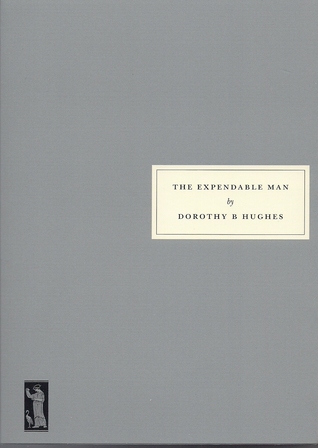
1. The Expendable Man by Dorothy B Hughes (1963)

From my review: “If you think you might want to read this book, it’s best that you know as little as possible before you begin. And I do highly recommend reading it! I was completely gripped from beginning to end…I couldn’t bear to put the book down until I knew what was going to happen to Hugh.”

2. A Murder is Announced by Agatha Christie (1950)

From my review: “Of all the Christie novels I’ve read, this has one of the best openings: first an introduction to each character in turn as we jump from house to house as newspapers are opened and the announcement is read; then the murder scene itself – a wonderful set piece with all of the suspects together in one place. We are given many of the clues we need in that scene and the rest in the chapters that follow, so that the reader has at least a chance of solving the mystery before the truth is revealed.”

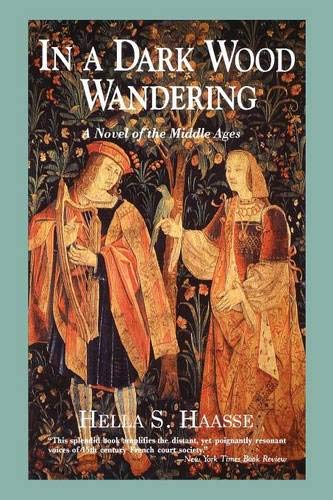
3. In a Dark Wood Wandering by Hella S Haasse (1949)

From my review: “Both Hella S Haasse’s recreation of early 15th century France and her portrayal of the key historical figures of the period feel completely real and believable…I loved the imagery Haasse uses in her writing; her descriptions of poppies glowing in green fields, sunlight sparkling on clear water and reflections of clouds in the river unfold like medieval tapestries.”

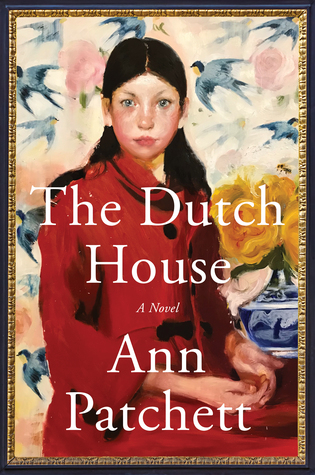
4. The Dutch House by Ann Patchett (2019)

From my review: “You could describe this as a book about a house, but I think of it more as a book about people and the connections between them – in particular, the relationship between a brother and a sister…the bond between them is deep and unbreakable and although there are times when it seems to restrict them from doing things they really want to do and times when it gets in the way of their other relationships, I still found it very moving.”

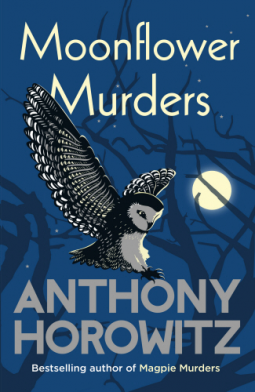
5. Moonflower Murders by Anthony Horowitz (2020)

From my review: “I didn’t love this book quite as much as Magpie Murders, probably because I already knew what to expect so it didn’t feel as original, but it was still hugely entertaining and, like the previous novel, packed with word games and other little puzzles cleverly woven into the text. And of course, as an Agatha Christie fan I adore the Atticus Pünd stories in both books, which are such perfect homages to Christie herself. ”

6. Greenwitch by Susan Cooper (1974)

From my review: “Like the previous books in the series, this is an atmospheric and eerie story, steeped in magic and ancient folklore…I found this book as compelling as the first two and read most of it in one day; as a book aimed at younger readers, it’s quite short and the plot moves along at a fast pace, but as an adult there’s still enough depth and complexity to the story and characters to hold my attention.”

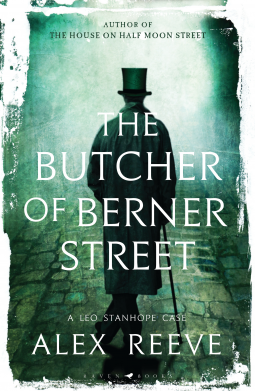
7. The Butcher of Berner Street by Alex Reeve (2020)

From my review: “This is one of several new historical mystery series I have been enjoying over the last few years…The plot is well constructed and although I did guess who the murderer was, there were several possible suspects and enough twists and turns to give me a few doubts. More than the plot, though, I loved the setting, the atmosphere and the insights into various aspects of Victorian life: the class differences and the fate of those living in poverty, the early days of the women’s suffrage movement and attitudes towards the Catholic church.”

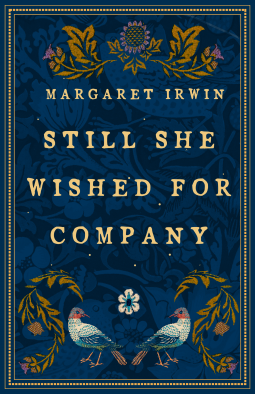
8. Still She Wished for Company by Margaret Irwin (1924)

From my review: “The book is beautifully written, with the same elegant prose and powerful descriptive writing I’ve loved in the other Margaret Irwin novels I’ve read…The eighteenth century storyline on its own could have been the basis for a compelling novel, but the addition of the ghost story/time travel elements make it something special, particularly as they are handled so well that they feel almost believable. It’s a lovely, magical read and just the sort of thing I was in the mood for at the moment!”

~

Have you read any of these?

What are your favourite books of 2020?

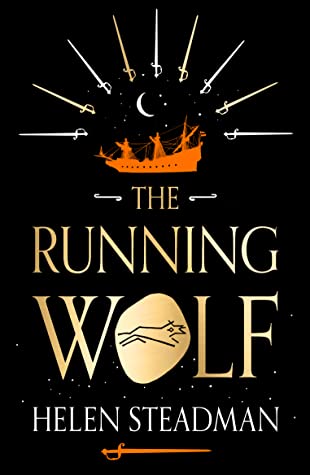
The Running Wolf by Helen Steadman

I enjoyed Helen Steadman’s Widdershins, a novel about the Newcastle Witch Trials of 1650, but her new book The Running Wolf sounded even more intriguing as it’s set partly in Shotley Bridge, which is just a few miles away from where I live. The novel begins, however, in Solingen, Germany in 1687, where master swordmaker Hermann Mohll is about to make a life-changing decision. Along with several other Solingen swordmakers, Hermann is planning to leave Germany and settle with his family in the North East of England in search of more work and better opportunities.

Arriving in Shotley Bridge, Hermann is kept busy making swords to sell to the English, while his wife Katrin, daughter Liesl and mother Anna – accompanied by Griselda, the one-eared dog – try to adjust to their new lives. The story of the Mohll family alternates with another storyline, set a few years later in the winter of 1703-4 and narrated by Robert Tipstaff, the unpleasant and corrupt keeper of Morpeth Gaol. December is usually a quiet month for Tipstaff, but this year is different; a German smuggler has been captured and brought to Morpeth, but who is he and why is the powerful Earl of Nottingham taking such an interest in him? Could he be a threat to the reign of Queen Anne?

Although Hermann Mohll and some of the other characters are loosely based on real people and the novel is inspired by real historical events, the story Helen Steadman weaves around Hermann and his family is fictional. The book may be set hundreds of years ago, but with themes including immigration, identity and trade, it all feels very relevant. I enjoyed watching the Mohll family and the rest of the group from Solingen settling into their new home and trying to find the right balance between holding on to their German customs and traditions and adopting the way of life of their new English neighbours. While Liesl is keen to learn to speak English and to make friends with the local children, Katrin finds it much more difficult to adjust, having been forced to leave her own mother behind in Solingen. As for Hermann himself, he has moments of doubt and times when he wonders whether he has made the right decision.

The Morpeth chapters, being set several years later, confused me slightly at first, but I soon started to see how the two threads of the novel were linked, although I was still kept in suspense wondering exactly how they would come together and what had led to the situation Tipstaff was describing. These chapters are shorter than the others and add some variety, not just with the change of narrator but also with the difference in writing style and the use of dialect.

The Running Wolf is a fascinating book. When you read a lot of historical fiction, as I do, it’s always nice to come across a subject you’ve never read about before and to be left feeling that you’ve learned something new. I could tell that Helen Steadman had thoroughly researched the lives of the Shotley Bridge swordmakers and I wasn’t surprised to read in the acknowledgments that she had carried out swordmaking training as part of her research, which explains the detailed and believable descriptions of Hermann’s work. As well as being an entertaining story, this was also an educational one for me!

Thanks to the author and Impress Books for providing a copy of this book for review.

Merry Christmas!

Just a quick post to say Merry Christmas to those of you who celebrate it!

This has been a year like no other. Many of us are unable to have the sort of Christmas this year that we would normally have and I know that there will be a lot of people who, like myself, are spending some or all of the Christmas period alone. Take care – and let’s hope for a better year in 2021!