Historical Musings #54: Historical Highlights

This month – on Wednesday 16th October to be precise – my blog will be ten years old! To mark the occasion, I thought I would use this month’s Historical Musings post to look back at some of the best historical fiction I have read since I started blogging in 2009. I have listed a selection of highlights for each year and apologise to any books and authors I haven’t managed to include!

In 2009:

* This was not a full year of blogging – just two and a half months – and only a few of the books I read in that time could be classed as historical fiction, but I particularly enjoyed The Moonlit Cage by Linda Holeman.
In 2010:

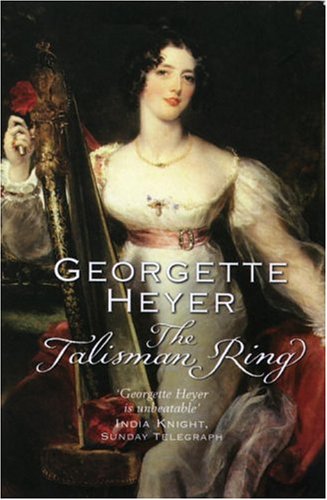
* I read my first Georgette Heyer novel, The Talisman Ring, and couldn’t believe I hadn’t started reading her books earlier! I also read my first books by Sarah Waters, Tracy Chevalier and Lisa See and have gone on to read more by all of them.
* One of my favourite books of the year was The Sunne in Splendour by Sharon Penman, a book which sparked my interest in the Wars of the Roses and Richard III.
* I also loved The Black Tulip, The Meaning of Night and The Saffron Gate.

In 2011:

* My first read of the year was the wonderful The House on the Strand by Daphne du Maurier. Only part of the book is set in the past and the rest is contemporary, but I love the way the transitions between the two are handled.
* Andrew Taylor and Jane Harris were two authors I read for the first time in 2011 and still love. I read two books by each in 2011 and my favourites were The American Boy (by Taylor) and Gillespie and I (by Harris).
* Other books I particularly enjoyed were Jamrach’s Menagerie, Passion, The Sisters Brothers and Stone’s Fall.

In 2012:

* This was the year I discovered Dorothy Dunnett! Reading the six books that make up The Lymond Chronicles – and then later in the year, the eight books of The House of Niccolò – was the highlight not just of 2012, but of my whole ten years of blogging.
* I also loved Scaramouche, Here Be Dragons, The Scarlet Pimpernel and Wolf Hall. I read the first book in Elizabeth Peters’ Amelia Peabody series this year too.
* The Gods of Gotham by Lyndsay Faye was probably the biggest surprise of the year, as I didn’t expect to like it much but ended up really enjoying it.

In 2013:

* I started two new series that I loved but still haven’t finished: Patrick O’Brian’s Aubrey/Maturin series and Maurice Druon’s The Accursed Kings.
* New authors read for the first time in 2013 included Elizabeth Fremantle, John Boyne, Mary Renault and Anne O’Brien. I also read my first two books by Guy Gavriel Kay – Tigana and The Lions of Al-Rassan, fantasy set in worlds closely resembling real periods of history.
* Other favourites this year were The King’s General, Bring Up the Bodies, King Hereafter and Captain Blood.

In 2014:

* I started two new historical mystery series in 2014 – first I met Matthew Shardlake in CJ Sansom’s Dissolution – and then Thomas Hawkins in Antonia Hodgson’s The Devil in the Marshalsea. Another historical crime novel I enjoyed, sadly not part of a series, was The Convictions of John Delahunt by Andrew Hughes.
* I read my first book by Robert Harris: his excellent novel about the Dreyfus Affair, An Officer and a Spy.
* I also loved The Moon in the Water, Hild, Bitter Greens, Zemindar, Falls the Shadow and The True and Splendid History of the Harristown Sisters. Another good year!

In 2015:

* I read Elizabeth Goudge for the first time in 2015 (The Child from the Sea) and I also enjoyed Alias Grace, The Sea-Hawk, Gildenford, and the Ibis trilogy.
* After avoiding books set in Ancient Rome for most of my life, two of my favourite books of the year turned out to be Imperium and Lustrum by Robert Harris, the first two books in his Cicero trilogy.
* Here on the blog I announced my Reading the Walter Scott Prize project (something I have sadly neglected in recent months and need to get back to). In April 2015 I also started my monthly Historical Musings posts. In the very first of these posts I asked a simple question: Do you read historical fiction?
In 2016:

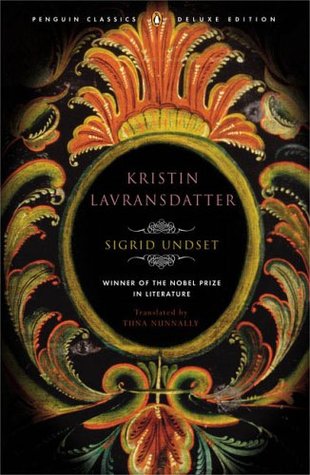
* I read a lot of classic historical fiction in 2016 including Lorna Doone, Mauprat, Kristin Lavransdatter and Redgauntlet – and I finished Alexandre Dumas’ d’Artagnan series this year as well.
* The Classics Club Spin gave me Prince of Foxes by Samuel Shellabarger. A great result as I loved it!
* I also enjoyed reading Troy Chimneys by Margaret Kennedy, Restoration and Merivel by Rose Tremain – and my first of Rosemary Sutcliff’s adult novels, The Rider of the White Horse.

In 2017:

* 2017 got off to a good start with The Red Sphinx and His Bloody Project and continued to be a good year for historical fiction. Some of my favourites of the year included Golden Hill, Wintercombe, Towers in the Mist and A Gentleman in Moscow – and two books by Rebecca Mascull, The Wild Air and Song of the Sea Maid.
* I read Shadow of the Moon for a summer readalong. As an MM Kaye fan, I don’t know why I hadn’t read it earlier, and of course I loved it.
* I also enjoyed The Bear and the Nightingale, the first in a fantasy trilogy grounded strongly in historical Russia, and I started Elizabeth Jane Howard’s Cazalet Chronicles (yet another series I still need to finish).
In 2018:

* I enjoyed re-reading Penmarric by Susan Howatch and really don’t know why I do so little re-reading these days.
* Some of my favourite historical fiction novels in 2018 were about real historical figures such as the Brontë sisters (Dark Quartet), Elizabeth Mortimer (Queen of the North) and William Marshal (The Scarlet Lion).
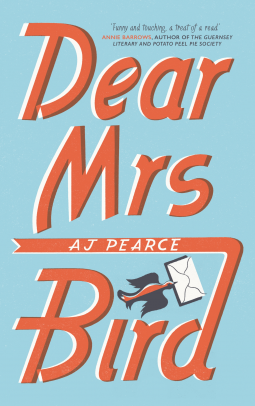
* I loved meeting Emmy Lake in AJ Pearce’s wartime novel Dear Mrs Bird, a book I thought was the perfect combination of light and dark.

In 2019:

* Well, 2019 isn’t over yet but so far some of my favourites have been The Way to the Lantern by Audrey Erskine Lindop, Things in Jars by Jess Kidd and The Devil’s Slave by Tracy Borman.

~

I hope I’ve convinced you to try some of these books, if you haven’t already! What are your own historical highlights of the last few years?
The King’s Evil by Andrew Taylor

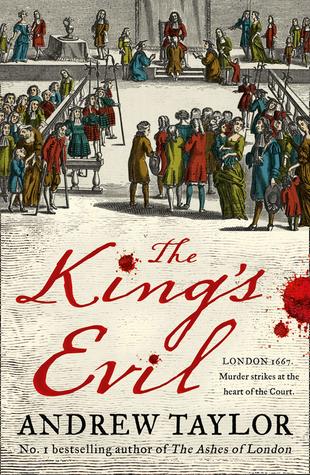
The King’s Evil is the third in Andrew Taylor’s series of historical mysteries set during and after the Great Fire of London and featuring the characters of James Marwood and Cat Lovett. The first two, The Ashes of London and The Fire Court, were both excellent books so I had high expectations for this one as well, and I’m pleased to say that I think this might be my favourite of the three. If you’re new to the series, I don’t think it’s completely necessary to read the books in order but I would still recommend that you do so if possible.

‘The King’s Evil’ is another name for scrofula, a disease which causes the swelling of glands in the neck. Historically, it was believed that a touch from the king could cure the disease and as the novel opens we see James Marwood watching a ceremony at Whitehall where sufferers are being brought one by one to receive the touch of King Charles II. Marwood himself does not have scrofula, but is using the ceremony as cover for a rendezvous with Lady Quincy (a woman we first met in The Fire Court, which is one of the reasons why I think it’s best to read the series from the beginning).

Lady Quincy warns Marwood that his friend, Cat Lovett – who, as the daughter of a regicide responsible for the execution of Charles I, is in hiding under an assumed name – has been located by her stepson Edward Alderley. Worried that Edward is planning to take revenge on Cat after the events of The Fire Court, Marwood hurries to her hiding place to tell her she is in danger. Before Edward can do anything, however, he is found dead in a well in the grounds of the Duke of Clarendon’s London mansion. Cat, using her new identity of Jane Hakesby, has been helping the architect Simon Hakesby with his work on a garden pavilion at Clarendon House, and suspicion falls on her as the murderer. Marwood is asked to investigate on behalf of the government but, although those in power want him to find Cat guilty, he is sure she is innocent and must find a way to prove it.

This series is getting better and better. We are moving further away from the time of the Great Fire now, but its effects are still being felt across London as rebuilding takes place and people try to move on with their lives. The aftermath of the fire is less important to the plot of this novel than it was to the previous two, though, with the focus this time on the royal court and the question of who will succeed to the throne if Charles II fails to produce a legitimate heir. The king’s brother James and his two daughters are currently next in line, placing James’s father-in-law, the Duke of Clarendon, in a position of power. As Marwood begins to look into the circumstances of Edward Alderley’s death, he finds himself caught up in a rivalry between Clarendon and one of the king’s favourites, the Duke of Buckingham. Andrew Taylor is so good at blending fact and fiction, so that the fictional events of the story feel quite plausible within the context of the period and the murder mystery fits smoothly into the history and politics of the time.

When I read the first book, I mentioned that I didn’t find James Marwood a particularly strong character, but after three books he feels much more real to me now. I love his relationship with Cat – it’s not what you could describe as a romance and sometimes not even really a friendship, but it’s clear that there is still a strong bond between them. I enjoy spending time with both of them and am hoping it won’t be too long before they are back with another mystery to solve!

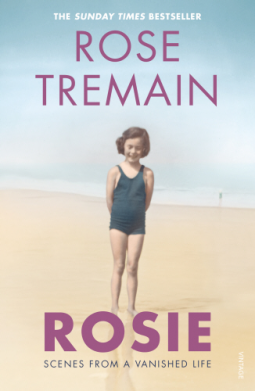
Rosie: Scenes from a Vanished Life by Rose Tremain

I don’t think I’ve read enough of Rose Tremain’s books to really describe myself as a fan or as any kind of expert on her work, but I’ve enjoyed the little I’ve read by her – Restoration and Merivel, her two novels set in 17th century England and France, and The Gustav Sonata, set in Switzerland before, during and after the Second World War – so I decided to give her recent memoir, Rosie, a try.

Judging purely by the cover and the subtitle Scenes from a Vanished Life, I was expecting something light, charming and nostalgic, but the reality was very different and the book left me feeling quite sad. It’s a slim book covering only the first eighteen years of the author’s life and I think it’s fair to say that Rose – or Rosie, as she was known when she was younger – didn’t have the happiest start to life. Born into an upper-middle-class family, with all the privilege and opportunity that comes with that, the one thing Rosie lacks is parental love. She is ten years old when her playwright father, Keith, leaves her mother, Jane, for a younger woman. Jane quickly remarries and sends Rosie and her sister, Jo, to boarding school, an incident Tremain thinks of as ‘The Great Casting Away’ and which she describes with both resentment and an attempt to understand:

When we were safely away in our cold dormitories at Crofton Grange, she and her friends could forget all about their children’s future. Instead, they could go to plays, go to films, go to restaurants, get drunk at lunchtime, flirt, shop, swear, take taxis, waste money, go dancing, have sex, and wander through London in the dawn light, laughing, determined to forget the war that had stolen their youth and so many of the people they’d loved.

The child Rosie is often hurt and confused by her mother’s actions, and not much has changed by the time she reaches adulthood; when her first play is broadcast on BBC radio in 1976, Jane says she is too busy to listen as she is going out to lunch that day. Rosie does acknowledge, however, that her mother’s lack of affection for her could be partly due to her own upbringing. Many of Rosie’s childhood memories revolve around holidays spent at her maternal grandparents’ home, Linkenholt Manor, but it quickly becomes clear that it is the house that holds a special place in her heart and not her grandparents themselves. Mabel and Roland Dudley, Jane’s parents, are depicted as cold, stern people who have struggled to move on from the loss of their two sons and see their daughter as a poor substitute; their granddaughters interest them even less. I found this so sad because my own childhood relationship with my grandparents was completely different – warm and loving and full of fun. The only love Rosie seems to receive comes from her nanny, Vera Sturt, and I was glad that she had at least one person who cared about her, although even this relationship was lost when she was sent away to boarding school.

As the title of the book suggests, the world of Tremain’s childhood is a world that has now largely vanished. Her account of her school days, of beliefs and attitudes and of society in general could only have been written by someone growing up in the 1950s and belonging to a certain class. As Rosie becomes a young adult and sets her sights on attending Oxford University, she sees her dreams shattered yet again when her mother insists on sending her to a Swiss ‘finishing school’ instead. Jane doesn’t see the need for her daughter to continue her education when all a woman needs to do to succeed in life is to find a rich husband.

Despite her privileged background then, Tremain still had obstacles to overcome as she grew from Rosie into Rose and embarked on her writing career. Because her memoir ends before the publication of her first book, she doesn’t spend a lot of time discussing her writing, but she does give us a few insights into how incidents, people and places from her early life later found their way into her novels. I’m sure this would have meant more to me if I had read more of her work! The book ends very abruptly, which was disappointing as I would have liked to have continued to follow Rose through her adult years. Still, it was interesting getting to know the young Rosie and her world. I will have to read more of her books soon; if there are any you would recommend please let me know.

Thanks to Vintage Publishing for providing a copy of this book for review via NetGalley.

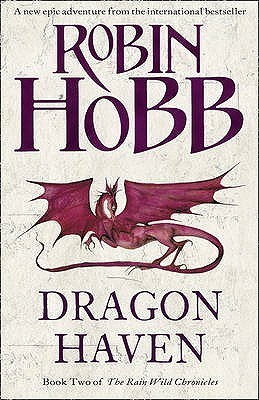
Dragon Haven by Robin Hobb

This is the second book in Robin Hobb’s Rain Wild Chronicles series, part of a larger sequence of fantasy novels set in a world known as the Realm of the Elderlings. I have been reading through the sequence in order of publication, beginning with the Farseer Trilogy and then moving on to the Liveship Traders Trilogy and the Tawny Man Trilogy. I started the Rain Wild Chronicles (a quartet rather than a trilogy) earlier this year and so far, after loving all of those previous series, I am quite disappointed with this one. In comparison with the others, I think these books feel less mature and less emotionally powerful, and although they are good enough for me to want to persevere and read all four, I am looking forward to being finished with them so I can start the final trilogy, Fitz and the Fool.

This second Rain Wild novel picks up the story exactly where the previous one ended, which is not surprising as I’m sure I read somewhere that they were originally supposed to be two halves of one long book. At the end of Dragon Keeper, we left our group of dragons and their keepers making the long and difficult journey up the Rain Wild River in search of Kelsingra, the legendary Elderling city now lost in the mists of time. In Dragon Haven the journey continues, with our characters facing a new set of trials and challenges. Who will survive and who will not? Will the dragons ever grow strong enough to fend for themselves? And will they ever find Kelsingra?

To start with the positives, I found myself enjoying the storyline following Sedric and the little copper dragon, Relpda. This surprised me because, based on the first book, Sedric was not a character I had imagined ever liking, but he undergoes a transformation in this book, largely due to the bond he forms with Relpda. And he is not the only one who changes as a result of spending time with the dragons. Without wanting to spoil too much for anyone who hasn’t got this far in the series yet, we learn a lot in this book about the connections between dragons and Elderlings – and are introduced to the intriguing idea that if dragons are coming back into the world, why not Elderlings too? I also enjoyed seeing Leftrin’s liveship, Tarman, take on more personality of his own.

Mainly, though, this book is concerned with the romantic relationships between the various characters and I have to admit, none of this interested me very much, particularly where the teenage dragon keepers were concerned. I didn’t really care whether Jerd was sleeping with Greft and whether Thymara would choose Tats or Rapskal or resist being forced to choose at all. And although I was pleased with the way Alise’s story played out, I found it quite predictable which meant I didn’t become as emotionally invested as I would have liked.

The book does end on a bit of a cliffhanger which has left me feeling more enthusiastic about reading the third book, City of Dragons. I’m hoping it will concentrate more on the dragons, Elderlings and Kelsingra rather than on trying to pair off every character regardless of whether it feels necessary or natural. I will also be interested to see, when I finally move on to Fitz and the Fool, whether I’ll be glad I read the Rain Wild novels or whether I could have missed them out.

Six Degrees of Separation: From Three Women to The Mysteries of Udolpho

It’s the first Saturday of the month which means it’s time for another Six Degrees of Separation, hosted by Kate of Books are my Favourite and Best. The idea is that Kate chooses a book to use as a starting point and then we have to link it to six other books of our choice to form a chain. A book doesn’t have to be connected to all of the others on the list – only to the one next to it in the chain.

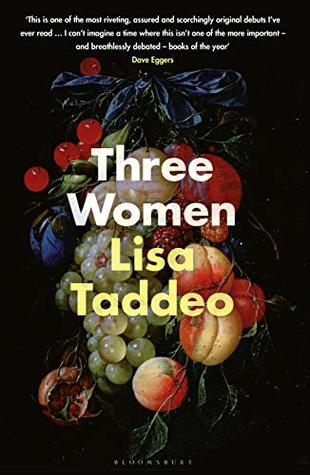
This month we are starting with Three Women by Lisa Taddeo, a book I haven’t read. Goodreads tells me that it’s ‘a record of unmet needs, unspoken thoughts, disappointments, hopes and unrelenting obsessions’. I don’t think I’m interested in reading it, but I know a lot of people have enjoyed it.

Although I haven’t read Three Women, the title immediately makes me think of one of the books I am currently reading – Big Sister, Little Sister, Red Sister by Jung Chang (1), a biography of the three Soong sisters who became three of the most powerful women in 20th century China. I chose to read this book because I loved Jung Chang’s earlier biography, Wild Swans, which was also about three women (herself, her mother and her grandmother). So far I am enjoying this new one as well, although I think it will take me a while to finish it.

The word sister provides my next link and leads me to The Sisters Brothers by Patrick deWitt (2), a novel set in 1850s Oregon and California and telling the story of two hired killers, Charlie and Eli Sisters. I liked this book much more than I had expected to and was so glad I didn’t let the ‘western’ label put me off.

It’s fair to say that I don’t usually choose to read westerns but sometimes it’s good to try something different. Another genre I don’t often read is science fiction, but I’ve enjoyed a few of John Wyndham’s books in the last few years – most recently, Chocky (3), a short but fascinating novel about a boy who appears to have an imaginary friend, which I read for Karen and Simon’s ‘1968 Club’ back in 2017.

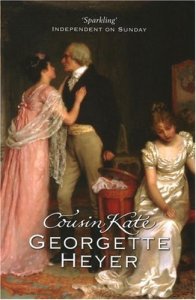
Another book I’ve read published in 1968 is Cousin Kate by Georgette Heyer (4). Like many of Heyer’s novels, this one is set in the Regency period but has a slightly different feel from most of the others because of the Gothic elements, which include storms, locked doors, noises in the night and family secrets waiting to be uncovered.

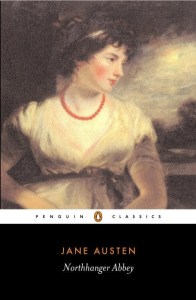
Looking back at my review of Cousin Kate, I said it reminded me of Northanger Abbey by Jane Austen (5) which has some of the same elements – and a heroine, Catherine Morland, who loves reading Gothic novels. At one point in Northanger Abbey, Catherine is given a list of seven ‘horrid novels’. I haven’t read any of the horrid novels, which is a shame as I could have used one of them as my next link!

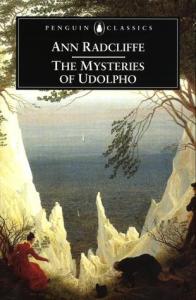
I have, however, read another book which is alluded to several times in Northanger Abbey – Ann Radcliffe’s The Mysteries of Udolpho (6). Published in the 18th century and set in France and Italy, it is the story of Emily St Aubert, a French orphan who is imprisoned in the remote and gloomy castle of Udolpho where she is subjected to lots of seemingly supernatural terrors. I read this before I started blogging, but if you want to see my thoughts on some other Ann Radcliffe books, I have reviewed both A Sicilian Romance and The Romance of the Forest.

~

Well, that’s my chain for this month, with links including three women, the word sister, books outside my comfort zone, 1968 and gothic novels. Next month we will be starting with Alice’s Adventures in Wonderland by Lewis Carroll.

The Dark is Rising by Susan Cooper

Since reading Susan Cooper’s Over Sea, Under Stone earlier this year, I have been looking forward to reading the rest of her The Dark is Rising sequence, especially after I was told that Over Sea, Under Stone is usually considered the weakest of the six books. The second book, The Dark is Rising, sounded appropriately dark, so I decided to read it for this year’s R.I.P event. The first thing to say is that although Over Sea, Under Stone was the first to be published, I don’t think it’s essential to read it before starting this one. They are linked by the character of Merriman Lyon and the same overarching theme, but otherwise they are quite separate stories.

The Dark is Rising, published in 1973, is set in the fictional English village of Huntercombe during the Christmas period. The novel opens with Will Stanton celebrating his eleventh birthday on Midwinter Day – 21st December – and wishing it would snow. He gets his wish because snow does soon begin to fall…and keeps on falling, covering the landscape in a thick blanket of white as far as the eye can see. Stepping outside into a world transformed by snow, Will quickly discovers that it has been transformed in other ways as well – the houses and roads of his own time have disappeared, to be replaced by the dense forest of an earlier age.

As Will begins to explore this strange, enchanted land, he learns for the first time that he is one of the Old Ones, destined to join the people of the Light in their ongoing battle against the forces of the Dark. With the help of Merriman Lyon and the mysterious Lady, Will must look for the six Signs of the Light and only when he has collected all six will he be able to ward off the powers of the Dark.

The Dark is Rising is described as a children’s classic, but even reading it as an adult I found it genuinely creepy in places. The villains, particularly the sinister cloaked Rider, are quite menacing and the way the snow keeps falling, day after day – too heavy and too persistent to be natural – adds to the general eeriness. For any tale of the conflict between good and evil to be effective, the evil needs to feel really evil and that is certainly the case here. But although the Light is obviously the ‘good’ side, Will discovers over the course of his quest that sometimes it is necessary to make sacrifices and difficult choices – and that sometimes innocent people will be made to suffer in furthering the cause of the Light.

Will himself could have been a fascinating character – an intriguing mixture of ordinary eleven-year-old boy and wise and powerful Old One – but I didn’t find him as interesting as I would have liked. This is maybe because his quest just seems a little bit too easy – he is led straight to most of the six Signs without really needing to search for them – and so he comes across as somebody to whom things happen rather than somebody who actively makes them happen. I also wondered at first why Susan Cooper had given him so many brothers and sisters (he is the youngest of nine children and I found the number of characters introduced in the opening chapters a bit overwhelming), but the significance of that soon becomes clear.

There are some elements of English folklore incorporated into the plot, such as the legend of Herne the Hunter, and Christmas traditions and customs play a big part in the story too: giving and receiving presents, decorating the tree, singing carols. While this book was a perfect choice for the R.I.P. challenge, I wish I had saved it until December as it would have been a perfect Christmas read. Anyway, I enjoyed it and am looking forward to reading the other books in the series.

This is book #4 read for this year’s R.I.P. event.

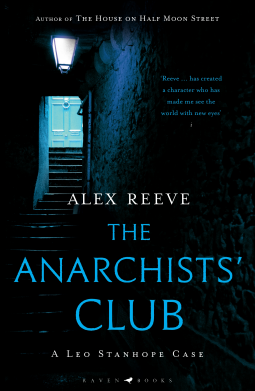
The Anarchists’ Club by Alex Reeve

One of the first books I read this year was Alex Reeve’s The House on Half Moon Street, the first in a new mystery series set in Victorian London. I enjoyed it and couldn’t wait to meet its hero, Leo Stanhope, again. Now that I’ve read the second book, The Anarchists’ Club, I’m pleased to say that I enjoyed this one just as much as the first. If you’re wondering whether it’s necessary to read the series in order, I don’t think it’s essential…you will have a better understanding of Leo and his background if you do, but otherwise both books work well as standalone mysteries.

Catching up with Leo again at the beginning of The Anarchists’ Club, it seems that not much has changed in his life. He is still renting a room above a pharmacy, still working as a hospital porter, still meeting his only friend Jacob for an occasional game of chess. One day he is helping out in the pharmacy when a woman comes in to buy some bromide. Lacking the money to pay, she asks for credit, but Leo refuses, telling her she will have to speak to the owner. It’s only a brief interaction but one which Leo will remember forever, because a few days later he receives a visit from the police. The woman, Dora Hannigan, has been murdered and a scrap of paper with Leo’s name and address on it has been found on her body.

Among the suspects is John Thackery, a man Leo knew many years ago – when he was quite literally a different person. If John makes his former identity known, the whole new life Leo has built for himself could be destroyed, so he agrees to give John an alibi in return for his silence. Has Leo done the right thing or is he allowing a murderer to walk free? The only way to be sure is to investigate the murder himself…

Leo’s investigations lead him to, as the title of the book suggests, a club of ‘anarchists and socialists’ with whom the dead woman had become involved. I was slightly disappointed that we don’t find out as much about these people and their work as I’d expected; although the division between the rich and poor in society is one of the book’s main themes, the mystery itself doesn’t really have much to do with any of that. As with the first novel, the most interesting aspect of the story is the character of Leo himself. Although he is known as Leo Stanhope now, he grew up as Lottie Pritchard before deciding as a teenager that he could no longer continue living as a woman and denying who he really was. Being transgender in the 19th century is not easy and a few words from someone who knows the truth – someone like John Thackery – could ruin everything for him. For Leo, though, being true to himself is worth the risk and the danger. As I am not transgender myself and, as far as I know, Alex Reeve isn’t either, I can’t really say whether the portrayal of Leo and his thoughts and feelings is accurate or not, but it does feel believable to me.

The books are narrated by Leo in the first person and I find him a very likeable character. For obvious reasons, he tries not to attract too much attention to himself and has a quiet, unassuming nature. In this second novel, I loved his relationship with Aiden and Ciara, Dora Hannigan’s children, whom he befriends and tries to look after once it becomes obvious that nobody else is going to. This is particularly touching because there are so few people in Leo’s life whom he still cares about or who care about him, having become estranged from his parents and sister after making the decision to leave his life as Lottie behind.

I was also pleased to meet Rosie Flowers, the pie maker, again; I said earlier that Jacob is Leo’s only friend, but that’s not quite true because although Rosie and Leo exasperate each other at times, they formed a close bond during their investigation of the previous mystery and work together to try to solve this one as well. I’m hoping to see them both again in future books; I haven’t seen any news of a third Leo Stanhope mystery yet, but I will certainly be looking out for it.

Thanks to Raven Books for providing a copy of this book for review via NetGalley.

This is book #3 read for this year’s R.I.P. event.