Six Degrees of Separation: From Daisy Jones & the Six to An Officer and a Spy

It’s the first Saturday of the month which means it’s time for another Six Degrees of Separation, hosted by Kate of Books are my Favourite and Best. The idea is that Kate chooses a book to use as a starting point and then we have to link it to six other books of our choice to form a chain. A book doesn’t have to be connected to all of the others on the list – only to the one next to it in the chain.

This month we are starting with Daisy Jones & The Six by Taylor Jenkins Reid, a book I read before Christmas and enjoyed, although I still need to post my review. It tells the story of a fictional 1970s rock band and is written in a documentary style, in the form of interviews with the band members. Books written in unusual or unconventional styles often don’t work for me, but this one did.

A book written in an unusual, unconventional style that didn’t really work for me was A Visit from the Goon Squad by Jennifer Egan (1), which is also about the music industry. Each chapter is different from the one before: a different narrator, a different time period, even a chapter presented as a series of Powerpoint slides – very imaginative, but I found it overwhelming and confusing.

I haven’t tried any other Jennifer Egan books yet, but eventually I will need to read Manhattan Beach for my Walter Scott Prize Project (I’m reading through the shortlists for that prize and Manhattan Beach appears on the 2018 shortlist). I have still only managed to read one book from the 2018 list and that was Sugar Money by Jane Harris (2), a novel set in the Caribbean in the year 1765.

Sugar is the name of the heroine in Michel Faber’s The Crimson Petal and the White (3). I loved that book, which follows the story of a prostitute’s rise through the ranks of society in Victorian London. Crimson is a shade of red and so is scarlet, which leads me to the next book in my chain…

The classic adventure novel The Scarlet Pimpernel by Baroness Orczy (4) is set during the French Revolution. The mysterious and elusive Scarlet Pimpernel is rescuing aristocrats from the guillotine and smuggling them to safety, but who is he and will he ever be caught?

I recently read The Bastille Spy by CS Quinn (5), another French Revolution novel, and couldn’t help noticing the similarities with The Scarlet Pimpernel – something the author definitely intended, as the code name adopted by the spy in the novel is ‘Mouron’, which translates to pimpernel! I will be posting my review of that book soon.

Bringing this month’s chain to an end is another book with the word Spy in the title – the wonderful An Officer and a Spy by Robert Harris (6), a fictional account of the Dreyfus Affair, a political scandal that caused great controversy in 19th century France. A book I would highly recommend!

~

And that’s my chain for January. The links included unusual books about the music industry, sugar, shades of red, pimpernels and spies! In February, we will begin with Fleishman is in Trouble by Taffy Brodesser-Akner, a book I know absolutely nothing about.

Love Without End: A Story of Heloise and Abelard by Melvyn Bragg

I’ve never read anything by Melvyn Bragg before, although he has been writing since the 1960s and most of his novels fall into my favourite genre, historical fiction. His new book, Love Without End, a retelling of the story of Abelard and Heloise – often described as one of the greatest love stories of all time – sounded appealing to me, so I thought I would give it a try.

The novel opens in 12th century Paris, where Heloise is living with her uncle, the canon Fulbert. She is intelligent, resourceful and exceptionally well educated for a woman of her time, particularly in Latin, Greek and Hebrew. When the renowned philosopher and scholar Peter Abelard returns to Paris after an absence of a few years, Heloise longs to go and sit with the male students listening to his lectures, but she is aware that this is an opportunity open only to men. A solution is found when Canon Fulbert allows Abelard to join his household as private tutor to Heloise, but he quickly comes to regret this decision when he discovers that his niece and her tutor have fallen in love.

I’m not going to say any more about the legend of Heloise and Abelard – if you don’t already know the story you probably don’t want me to spoil it for you, and it’s so well documented the details can easily be looked up online anyway. All I will say is that, like Romeo and Juliet and other legendary lovers, their romance is dramatic and tragic. Melvyn Bragg’s account follows the usual, accepted outline of the story, using sources such as the Penguin Classics collection of the translated letters of Abelard and Heloise, although he also uses his imagination to fill in some of the gaps and mixes some fictional characters in with the real historical ones.

Despite all the drama and tragedy, however, I found this novel strangely flat and emotionless. There seemed to be no real chemistry between Heloise and Abelard; although Bragg tells us that they are passionately in love, I never really felt that for myself. Even the setting never came to life; I wanted to know what it felt like to live in 12th century Paris, what it looked like, sounded like, smelled like…but instead I came away with the feeling that the story might as well have been taking place in any city and at any time.

Even so, I might have still enjoyed this book if it had just concentrated solely on the story of Abelard and Heloise. Recently, though, I’m finding that authors rarely seem to write books set entirely in the past anymore. Instead we get two alternating storylines – one set in the past and one in the present. In this case, the present day story follows an author, Arthur, who is visiting Paris with his daughter, Julia, to finish researching and writing a novel about Abelard and Heloise. It is supposedly Arthur’s novel that we are reading in the historical chapters, while in the modern day chapters he and Julia talk about his work and how he has interpreted various parts of the Abelard and Heloise legend.

The Arthur and Julia storyline appears to exist purely as a way for Bragg to discuss and comment on various aspects of the relationship between Heloise and Abelard or to explain things for the benefit of the modern reader, rather than leaving us to reach our own conclusions. Most of the discussions involve Julia questioning Abelard’s behaviour and Arthur trying to defend him by pointing out that she needs to put things into historical context and judge Abelard by the standards of the 12th century instead of the 21st. I found both Arthur and Julia very irritating; their dialogue seemed unnatural and not the way two people would speak to each other in real life. They just didn’t feel like real human beings at all and were a distraction from the Heloise and Abelard story rather than an interesting addition to it.

This was disappointing, but if you’ve enjoyed any of Melvyn Bragg’s other books maybe you can convince me to give him another chance? Also, if anyone has read anything else about Abelard and Heloise – or even some of the original letters and writings – please let me know what you would recommend.

Thanks to Skyhorse Publishing for providing a copy of this book for review via NetGalley.

A new year begins…

Happy New Year! I hope everyone’s 2020 reading is getting off to a good start. My first read of the year is Big Sky by Kate Atkinson, which I’m enjoying so far. What’s yours?

When I posted my ‘favourite books of 2019’ list a few days ago, I mentioned that although I had read a lot of good books in 2019, there were very few that I can honestly say I loved. I’m not entirely sure why that is, but I think one of the reasons is that, particularly in the final months of the year, I was concentrating mainly on new releases and getting through my backlog of NetGalley review copies, and reading fewer of the older books that usually turn out to be my favourites. I want 2020 to be a more enjoyable reading year so, without being too specific in terms of targets and numbers, I have put together a short list of resolutions:

* Read more of the books that are already on my own shelves, some of which have been waiting for years for the ‘right time to read them’ to arrive.

* Re-read some old favourites – and don’t feel guilty for taking the time to do so.

* Make more progress with my Classics Club list and my personal projects such as Reading the Walter Scott Prize, both of which have been the source of some great discoveries in the past.

* Find a better balance between trying new authors and reading books by authors I already know and love.

* Continue with some of the series and trilogies I started years ago and inexplicably abandoned after one or two books, despite loving those one or two books!

* Be more ruthless about giving up on books that I’m not enjoying, rather than persevering to the end.

I’m hoping that by trying to follow these resolutions throughout 2020 I can make every book I pick up a potential book of the year!

Do you have any reading resolutions or plans for 2020?

My Commonplace Book: December 2019

A selection of words and pictures to represent December’s reading:

commonplace book
noun
a book into which notable extracts from other works are copied for personal use.

~

Lejeune shook his head. “It’s not like that at all,” he said. “Evil is not something superhuman, it’s something less than human. Your criminal is someone who wants to be important, but who never will be important, because he’ll always be less than a man.”

The Pale Horse by Agatha Christie (1961)

~

A house divided against itself cannot stand. A house built on sand will not survive the coming storms and tempests. Such prophecies accurately describe the House of York, and I intend to prove such predictions are correct in all their details.

Dark Queen Rising by Paul Doherty (2018)

~

Abelard and Heloïse in a manuscript of the Roman de la Rose (14th century)

Novels can make a unique connection – one person is alone, writing, and contact is made miles and centuries away with another person alone, reading. Receiving the message. Not from outer space but from inner space. And there’s instant connection. It’s a sort of magic.

Love Without End by Melvyn Bragg (2019)

~

“You have to have one person in your life that you know would never do anything to steer you wrong. They may disagree with you. They could even break your heart, from time to time. But you have to have one person, at least, who you know will always tell you the truth.”

Daisy Jones & The Six by Taylor Jenkins Reid (2019)

~

Of one thing though I am most perfectly certain and that is that the case is more completely topsy-turvy than it ought to be. I like my murders to start at the beginning with the corpse and go on to the end with the conviction. But when you start in the middle with the confession — well, all I can say is, that it’s all wrong!”

Left-Handed Death by Richard Hull (1946)

~

Winchester Cathedral

“There’s something quite mysterious about the pattern of bells ringing – more so than if it were a melody, which would be too predictable. A little complexity can be a good thing. I think people sense there is a form holding it all together. Must they know what that form is to enjoy it?”

A Single Thread by Tracy Chevalier (2019)

~

It looked like the posters you see in tourist offices advertising the Riviera. In spite of the traffic whizzing past them on the road, the place was peaceful. More yachts floating about the sea, family parties sporting on the beaches, little cafes with coloured awnings and parasols and painted chairs and tables. Above the road, villas built on terraces on the porphyry rock, with masses of pink and red geraniums, bougainvillaea, hydrangeas blooming in the gardens, and sheltered by palms, olives and lemon trees.

Death in Room Five by George Bellairs (1955)

~

‘I have little interest in it,’ I admit. ‘My attentions are directed to abolishing slavery through more active means. But now I am here and I see your people,’ I conclude, ‘I realize not all slaves wear chains.’

The Bastille Spy by CS Quinn (2019)

~

Anne of Cleves, by Hans Holbein the Younger

‘I haven’t seen it, Madam, but I do not need to. I speak as a friend when I say you are a lovely lady; there can be no denying it. Beauty comes from within; it illuminates the features. Others, I know, have seen this in you. The King may come belatedly to see it too.’

Anna of Kleve, Queen of Secrets by Alison Weir (2019)

~

‘Well, I find it fascinating that so much of the world craves fame, yet in my experience, it often brings only misery. People believe that it will grant them the right to do or be anything they choose, but in fact they lose the most precious commodity we humans have, and that is their freedom. Your freedom,’ she added.

The Sun Sister by Lucinda Riley (2019)

~

I never was at table, nor close up to him that first summer; but I looked about me. No man should think because I am a woman and slighter shaped, that my eyes and my thoughts are smaller than theirs. That is a mistake easy to fall into, as others have done.

Call Upon the Water by Stella Tillyard (2018)

~

Favourite books read in December:

The Sun Sister and The Pale Horse

New authors read in December:

Melvyn Bragg, CS Quinn, Taylor Jenkins Reid, Stella Tillyard

Countries visited in my December reading:

England, France, USA, Germany, Kenya

~

Have you read any of these books? Which books did you enjoy reading in December?

My favourite books of 2019

With 2020 almost here, it’s time to look back on my favourite reads of 2019. This is a shorter list than in previous years, because although I’ve read a lot of very good books in 2019, I don’t feel that there have been as many as usual that I’ve really loved. I’ll be exploring the reasons for that and some possible solutions when I post my reading plans and resolutions for 2020 in the New Year, but for now here are some of the books I did enjoy in 2019:

~

The Way to the Lantern by Audrey Erskine Lindop (1961)

From my review: “Why it has been allowed to go out of print and fade into obscurity is a mystery to me. I thought it was a wonderful book and I thoroughly enjoyed it from beginning to end…The balance between the historical detail and Roberts’ fictional adventures is perfect; it’s the sort of book where you learn a lot as you go along, while being entertained by a great story at the same time.”

How Green Was My Valley by Richard Llewellyn (1939)

From my review: “This is a beautifully written novel with characters I came to love and care about…At first I thought it was going to be a long, slow read, but as I gradually became more and more engrossed in Huw’s story the pages started to fly by much more quickly than I’d expected.”

The ABC Murders by Agatha Christie (1936)

From my review: ” I found this a particularly clever Christie novel and didn’t come close to solving it. I allowed myself to be sent in completely the wrong direction by the red herrings and took everything at face value; in fact, for a long time I thought I was reading a different sort of mystery entirely…I loved this one and I think I did the right thing in reading it before trying to watch the adaptation again.”

Those Who Are Loved by Victoria Hislop (2019)

From my review: “As I probably knew even less about 20th century Greek history than Nikos and Popi at the start of the novel, I found that I was learning a lot from the book, as well as being gripped by the personal stories of Themis and her family…Those Who Are Loved is a powerful, emotional story.”

The Devil’s Slave by Tracy Borman (2019)

From my review: “I loved this book; the reservations I had about the first one (mainly the slow pace at the beginning and the story being not quite what I’d expected) were not problems this time and I was engrossed from the first page. This is such a fascinating period of history, yet being sandwiched between the end of Elizabeth I’s reign in 1603 and the Civil Wars of 1642-1651, it often tends to be overlooked. There’s so much going on in this novel…and Frances is right at the heart of it all.”

Sprig Muslin by Georgette Heyer (1956)

From my review: “Georgette Heyer is almost always a delight to read and I found this 1956 novel, Sprig Muslin, particularly enjoyable and entertaining. Set in the Regency period she recreated so convincingly, it has all the humour, adventure and romance I expect from her work.”

Things in Jars by Jess Kidd (2019)

From my review: “What an unusual book! Not having read anything by Jess Kidd before, I didn’t know what to expect from this new Victorian mystery, but I immediately fell in love with the playful writing and imaginative plot. I knew as soon as the ghost of a tattooed boxer arose from a tomb in Highgate Cemetery that this was going to be no ordinary detective novel.”

The King’s Evil by Andrew Taylor (2019)

From my review: “This series is getting better and better. We are moving further away from the time of the Great Fire now, but its effects are still being felt across London as rebuilding takes place and people try to move on with their lives…Andrew Taylor is so good at blending fact and fiction, so that the fictional events of the story feel quite plausible within the context of the period and the murder mystery fits smoothly into the history and politics of the time.”

Dumb Witness by Agatha Christie (1937)

From my review: “I really enjoyed this particular Poirot novel; I usually do tend to enjoy the ones narrated by Hastings and I wish there had been a few more of them. The real star of this book, though, has to be Bob the dog!”

The Art of Dying by Ambrose Parry (2019)

From my review: “This is the second book in a new series of historical mysteries written by Ambrose Parry, a pseudonym used by husband and wife team Chris Brookmyre and Marisa Haetzman…My main criticism of The Way of All Flesh was the weakness of the murder mystery, but I found this one much stronger…As with the first book, though, it was the medical aspect of the story that I found most interesting.”

~

And I want to give these books a special mention too:

The Butcher’s Daughter by Victoria Glendinning
The Conviction of Cora Burns by Carolyn Kirby
Margaret Tudor by Melanie Clegg
A Ladder to the Sky by John Boyne
Over Sea, Under Stone by Susan Cooper
The Sun Sister by Lucinda Riley

~

Have you read any of these? What are your favourite books of 2019?

Historical Fiction Reading Challenge: Looking back at 2019 and forward to 2020

I don’t take part in many reading challenges these days as I prefer to have the freedom to read what I want to read without trying to meet too many targets and goals, but one challenge I have been participating in during 2019 is the Historical Fiction Reading Challenge hosted by Amy at Passages to the Past.

Reading historical fiction is not really much of a ‘challenge’ for me, but I still enjoy linking my reviews to the monthly challenge posts, seeing what other participants are reading and discovering new historical fiction novels and bloggers. I will be signing up again in 2020, but first, Amy has provided some questions for us to answer about our 2019 reading:

So, how many historicals did you read in 2019?
50, although I have only reviewed 45 of them so far.

Did you reach your original challenge goal level?
Yes – I had signed up at ‘Prehistoric’ level, which meant I needed to read 50 books for the challenge.

What was your favorite historical of the year?
The Way to the Lantern by Audrey Erskine Lindop

What was the most surprising historical read of the year for you?
The House on Half Moon Street by Alex Reeve – I knew nothing about it and wasn’t expecting much from it, but I was surprised by how much I enjoyed it.

What historical are you looking forward to most in 2020?
Like many people, I’m eagerly awaiting The Mirror and the Light by Hilary Mantel!

Here is a full list of the books I read for the challenge in 2019:

1. Once Upon a River by Diane Setterfield
2. The House on Half Moon Street by Alex Reeve
3. The Name of the Rose by Umberto Eco (re-read)
4. Blood & Sugar by Laura Shepherd-Robinson
5. Bodies of Light by Sarah Moss
6. Elizabeth, Captive Princess by Margaret Irwin
7. The She-Wolf by Maurice Druon
8. A King Under Siege by Mercedes Rochelle
9. Beauvallet by Georgette Heyer
10. The Western Wind by Samantha Harvey
11. The Confessions of Frannie Langton by Sara Collins
12. The Mark of the Horse Lord by Rosemary Sutcliff
13. Casanova and the Faceless Woman by Olivier Barde-Cabucon
14. Cashelmara by Susan Howatch (re-read)
15. The Alchemist of Lost Souls by Mary Lawrence
16. Sprig Muslin by Georgette Heyer
17. Things in Jars by Jess Kidd
18. The Scottish Chiefs by Jane Porter
19. After the Party by Cressida Connolly
20. The Adventurers by Jane Aiken Hodge
21. The Island of Sea Women by Lisa See
22. The Woman in the Lake by Nicola Cornick
23. The Glass Woman by Caroline Lea
24. The House of Hardie by Anne Melville
25. The Devil’s Slave by Tracy Borman
26. Wakenhyrst by Michelle Paver
27. The Lighthouse Keeper’s Daughter by Hazel Gaynor
28. The Butcher’s Daughter by Victoria Glendinning
29. The Way to the Lantern by Audrey Erskine Lindop
30. The Canary Keeper by Clare Carson
31. A Tapestry of Treason by Anne O’Brien
32. The Anarchists’ Club by Alex Reeve
33. The King’s Evil by Andrew Taylor
34. The Daughter of Hardie by Anne Melville
35. The Doll Factory by Elizabeth Macneal
36. To Calais, in Ordinary Time by James Meek
37. The Silver Pigs by Lindsey Davis
38. Those Who Are Loved by Victoria Hislop
39. Bone China by Laura Purcell
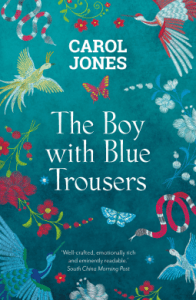
40. The Boy with Blue Trousers by Carol Jones
41. The Outrageous Fortune of Abel Morgan by Cynthia Jefferies
42. The Conviction of Cora Burns by Carolyn Kirby
43. The Drowned Court by Tracey Warr
44. The Art of Dying by Ambrose Parry
45. A Single Thread by Tracy Chevalier
46. Dark Queen Rising by Paul Doherty
47. Love Without End by Melvyn Bragg
48. The Bastille Spy by CS Quinn
49. Anna of Kleve, Queen of Secrets by Alison Weir
50. Call Upon the Water by Stella Tillyard

~

Now, on to next year’s challenge! As usual, there are different levels to choose from:

20th Century Reader – 2 books
Victorian Reader – 5 books
Renaissance Reader – 10 books
Medieval – 15 books
Ancient History – 25 books
Prehistoric – 50+ books

Any sub-genre of historical fiction is accepted (Historical Romance, Historical Mystery, Historical Fantasy, Young Adult, History/Non-Fiction, etc).

I will be aiming for Prehistoric again, but won’t be too disappointed if I don’t reach 50 books (I nearly didn’t this year). Enjoying my reading is the most important thing!

Will you be taking part in this challenge too? You can find full details at Passages to the Past here.

A Single Thread by Tracy Chevalier

Violet Speedwell is a ‘surplus woman’ – a woman whose fiancé was killed in the First World War and who, like more than a million other British women, is now unlikely to find a husband because there are simply no longer enough men to go around. Tracy Chevalier’s new novel, A Single Thread, tells Violet’s story beginning in 1932 when Violet, who has stayed at home with her mother until the age of thirty-eight, decides that it’s finally time to move out and build a life of her own.

Moving from Southampton to nearby Winchester, Violet is determined to be financially independent but it’s not easy on the low wages she earns as a typist in the office of a small insurance company. By the time she’s paid to rent a room in a house shared with two other women she finds that she’s struggling to buy a hot meal or put coal on the fire. This is all very depressing at first, but a visit to Winchester Cathedral changes everything. Here she meets a group of women who call themselves the Winchester Cathedral Broderers and who devote their spare time to embroidering cushions and kneelers for the cathedral seats and benches. Violet decides to attend one of their weekly meetings and soon she is learning new skills and making new friends.

One of these friends is Gilda Hill, another single woman, who introduces her to Arthur, an older man who volunteers with a group of bell-ringers at the cathedral. Violet likes Arthur immediately but she is aware that he has a wife and daughter, so anything more than friendship must be out of the question. Still, with the help of Gilda, Arthur and others, Violet begins to find her place in her new community – until events back in Southampton force her to make an important decision.

This is a quiet, gentle book – not one with a dramatic, exciting plot – but I found it completely absorbing. I liked Violet and sympathised as she tried to navigate a society designed for men and married women; as a single woman she faced a large number of challenges and I particularly admired the way she dealt with her male employer who had never even considered the pay and working conditions of his female workers. Some of the other women amongst the Winchester Broderers had interesting stories of their own too, especially Gilda and Dorothy, and I was intrigued to learn that the woman leading the embroidery project, Louisa Pesel, was a real person.

I have to admit, the detailed descriptions of different types of embroidery stitches and patterns didn’t interest me all that much, but the enthusiasm of Violet and the other Broderers and the pride they took in their work came across strongly. Similarly, I didn’t share the passion of Arthur and his friends for bell-ringing, but I did enjoy hearing them explain what was involved and why they found it so rewarding.

I wasn’t completely satisfied with the way the book ended as I found it too predictable and would have preferred something more unconventional for Violet, but I still thought it was an enjoyable and insightful read, highlighting a section of 1930s society we don’t hear enough about.

Thanks to HarperCollins for providing a copy of this book for review via NetGalley.