Nonfiction November 2019: Week 1 – Your Year in Nonfiction

I enjoyed taking part in Nonfiction November for the first time last year, so I thought I would join in again this year. This event runs for five weeks, with five weekly discussion topics, giving us a chance to highlight and talk about our non-fiction reads. Our hosts for 2019 are Katie of Doing Dewey, Julz of Julz Reads, Rennie of What’s Nonfiction, Sarah of Sarah’s Book Shelves, and Leann of Shelf Aware.

This week’s topic is:

Week 1: (Oct. 28 to Nov. 1) – Your Year in Nonfiction (hosted by Julz of Julz Reads):

Take a look back at your year of nonfiction and reflect on the following questions – What was your favorite nonfiction read of the year? Do you have a particular topic you’ve been attracted to more this year? What nonfiction book have you recommended the most? What are you hoping to get out of participating in Nonfiction November?

I have read six non-fiction books so far this year and five of them are history, with the other one being an author’s memoir. These are the topics I’m usually drawn to when it comes to non-fiction; I would like to be more adventurous and try something different, but I always find myself coming back to the same sort of books! Here are the links to my reviews, in the order that I posted them:

When Women Ruled the World by Kara Cooney

Margaret Tudor by Melanie Clegg

The Afterlife of King James IV by Keith J. Coleman

Richard III: Fact and Fiction by Matthew Lewis

Decoding the Bayeux Tapestry by Arthur C. Wright

Rosie: Scenes from a Vanished Life by Rose Tremain

Of these, my favourite was Melanie Clegg’s biography of Margaret Tudor, sister of Henry VIII and wife of James IV. I found all of the other books interesting and entertaining too, apart from When Women Ruled the World, which was supposed to be about the lives of female Egyptian pharaohs but turned out to be more concerned with women in modern politics.

As well as the books above, I have almost finished Bookworm by Lucy Mangan, which I’ve been dipping into over the last few weeks, and am halfway through Big Sister, Little Sister, Red Sister by Jung Chang.

I also have the following on my TBR:

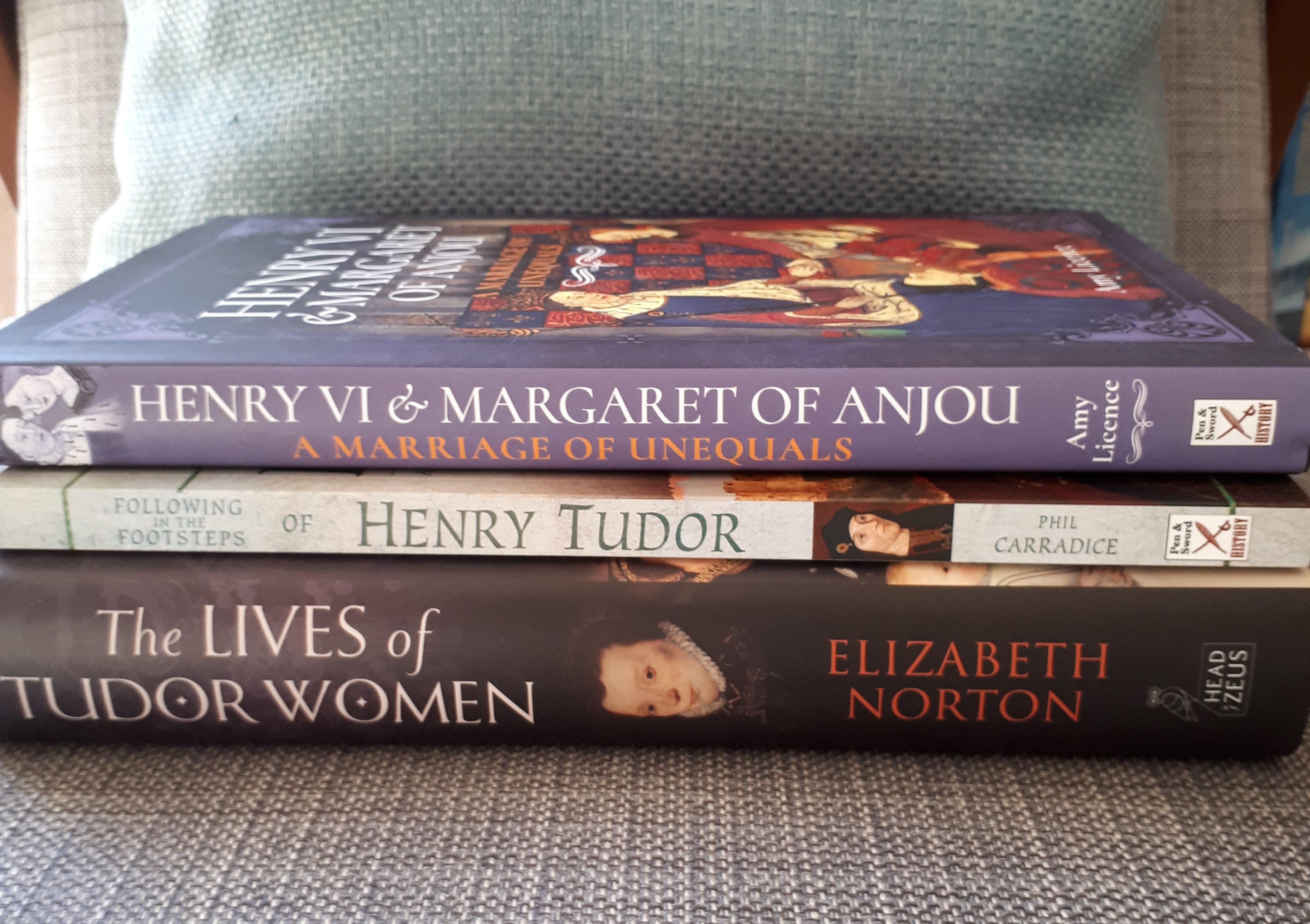
Henry VI and Margaret of Anjou: A Marriage of Unequals by Amy Licence
Following in the Footsteps of Henry Tudor by Phil Carradice
The Lives of Tudor Women by Elizabeth Norton

And on my Kindle:

The Brothers York by Thomas Penn
Elizabeth Widville, Lady Grey by John Ashdown-Hill

To answer the final question above (What are you hoping to get out of participating in Nonfiction November?), I would be happy if I could read at least some of the books above, but I’m also hoping that visiting other participants’ posts will help me to discover other books that I might enjoy and wouldn’t have otherwise thought of picking up.

~

How has your year in non-fiction been? What are the best non-fiction books you’ve read this year?

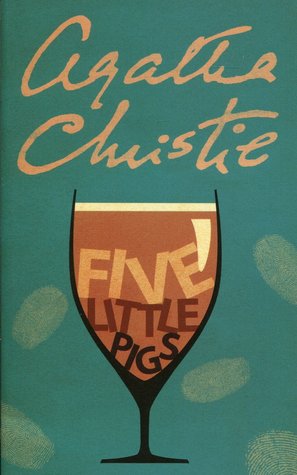
Five Little Pigs by Agatha Christie

This is one of the Christie novels I have been particularly looking forward to reading, as so many people list it amongst their favourites. I had hoped to read it last month as it was September’s selection for the 2019 Read Christie Challenge, but it ended up having to be an October read for me instead.

Published in 1942, Five Little Pigs is one of Christie’s Poirot mysteries, but it is slightly different from the others in that Poirot is trying to solve a crime which took place many years before the novel opens. Carla Lemarchant has received a letter from her mother, Caroline, who has died in prison while serving a life sentence for the murder of her husband, Amyas Crale, sixteen years ago. In the letter, Caroline assures her daughter of her innocence – and because Carla knows that her mother was always a woman who told the truth, she believes her. Hoping to find out what really happened, Carla approaches Hercule Poirot and asks him to investigate.

This is not Poirot’s usual sort of mystery – there is no active crime scene to visit and any evidence is likely to have been lost or destroyed long ago – but he agrees to Carla’s request. He begins by collecting statements from the five people who, other than Caroline, had been present on the day of the murder: the stockbroker Phillip Blake and his reclusive brother Meredith; Elsa Greer, with whom Amyas Crale was thought to be having an affair; the governess Cecelia Williams; and Caroline’s younger sister, Angela, who was just a teenager at the time. If Caroline was innocent, then one of these five must have been the murderer – but will it still be possible to identify the real culprit now that so much time has passed?

I can understand why Five Little Pigs is so highly regarded by Christie fans. The characterisation is excellent; the suspects are well drawn and have believable motives for wanting Amyas dead, and there is evidence of character development too, in the contrast between their present day selves and the people they had been sixteen years earlier. The structure is clever too – the statement each character writes is given in full and although I thought at first that I would find it repetitive reading about the same events five times in a row, that wasn’t really a problem. Each account of that fateful day is slightly different and each one makes us question what we were told in the previous one. It’s only once Poirot has all five accounts in front of him and has spoken to all five of the writers in person that he can piece everything together and solve the mystery.

I enjoyed this book but it hasn’t become a personal favourite and there are other Poirots I’ve liked more. The problem I had with this one was that, although I appreciated the structure and the characters, I didn’t find the mystery itself particularly imaginative or entertaining. I thought The ABC Murders and Dumb Witness both had better plots, to give two examples that I’ve read this year for the Read Christie challenge. Having just caught up with September’s book at the end of October, I am going to skip October’s book for the challenge (a new short story collection, The Last Séance) and will wait to see what November’s choice will be.

And if you’re wondering, the title of Five Little Pigs refers to the fact that the five suspects remind Poirot of the children’s rhyme, “This little piggy went to market, this little piggy stayed at home; This little piggy had roast beef, this little piggy had none; And this little piggy went ‘wee wee wee’ all the way home!”

This is book #6 read for this year’s R.I.P. event.

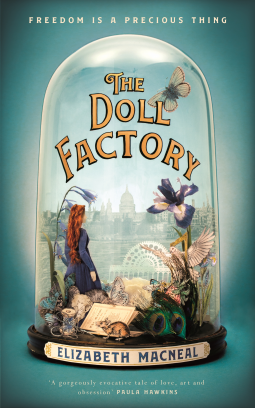
The Doll Factory by Elizabeth Macneal

The Doll Factory was one of the books on my 20 Books of Summer list that I never got round to reading, so I added it to my Autumn TBR list instead, hoping that would give me a push into picking it up sooner rather than later. Now that I’ve finally read it, I can say that it was worth waiting for – and it was actually a perfect October read.

The Doll Factory is set in Victorian London and follows three main characters whose stories become more and more closely entwined as the novel progresses. First, we meet Silas Reed, a lonely and eccentric man of thirty-eight whose ‘shop of curiosities’ houses stuffed animals, jars of specimens and cabinets of butterflies. He dreams of one day opening his own museum and hopes he will get his chance to make a name for himself at London’s upcoming Great Exhibition, but a chance encounter with Iris Whittle proves to be a distraction.

Iris – like her sister, Rose – works at Mrs Salter’s Doll Emporium, painting faces on china dolls. What Iris really wants is to develop her skills as an artist and be taken seriously as a painter in her own right, so when she is approached by Louis Frost, a member of the Pre-Raphaelite Brotherhood who asks her to model for him, she jumps at the opportunity…on the condition that Louis teaches her to paint. As she and Louis begin to spend time together, Iris discovers that she is falling in love – but she is being watched by Silas Reed, who has already decided that Iris is the woman he has been waiting for all his life.

Ten-year-old Albie has links with both Silas and Iris, providing dead animals for the curiosity shop and running errands for the doll factory. Albie is a bright and observant boy, but has grown up in poverty; he needs all the money he can get if he is ever going to help his sister out of prostitution and achieve his dream of buying a new set of teeth for himself. Albie can see that Silas is becoming dangerously obsessed with Iris, but will he be able to help her before it’s too late?

There are so many things to admire about The Doll Factory. I loved the Victorian setting, which in Elizabeth Macneal’s hands feels vivid and convincing, and I loved the way she blends her fictional characters and storylines together with real history. I enjoyed reading about the art world of the 1850s; although we do meet some of the real Pre-Raphaelites such as Rossetti and Millais, they are just minor characters while the focus is on Iris’s relationship with the fictional Louis Frost (and his wombat, Guinevere). As a woman trying to find her way into this world, Iris knows she faces huge challenges and obstacles but she knows she has talent as an artist and is determined to find a way to express herself.

Because of the Pre-Raphaelite element of the novel, I kept being reminded of Crimson and Bone by Marina Fiorato, another book in which a young woman becomes an artist’s model, although I think this is the stronger and better written of the two. It’s also quite a dark novel; the signs are there from the beginning with the descriptions of taxidermy, the collection of dead creatures and some of the macabre paintings Iris and her sister create for mourning parents in the doll factory, but it becomes much darker and more disturbing in the second half of the book as Silas becomes increasingly obsessed with possessing Iris. The ending wasn’t perfect – the climax of the story seemed to go on for far too long and was the one part of the book that, for me, felt contrived and over the top – but other than that, I really enjoyed The Doll Factory. It’s an impressive first novel and I will be hoping for more from Elizabeth Macneal.

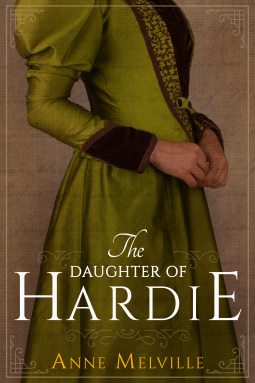
The Daughter of Hardie by Anne Melville

The Daughter of Hardie, originally published in 1988 as Grace Hardie, is the second in Anne Melville’s trilogy of novels following the story of a family of English wine merchants throughout the late nineteenth and early twentieth centuries. I think this book does stand alone quite well as it concentrates mainly on the younger generation of the Hardie family, but I would still recommend starting with the first one, The House of Hardie, if you can.

This second novel opens in 1898 with Grace Hardie growing up at Greystones, the family estate in the countryside near Oxford, where they have their wine shop. As the only girl in a family of boys and considered an invalid due to her severe asthma attacks, Grace is struggling to find her place in the world but she finds happiness in exploring the grounds of Greystones and playing with her beloved cat, Pepper. Then, one day, a tragic accident destroys Grace’s happiness and things are never quite the same again. Meanwhile, 1914 is approaching and with it the beginning of the First World War. With five brothers, four of whom are old enough to fight, there could be more tragedy ahead for Grace and her family…

I enjoyed the first Hardie novel, but I thought this one was even better. I wasn’t sure about it at first – I found the scenes describing the accident I alluded to earlier quite harrowing and I almost stopped reading at that point, but I’m pleased I didn’t because as the consequences of that incident and its impact on Grace and her brothers became clearer I started to understand why it was depicted in that way. By the time war broke out halfway through the novel I had been fully drawn into the story and was genuinely worried for the characters as they either went off to fight or were left behind to wait for news of their loved ones.

Anne Melville manages to cover almost every aspect of the war you could think of – men sent home from the front wounded, men left suffering from shellshock, gas attacks and zeppelin raids, conscription and desertion, women stepping into roles vacated by men, and the difficulties of keeping a large estate running during and after the war. This could easily have felt overwhelming, but it doesn’t…all of these storylines arise naturally from the stories of the various characters and the types of people they are.

But this is not just a book about war. One of the main themes of the first novel, women’s education, was at the forefront of this one too. Midge Hardie, my favourite of the ‘first generation’ characters, is now a school headmistress – a job she loves, even though she had been forced to make an unfair choice between marriage and a teaching career, as married headmistresses are considered ‘unacceptable’. Grace herself is not as certain as Midge about what she wants to do and it was interesting to follow her internal struggles over whether to marry and have children or to pursue a more independent way of life.

There was so much to enjoy in this book that I really don’t think the two big plot twists that come towards the end of the book were at all necessary. One in particular felt unbelievable and just a way of trying to tie up loose ends that didn’t need to be tied. That was a shame because otherwise I had loved the book, after that uncertain start. Despite those reservations, though, I will definitely be reading the final part of the trilogy, The Hardie Inheritance, and will look forward to finding out how the story ends.

Thanks to Agora Books for providing a copy of this book for review via NetGalley.

It Walks by Night by John Dickson Carr – #1930Club

This week Simon from Stuck in a Book and Karen from Kaggsy’s Bookish Ramblings are hosting another of their club events, where bloggers read and write about books published in a chosen year. This time it’s 1930 and I found two books on my TBR from that year, one from each of my two favourite genres, classic crime and historical fiction.

I decided to start with It Walks by Night, a detective novel by American author John Dickson Carr which has just been reissued as a British Library Crime Classic. My previous experience of Dickson’s work has been limited to the short story Persons or Things Unknown, which appeared in a Christmas anthology I read a few years ago, but I liked it and knew I wanted to read more. It Walks by Night was his first detective novel and also the first in a series featuring the character of Henri Bencolin, a juge d’Instruction (examining magistrate) of the Parisian police.

The novel is set in 1927 and opens with the newly married Duc de Saligny attending a gambling house in Paris. The Duc has been accompanied by a police escort who are providing protection after he received a death threat from Alexandre Laurent, the violent ex-husband of his new wife, Louise. Laurent recently escaped from the asylum where he had been committed after attacking Louise with a razor and has vowed to kill both Saligny and Louise if they go through with the marriage.

Late in the evening, the Duc walks into an empty card room with police guarding both doors. Soon afterwards a bell rings from inside the room and a waiter arrives to answer the summons, expecting to be given a drinks order. Instead, he finds the Duc dead, his head severed from his body, and a blood-covered sword hanging on the wall. There is nobody else in the room and as both entrances were being closely watched, nobody could have gone in or out without being seen. The murderer must be Laurent – but how did he manage it? Henri Bencolin, who claims to have never taken more than twenty-four hours to solve a case, sets out to discover the truth.

It Walks by Night is narrated by Jeff Marle, an American friend of Bencolin’s who plays a similar role to Watson in the Sherlock Holmes novels or Hastings in the Poirot novels. His main function is to provide a sort of bridge between the reader and the detective so that the solution is not revealed as early as it would have been if the story had been told from Bencolin’s perspective. Bencolin himself is not the most appealing or memorable of detectives, in my opinion, and I never warmed to him at all – but I haven’t met any of Carr’s other detectives yet, so maybe his characterisation improves in later books.

As a classic locked room mystery, it’s quite a clever one and certainly kept me wondering how the murder could possibly have been carried out, in a room with no secret entrances, no hiding places and a window forty feet above the ground. To make things even more confusing, we are told in the first chapter that Laurent is known to have visited a plastic surgeon and may have altered his appearance so successfully that he could be almost any of the characters we meet throughout the novel. I didn’t much like this idea as it seemed too far-fetched to me, but it did give me something else to think about.

So did I guess the solution? Of course not; I almost never do! There were clues – there’s a map at the beginning of the book and some allusions to a story by Edgar Allan Poe which I have read more than once, but I still didn’t work out the significance of any of this. I don’t feel too bad about my poor detective work, though, as it meant I was surprised by the twists at the end of the story! I will read more by John Dickson Carr, but as I didn’t like Bencolin I would prefer to try a book from a different series next.

~

I’m not sure whether I’ll have time to finish my second 1930 book by the end of the week, but for now here are some other books from that year previously reviewed on my blog:

The Mysterious Mr Quin by Agatha Christie
Giant’s Bread by Mary Westmacott (Agatha Christie)
The Secret of High Eldersham by Miles Burton
The Diary of a Provincial Lady by EM Delafield
Mystery Mile by Margery Allingham

Historical Musings #54: Historical Highlights

This month – on Wednesday 16th October to be precise – my blog will be ten years old! To mark the occasion, I thought I would use this month’s Historical Musings post to look back at some of the best historical fiction I have read since I started blogging in 2009. I have listed a selection of highlights for each year and apologise to any books and authors I haven’t managed to include!

In 2009:

* This was not a full year of blogging – just two and a half months – and only a few of the books I read in that time could be classed as historical fiction, but I particularly enjoyed The Moonlit Cage by Linda Holeman.

In 2010:

* I read my first Georgette Heyer novel, The Talisman Ring, and couldn’t believe I hadn’t started reading her books earlier! I also read my first books by Sarah Waters, Tracy Chevalier and Lisa See and have gone on to read more by all of them.
* One of my favourite books of the year was The Sunne in Splendour by Sharon Penman, a book which sparked my interest in the Wars of the Roses and Richard III.
* I also loved The Black Tulip, The Meaning of Night and The Saffron Gate.

In 2011:

* My first read of the year was the wonderful The House on the Strand by Daphne du Maurier. Only part of the book is set in the past and the rest is contemporary, but I love the way the transitions between the two are handled.
* Andrew Taylor and Jane Harris were two authors I read for the first time in 2011 and still love. I read two books by each in 2011 and my favourites were The American Boy (by Taylor) and Gillespie and I (by Harris).
* Other books I particularly enjoyed were Jamrach’s Menagerie, Passion, The Sisters Brothers and Stone’s Fall.
In 2012:

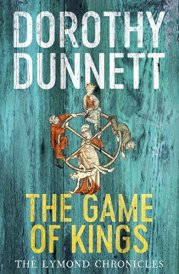
* This was the year I discovered Dorothy Dunnett! Reading the six books that make up The Lymond Chronicles – and then later in the year, the eight books of The House of Niccolò – was the highlight not just of 2012, but of my whole ten years of blogging.
* I also loved Scaramouche, Here Be Dragons, The Scarlet Pimpernel and Wolf Hall. I read the first book in Elizabeth Peters’ Amelia Peabody series this year too.
* The Gods of Gotham by Lyndsay Faye was probably the biggest surprise of the year, as I didn’t expect to like it much but ended up really enjoying it.

In 2013:

* I started two new series that I loved but still haven’t finished: Patrick O’Brian’s Aubrey/Maturin series and Maurice Druon’s The Accursed Kings.
* New authors read for the first time in 2013 included Elizabeth Fremantle, John Boyne, Mary Renault and Anne O’Brien. I also read my first two books by Guy Gavriel Kay – Tigana and The Lions of Al-Rassan, fantasy set in worlds closely resembling real periods of history.
* Other favourites this year were The King’s General, Bring Up the Bodies, King Hereafter and Captain Blood.
In 2014:

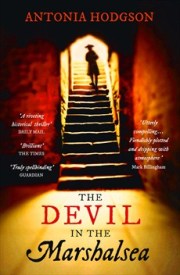
* I started two new historical mystery series in 2014 – first I met Matthew Shardlake in CJ Sansom’s Dissolution – and then Thomas Hawkins in Antonia Hodgson’s The Devil in the Marshalsea. Another historical crime novel I enjoyed, sadly not part of a series, was The Convictions of John Delahunt by Andrew Hughes.
* I read my first book by Robert Harris: his excellent novel about the Dreyfus Affair, An Officer and a Spy.
* I also loved The Moon in the Water, Hild, Bitter Greens, Zemindar, Falls the Shadow and The True and Splendid History of the Harristown Sisters. Another good year!

In 2015:

* I read Elizabeth Goudge for the first time in 2015 (The Child from the Sea) and I also enjoyed Alias Grace, The Sea-Hawk, Gildenford, and the Ibis trilogy.
* After avoiding books set in Ancient Rome for most of my life, two of my favourite books of the year turned out to be Imperium and Lustrum by Robert Harris, the first two books in his Cicero trilogy.
* Here on the blog I announced my Reading the Walter Scott Prize project (something I have sadly neglected in recent months and need to get back to). In April 2015 I also started my monthly Historical Musings posts. In the very first of these posts I asked a simple question: Do you read historical fiction?

In 2016:

* I read a lot of classic historical fiction in 2016 including Lorna Doone, Mauprat, Kristin Lavransdatter and Redgauntlet – and I finished Alexandre Dumas’ d’Artagnan series this year as well.
* The Classics Club Spin gave me Prince of Foxes by Samuel Shellabarger. A great result as I loved it!
* I also enjoyed reading Troy Chimneys by Margaret Kennedy, Restoration and Merivel by Rose Tremain – and my first of Rosemary Sutcliff’s adult novels, The Rider of the White Horse.

In 2017:

* 2017 got off to a good start with The Red Sphinx and His Bloody Project and continued to be a good year for historical fiction. Some of my favourites of the year included Golden Hill, Wintercombe, Towers in the Mist and A Gentleman in Moscow – and two books by Rebecca Mascull, The Wild Air and Song of the Sea Maid.
* I read Shadow of the Moon for a summer readalong. As an MM Kaye fan, I don’t know why I hadn’t read it earlier, and of course I loved it.
* I also enjoyed The Bear and the Nightingale, the first in a fantasy trilogy grounded strongly in historical Russia, and I started Elizabeth Jane Howard’s Cazalet Chronicles (yet another series I still need to finish).

In 2018:

* I enjoyed re-reading Penmarric by Susan Howatch and really don’t know why I do so little re-reading these days.
* Some of my favourite historical fiction novels in 2018 were about real historical figures such as the Brontë sisters (Dark Quartet), Elizabeth Mortimer (Queen of the North) and William Marshal (The Scarlet Lion).
* I loved meeting Emmy Lake in AJ Pearce’s wartime novel Dear Mrs Bird, a book I thought was the perfect combination of light and dark.

In 2019:

* Well, 2019 isn’t over yet but so far some of my favourites have been The Way to the Lantern by Audrey Erskine Lindop, Things in Jars by Jess Kidd and The Devil’s Slave by Tracy Borman.

~

I hope I’ve convinced you to try some of these books, if you haven’t already! What are your own historical highlights of the last few years?
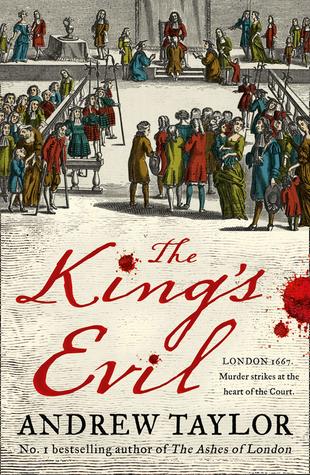
The King’s Evil by Andrew Taylor

The King’s Evil is the third in Andrew Taylor’s series of historical mysteries set during and after the Great Fire of London and featuring the characters of James Marwood and Cat Lovett. The first two, The Ashes of London and The Fire Court, were both excellent books so I had high expectations for this one as well, and I’m pleased to say that I think this might be my favourite of the three. If you’re new to the series, I don’t think it’s completely necessary to read the books in order but I would still recommend that you do so if possible.

‘The King’s Evil’ is another name for scrofula, a disease which causes the swelling of glands in the neck. Historically, it was believed that a touch from the king could cure the disease and as the novel opens we see James Marwood watching a ceremony at Whitehall where sufferers are being brought one by one to receive the touch of King Charles II. Marwood himself does not have scrofula, but is using the ceremony as cover for a rendezvous with Lady Quincy (a woman we first met in The Fire Court, which is one of the reasons why I think it’s best to read the series from the beginning).

Lady Quincy warns Marwood that his friend, Cat Lovett – who, as the daughter of a regicide responsible for the execution of Charles I, is in hiding under an assumed name – has been located by her stepson Edward Alderley. Worried that Edward is planning to take revenge on Cat after the events of The Fire Court, Marwood hurries to her hiding place to tell her she is in danger. Before Edward can do anything, however, he is found dead in a well in the grounds of the Duke of Clarendon’s London mansion. Cat, using her new identity of Jane Hakesby, has been helping the architect Simon Hakesby with his work on a garden pavilion at Clarendon House, and suspicion falls on her as the murderer. Marwood is asked to investigate on behalf of the government but, although those in power want him to find Cat guilty, he is sure she is innocent and must find a way to prove it.

This series is getting better and better. We are moving further away from the time of the Great Fire now, but its effects are still being felt across London as rebuilding takes place and people try to move on with their lives. The aftermath of the fire is less important to the plot of this novel than it was to the previous two, though, with the focus this time on the royal court and the question of who will succeed to the throne if Charles II fails to produce a legitimate heir. The king’s brother James and his two daughters are currently next in line, placing James’s father-in-law, the Duke of Clarendon, in a position of power. As Marwood begins to look into the circumstances of Edward Alderley’s death, he finds himself caught up in a rivalry between Clarendon and one of the king’s favourites, the Duke of Buckingham. Andrew Taylor is so good at blending fact and fiction, so that the fictional events of the story feel quite plausible within the context of the period and the murder mystery fits smoothly into the history and politics of the time.

When I read the first book, I mentioned that I didn’t find James Marwood a particularly strong character, but after three books he feels much more real to me now. I love his relationship with Cat – it’s not what you could describe as a romance and sometimes not even really a friendship, but it’s clear that there is still a strong bond between them. I enjoy spending time with both of them and am hoping it won’t be too long before they are back with another mystery to solve!